7 Beard Plans for Every Face Shape, Exact Neckline and Guard Lengths

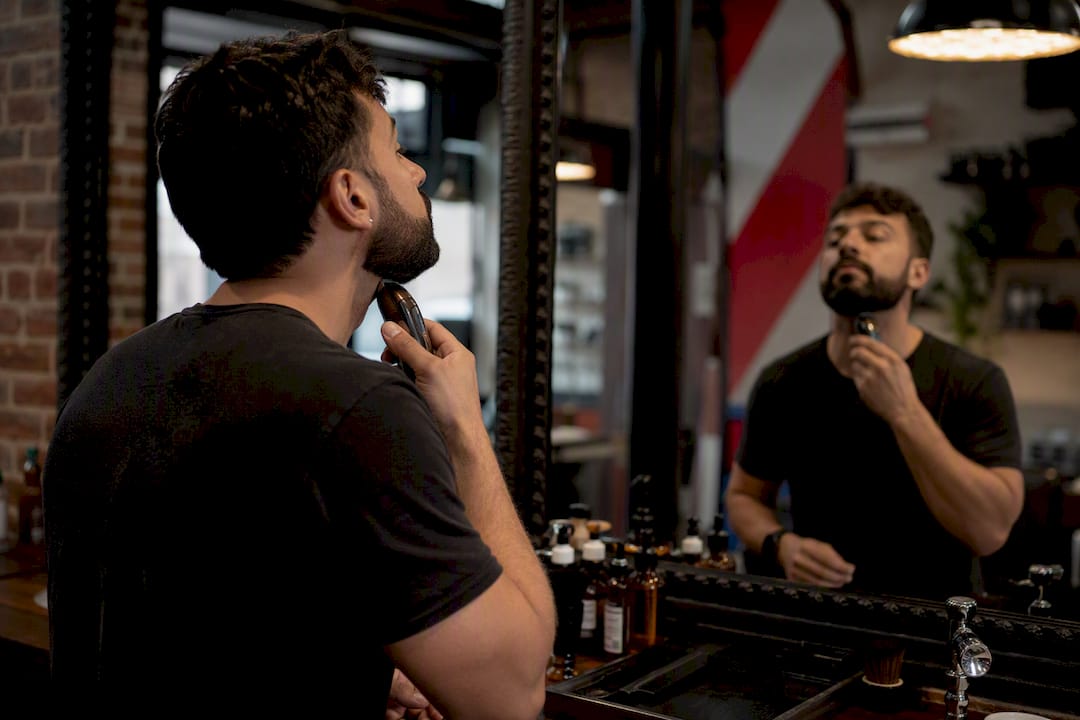
Use your beard to push your lower face toward an oval, the shape barbers treat as the visual baseline for balance. That means adding length and width where your face is narrow, and stripping it back where your face is already wide. Start by measuring your forehead, cheekbones, jaw, and face length to land on one of seven shapes: oval, round, square, rectangle, diamond, heart, or triangle. Grab a tape measure or a bar of soap and a mirror, and you’ll know your shape in under two minutes.
Face shape measurement is essential for selecting the most flattering beard style, with specific shapes requiring targeted length and width adjustments.
Men with thin or patchy growth should opt for shorter, more defined styles to maintain a balanced appearance and avoid bald patches.
Proper neckline and cheek line trimming, following precise guidelines, are crucial for maintaining a sharp, balanced look over time.
Seasonal changes should influence beard length, with shorter styles preferred in summer for practicality and longer styles in winter for warmth and conditioning.
Professional shaping and consultation are recommended to ensure natural growth patterns and facial features are accurately balanced, especially for long-term style maintenance.
Table of Contents
How to Find the Right Beard for Your Face Shape
Barbers rely on four measurements, and you can take all of them at home with a soft tape measure or a piece of string and a ruler.
Face length: measure from the center of your hairline straight down to the bottom of your chin.
Forehead width: measure across your forehead from the outer edge of one eyebrow to the other.
Cheekbone width: measure across your face just below the outer corners of your eyes, at the widest point of your cheekbones.
Jawline width: measure across your jaw at its widest point, roughly level with your earlobes.
Write down all four numbers. If your face length is noticeably longer than your cheekbone width and your jawline is softer than sharp, you’re likely oval or oblong. If your forehead, cheekbones, and jaw all measure within about half an inch of each other and your face length is close to your cheekbone width, you’re probably round or square, depending on how angular your jaw feels when you run a finger along it. A wider forehead that narrows sharply to the chin usually signals a heart or triangle shape (triangle runs the opposite way, narrow at the top and wide at the jaw), and a narrow forehead and jaw with wide, prominent cheekbones points to diamond. This four-point measuring method comes from the same classification system used by face-shape analysis tools, and it holds up better than eyeballing yourself in a bathroom mirror.
No tape measure handy? Trace your reflection on a fogged-up mirror or a photo, then step back and compare the outline to the seven shapes above. Two quick sanity checks: run your finger along your jaw (sharp corners mean square or rectangle, soft curves mean round or oval), and look at your hairline (a widow’s peak or high forehead often pairs with heart or diamond). If two shapes seem close, pick the one with the sharper jawline reading.
Best Beard Styles for Every Face Shape
Here’s the specific part. Every shape below gets three style families that flatter it, real examples you can name to a barber, and two things to skip. Execution still beats style names. A precisely edged short beard on the wrong “official” shape will look better than a sloppy version of the “correct” one, a point Wahl’s own stylists make repeatedly when they talk clients through fittings.
Oval face
Oval is already the balanced shape, so your job is maintaining proportion, not correcting anything.
Short boxed beard: clean, uniform length that keeps the natural balance intact.
Anchor beard: adds definition along the jaw without overwhelming the face.
Light stubble (around short stubble length) works well because there’s nothing to fix.
Keep the beard length moderate and well-proportioned to maintain balance for most oval faces. Avoid letting a beard grow long and shapeless (it erases the jawline that made your face balanced in the first place) and skip overly wide mustaches that throw off the horizontal proportions.
Round face
The goal here is length and angles. You’re fighting softness, so every recommended style adds vertical length or sharp lines at the chin.
Extended goatee: pulls the eye downward and adds visual length to the chin.
Van Dyke: the pointed chin beard paired with a mustache creates a defined tip that a round jaw doesn’t naturally have.
Short boxed beard with a defined chin point: keeps sides tight while building a sharp corner at the chin.
If your density is strong, a ducktail (tapered to a point below the chin) does the same job with more presence. The core mechanic across all of these: add length at the chin, keep the sides trimmed close, and cut sharp cheek lines instead of a soft, rounded cheek line, which just repeats the roundness you’re trying to offset. A straight, slightly downward-angled cheek line does more work here than any specific style name because it fakes an angular jawline where the bone structure doesn’t naturally provide one. Avoid full round beards that mirror your face shape and any style that adds width at the cheeks without adding length at the chin.
Square face
Square faces already have strong angles. You’re softening the hard corners of the jaw, not adding more edge.
Rounded full beard: takes the jaw’s sharp corners and softens them with fuller cheek and chin growth.
Circle beard: a shorter, rounded shape that works with a strong jaw instead of fighting it.
Medium stubble with rounded cheek lines: a lower-maintenance option that still takes the edge off.
A moderate beard length usually works well to soften sharp angles. Avoid boxy, geometric beard shapes that echo the jaw’s angularity, and skip razor-sharp cheek lines that add even more hard edges to a face that already has plenty.
Rectangle (oblong) face
A long face needs width, not more length. Every style choice here should widen the visual field rather than stretch it further.
Full beard, moderate length: adds width along the cheeks and jaw without extending the face downward.
Boxed beard with fuller sides: keeps the chin length modest while building out width at the jawline.
Mutton chops or wide sideburn-to-beard connections: less common but genuinely effective for pulling focus to the sides.
Aim for shorter chin length (under half an inch) with more volume left on the sides. Avoid long, pointed goatees that add even more vertical length to an already long face, and steer clear of any beard style that tapers sharply at the chin.
Diamond face
Diamond faces have narrow foreheads and narrow jaws with wide, prominent cheekbones. You want width at the chin and jaw to balance out those cheekbones.
Full beard: builds mass along the jaw and chin, softening the cheekbone’s dominance.
Beard with a rounded chin: adds width exactly where the diamond shape narrows.
Chinstrap combined with light stubble: a lower-commitment option that still adds some jaw definition.
Avoid very short stubble that leaves the jaw looking as narrow as it actually is, and skip goatees, which draw attention right back to the widest part of the face instead of away from it.
Heart face
A heart-shaped face has a wide forehead that narrows to a pointed chin. The fix is adding width and weight at the jaw and chin.
Full beard: the most reliable option, since it builds out the narrow lower third.
Beard with fuller sides, tapered chin: balances the wider forehead by widening the jaw to match.
Light to medium stubble: works if you want subtlety, but only if grown out slightly fuller near the jaw.
Avoid thin, pointed goatees that emphasize the chin’s narrowness even more, and skip beards trimmed very close at the jawline, since that just shows off the imbalance instead of correcting it.
Triangle face
The opposite of heart: a narrower forehead with a wider, heavier jaw. You’re adding volume up top (through hair, not beard) while keeping the beard controlled at the jaw.
Short boxed beard: adds a little definition without exaggerating the jaw’s width.
Light stubble: keeps things clean and doesn’t add bulk to an already prominent jawline.
Balbo (disconnected beard and mustache): draws focus toward the chin and mouth rather than the wide jaw edges.
Avoid full, wide beards that add even more mass to the jaw, and skip styles that connect thickly into wide sideburns, which widen the lower face further.
The Neckline and Cheek Line Rules That Matter More Than Length
Get the neckline and cheek line wrong, and no style name will save you. This is where most home grooming attempts fall apart.
The standard neckline rule: place two fingers flat against your throat, right above your Adam’s apple, and trim everything below that line. A neckline set too high makes your jaw look smaller than it is; set too low, the beard reads as heavy and unkempt. Round and square faces can push the neckline very slightly higher to expose a touch more jaw definition. Long or narrow faces should keep it at the standard two-finger mark or even a touch lower, since a higher neckline shortens the visual jaw further.
Cheek lines come in two flavors: straight/angled and soft arc. A straight, slightly angled cheek line adds structure and works well on round and oval faces. A soft, natural arc that follows your existing cheek hair growth suits square and diamond faces, since it avoids piling more hard angles onto a face that already has them.
Pro Tip: Take a photo of your finished cheek line and neckline the first time a barber gets it right. Text it to them before your next visit so they can match the exact shape, even if a different barber is working that day.
Three rules to keep the shape intact between appointments:
Never trim your cheek line yourself past a light cleanup of stray hairs above the established line.
Touch up the neckline weekly, but don’t move the line higher or lower without a barber resetting it first.
Trim in the direction of hair growth for the neckline and against it only for close detail work on the cheek line.
How to Trim and Maintain Your Beard at Home
Beard maintenance breaks into daily upkeep, weekly shaping, and a monthly reset, and each one calls for a different tool.
Trim dry, not wet. Wet hair stretches, so you’ll cut it shorter than intended once it dries and shrinks back.
Start with a longer guard and work down. You can always take more off; you can’t put hair back on.
Match your guard to your target style: stubble runs 1 to 3mm, a short boxed beard sits around 3 to 6mm on the sides with 6 to 10mm at the chin, a medium full beard runs half an inch to an inch, and longer chin-focused styles like the Van Dyke or extended goatee need scissors for shaping past an inch.
Detail the neckline and cheek line last, using a T-blade trimmer with no guard for crisp edges.
Maintenance cadence matters as much as the trim itself:
Daily: knock down stray hairs on the neckline and cheek line with a trimmer set to a low guard or no guard.
Weekly: run a full trim with your chosen guard to keep length even.
Monthly: reassess the whole shape, since growth patterns shift the neckline and cheek line slightly over four weeks.
Your basic toolkit needs a precision trimmer for guard work, a T-blade or detail trimmer for edging, a comb, and a pair of beard scissors if you’re keeping anything past stubble length. Beard oil isn’t cosmetic fluff. It softens the hair enough that trimming feels less like cutting through wire, and it keeps flyaways from ruining a clean line two days after a trim.
Adjusting Your Beard Style for Density and Growth Pattern
Face shape sets the target. Hair density and growth pattern decide whether you can actually hit it.
If your beard grows in thin or patchy, skip complex, disconnected styles like the Balbo or ducktail. They rely on visible negative space between sections, and patchy growth turns that negative space into bald patches instead of intentional gaps. A compact, high-contrast shape like a short boxed beard or a tightly defined goatee reads as deliberate even with thinner coverage, because there’s less territory for the thin spots to show through.
Four rules worth following:
If your growth is thin overall, favor short boxed or stubble styles over anything requiring length.
If you have patchy sections, keep the beard shorter across the board so patches blend rather than stand out.
If you want a Balbo or a precisely floating mustache, book a barber. Anchor and Balbo styles depend on exact symmetry that’s hard to maintain solo.
If growth is very sparse in specific spots, ask about subtle beard filler or tinting products before writing off a fuller style entirely.
When you sit down for a consultation, ask about your growth pattern directly, how much weekly maintenance the style actually needs, and what image you’re going for (professional, casual, sharper jawline). A measurement-first approach combined with a real consultation gives you the best shot at a style that fits both your face and how your hair actually grows, not just how it’s supposed to grow on paper. Manhattan Barbershop’s shaping sessions start with exactly that conversation before a single guard touches your face, and understanding how hair density affects styling choices upfront saves you from chasing a style your growth pattern can’t support.
Can a Beard Style Make You Look Older or Younger?
Beard length and density shift perceived age more than most men expect. A fuller, longer beard tends to read as older and more authoritative, which is why it works in favor of younger men trying to look more established for a professional setting. Heavy gray coverage in a full beard ages a face further, sometimes by more than the gray on the head does, since beard hair sits closer to the eyes and mouth where age shows first.

Shorter, tighter styles do the opposite. Stubble and short boxed beards tend to read as younger and more current, partly because they require visible upkeep and signal an active grooming routine rather than just letting hair grow. A well-defined jawline, whether it’s natural or built through cheek-line and chin shaping, reads as more youthful across nearly every face shape, since a soft, undefined jaw is one of the more consistent visual markers of aging.
If you’re gray and want to keep a fuller beard without the aging effect, ask your barber about gray blending or camouflage treatments rather than growing it out untouched. A trimmed, intentional gray beard reads as distinguished. An untrimmed one reads as older than you are. The style you pick interacts directly with how sharp or soft your other features look. A strong jawline and defined cheekbones can carry more beard volume before it starts to overwhelm the face, while softer, rounder features usually look best with more restraint.
Matching Your Beard Style to Your Job and Daily Routine
Face shape tells you what could work. Your job and daily schedule tell you what will actually survive the week.
Client-facing and corporate roles generally favor tighter, more defined styles: short boxed beards, stubble, or a clean goatee. These read as put-together without requiring a stylist’s touch every morning. Creative fields and roles with more visual latitude give you room for fuller beards, Van Dykes, or Balbos, styles that need more weekly maintenance but also communicate more personality.
Physical jobs change the calculation entirely. If you work with machinery, food service, or anything requiring a respirator or tight-fitting mask, longer beards create real safety and hygiene issues, and many workplaces have policies limiting beard length for exactly that reason. Stubble or a short boxed beard sidesteps the problem while still giving you a defined look.
Time is the other variable people underestimate. A Van Dyke or an anchor beard with a precisely shaped floating mustache needs near-daily touch-ups to look intentional rather than accidental. Be honest about which category you fall into before committing to a style that assumes you have ten spare minutes every morning.
Why Your Beard Style Should Change with the Seasons
Beard length that works in July often feels wrong by January, and that’s not just about comfort.
Summer heat and humidity make shorter styles more practical: stubble and short boxed beards trap less sweat and stay cleaner through the day. Longer beards in high humidity tend to frizz and lose the crisp lines you worked to establish, especially along the cheek line where humidity causes the most flyaway hair. If you live somewhere genuinely hot for months at a time, dropping to a shorter guard length through summer isn’t a downgrade. It’s just practical.

Cold, dry winter air pulls moisture from beard hair the same way it does from skin, which makes longer styles prone to brittleness and static. This is where beard oil earns its keep, since a longer winter beard needs more conditioning to stay soft and manageable than the same length would in summer. Cold climates also make fuller beards more appealing for the actual warmth they provide, so if you’ve been considering growing out past stubble, winter is the easier season to do it in.
If you split time between climates, or your region swings hard between seasons, plan your beard length changes around the calendar rather than fighting the same style year round.
Mistakes Men Make When Trying a New Beard Style
Most beard style failures trace back to a handful of repeatable mistakes, not bad luck with hair growth.
The biggest one: skipping the measurement step and picking a style because it looked good on someone else. A beard style that flatters a square-jawed guy in a magazine photo can genuinely work against a diamond or heart-shaped face. Measure first, then choose.
The second mistake is neglecting the neckline and cheek line while focusing entirely on length. A long, full beard with a sloppy neckline looks worse than a shorter, cleanly edged one, every time. The third is changing styles too fast. Give a new beard shape at least four weeks of consistent trimming before deciding it doesn’t suit you. Beards often look awkward mid-growth in ways that resolve once length and density catch up.
Fourth, men with patchy or thin growth frequently try styles built for dense hair anyway, then blame the style instead of the mismatch. And fifth: trimming wet. It’s a small technical error that quietly undercuts otherwise solid style choices by leaving the beard shorter than planned once it dries.
A Barber’s View on Shaping Beards by Face Shape
When a client sits down for a beard shaping, the conversation starts before the trimmer ever turns on. We look at face shape, sure, but growth pattern and density decide almost as much of the final call. A guy with a strong jaw and even density can carry a longer, fuller shape. A guy with patchy cheeks needs something tighter and more deliberate, regardless of what his face shape technically calls for.
The name of the style matters far less than most men assume. What actually holds up week to week is the line work: a crisp neckline, a cheek line that matches the face’s natural angles, and a shape that’s realistic to maintain without daily barber visits. That’s the difference between a beard that looks sharp for a weekend and one that still looks sharp three weeks later.
— Evgenii
Get Your Beard Professionally Shaped at Manhattan Barbershop
Reading about neckline placement and cheek-line angles only gets you so far. A trimmer in your own hand, with no second mirror angle and no one checking your blind spots, still leaves plenty of room for a crooked line you won’t notice until it’s already grown out. Manhattan Barbershop’s beard shaping appointments start with a real consultation on your face shape, growth pattern, and how much upkeep you actually want to commit to, then move into the line work that makes a style hold up for weeks instead of days.
A typical appointment covers a short consultation, precise cheek-line and neckline definition, and a trim plan you can actually repeat at home between visits. If you’re not sure what to ask before you book, this consultation checklist covers the basics. Booking ahead also means less waiting around, and tools like online barber booking software make it easy to lock in a repeat slot for your monthly reshape. Ready to see what your face shape actually calls for? Book your appointment online or check out walk-in availability for your next visit.
Sources
Recommended
Comments