Newcomer's Guide to Comparing Local Barbershops

Updated: Sep 20

Moving to a new area means rebuilding routines from scratch, and finding a reliable barber ranks higher on that list than most people expect. The best approach for newcomers comparing local barbershops is to filter first by hygiene and consultation quality, then layer in style fit, pricing transparency, and booking convenience. Skip that order and you’ll waste time and money on cuts you don’t love.
A great barber isn’t just someone who can hold clippers. They’re someone who listens, asks the right questions, and adjusts to your hair type and lifestyle. That relationship takes a few visits to build, but the criteria you use to evaluate shops from day one will determine how quickly you find the right fit.
How newcomers can compare and choose the best local barbershop
Start your evaluation with these core factors before you ever sit in a chair:
Hygiene first. Sanitized tools between clients and a visibly clean workspace are non-negotiable baseline standards. If the station looks cluttered or the combs are sitting in dry holders, walk out.
Consultation quality. A barber who asks about your lifestyle, hair type, and styling habits before picking up clippers will consistently outperform one who doesn’t. This two-way conversation is the foundation of a personalized cut.
Style specialization. A shop known for sharp fades may not be the right call if you want scissor-heavy natural styles. Match the shop’s strengths to what you actually need.
Pricing transparency. Good shops display their prices clearly, either on the wall or on their website. Vague or inconsistent pricing is a red flag.
Atmosphere fit. Some shops are loud and social; others are quiet and focused. Neither is wrong, but one will suit you better.
Booking options. Appointment availability and online booking tell you a lot about how organized and in-demand a shop is.
First-visit strategy. Start with a simple maintenance cut rather than a full restyle. It lets you assess the barber’s skill without high stakes.
Use online reviews and social media portfolios alongside these factors. High Google Maps ratings combined with detailed Instagram work samples give you a solid picture before you walk through the door.
How to find barbershops open near you
Discovery is the first practical step, and you have more tools than you probably realize.
Google Maps lets you filter by rating, hours, and distance. Search “barbershop near me” or “men’s haircut [your neighborhood]” and sort by rating with a minimum review count in mind.
Ask people with sharp haircuts. This sounds obvious, but it works. Coworkers, gym regulars, and neighbors with consistently clean fades are your best leads. Ask not just where they go, but which specific barber they book.
Instagram and TikTok can surface local barbers who tag their city or neighborhood. Look for consistent portfolio quality across many posts, not a single viral cut.
Community groups. Nextdoor, local Facebook groups, and Reddit city subreddits regularly have threads where residents recommend specific barbers. These tend to be honest and detailed.
Online booking systems. If a shop has Booksy or a similar platform, you can often browse barber profiles and read individual reviews before committing.
Location and routine. A shop near your office or your regular commute route is one you’ll actually visit consistently. Convenience matters more than people admit.
Pro Tip: When you ask for a recommendation, always follow up with “who specifically should I book?” The shop’s reputation often lives with one or two individual barbers, not the whole team.
Key factors to consider when selecting a barbershop
Once you have a shortlist, dig deeper into these attributes before making your first appointment.
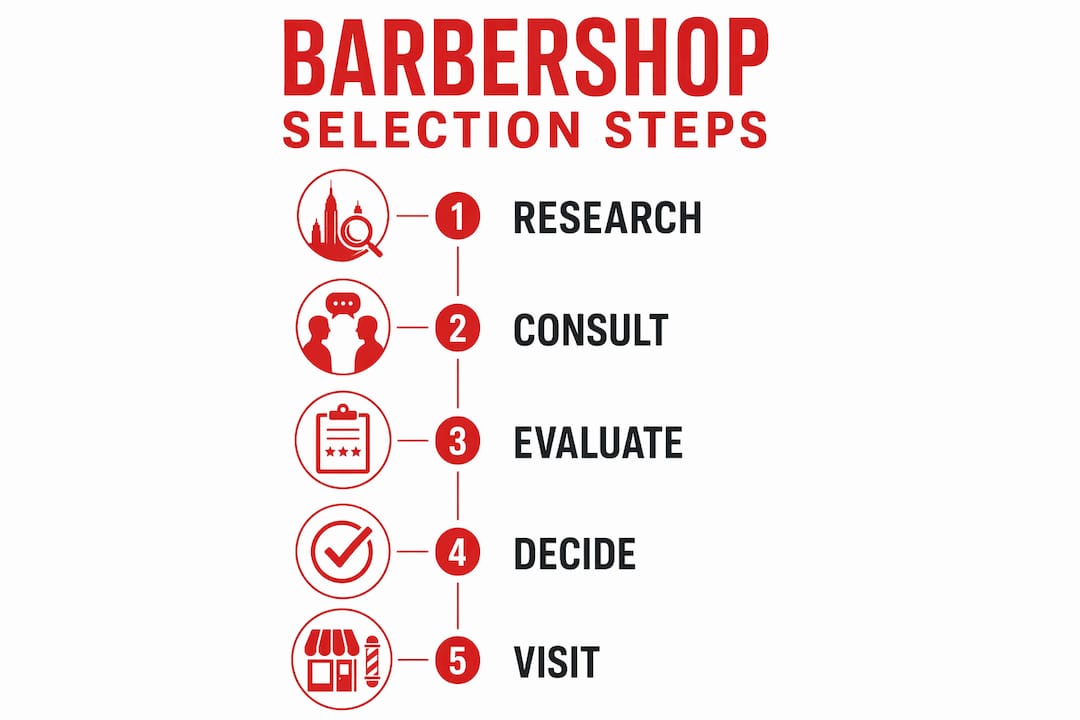
Hygiene and sanitation
Professional barbershops sanitize tools between every client and maintain clean, organized workspaces. Watch for barbicide jars with fresh solution, clean capes, and swept floors. A messy station often reflects the same lack of attention in the actual cut.
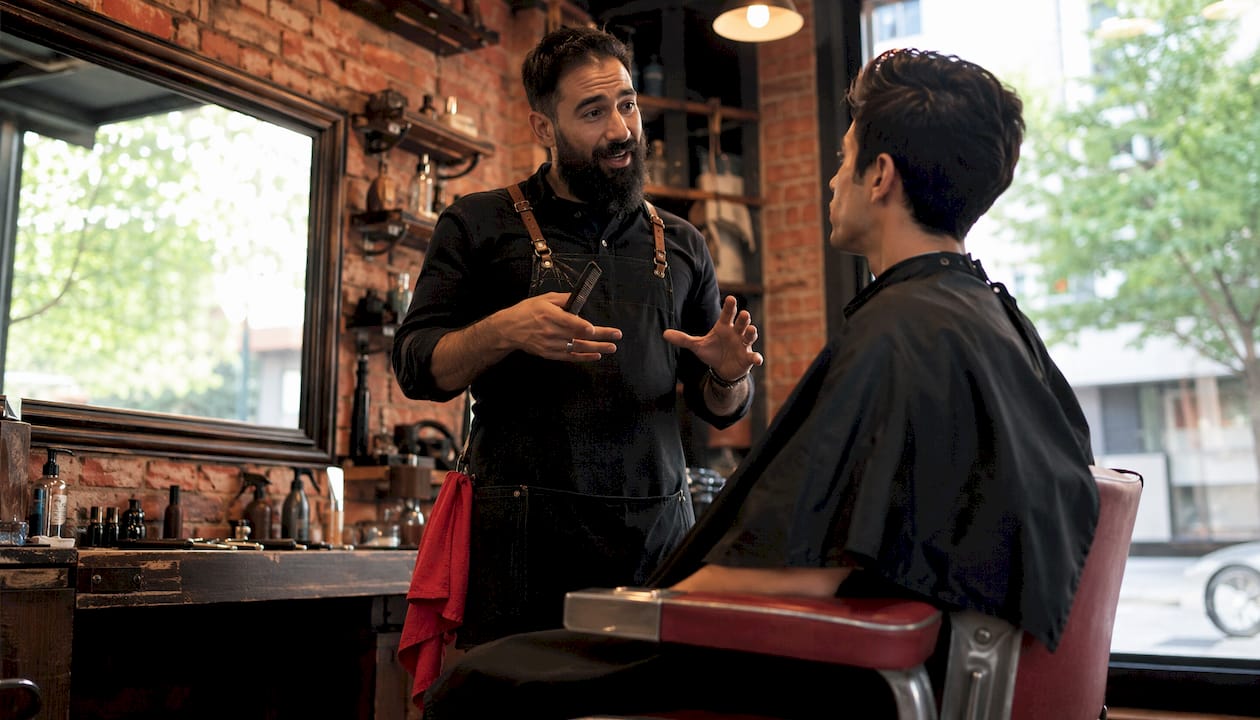
Barber experience and consultation
Ask how long the barber has been cutting hair and whether they conduct a consultation before starting. Barbers who ask about your job, styling habits, and daily routine tailor cuts more effectively and build stronger client relationships over time. A barber who skips this step and goes straight to the clippers is telling you something.
Service range and style fit
Check that the shop actually offers what you need. A shop listing only clipper cuts won’t serve you well if you want scissor work or beard shaping. Style alignment matters as much as technical skill. A barber who excels at skin fades may struggle with longer, textured styles.
Pricing clarity
Good barbershops display pricing openly and keep it consistent. You should never sit down without knowing the cost. Fair pricing reflects service quality, not just the lowest number on the board.
Atmosphere
A shop you visit every few weeks needs to feel comfortable. Some people want music, conversation, and energy. Others prefer a quieter, more focused environment. Walk in before booking to get a feel for the room.
Appointment policies
Shops that use appointment systems and stay consistently booked tend to have loyal clienteles and skilled barbers; learning how to sync your salon or barber calendar with Google Calendar can streamline managing these bookings efficiently. Walk-in-only shops can work for your first visit, but once you find a barber you like, booking ahead protects your time slot.
Pro Tip: Prioritize barbers who ask questions before they cut. A thorough consultation isn’t small talk. It’s how a barber builds a cut that fits your face, your hair, and your life.
What types of barbershop services should you expect?
Understanding what’s on the menu helps you match a shop to your actual needs.
Basic clipper cuts. The standard men’s haircut, usually done with guards and blending. Fast, affordable, and widely available.
Scissor cuts. More time-intensive and better for longer styles or textured hair. Not every shop does these well, so check portfolios.
Fades and tapers. Skin fades, mid fades, and tapers require real technical skill. Look for shops that specialize in these if that’s your style.
Design work. Hard parts, geometric lines, and custom designs are a specialty. Ask to see examples before requesting one.
Beard trims and shaping. A good beard trim is a separate skill from cutting hair. Confirm the barber has experience with your beard type and density.
Hot towel shaves. A premium service that not every shop offers. If you want one, confirm it’s available and whether it’s included in the cut price or charged separately.
Children’s cuts. Family-friendly shops often list kids’ cuts explicitly. If you’re bringing children, confirm age range and pricing upfront.
Additional styling. Some shops offer scalp treatments, product application, or styling consultations. These are worth asking about if you’re building a full grooming routine.
Service specialization shapes your barber choice more than most newcomers realize. A shop that does everything adequately may not match a specialist who does your specific style exceptionally well.
How to read and interpret barbershop reviews and ratings
Online reviews are useful, but only if you know how to read them critically.
A shop with a 4.5 rating and many detailed reviews is generally more trustworthy than a perfect 5.0 from a handful of generic posts. Volume and specificity together signal consistency. One-line reviews that say “great cut!” tell you almost nothing.
Read for patterns. If multiple reviewers mention that a barber listens carefully, takes their time, or nails a specific style, that’s a reliable signal. Repeated complaints about rushed cuts or poor communication are equally telling, even if the overall rating looks fine.
Pay attention to how the shop responds to negative reviews. A shop that acknowledges criticism and offers to make it right shows professionalism. A defensive or dismissive response suggests the opposite. You can learn more from a shop’s worst review than from its best one.
Watch for fake or generic reviews. Clusters of five-star posts with no detail, all posted within a short window, are a warning sign. For a deeper look at evaluating review patterns, cross-reference Google with Yelp or Booksy to see if the feedback is consistent across platforms.
Recency matters too. A shop with strong reviews from three years ago but nothing recent may have changed ownership or lost key barbers.
Tips for communicating your desired haircut to your barber
Clear communication before the cut starts is the single biggest factor in getting what you want.
Bring reference photos. A picture removes ambiguity. Save two or three examples that show the length, fade level, and texture you’re going for. Show the barber what you like and what you don’t.
Describe your routine. Tell the barber how much time you spend styling in the morning and what products you use. A cut that looks great with 20 minutes of work might not suit someone who air-dries and walks out the door.
Discuss your hair’s behavior. Consultations that cover hair growth patterns, texture, and condition lead to cuts that work with your hair rather than against it. Mention any cowlicks, thinning areas, or growth directions that affect how your hair sits.
Be specific about length. “A little off the top” means different things to different people. Use guard numbers or finger measurements when you can.
Ask for the barber’s input. A good barber will tell you if a style won’t suit your hair type or face shape. That pushback is a sign of skill, not attitude.
Confirm before they start. Before the first clipper pass, repeat back what you’ve agreed on. A 30-second confirmation prevents a 30-day wait for your hair to grow back.
For a full breakdown of what to cover before sitting down, the guide on questions to ask a new barbershop covers the consultation process in detail.
What to expect during your first visit to a new barbershop
Walking into a new shop for the first time is a low-stakes evaluation opportunity if you approach it right.
Arrive a few minutes early. Use the wait to observe the shop. Watch how barbers interact with current clients, how they handle the consultation, and whether the space is clean and organized.
Start with a simple cut. Avoid full restyles on your first visit. A tidy-up or basic refresh lets you assess the barber’s skill and communication style without high risk. If the simple cut is off, you haven’t lost much. If it’s great, you’ve found your barber.
Notice the consultation. Does the barber ask questions before picking up the clippers? Do they look at your hair, check the growth direction, and discuss what you want? A barber who skips this step on a first visit will likely skip it every time.
Check hygiene in real time. Watch whether tools are cleaned between clients and whether the barber washes or sanitizes their hands. These habits should be automatic, not occasional.
Ask about pricing before you sit. Confirm the cost of your specific cut upfront. A professional shop will answer without hesitation.
Evaluate after a few days. The real test of a haircut isn’t how it looks in the chair. It’s how it holds up after washing, sleeping on it, and styling it yourself. Give it three or four days before deciding whether to go back.
The barber consultation process is worth understanding in detail before your first visit. Knowing what to expect makes the whole experience less stressful.
Expert insights on identifying a high-quality barbershop
The traits that separate a genuinely good barbershop from a mediocre one are consistent across different markets and price points.
Strict hygiene protocols. Top shops treat sanitation as a standard, not an extra. Tools cleaned between clients, fresh capes, and organized stations are baseline expectations at quality establishments.
Consultation as the starting point. Barbers who discuss grooming history, lifestyle, and hair condition before cutting consistently produce better results. This isn’t a formality. It’s the technical foundation of a tailored cut.
Portfolio consistency over viral posts. A barber’s social media should show consistent technique across many clients and hair types, not just one perfect showcase image. Scroll back through at least a dozen posts before drawing conclusions. For guidance on reading portfolios critically, the barber portfolio selection guide breaks down exactly what to look for.
Busy but accessible. Shops that stay booked through appointment systems signal a loyal clientele and skilled barbers. A shop that’s always wide open with no wait may not have the repeat business that comes from consistently good work.
Technical range. A high-quality barber demonstrates mastery across clipper work, scissor cuts, and blending. Watch how they handle the transitions and detail work, not just the overall shape.
Long-term client focus. The best barbers adapt their approach as your hair changes, your style evolves, or your lifestyle shifts. They remember what worked last time and build on it.
Pro Tip: Look for barbers who follow up on previous cuts. A barber who asks “how did that hold up?” at your next visit is building a relationship, not just filling a chair.
Key Takeaways
Finding the right local barbershop as a newcomer comes down to prioritizing hygiene and consultation quality first, then using reviews, social media portfolios, and a low-risk first visit to confirm the fit.
Point | Details |
Hygiene is the baseline | Sanitized tools and a clean workspace are the minimum standard before evaluating anything else. |
Consultation quality predicts results | Barbers who ask about your lifestyle and hair type before cutting consistently deliver better, more personalized cuts. |
Reviews need critical reading | A 4.5-star rating with detailed, consistent reviews outperforms a perfect score from a handful of generic posts. |
Start simple on your first visit | A basic maintenance cut lets you evaluate skill and communication without the risk of a full restyle gone wrong. |
Manhattanbarbershopny | Offers personalized consultations, clean fades, and classic cuts with transparent pricing and walk-in convenience on the Upper East Side. |
What actually makes a barbershop worth going back to
Most newcomers approach barbershop selection like they’re buying a product. They compare prices, read a few reviews, and pick the highest-rated option nearby. That works fine for a one-time purchase. It doesn’t work for a relationship you’re going to maintain every three to four weeks for years.
The thing most guides won’t tell you is that the technical skill gap between decent barbers is smaller than people think. What separates a barber you’ll stay with for five years from one you’ll try twice is almost entirely about communication and consistency. Does the barber remember what you asked for last time? Do they notice when your hair is behaving differently and adjust? Do they tell you when a style you want won’t suit your hair type, or do they just do it and let you figure it out at home?
Atmosphere matters more than people admit, too. A shop you dread visiting is a shop you’ll skip. One that feels comfortable, where the barber knows your name and the vibe suits your personality, is one you’ll actually keep appointments at. That consistency is what produces the best long-term results, because a barber who has cut your hair a dozen times knows it better than one who’s seen it once.
The practical advice here is to be patient. Give yourself two or three trial visits across different shops before committing. The cost of one extra haircut is nothing compared to a year of mediocre cuts from someone who never quite got what you were after.
Why Manhattanbarbershopny is worth a visit if you’re new to the area
If you’ve just moved to New York and you’re working through a newcomer barbershop checklist, Manhattanbarbershopny on the Upper East Side is worth putting at the top of your list. The shop focuses on clean fades, classic cuts, and the kind of personalized consultation that actually changes how a haircut fits your face and your routine.
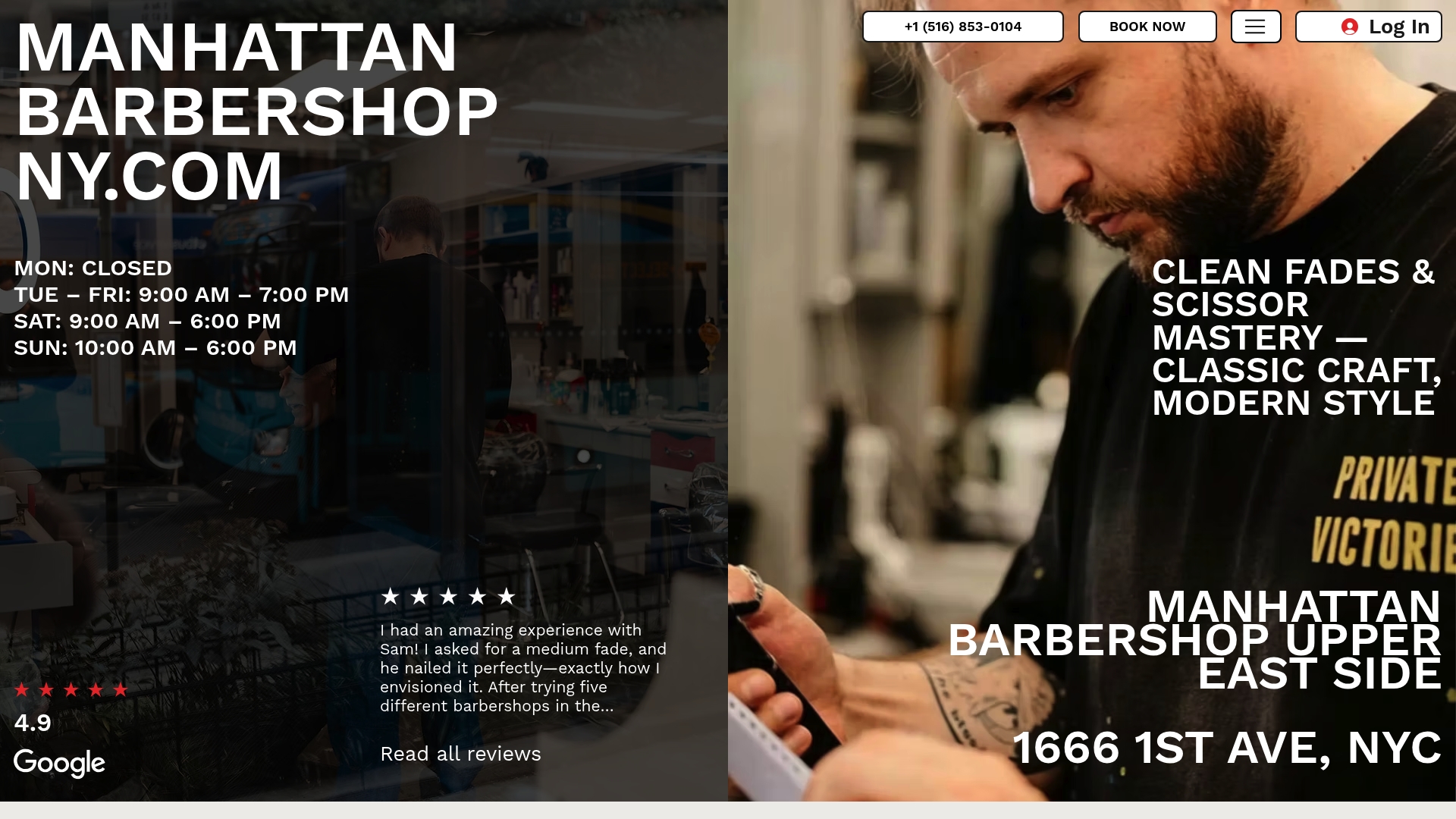
Owner Eugene Solod built the shop around one principle: understand the client’s hair type and lifestyle before touching the clippers. That means every visit starts with a real conversation, not a quick “what are we doing today?” The result is cuts that hold their shape for weeks and styles that are easy to maintain without heavy product use. Pricing is transparent, online booking is available, and walk-ins are welcome for those who prefer flexibility. Book your first appointment or reserve a time online and see what a properly personalized cut actually feels like.
Recommended
Comments