Get a Drop Fade That Lasts 2–4 Weeks: Manhattan Barbershop Tips

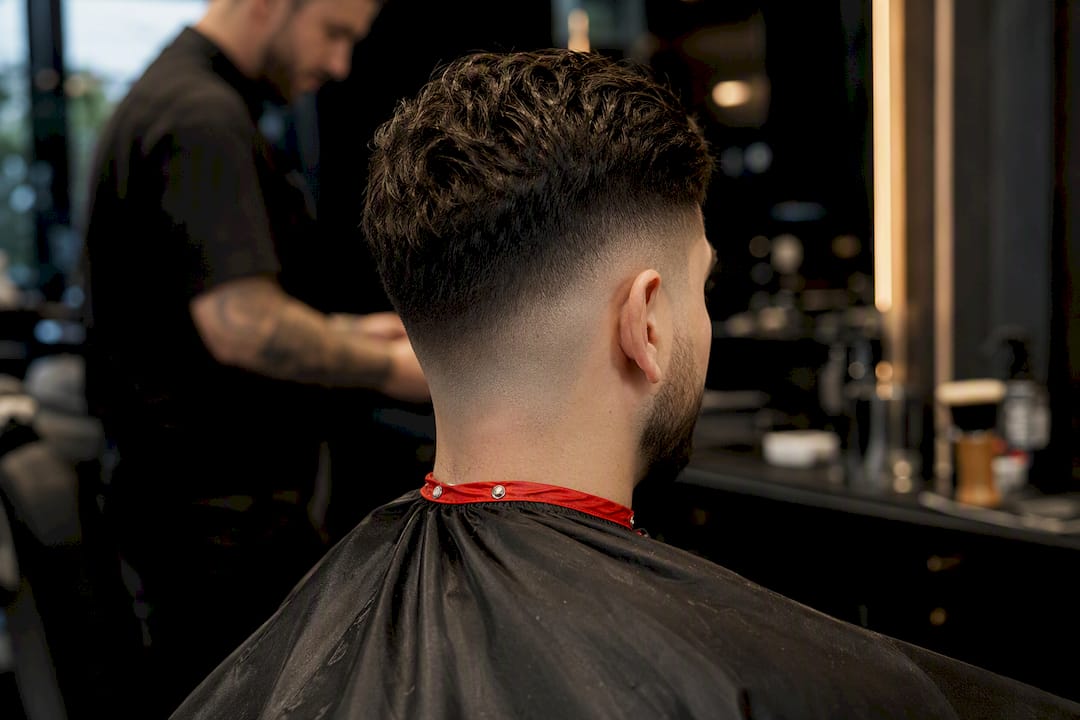
A drop fade haircut is a fade where the guideline curves downward behind the ear, following the natural curve of your skull instead of cutting a straight horizontal line. The dip creates a rounder, more natural silhouette and tends to flatter most head shapes. The trade-off: the lower and sharper the curve, the more often you’ll need to sit back in the chair.
TL;DR:
A drop fade follows the skull’s natural curve behind the ear, creating a rounded silhouette that flatters most head shapes and requires precise execution.
The height of a drop fade—from low to skin—affects its contrast, maintenance schedule, and suitability for different hair growth rates and lifestyles.
Pairing a drop fade with top styles like textured crops, pompadours, or curly tops can enhance the overall look, with contrast and head shape guiding the best choice.
Clear, specific instructions like guard numbers and shape details are essential to achieve the precise curve and symmetrical finish desired from a barber.
Proper maintenance involves timely touch-ups based on fade height, avoiding DIY re-shaping of the curve, and protecting the fade from wear after shaving or exposure.
Table of Contents
Anatomy of a Drop Fade: How It Differs From a Regular Fade
Picture the guideline starting at your temple, running level for a beat, then dipping into a curve that dives behind the ear and bottoms out near the occipital bone, the bony bump at the base of your skull. That drop is the entire point of the style. A regular fade keeps that line straight across the side, which can look sharp but occasionally leaves a flat “shelf” where the hair meets the skin, especially if the back of your head has any prominence.
Following the skull’s actual shape avoids that shelf entirely. A skilled barber traces the arc with the spine of a comb before touching clippers to hair, then works through curved guard progression rather than a single straight pass. That’s the core technique behind a clean drop, and it’s harder to execute than it looks.
A few quick distinctions worth knowing before you sit down:
Regular (taper) fade: straight horizontal line, gradual blend, no dip.
Burst fade: curves around the ear only, often used with fringe or spiky tops, doesn’t extend into a long drop toward the neck.
Drop fade: the curve continues past the ear and drops low toward the nape, creating a longer, more dramatic arc.
Low, Mid, High, and Skin Drop Fades: Which Height Fits You
Height changes almost everything about how a drop fade looks and how often you’re back in the chair. The curve stays the same shape; what shifts is where the fade starts and how close to the scalp it gets.
Low drop fade. Fade starts just above the ear, blending into slightly longer hair (guard #2 to #3, roughly 1/4 to 3/8 inch) at the top of the transition. Subtle, office-friendly, minimal contrast.
Mid drop fade. Starts around the temple, uses a wider range of guards (skin to #2), and shows a more visible curve without going full skin. This is the middle ground most first-timers should ask for.
High drop fade. Starts higher on the side of the head, leaving more scalp exposed and creating sharper contrast against the top length.
Skin (bald) drop fade. Faded down to bare skin at the lowest point of the arc, the most dramatic contrast and the shortest lifespan between cuts.
Pro Tip: If you’re not sure which height to choose, ask for a mid drop fade first. It gives you the visual payoff of the curve without committing to the maintenance schedule of a skin fade, and it’s easy to push lower on your next visit if you want more contrast.
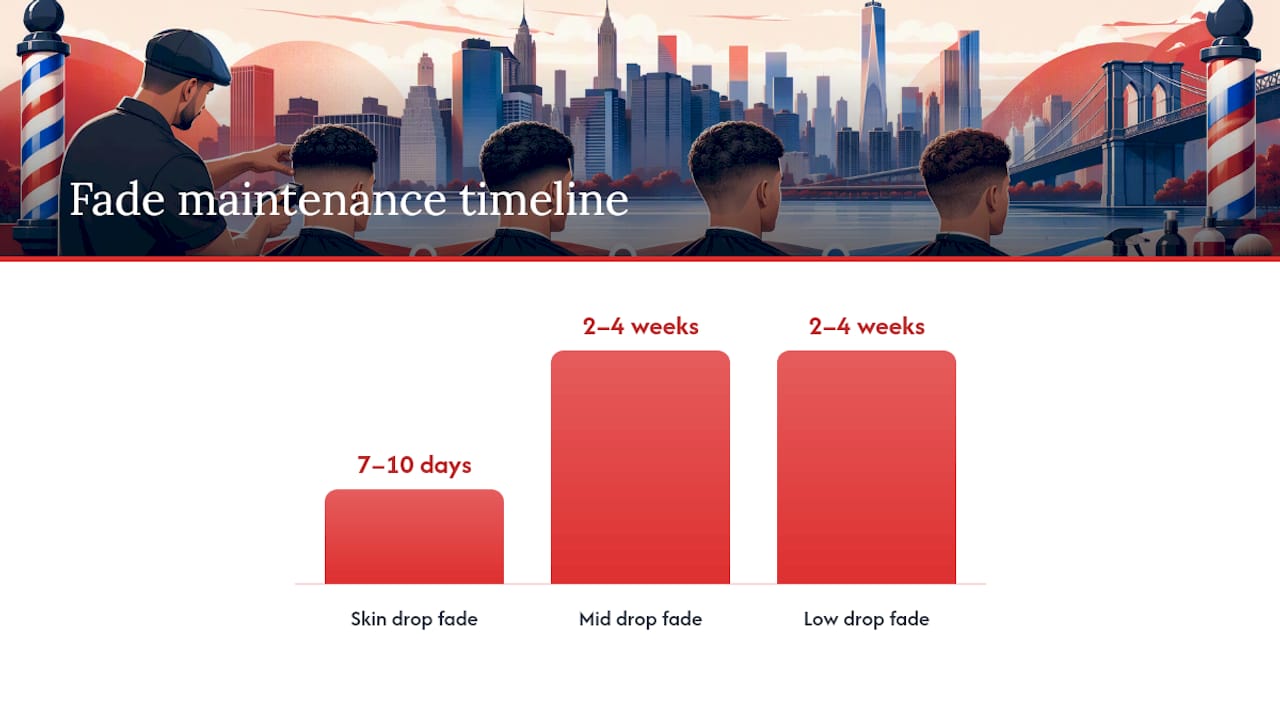
Maintenance tracks directly with height and contrast. Skin drop fades generally need a touch-up every 7 to 10 days, while mid and low versions can often stretch to two, even four weeks depending on how fast your hair grows. If your schedule doesn’t allow biweekly barbershop visits, a low or mid drop is the more realistic choice, not a skin fade you’ll let grow out unevenly.
Best Top Styles to Pair With a Drop Fade
The curved line does a lot of the visual work on its own, but the top style you choose changes the whole finished look. A drop fade pairs well with a wide range of textures and lengths because the rounded outline gives almost any top shape a cleaner frame.
Textured crop: short, choppy top with matte texture paste; the drop fade keeps the sides quiet so the texture reads as intentional, not messy.
Pompadour or quiff: height and volume on top, drop fade underneath to keep the silhouette from looking bulky. Use a pomade with medium hold for the swept-back shape.
Slick back: works especially well with a skin drop fade since the low contrast on top of the head mirrors the sharp arc below the ear.
Curly top: the curve of the fade echoes the curl pattern instead of fighting it. A curl cream or light gel keeps definition without weighing curls down.
Messy fringe: forward, textured bangs over a mid drop fade give a softer, younger look than a fully slicked style.
Mohawk variants: a bolder pairing where the drop fade frames a raised center strip; check out a mohawk if you want something with more edge.
Contrast is the real lever here. A skin base against a longer, textured top reads bold and sharp in photos. A #1 or #2 base against that same top softens everything, which matters if you want something that reads well in an office setting rather than at a club.
Who Actually Suits a Drop Fade: Face and Head Shape Guide
Head shape matters more than most guys realize when deciding on a drop fade. The style works particularly well for clients with a prominent occipital area, the bump at the back of the skull, since the curve visually smooths that prominence instead of drawing attention to it with a straight line.
By face shape:
Round faces: a softer, lower drop reads better than a high, sharp one. Too much contrast up top on a round face amplifies width.
Square faces: can handle a bolder mid or high drop; the strong jawline balances the sharper curve.
Oval faces: the most flexible. Nearly any drop height and top style works.
Long faces: keep some length on top and avoid an overly high fade, which can stretch the face further.
Texture changes what the gradient actually looks like once it’s cut. Straight hair shows the curve crisply and quickly grows out uneven. Wavy and curly hair blur the transition slightly, which is forgiving between appointments. Coily hair often looks best with the fade kept at #1 or higher rather than skin, since very tight coils against bare skin can emphasize any unevenness in the cut. If you have a flatter back of the head or prefer subtlety, ask for a gentler drop or a straight taper instead. Not every head needs the dramatic curve to look sharp.
How to Ask Your Barber for a Drop Fade (Exact Words to Use)
Precision at the chair prevents a bad haircut more than anything else. Vague requests like “give me a fade” leave too much up to interpretation.
Name the shape and height together. Say “mid drop fade” or “low drop fade,” not just “drop fade.” This tells your barber both the curve and where it sits.
Point to where you want the lowest arc. Touch the spot just behind and below your ear where you want the curve to dip.
Specify your bottom length. Skin, 0.5 guard, #1, or #2. Say the number out loud rather than assuming “short” means the same thing to both of you.
Give a top length in inches. “Two inches on top” is clearer than “medium length.”
Ask for checkpoints during the cut. Request a mirror check of the back, confirm both sides look symmetrical, and check that the transition between guard lengths looks blended, not banded.
A drop fade demands adjusted wrist angle and precise guard sequencing to keep that curve smooth, so a good barber won’t mind you asking to see the back before they finish.
Pro Tip: If you spot a visible line or “step” where one guard length meets the next, stop the cut and ask your barber to blend it with a lighter hand or a trimmer on a lower setting. A drop fade should look like a gradient, never a staircase.
Keeping a Drop Fade Sharp: Maintenance and Home Care
Rebooking cadence depends entirely on the height you chose. Skin drop fades need attention roughly every 7 to 10 days; high fades can usually stretch to 10 to 14 days; mid and low drops often go two to four weeks before the line starts blurring.
Daily upkeep is simple but easy to skip. A light, unscented moisturizer on the faded skin prevents dryness and irritation, especially if you’re shaving that area yourself between visits. Avoid letting collars or hats rub directly against a fresh skin fade for the first day or two while any redness settles.
Blurred arc or a visible “shelf” forming where the curve used to be sharp: time to rebook.
Noticeable asymmetry when you check both sides in a mirror: rebook, don’t try to fix it yourself with clippers you don’t know how to use.
Uneven growth making the top and sides blend awkwardly: usually a sign you’ve gone a week or two past your ideal window.
Small touch-ups, like trimming stray neck hair with a trimmer, are fine between visits. Reshaping the actual curve is not a DIY job.
Where the Drop Fade Came From
The drop fade isn’t an old-school barbering standard the way the crew cut or the pompadour is. It gained real traction in barbering communities in the mid-2010s, growing out of the broader fade revival that also popularized burst fades and skin fades during the same stretch.
Its rise tracks closely with two things: the spread of Instagram and YouTube as barbering showcases, and a shift toward styles that photograph well from every angle. A straight fade looks fine from the side but can look abrupt from behind. The curved drop solved that by giving the back of the head a shape that reads as intentional no matter which angle a photo catches.
It also rode the coattails of the broader men’s grooming shift toward more sculpted, deliberate haircuts rather than the buzzed-and-done approach of the early 2000s. Once barbers started treating the fade line itself as a design element rather than just a blend technique, the drop fade became one of the natural results.
Regional barbershop cultures, particularly Latino and Black barbering traditions in urban centers, played a major role in refining the technique and pushing skin-level precision into mainstream demand. The style has since become one of the most requested fade variations, largely because it works across such a wide range of hair textures and top styles.
Beyond Height: Other Ways to Customize a Drop Fade
Height isn’t the only variable. Taper intensity, the speed at which hair shortens from top to bottom, changes the whole feel of the cut independent of where the drop sits. A slow taper blends gradually over a longer distance and looks softer even at skin length. An aggressive taper compresses that same transition into a tighter zone, creating sharper contrast.
Blending style is another lever. Some barbers work in distinct guard steps and then blend the lines afterward with shears or a trimmer on a diffuser attachment. Others use a technique called “fading on the go,” constantly adjusting clipper lever position mid-stroke for a seamless gradient with no visible steps at all. Ask which method your barber prefers; both can look great, but the second usually holds its shape longer as hair grows.
You can also customize the front. A hard part, a shaved line cut into the fade near the temple, adds a graphic element some guys pair with a drop fade for a bolder finished look. Others skip the part entirely for a cleaner, more understated result.
Beard fades are worth mentioning too. Many barbers now blend a drop fade on the head into a matching fade on the beard line, creating one continuous gradient from sideburn to jaw. It’s become one of the more requested combination cuts, especially paired with shorter top styles like a textured crop or mod cut.
Styling a Drop Fade Between Barbershop Visits
The fade itself doesn’t need daily styling, it holds its shape until it grows out. The top is where your morning routine actually matters.
For textured tops, work a small amount of matte paste through damp hair, then let it air dry or blast it briefly with a blow dryer on low heat while scrunching for texture. For pompadours and quiffs, a pomade with medium to strong hold applied to towel-dried hair gives you the volume and hold needed to sweep the front up and back.
If you’re maintaining a skin or high drop fade yourself between professional visits, a trimmer with adjustable guard settings can clean up neck hair and soften minor regrowth along the line, but resist the urge to reshape the curve itself. That’s a two-handed, mirror-and-clipper job that’s easy to mess up on your own head. Stick to detail work: neckline cleanup, stray hairs above the ear, light edging around the hairline.
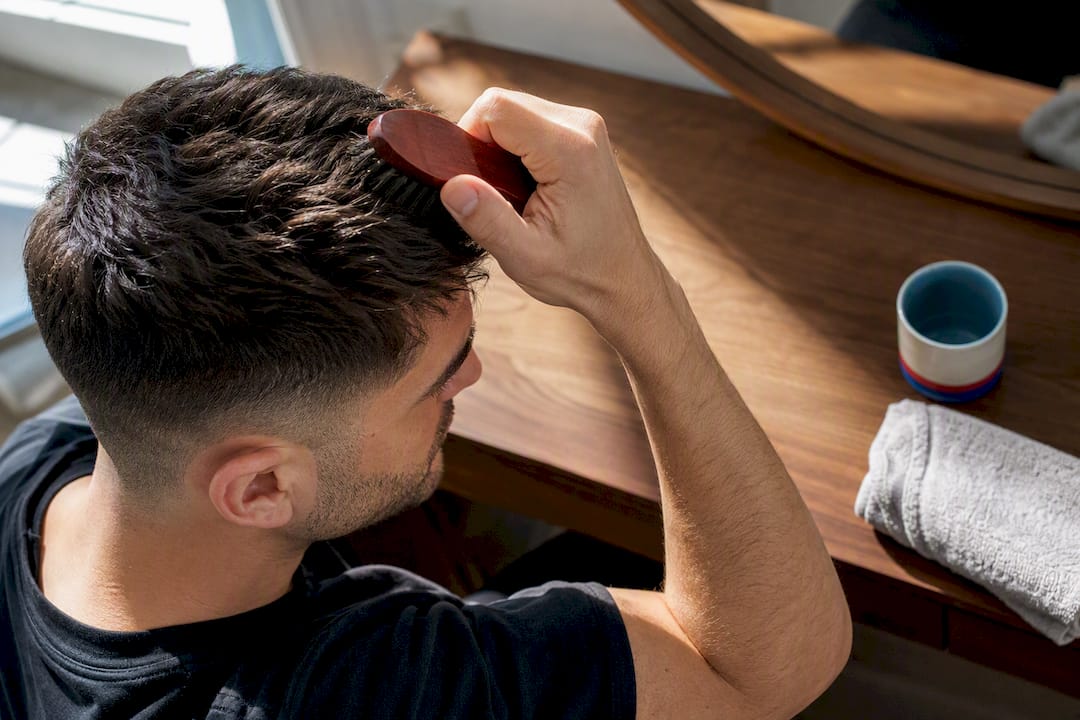
A boar-bristle brush helps distribute natural oils through the top length daily, which keeps hair looking healthier between wash days and reduces the need for heavy product. If your top hair tends toward dryness, a light leave-in conditioner before styling product goes a long way toward keeping texture manageable rather than frizzy.
Mistakes That Ruin a Drop Fade
Most bad drop fades trace back to a handful of avoidable errors, not bad luck or bad hair.
Asking for “a fade” with no shape specified. Without naming the drop and the height, you’re leaving the exact curve entirely up to interpretation, and interpretations vary a lot between barbers.
Skipping the mirror check. A drop fade is hard to evaluate on your own head from the front. Always ask to see the back before the barber calls it finished.
Choosing skin length without accounting for your schedule. A stunning skin drop fade that you can’t maintain for 10 days starts looking rough fast. Be honest about how often you’ll actually get back in the chair.
Ignoring your head shape. A dramatic high drop on a head with a flat occipital area can look strange rather than sharp. Match the height to your actual skull shape, not just a photo you liked.
Letting a new barber freehand it without reference points. If you’re trying a drop fade for the first time with someone unfamiliar with the technique, bring photos and specify guard numbers rather than assuming they’ll interpret “drop fade” the same way the last shop did.
Talking to Barbers Across Different Shops and Regions
Barbering vocabulary isn’t universal, and that becomes obvious the moment you travel or switch shops. What one barber calls a “drop fade,” another might call a “swing fade” or simply describe as “curving it back.” The safest approach anywhere is to lean on guard numbers and physical reference points rather than trusting that a style name will translate perfectly.
In shops with a strong Latino or Black barbering tradition, drop fades and skin fades are often part of everyday vocabulary, and barbers there may already assume a curved line unless you specify otherwise. In shops less specialized in fades, you may need to be more explicit, showing a photo and pointing to where you want the arc to sit.
If you’re getting cut somewhere new, start the conversation the same way regardless of location: name the shape, the height, the bottom length, and the top length, and ask to see the back before you leave the chair. That combination works whether you’re at a corner barbershop or a high-end salon, and it removes almost all the guesswork that leads to a fade you don’t actually want.
The Manhattan Barbershop Approach to a Clean Drop Fade
A drop fade lives or dies on execution, not just the request. At Manhattan Barbershop, the curve gets traced with a comb before clippers ever touch hair, then built through careful guard progression to keep the line clean, with symmetry checked from both sides and the back before calling it finished.
Owner Eugene Solod built the shop around that kind of craftsmanship: fades that hold their shape for weeks, not days, and a consultation that actually accounts for your head shape and hair type before the clippers come out. You can see the shop’s fade standards firsthand on the high-top fade service page or book directly for a consultation on your own drop fade.
— Evgenii
Ready for a Professional Drop Fade? Here’s Your Next Step
Reading about guard numbers and arc placement only gets you so far. Getting the curve right, checking symmetry from the back, and matching the height to your actual head shape takes a trained eye and steady hands, which is exactly where Manhattan Barbershop comes in.

Manhattan Barbershop specializes in clean, natural-looking fades built around your specific hair type and head shape rather than a one-size-fits-all template, so the drop fade you leave with actually holds its line for weeks instead of blurring after a few days. The consultation happens before the clippers do, which means less back-and-forth mid-cut and a finished result that matches what you actually asked for. If you’re new to the shop, check out the free model haircut offer to experience the craftsmanship firsthand, or go ahead and book your appointment online for a drop fade cut the way it’s supposed to look.
Sources
For readers who want to go deeper on technique or explore the style family further, these guides cover the ground this article draws from:
Recommended
Comments