Keep a Straight Hair Fade Sharp 1–3 Weeks: Manhattan Barbershop Scripts

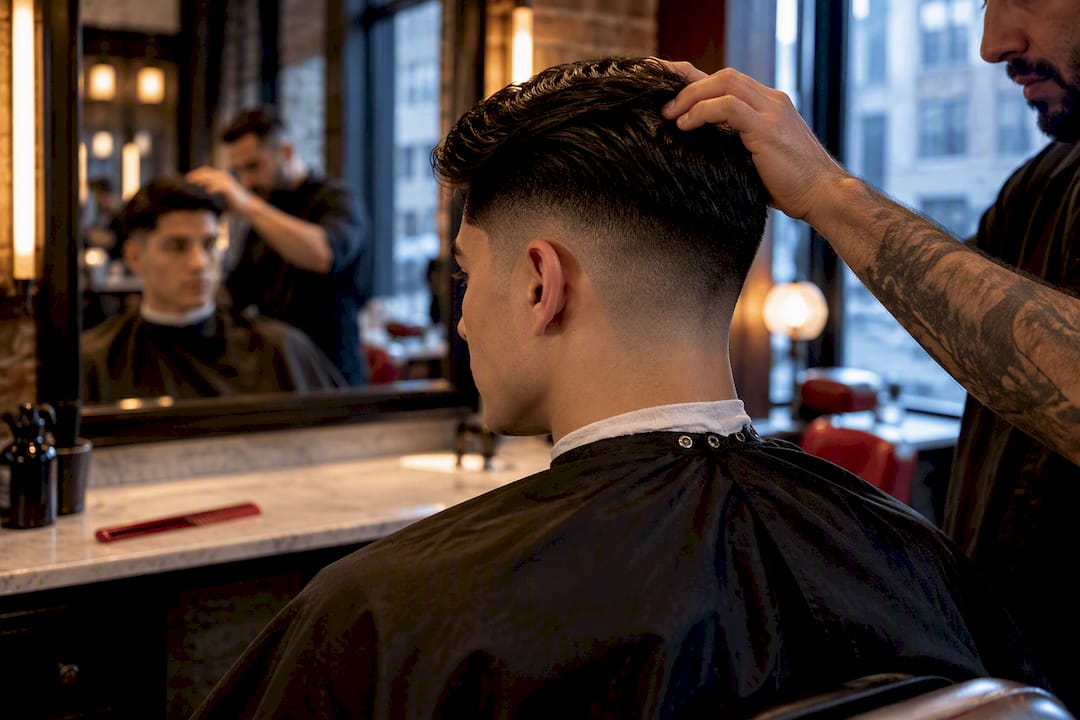
The best fades for straight hair are low-to-high tapers, burst fades, and softened skin fades chosen by density and face shape. Straight strands lie flat and uniform, so gradients read cleanly with no wave to blur the lines. Expect to book a refresh every one to three weeks depending on how sharp you want the blend.
TL;DR:
Fades on straight hair work best when tailored to density and face shape, with high tapers and burst fades showing the sharpest contrast.
Fine hair typically requires softer fades like low or mid tapers to maintain fullness and avoid patchiness, especially with skin fades.
Aggressive fades positioned at high or skin levels need frequent touch-ups every one to two weeks to keep their shape sharp.
Longer or thicker straight hair handles high contrasts better, but style maintenance involves regular trims and proper product use for lift and texture.
Precise communication with your barber about fade start points, guard sequences, and neckline shape ensures a haircut that holds its look over time.
Table of Contents
What Is the Best Fade for Straight Hair?
Straight hair does something curly and wavy hair can’t: it lies down in one direction and shows every line of a haircut without distortion. That’s why barbers often push straight-haired clients toward fades over standard tapers when they want visible contrast. A taper fades down into the natural hairline while a skin fade shaves down to bare skin, which is the core distinction worth understanding before you sit in the chair.
Here are the fades that consistently work on straight hair, ranked by how forgiving they are.
Low taper. The safest starting point for anyone new to fades. It stays close to the hairline, works on any density, and needs a trim roughly every three weeks.
Mid taper. A step up in contrast that still leaves a buffer zone above the ears. Good for medium to thick hair and office environments that want something sharp but not loud.
High taper. This is where straight hair really shows off. It demands trims every one to two weeks to hold its shape and needs root-lifting technique on top, but the contrast on straight strands is hard to beat.
Skin fade (with caution). Skin fades cut all the way to bare scalp, which reads sharp and modern. Fine or light-colored straight hair can look patchy at the shortest point, so ask for a softer gradient or a #1 guard minimum instead of true skin.
Drop fade. The fade line curves down behind the ear rather than staying level, which flatters rounder face shapes and pairs nicely with a longer top on straight hair.
Burst fade. A semicircular fade that wraps around the ear instead of running straight across. Burst fades show especially sharp geometry on straight hair because there’s no wave pattern to soften the curve. Recommended top length runs 3 to 6 inches for a blowout look, or shorter for a textured crop.
Textured crop with taper. Keep the top around 2 to 3 inches, add texture with clippers or scissors, and pair with a low or mid taper for an easy, low-maintenance shape.
Pompadour with taper. A classic build that needs 4 inches or more on top for lift, tapered on the sides for a cleaner transition from vintage to modern.
When you’re describing what you want, mention three things: where the fade should start (temple, ear level, or higher), the guard sequence you’re picturing (a number like #2 to #1, or “skin”), and whether you want the neckline squared off or rounded.
How to Pick the Right Fade for Your Hair and Face
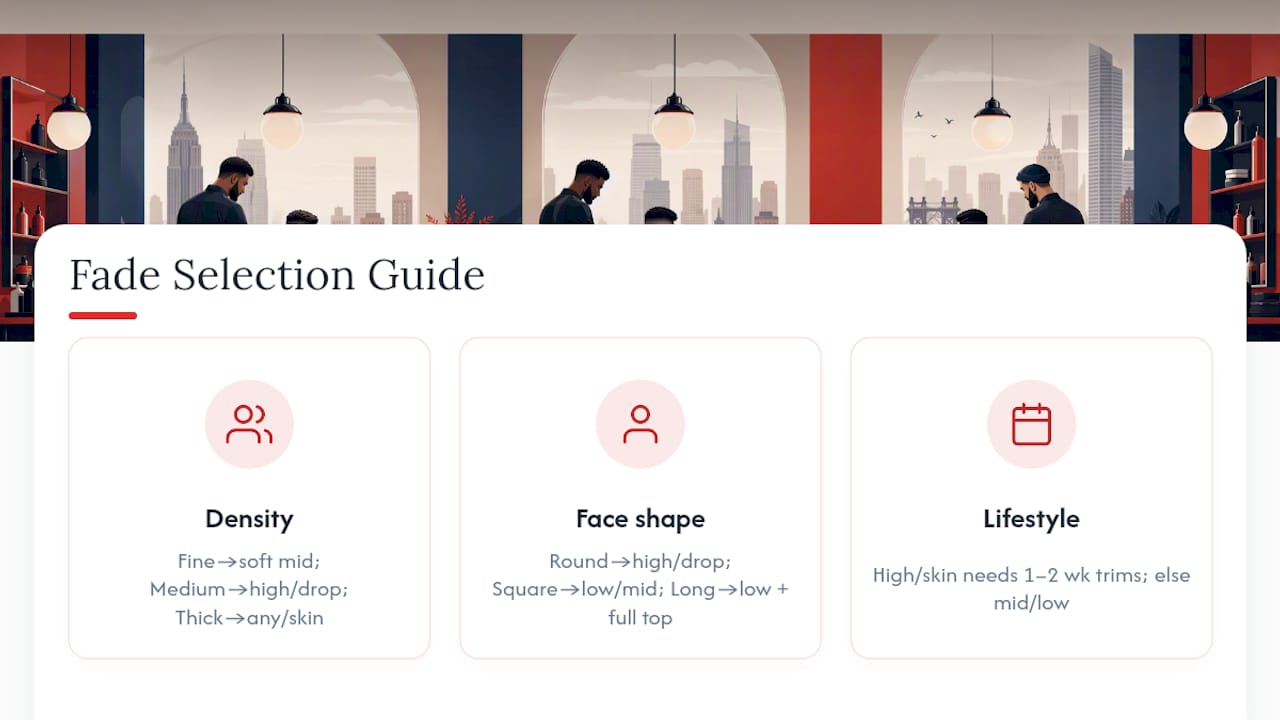
Density decides how aggressive your fade can go. Fine straight hair shows scalp faster at short guard lengths, so a soft mid taper usually looks fuller and holds its shape longer than a skin fade. Medium straight hair handles high tapers and drop fades well because there’s enough strand thickness to create texture on top without looking flat. Thick straight hair can carry almost any fade, including skin fades, since there’s more length above the fade line to balance the contrast.
Face shape changes which height flatters you most. Round faces usually look better with a high taper or drop fade, since the vertical line elongates the face. Square jaws pair well with low or mid tapers that soften the angle instead of sharpening it further. Long or narrow faces benefit from a fuller top paired with a low fade, which keeps the eye moving side to side instead of up and down.
Lifestyle matters just as much as looks. A high taper or skin fade looks incredible for the first week and rougher by day ten, so if you can’t get to a barber every one to two weeks, lean toward a mid or low taper instead. Some workplaces still frown on aggressive contrast, so bring that into the conversation before you commit.
Before you sit down, run through this checklist: pick your density category (fine, medium, thick), pick your face-shape pairing, and be honest about how often you’ll actually book a trim. That third item matters more than most people admit.
Styling a Fade on Straight Hair: Routine and Products
A fade only looks intentional when the top is styled with some direction and lift, not just left flat off the pillow.
The 1 to 3 minute version:
Run a small amount of product through damp or dry hair with your fingers.
Push the roots up and back instead of combing them flat.
Let it air dry for a natural, textured finish.
The 5 to 10 minute version: towel dry hair to about 70%, apply a root volume product, then blow dry upward and back using a round brush. Finish with a cool shot from the dryer to lock the shape, then work a small amount of product through with your fingers.
Product choice should match your density, not just your style preference:
Fine straight hair: a light mousse applied at the root, not the ends. It adds body without weighing hair flat.
Medium straight hair: a texture clay for definition and a slightly matte finish.
Thick straight hair: a stronger pomade or paste to control volume and hold shape through the day.
The most common mistake is reaching for a heavy pomade on fine hair. It flattens the volume a fade needs to look sharp. If your hair looks greasy or collapsed by midday, switch to a lighter product and apply less of it, closer to the roots than the ends.
How Long a Fade Lasts and How to Care for It Between Visits
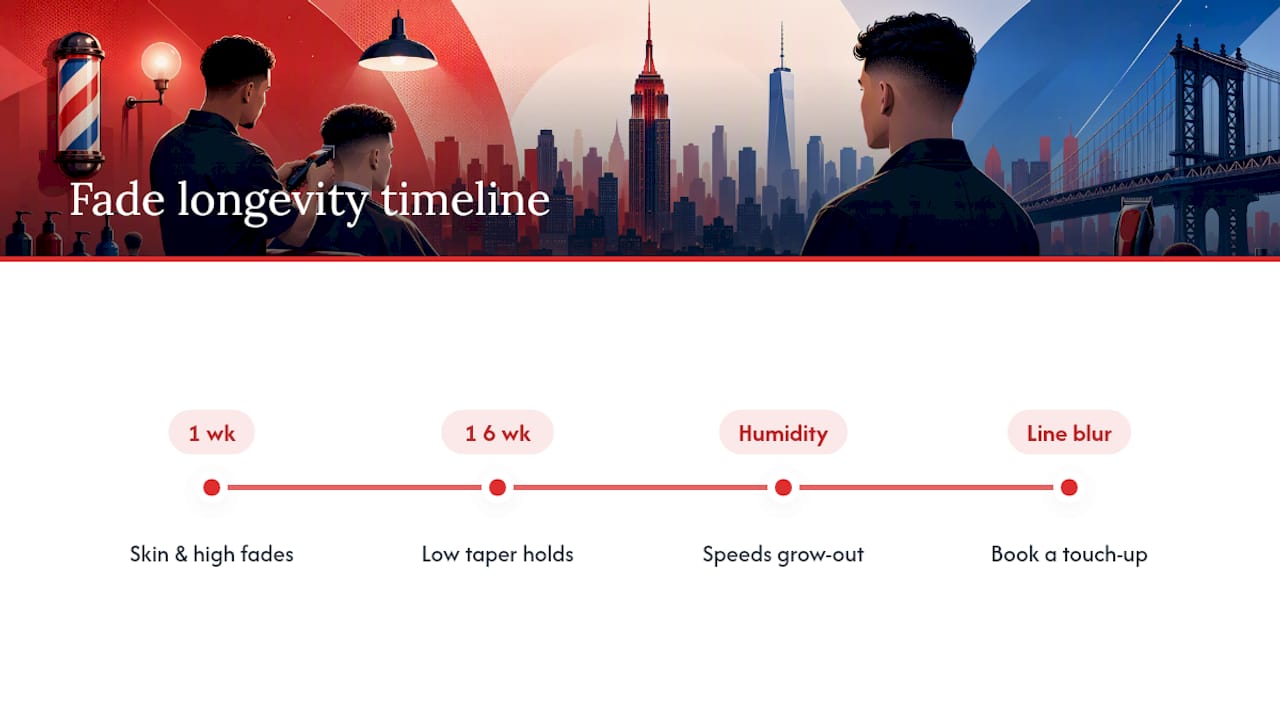
Straight hair grows out visibly fast, which shortens how long a fade stays crisp compared to other hair types. Skin fades and high fades can start looking grown out within about a week, while low taper fades can hold their shape for up to a few weeks depending on density and growth rate. Humidity speeds this up further, so if you live somewhere hot and damp, plan on the shorter end of that window or choose a less aggressive fade to begin with.
Between visits, stick to safe maintenance only. Brush daily to keep the top looking styled, moisturize your scalp if it gets dry, and protect the cut at night with a satin pillowcase or durag to cut down on friction. Wash with a strong shampoo no more than once or twice a week so you don’t dry out the scalp right where the fade is shortest.
Don’t try to re-blend the fade line yourself. Attempting to clean up the gradient at home is one of the most common ways people permanently mess up the shape of a haircut. Clean the very edge of the neckline if it’s bothering you, and leave everything above that to your barber. Book a touch-up when the line starts to blur, and save the full trim for when the top has grown out enough to lose its shape entirely.
Barber Scripts and Upkeep Rules for Straight Hair Fades
Walking in with the right words saves you from walking out with the wrong cut. Try this: “Start the fade at the temple, guard sequence from a 3 down to a 1, skin at the very bottom, and square off my neckline.” For something softer, swap “skin at the bottom” for “keep a 1 guard minimum” if you have fine or light-colored hair, since that avoids the patchy look a true skin fade can create on thinner strands. You can find more full phrasing examples in this guide to describing your fade to a barber.
Do at home: brush daily, moisturize your scalp, and clean the very edge of the neckline between visits. Don’t do at home: attempt to re-blend the fade gradient yourself, over-wash with harsh shampoo, or skip trims past the two-week mark on aggressive fades.
Pro Tip: Match your fade’s aggression to your hair color and density. Light, fine straight hair shows scalp faster at short guard lengths, so a softer blend or a 1 guard minimum is usually recommended instead of true skin for that hair type.
A Barber’s Take on Tailoring Fades to Straight Hair
Straight hair rewards precision. A fade cut without accounting for density and growth pattern looks sharp for three days and messy for the next ten. Getting the guard sequence and start point right the first time is what makes a cut hold its shape for weeks instead of days. If you want a fade built around your actual hair, not a generic template, book a consultation and we’ll walk through it together.
— Evgenii
Book a Fade That Actually Holds Its Shape
You’ve read what makes a fade work on straight hair. Getting one that holds requires a barber who adjusts guard sequences and blend points to your exact density instead of running the same template on every head. This barbershop is built around that kind of tailoring: clean fades, personalized consultations, and cuts designed to keep their shape for weeks rather than days.

If a high taper caught your eye, the High-Top Fade service is priced at $42. Want more length on top with a tapered side? The Crop is also $42 and pairs well with a low or mid fade for fine straight hair. A standard Regular Haircut runs $42 as well, and every appointment starts with a quick consultation so your barber can match the fade height and guard sequence to your density before a single clip touches your head.
Plan on a touch-up every one to two weeks if you go with an aggressive fade, or every three weeks for a softer taper. Book your appointment online and get a cut built around how your hair actually grows, not a one-size template.
Sources
FAQ
Which Fade Is Best for Straight Hair?
Low-to-high tapers, burst fades, and softened skin fades all work well because straight strands show the gradient line with no wave to blur it. Fine or light-colored hair usually looks better with a taper or a soft blend rather than a true skin fade.
Are Fades Out of Style in 2026?
No. Fades remain one of the most requested men’s cuts, and the taper, burst, and drop variations continue to dominate barbershop bookings because they flatter nearly every face shape and density.
What Is Better, a Fade or a Taper?
Neither is universally better. A fade cuts down to bare skin while a taper shortens hair down to the natural hairline, so a fade gives higher contrast and a bolder look, while a taper is softer and easier to maintain between trims.
What Does a 3:2:1 Fade Look Like?
There’s no single fixed definition for a “3:2:1 fade.” It generally refers to a guard sequence, moving from a #3 guard down to a #2 and finishing at a #1, blended into a gradual fade rather than a hard line. Bring the exact numbers to your barber so they can adjust the sequence to your density.
Recommended
Comments