Say This in the Chair: Curly Haircuts for Men by Curl Type

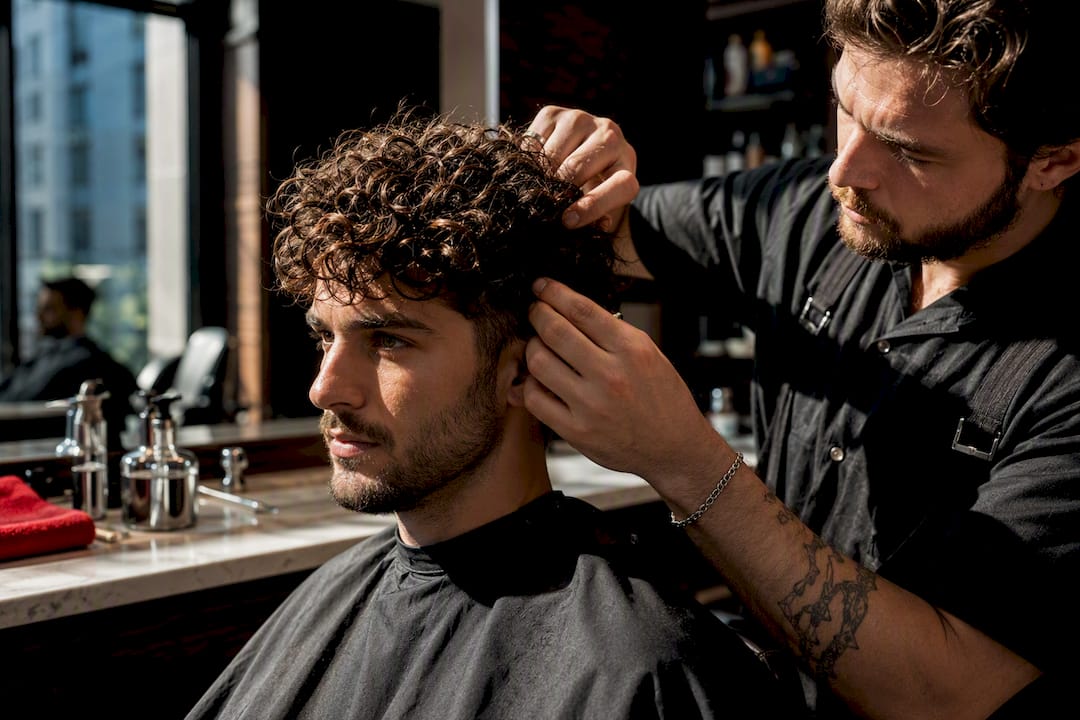
For most men with 2C to 3B curls, the curly taper fade or textured crop is the safest first cut because it keeps the curl pattern intact on top while cleaning up the sides. If your coils run tighter than that, or you’d rather skip the barbershop every three weeks, a low-maintenance fade or a longer, loosely layered style will serve you better.
TL;DR:
Most men with curl patterns between 2C and 3B should choose textured crops or curly taper fades for low-maintenance, shape-retentive looks that last weeks.
Longer styles like man buns, long layers, or the modern mullet require regular deep conditioning and careful shaping to avoid a pyramid or uneven growth.
Choosing a cut based on your specific curl type, face shape, and lifestyle results in more reliable and flattering outcomes than style-focused decisions alone.
Proper product routines tailored to curl patterns, avoiding overbrushing and thinning shears, help maintain shape and reduce frizz between barber visits.
Dry cutting using precise language and clear communication with the barber ensures your curly style holds its shape and matches your expectations.
Table of Contents
Haircuts for Curly Hair Men: Best Short Styles by Curl Type
Short cuts win for curly guys because less length means less weight pulling the curl pattern loose, and less time spent styling every morning. Here are the five that come up again and again in barber chairs, matched to who they actually flatter.
Textured crop. Works well on 2B to 3B curls and suits round, oval, and square faces. Regular trims every few weeks help keep the fringe from flopping over. Barber script: “Keep the top at two to three inches, texturize with scissors, and taper the sides tight.”
Curly taper fade. This is the most accessible starting point across nearly every curl type because the fade frames the curls without touching their shape on top. It reads sharp on angular faces and softens a square jawline. Barber script: “Low taper fade on the sides, leave the top full for scissor work.”
Curly crew cut. A good fit for 2A to 3A waves and curls, and for guys who want something that survives a gym bag and a hat. Use a light curl cream, not gel, so the shorter length doesn’t stiffen up. Barber script: “Crew cut length on top, blend the sides with clippers.”
Buzz with texture. Best for 3B to 4A patterns when you want almost no morning routine at all. A small amount of curl-defining cream on damp hair is usually all it needs. Barber script: “Buzz to a number two, leave a little length on top for texture.”
Tight curl fade and short afro fade. Suited to 4A through 4C coils, usually cut with a guard between a one and a two on the sides, fading into a rounded or flat top depending on preference. Barber script: “Afro fade, guard one and a half on the sides, round the top.”
Every one of these holds its shape for weeks with minimal upkeep, which is exactly why barbers reach for them first when a client says they’re tired of fighting their hair.
Medium-Length Curly Hairstyles That Give You More to Work With
Medium length trades a little maintenance for a lot more versatility. These cuts suit guys who want to switch up their look day to day, not just wear the same shape on repeat.
Curly bro flow. Suits 2B to 3B curls and works especially well on longer face shapes, letting the curls fall forward and frame the face.
Curly quiff. A strong pick for 2A to 3A texture on rounder faces, since the height adds length visually.
Shag or wolfcut. One of the styles trending heavily through 2026, built on heavy layering that flatters 3A to 3C curls and almost any face shape.
Broccoli cut. Best on 3B to 4A curls with round or oval faces, relying on rounded, even layers all over.
Curtain bangs. Works on looser 2B to 3A waves and softens square or angular features.
Pro Tip: Ask your barber to check the shape while your hair is dry, not just wet. Curls shrink as they dry, and a cut that looks even wet can turn lopsided once it springs back.
Layering is what keeps these styles from turning into a triangle. Ask for weight removed through the crown, not just at the ends, and use a lightweight cream on damp hair before diffusing to keep the shape without weighing curls down.
Long Curly Haircuts for Men Willing to Commit
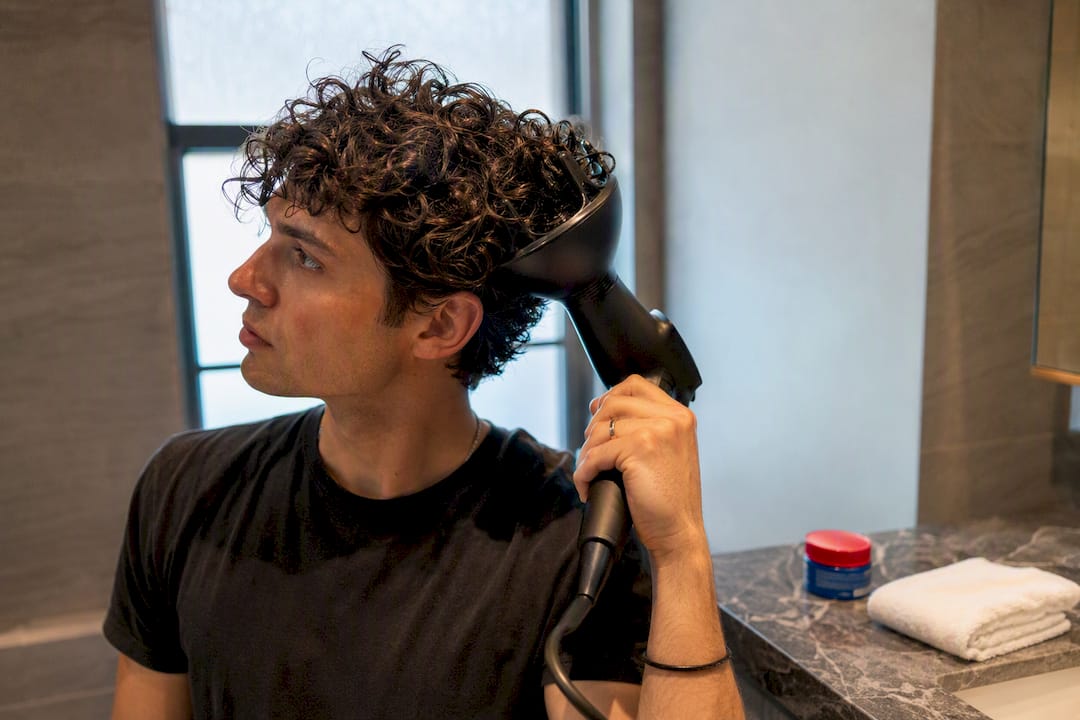
Long curls reward patience but punish neglect. Growing out curly hair without a plan almost always ends in a pyramid shape, heavy at the bottom and thin on top.
Long layered styles suit 2A to 3B curls on oval or heart-shaped faces, with layers distributed evenly to avoid bulk at the ends.
Man buns work best on 3A to 4B texture once you have at least four inches of length to pull back.
Modern mullet is another 2026 favorite, especially on 3B to 4A curls, mixing short sides with dramatic length in back.
Free-flowing manes suit looser 2B to 3A waves on most face shapes, provided you’re committed to regular deep conditioning.
A leave-in conditioner followed by a diffuser on low heat is the combination most curly-hair guides recommend for keeping long curls hydrated instead of frizzy.
The Curl-to-Cut Framework: How to Pick Your Style
Choosing a cut without a plan is how most men end up with a haircut that looks nothing like the photo they brought in. The Curl-to-Cut Framework fixes that by working through three variables in order, instead of picking a style first and hoping it fits.
Step one: identify your curl type. Wet your hair and let it air dry without touching it. Loose S waves land around 2A to 2B, springy ringlets sit at 3A to 3C, and tight coils that shrink dramatically fall in the 4A to 4C range.
Step two: pick a length based on lifestyle, not just looks. Short cuts fit guys who want low upkeep; medium and long styles fit guys willing to spend more time on products and trims.
Step three: match the cut to your face shape, then set realistic maintenance expectations before you sit in the chair.
Barbers who ask about your daily routine, humidity exposure, and activity level before cutting tend to deliver styles that actually hold up outside the shop, not just under studio lighting.
Use this checklist in the chair:
Confirm your curl type out loud before the barber picks up scissors.
Ask for point cutting, never thinning shears, to remove bulk.
Request dry shaping if your curl pattern is tight or unpredictable.
Bring a reference photo of curls similar to yours, not straight hair styled curly.
A framework that works across curl types: guides that combine curl-type matching with scissor-on-top technique and taper or fade sides on the perimeter consistently produce more reliable results than cuts chosen on style alone.
Styling and Product Routines by Curl Type
Your product routine should match your curl pattern, not a one-size-fits-all bottle from the drugstore. For a deeper breakdown of how texture affects cut and care, this curl type guide walks through the categories in more depth.
2A to 2C waves: a lightweight mousse or sea-salt spray on damp hair, scrunched upward, then air-dried or diffused on low.
3A to 3C curls: a curl cream followed by a gel for hold, applied to soaking wet hair and scrunched before diffusing.
4A to 4C coils: a heavier leave-in and a curl butter, applied section by section to control shrinkage and lock in moisture.
Pro Tip: Apply product to dripping wet hair, not towel-dried hair. Curls absorb product better before they start losing water, which means less frizz once they dry.
The most common mistake across every curl type is overbrushing once hair is dry, which breaks up the curl clump and causes frizz. A close second is letting a barber use thinning shears, which weakens the curl loop over time instead of simply removing weight.
Barber Scripts: Exactly What to Say for Popular Curly Cuts
Precise language in the chair prevents the most common miscuts. Try these:
“Low fade on the sides, scissor-cut top, no thinning shears.”
“Guard two on the sides, blend into a rounded top.”
“Cut it dry so you can see how the curls actually fall.”
“Point cut to remove bulk, don’t thin it out.”
“Taper fade starting above the ear, leave three inches on top.”
“Diffuse dry, then shape around the natural curl pattern.”
Cutting curly hair dry or slightly damp lets the barber see the true finished shape instead of guessing at shrinkage. Before scissors touch your hair, confirm the guard number on the sides and ask whether the barber plans to cut wet or dry.
Keeping Your Curly Cut Looking Sharp Between Visits
Trims should be done periodically according to your scalp and hair-clinic care needs to control split ends and maintain shape, with shorter styles needing more frequent trims than longer curls.
Sleep on a satin pillowcase or loosely pineapple your curls at night.
Apply a light leave-in before bed if your hair tends to dry out overnight.
Refresh curls with water and a small amount of product between wash days.
Book a shape-up appointment once you notice the sides growing past the fade line.
Barber Perspective: Rules That Actually Prevent Bad Curly Cuts
Three rules guide every curly cut at the chair: scissors on top to preserve the loop, dry cutting whenever the curl pattern allows it, and no thinning shears, ever. Clients who mention their routine and activity level upfront get better results.
— Evgenii
Book a Curly Cut That Actually Holds Its Shape
Every curly consultation should be treated as a two-way conversation, not a five-minute clipper job. Before scissors come out, tell your barber your curl type and how much time you’re realistically willing to spend styling each morning. That single detail shapes everything from guard length to whether the cut gets scissored dry or wet.
Clients get a personalized consultation, dry shaping when the curl pattern calls for it, and a maintenance plan built around their actual schedule. Walk-ins are welcome, but booking online guarantees you get a chair without waiting. If you want to see the shop’s approach to specific cuts first, the Manhattan Cuts Magazine has more before booking your first appointment through the free model haircut offer.
Sources
Recommended
Comments