Five Minute Fix for a Receding Hairline: Barber Cuts & Guard Numbers

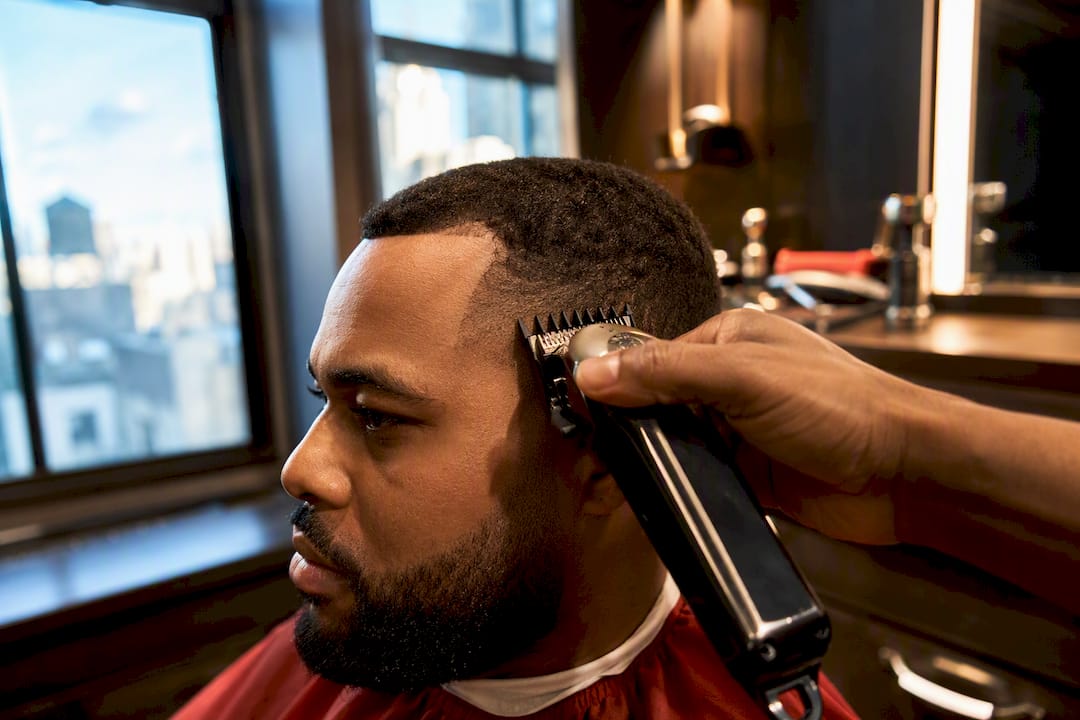
The best fix for a receding hairline isn’t a longer style that hides it. It’s a shorter, textured cut that owns it: a buzz cut if your hairline has moved back significantly, or a textured crop or high fade if you’ve still got density up top. Which one depends on your hairline stage and your hair texture, and a five-minute consultation with a barber who knows both will get you there faster than guessing on your own.
TL;DR:
Short, matte, and structured cuts like buzz cuts, crew cuts, or fades are recommended as they reduce contrast and draw attention away from the receding hairline.
For moderate to advanced recession, a buzz cut with guard #1 to #3 is the most reliable option, needing maintenance every two to three weeks.
Early-stage receding with density can be effectively managed with textured crops, Caesar cuts, or Ivy League styles, which require regular refreshes every three to five weeks.
Styling should avoid shine-heavy products and instead focus on matte pastes or powders to create the appearance of thicker hair and minimize scalp visibility.
Honest assessment of your hairline stage and maintenance willingness is crucial; styles that choose length to hide recession tend to attract more attention and less confidence.
Table of Contents
Haircuts for a Receding Hairline: What Barbers Actually Recommend
Male pattern hair loss commonly appears as a receding hairline and is highly prevalent by middle age, and it almost always starts at the temples before it touches the crown, according to clinical literature on androgenetic alopecia. That’s the biology. The styling fix is simpler than most guys assume: short, matte, structured cuts reduce the visual contrast between hairline and scalp, while long hair on top does the opposite, according to the American Academy of Dermatology. Barbers who specialize in this call it “leaning into” the recession instead of fighting it, according to The Manual.
Here are the cuts that actually deliver on that idea, matched to hairline stage and hair type.
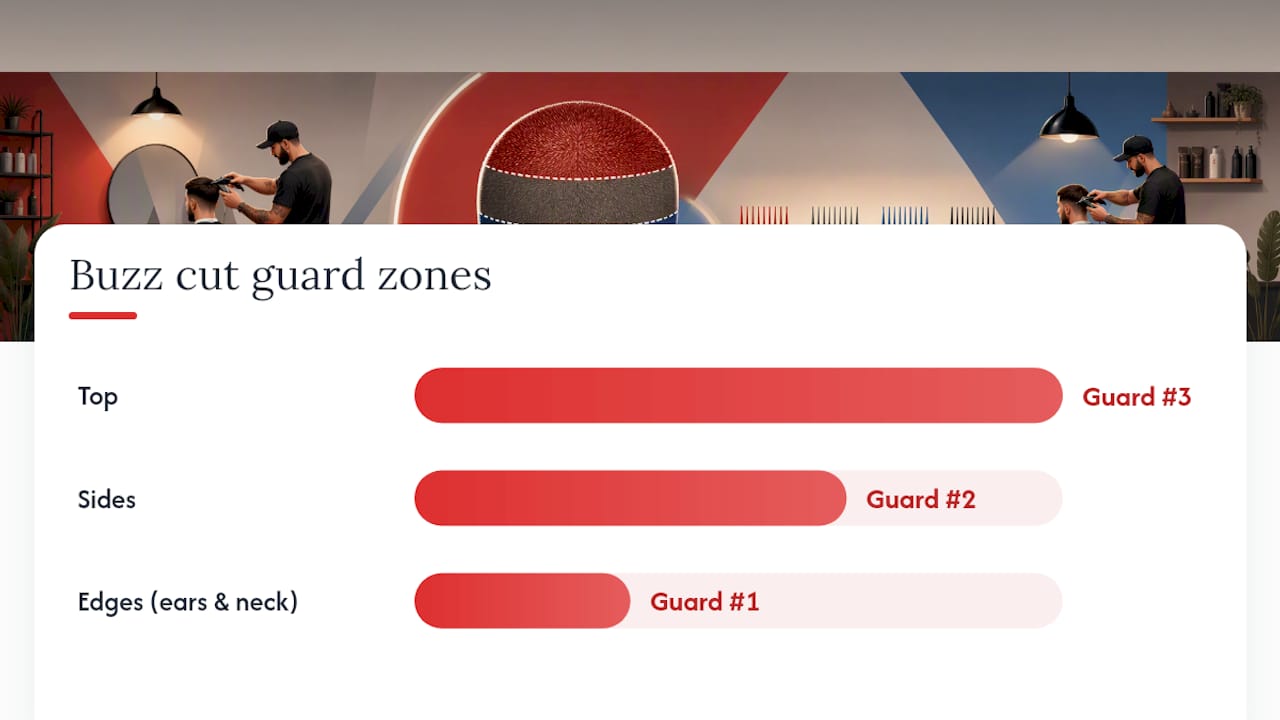
Buzz cut (guard #1 to #3). This is the default answer for moderate to advanced recession, and for good reason: uniform length everywhere erases the line where scalp meets hair, so there’s no contrast for the eye to catch. A common barber shorthand here is the “3:2:1” approach: a #3 guard on top, #2 on the sides, #1 around the ears and neck, according to Modern Man Barber Studio. It works on any texture and suits every face shape, though round faces benefit from keeping the sides slightly shorter than the top to add visual length. Tell your barber: “3 on top, 2 on the sides, 1 around the edges, and no visible line between them.” Maintenance runs every two to three weeks since a buzz grows out fast enough to lose its shape.
Crew cut. A longer top (usually three quarters to one inch) with tapered sides gives you more to work with than a buzz while still reading as clean and deliberate. It flatters oval and square faces particularly well and works best on medium to coarse hair, since fine hair can look thin once it grows past half an inch. Ask your barber for “a crew cut with a taper, not a full fade, and keep the top textured rather than blunt.” Expect to return every three to four weeks.
Textured crop, French crop, or Caesar. These three are close cousins: short length overall with a slightly heavier, choppy fringe at the front. A forward fringe can soften an early-stage hairline by breaking up the straight recession line, but it stops working once density at the front thins out too much, at which point the fringe just looks patchy. This is a style for early to mid recession only, not advanced. Say to your barber: “Caesar crop, texturize the front with scissor over comb, keep it short enough that it doesn’t lie flat.” Get it refreshed every three to five weeks.
Taper fade, high fade, or high and tight. Fades don’t cover the hairline, they redirect attention downward toward the fade line instead, which does a lot of the visual work a comb over tries and fails to do. A high fade paired with a slightly longer top (one to two inches) gives you styling flexibility while the shaved sides keep the whole look sharp. This suits most face shapes and works with fine to coarse hair, though very fine hair looks best kept shorter on top to avoid separation. Tell your barber: “high fade, skin on the sides above the ears, leave enough length on top to add texture with product.” Fades need a touch up every two to three weeks to stay crisp.
Ivy League or short quiff. If your recession is genuinely early (still mostly at the temples, crown intact) a slightly longer top with a side part or soft quiff can still work, provided the front isn’t relying on length to hide anything. This is the riskiest option on this list because it’s the easiest to get wrong: too much length up front and you’re one bad hair day from a comb over. Best for medium to thick hair only. Ask for “an Ivy League with a hard part, keep the front short enough to stand up on its own.” Trim every four weeks to keep the length from getting away from you.
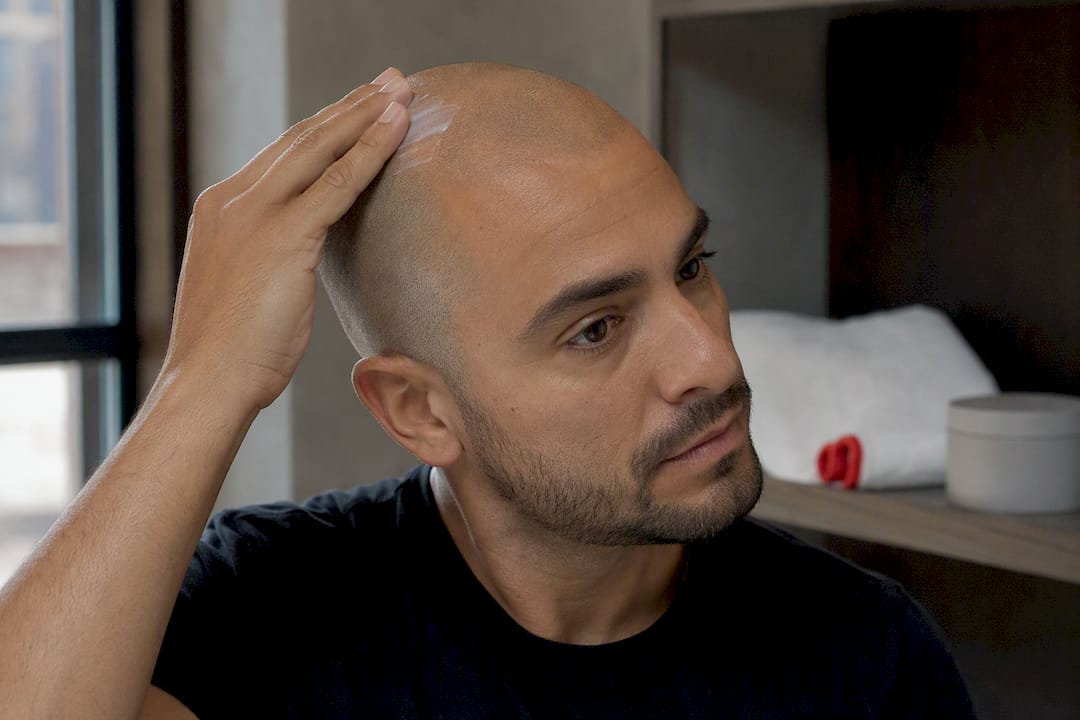
Shaved head or close shave. For advanced recession or diffuse thinning across the whole scalp, a full shave is often the cleanest, lowest maintenance option, and it reads as a deliberate choice rather than a concession. Works with any face shape, though a well-defined jawline photographs better with it. Ask your barber about scalp care, not styling, since a shaved head is really a skin maintenance routine (moisturizer, sun protection) more than a haircut. Reshave every five to seven days if you want a truly clean look, or every ten to fourteen days for stubble.
Pro Tip: Bring a photo of the cut you want, but also tell your barber your hairline stage honestly. A photo of a full head of hair styled a certain way tells your barber almost nothing about how that same length will sit on your specific recession pattern.
How to Pick the Right Cut for Your Hairline
Start with an honest look in good lighting, ideally with wet hair pushed back so you can see exactly where the hairline sits.
Assess your stage. Temples receding but the frontal hairline still roughly straight across the top points you toward a crop, Caesar, or Ivy League. A hairline that’s moved back into an “M” shape or a thinning crown means a fade or crew cut works better. Recession that’s advanced across most of the scalp usually means a buzz cut or shave gives the most reliably good result, an approach barbering guides consistently point to for later Norwood stages, according to haircutsuitsme.
Match your texture. Fine hair looks best short since length exposes gaps between strands. Medium hair has the most flexibility across every style on this list. Coarse or curly hair holds shape well even at slightly longer lengths, which is why crew cuts and crops work particularly well on it.
Check the fit against your face shape. Round faces want height and shorter sides. Long or oblong faces do better with a bit more width at the sides and less height. Square and oval faces can wear almost anything, which is a genuine advantage if your face shape falls here.
Be honest about your maintenance tolerance. A shaved head is a five-minute daily job with a razor. A crew cut needs a comb and five minutes of styling before you leave the house. If you’re not going to put in the daily effort, buy the buzz cut or fade over the crop.
Walk in with three phrases ready: “match the guard numbers exactly on both sides,” “keep the top textured, not blunt,” and “no visible line where the hair changes length.” Ask your barber three things back: how often you’ll need to return, whether your texture holds this style well, and what a bad day with this cut looks like.
If a barber suggests growing the top out to “cover” the hairline or offers a heavy product routine as a fix instead of a haircut, that’s a red flag. Those approaches almost always draw more attention to the recession, not less.
Styling That Builds the Look of Density Without Shine
The product side of this matters almost as much as the cut itself. Lightweight, matte products create the appearance of thicker hair; shiny, heavy ones flatten strands against the scalp and make thinning more visible, according to InStyle.
Matte paste or clay for buzz cuts, crew cuts, and fades: a pea sized amount worked in at the roots first, then through the ends, gives texture without weight.
Texture powder for anyone with fine hair wanting extra lift at the crown: apply directly to dry roots and work in with fingertips before any other product.
Sea salt spray for crops and Caesars needing a looser, more tousled finish: spray onto damp hair, then blow dry with fingers to rough it up.
Light mousse for slightly longer styles like the Ivy League that still need hold without stiffness.
Skip pomades, oils, or anything labeled “high shine.” They look great on thick hair and work against you on thin hair, since shine on a flat surface reads as scalp, not hair. Heavy conditioners cause the same problem by weighing hair down.
Pro Tip: Apply any product to slightly damp, not dry, hair. It distributes more evenly and avoids the clumping that makes thin sections look even sparser.
Refresh your cut on the schedule that matches your style: buzz cuts and fades every two to three weeks, crops and crew cuts every three to five weeks. Waiting past that window is when a good cut starts looking neglected.
Mistakes That Make a Receding Hairline More Obvious
Some habits do real damage to an otherwise good haircut, and they’re worth naming directly.
Comb overs and long wispy fringes. Both rely on length to hide skin, and both fail the moment there’s wind, sweat, or humidity in the room.
Slicked back, wet looking styles. Gel and high shine finishes increase the contrast between hair and scalp instead of softening it.
Over processing or tight, pulled back styles. Bleaching, heavy layering at the front, or tight man buns and slick ponytails add mechanical stress right at the hairline, which can accelerate thinning through traction.
Waiting too long between cuts. A buzz cut two weeks past due stops looking intentional and starts looking neglected, which undercuts the entire point of the style.
What We See Behind the Chair at Manhattan Barbershop
Every consultation here starts the same way: we look at where your hairline actually sits, how your hair sits when it’s dry versus wet, and how your face is built before a single clipper guard comes out. A guy who thinks he needs a shave often has enough density at the crown for a fade instead. Someone convinced he needs length to “hide” his temples usually looks better and more confident with a Caesar crop that works with the recession rather than around it.
Your first visit is a real consultation, not a rushed five-minute trim. We talk through your hairline stage, your hair’s texture, and how much daily styling you’re actually willing to do, then we build a maintenance plan around your answer, not a guess. Most guys leave surprised at how much better a shorter cut looks than the longer one they’d been clinging to.
— Evgenii
Ready for a Cut That Works With Your Hairline, Not Against It
Our barbershop specializes in tailored, low-product fades and textured crops, with a focus on thorough consultations before cutting. This approach contrasts with a generic trim by focusing on styles suited to your hairline stage and texture, aiming for ease of maintenance.

Come in knowing your rough hairline stage and how much daily styling effort you’re willing to put in. Your barber will handle the rest, including guard numbers, fade height, and top texture, and walk you through a maintenance plan before you leave the chair. First time in the Upper East Side? Try the free model haircut program or go straight to booking an appointment online. If you’re already leaning toward a high fade, the high-top fade service page breaks down exactly what that cut involves before you sit down. And if a new cut is going toward a professional headshot, this headshot styling guide for men is worth a quick read beforehand.
Sources
For medical context beyond styling, the American Academy of Dermatology’s hair loss treatment page covers when to see a dermatologist and what treatment options actually exist. The NCBI clinical overview of androgenetic alopecia explains the biology behind pattern hair loss in plain enough terms for a non-specialist. For style inspiration matched to hairline stage, haircutsuitsme’s guide and The Manual’s grooming feature are both worth a look before your next appointment.
FAQ
What haircut should I get if I have a receding hairline?
A buzz cut works best for moderate to advanced recession, while a textured crop, Caesar, or high fade suits earlier stages with more density up top. The right pick depends on your hairline stage and hair texture, which a barber can assess in a few minutes.
What is the best haircut for a receding hairline?
There’s no single universal answer, but short, matte, texturized cuts consistently outperform anything long or slicked back because they reduce the visual contrast at the hairline, according to the American Academy of Dermatology. For most men, that means a buzz cut, crew cut, or high fade.
Can hair regrow on a receding hairline?
Naturally, no. Androgenetic hair loss doesn’t reverse on its own, though medical treatments exist and require a conversation with a dermatologist rather than a stylist, according to the American Academy of Dermatology. A good haircut manages the appearance of recession; it doesn’t treat the underlying cause.
What does the 3:2:1 haircut rule mean?
It’s barber shorthand for a graduated buzz cut: a #3 guard on top, a #2 guard on the sides, and a #1 guard around the ears and neck, according to Modern Man Barber Studio. It’s one of the easiest, most reliable ways to describe a clean, uniform buzz to any barber.
How often should I get my haircut if I have a receding hairline?
Buzz cuts and fades need a touch up every two to three weeks to stay sharp, while crew cuts and textured crops can typically stretch to three to five weeks. Waiting longer than that tends to make the cut look neglected rather than intentional.
Recommended
Comments