10 Haircuts for Men With Straight Hair Barbers Recommend in 2026


Straight hair works best in three directions: short textured crops that fight flatness with cutting technique, medium-length curtains or crops that use natural fall to your advantage, and lived-in longer styles that trade shape for movement. Evgenii and the team at Manhattan Barbershop shape all three around your density and daily routine, not a photo you found online. Every 2026 trend points the same way: less product, more texture, cuts that hold up on their own.
TL;DR:
Straight hair’s flat behavior means cuts that emphasize natural fall and minimal product provide better long-term shape and movement.
Fine straight hair benefits from shorter, texturized cuts like textured crew or buzz cuts, while thick strands suit layered, longer styles to reduce bulk.
Proper cutting techniques such as point cutting or razor finishing are critical, since they create lasting separation without relying heavily on styling products.
Face shape and density influence the best style; oval faces can wear most cuts, but round faces need height, and thick hair prefers longer, layered shapes.
Regular trims every three to six weeks are necessary to maintain style and prevent cut shape from softening, especially for crops and medium lengths.
Table of Contents
What Straight Hair Means for Choosing a Cut
Straight hair lies flat against the scalp with minimal natural bend, which means gravity does most of the work and product does the rest. That behavior is exactly why generic tutorials fail: a cut built for wavy or coily hair to add lift reads completely differently on strands with no curl pattern to hold it up. Barbers separate two things people usually confuse: density (how many hairs per square inch) and thickness (the diameter of each strand). A guy can have dense but fine hair, or thick strands that are sparse. Both change what a cut can do.
Quick signs of where you land:
Fine straight hair: individual strands feel silky, hair goes limp by midday, scalp shows through when wet.
Medium straight hair: holds a part without much effort, average feel between silk and wire.
Thick straight hair: strands feel coarse or wiry, hair holds volume even without product, harder to part cleanly.
Best Haircuts for Straight Hair, by Length
1. Textured Crew Cut
The crew cut has moved past its ultra-short, shiny original. The 2026 version runs slightly longer on top and gets point-cut for a matte, textured finish instead of a slicked one. It suits nearly every face shape and works on fine to thick density alike. One styling move: apply a dime-size amount of matte clay to towel-dried hair, then press it forward with your fingers instead of a brush.
2. Buzz Cut
The lowest-maintenance option on this list, and the most forgiving for round or square faces since the guard length can be adjusted to balance width. Straight hair takes a buzz cut evenly with no cowlick fighting you the way curl patterns sometimes do. No styling required beyond a scalp moisturizer if your skin runs dry.
3. French Crop with a Fringe
This is the most-requested cut in barbershops right now, and straight hair handles the fringe better than almost any other texture because the front sits flat instead of curling up. Best on oval or oblong faces. Ask for point cutting through the fringe, not blunt scissor work, so it breaks up naturally instead of sitting like a helmet edge.
4. Butch Cut
A slightly grown-out buzz with more length on top, giving straight hair just enough to grip a light paste. Good for thick density that would otherwise look bulky in a longer style. Rub a pea-size amount of paste between your palms and press, don’t rake, into damp hair.
5. Curtains with a Middle Part
Curtains never fully left, and the 2026 version is softer and piecier than the middle-part wave of a few years back, sometimes called the heartthrob fringe. Straight hair actually does curtains better than wavy hair because the sides fall in clean lines instead of flaring. This works best with medium to thick density since fine hair can look thin split down the middle. Blow-dry with a vent brush pulling hair outward from the crown, then set with a light cream.
6. Modern Mullet
Business up top, texture at the back and sides, cropped shorter than the exaggerated versions from a few years ago. Straight hair keeps the sides controlled while letting the back carry length and movement. Best on longer face shapes that can handle extra visual weight at the nape. Ask specifically for a “tapered mullet” so your barber doesn’t default to the bulkier retro cut.
7. Edgar Crop
Thick straight hair achieves the flat, cropped fringe of the Edgar cleanly, since there’s enough density to hold the blunt line without gapping. Finer straight hair needs choppier layers through the fringe instead of one straight edge, or it reads sparse rather than sharp. Best suited to square or oval faces; round faces should ask for slightly longer sides to avoid boxing in the face.
8. Side Part
The classic that never actually left barbershop chairs. Straight hair holds a side part with almost no effort compared to other textures, which makes it a low-maintenance option for guys who want to look put together for client meetings without a lot of styling time. Comb-through with a light pomade while damp, dry with a round brush lifting at the root.
9. Bro Flow
Shoulder-graze length, center or slight side part, minimal layering. Straight hair gives this look its signature clean fall instead of the frizzy edges wavy hair fights. Best on medium to thick density; fine hair tends to look stringy past collar length without regular trims to the ends.
10. Low Bun or Half-Up Knot
For guys growing out past bro-flow length. Straight hair ties back cleanly with no flyaways escaping the way curlier textures do. Works on any face shape since the style pulls hair away from the face entirely. A small amount of pomade at the hairline controls baby hairs without greasing the whole head.
How to Style Straight Hair: Tools, Steps, and Product Picks
Damp hair, not soaking wet, gives you the most control. Rough-dry with a vent brush first to remove excess moisture, then switch to a round brush at the crown if you need lift, working in sections against the direction you want the finish to fall.
Product choice depends on the goal:
Light cream: for side parts and slicker looks that still need movement.
Clay or paste: for crops, crews, and anything that needs matte texture and hold.
Texture powder: for curtains or mullets that need volume at the root without weight.
Sea-salt spray: for bro flow or longer styles where you want a beachy, undone finish.
Keep your blow dryer on medium heat, not high. Straight hair scorches fast and shows heat damage as dullness within weeks. Skip the diffuser attachment entirely; it’s built for curl patterns, not straight strands. If you’re reaching for a flat iron to force texture, stop. It over-smooths straight hair and kills the separation a good cut is supposed to create on its own.
Pro Tip: If your style looks flat by 2 p.m., you’re using too much cream and not enough texture powder at the root. Swap one for the other before you add more product.
Match a Cut to Your Face Shape and Density
Oval faces can wear almost anything on this list without a downside. Round faces need height and angles, so crops, crews, and anything with a defined fringe outperform curtains or side parts that add width. Oblong faces benefit from width at the sides, which is where curtains and mullets earn their keep. Square faces soften with a textured fringe that breaks up a strong jawline instead of framing it further.
Density rules stack on top of face shape:
Thin straight hair: shorter, texturized cuts read fuller than anything grown past the ears.
Thick straight hair: longer, layered shapes actually reduce bulk better than short cuts, which can look boxy.
Bring two or three reference photos of hair, not just the finished style, so your barber can see how your texture actually falls. Say the words “point cut” and “low maintenance” out loud. Both tell an experienced barber exactly how much daily effort you’re willing to put in.
Maintenance: How Often to Cut and What to Do Between Visits

Buzz cuts and crew cuts need a trim every four to six weeks before the guard-length outline goes soft. Textured crops move faster, every three to five weeks, since the point-cut layers grow out unevenly. Curtains and other medium lengths sit at four to six weeks, with the middle part needing a light trim around week three to keep the sides from overwhelming the top.
Between visits, a small pair of scissors handles fringe trims at home, and a light refresh of the same product you used at the salon keeps the shape from looking tired. Sleep on a satin or silk pillowcase if you can; it cuts down on the flattening that straight hair suffers from cotton friction overnight.
The 2026 shift is measurable in demand, not just opinion. Trade sources report barbershops leaning harder into natural texture and softer tapers instead of the high-contrast skin fades that dominated a few years back, a pattern that shows up directly in what clients ask for in the chair.
A Barber’s Take on Cutting Straight Hair
Manhattan Barbershop starts every straight-hair consultation with three questions: how you sleep, how much product you actually use on an average morning, and whether you have a photo of your hair on day two, not day one fresh from styling. That third question matters more than most guys expect.
Straight hair gets its movement from the scissor work, not the product, so barbers point-cut and slightly razor the ends to create separation that survives past noon. Expect your first cut to feel shorter than you pictured. It grows into the shape over the following week as the texture settles.
What the Trend Charts Miss
Every “best haircuts for 2026” list treats straight hair like a single category, and that’s the actual failure point. Fine straight hair and thick straight hair need almost opposite cutting decisions, yet most guides hand out the same five styles to everyone regardless of density. The Edgar crop is the clearest example: it flatters thick straight hair and looks sparse on fine strands, but you’d never know that from a Pinterest board.

The conventional advice also overrates product as the fix for flat straight hair. Piling on paste doesn’t create texture. It just weighs hair down faster. The actual lever is the cut itself, specifically how much point cutting or razoring the barber does through the ends before you ever touch a styling product.
If you take one thing from this list, prioritize the consultation over the photo. Bring the picture, sure, but spend more time describing your actual morning routine and how often you’re willing to sit in a chair. A cut that matches your maintenance tolerance will look better in week three than a trendier cut you can’t keep up with.
— Evgenii
Book a Cut Built Around Your Hair, Not a Trend
Manhattan Barbershop tailors every cut to your actual texture and density instead of forcing a template style onto hair that won’t cooperate with it, which is why the shapes hold for weeks rather than falling apart after the first wash. Whether you want a matte textured crop, a clean buzz cut, or a straightforward regular haircut that just needs sharpening up, the approach stays the same: skillful scissor and clipper work, minimal product, natural results.
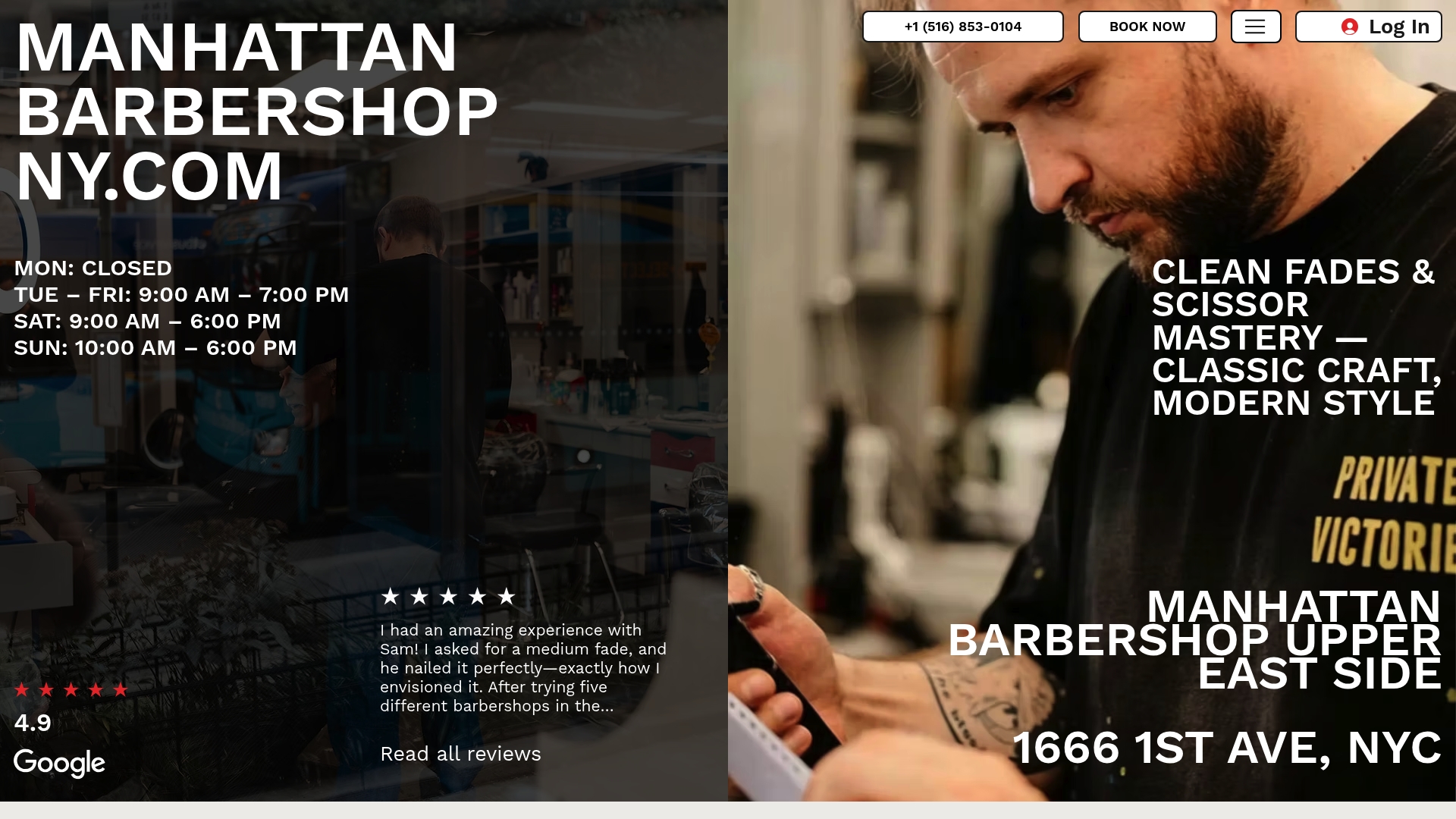
The shop keeps consultations honest about what your density and daily habits can actually support. If you’re not sure which cut fits, that conversation happens in the chair, not over the phone. Book your appointment online and bring a couple of reference photos of your hair on a normal day, not a styled one.
Sources
FAQ
What haircut is best for straight hair men?
Textured crops and crew cuts tend to work best because they rely on cutting technique rather than curl pattern to create movement. Curtains and side parts also perform well since straight hair falls cleanly with minimal frizz.
What does the 3:2:1 haircut rule mean?
Definitions vary depending on the barber, but the phrase generally refers to leaving graduated length ratios between the top, sides, and back to keep proportions balanced as hair grows out. It’s more of a rough guideline than a fixed industry standard.
What are the hair trends for 2026?
Soft tapers, textured crops, and curtains are leading the year, replacing the high-contrast skin fades that dominated recent seasons. Trade coverage points to a broader shift toward natural-looking, low-maintenance texture over sharp, heavily styled shapes.
Which hairstyle attracts girls?
There’s no single style that works universally since preference varies by person, but well-groomed, natural-looking cuts consistently outperform overly styled or product-heavy looks in casual observation. A cut suited to your face shape and kept up with regular barber visits reads as more put-together than chasing a specific trend.
Recommended
Comments