12 Barber Backed Haircuts for Thinning Hair Men, Guard Numbers Included

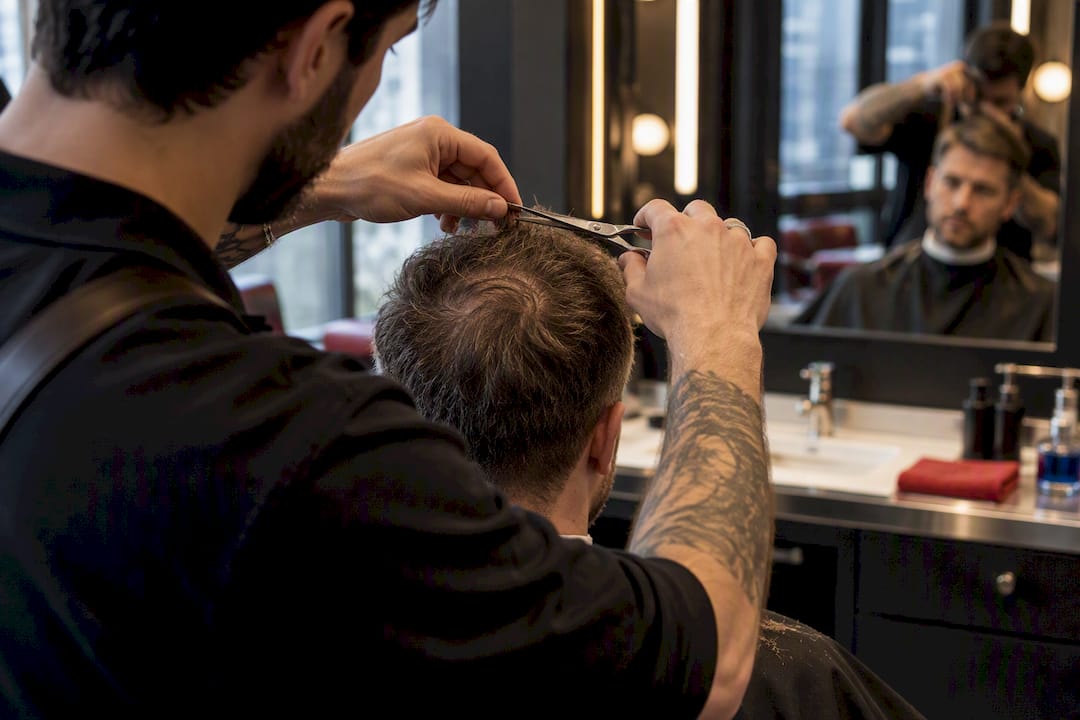
Short, textured cuts, think textured crops, crew cuts, Caesars, and buzz cuts, are the go-to answer for thinning hair because they cut the contrast between scalp and strand instead of fighting it. Length and shine make thin hair look thinner. Texture and choppy ends scatter light and add the illusion of density. The right cut still needs a trim schedule and the right styling routine to keep working.
TL;DR:
Short, textured cuts like the crop or buzz cut are the most effective styles for reducing scalp contrast and are recommended for advanced thinning.
A buzz cut with a guard size of 2 to 4 offers a balanced, uniform look that is flattering and low maintenance for thinning hair.
Regular trims every 2 to 6 weeks are necessary to maintain the style’s effectiveness and prevent thinning from becoming more visible.
Using matte styling products and avoiding heavy shine gels helps create natural texture and volume without weighing down thin hair.
Precise consultation with a barber, including photos of the crown and sides, ensures the chosen style fits your density and growth pattern.
Table of Contents
Best Haircuts For Thinning Hair Men, Ranked By Situation
Each of these cuts solves a different version of the same problem. Some fight crown thinning, some hide a receding hairline, and a couple just accept the thinning and own it. Bring this list to your next appointment.
1. Textured Crop
The textured crop is the default recommendation for diffuse thinning across the top. A barber cuts the top short, usually one to two inches, then uses point cutting or texturizing shears to break up the ends so the hair sits with movement instead of lying flat and see-through. Ask for a low or mid fade on the sides to keep the contrast soft. Style with a small amount of matte clay worked in with fingers, not a comb.
2. French Crop
A close cousin of the textured crop, the French crop adds a hard or textured fringe across the front. It works especially well if your hairline is receding at the temples but still holds density in the middle. Have the barber blend the fringe into a soft taper rather than a skin fade. Skin fades create a hard line that draws the eye straight to thinning at the crown.
3. Caesar Cut
The Caesar keeps length short and uniform on top, with a straight, horizontally cut fringe. It reads as intentional and low maintenance rather than a cut trying to disguise something. This one suits overall thinning better than heavy crown loss, since there’s little length to comb or lift over a bald patch.
4. Buzz Cut (Grade 2–4)
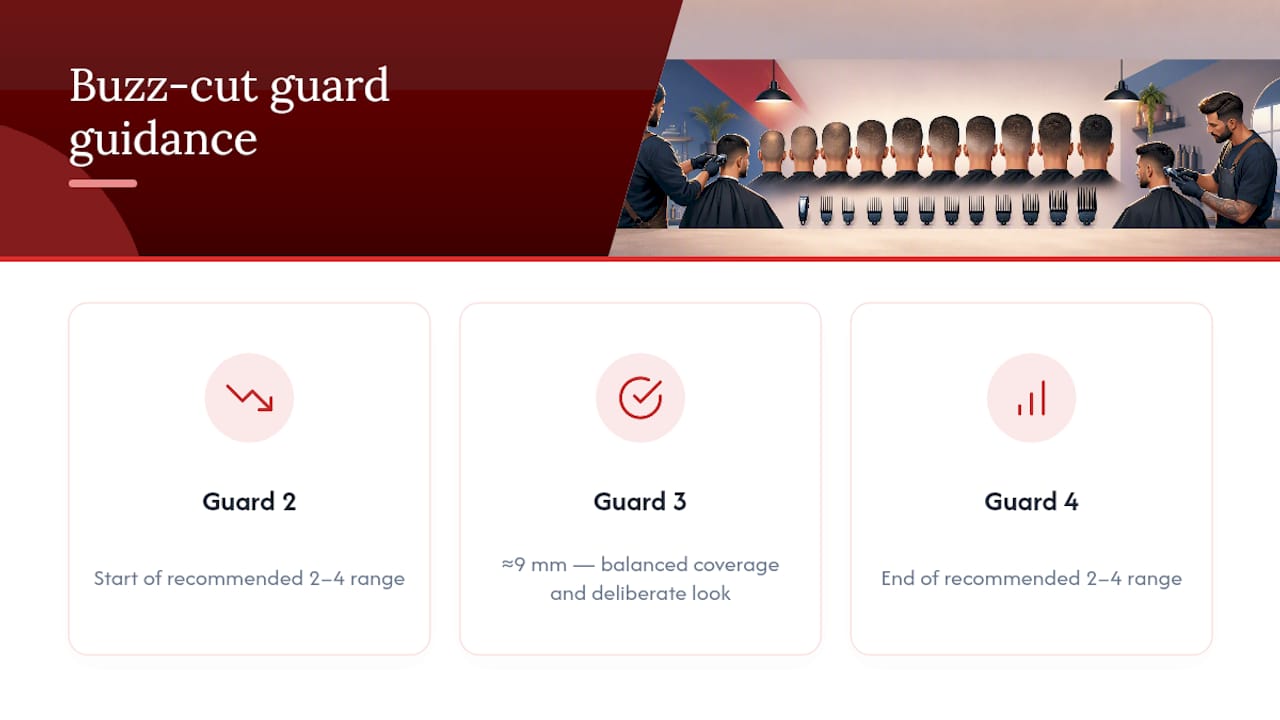
For advanced thinning, a buzz cut is often the most honest and most flattering option. A common recommendation is a guard 2 to 4, with a guard 3, roughly 9 millimeters, hitting a good balance between coverage and looking deliberate rather than patchy. Uniform length everywhere removes the comparison between thick and thin zones that makes thinning obvious in longer cuts.
5. Crew Cut With Taper
The crew cut is a buzz cut’s slightly longer sibling: short on top, tapered on the sides, with just enough length up top to add texture with a matte product. It’s a strong pick if your thinning is mostly at the crown but the hairline is holding steady. Ask for a taper rather than a fade on the sides, since a fade next to short, thin top hair can look more like a bald ring than a haircut.
6. Textured Fringe
If most of your density loss is at the crown but the front and sides still have coverage, a textured fringe brings visual weight forward. Point cutting through the front section creates soft, uneven pieces that a comb-over never achieves. Keep the back and crown very short so there’s no long hair to expose thin patches when the wind picks up.
7. Short Pompadour (Reduced Height)
A traditional pompadour needs volume most thinning hair can’t supply, but a scaled-down version, shorter sides, a soft two-inch lift at the front instead of four, still works. The trick is asking your barber for restrained layering underneath so the top section isn’t carrying more length than the hair can support on its own.
8. Ivy League
The Ivy League is a shorter, tidier cousin of the classic side part, cut close on the sides with just enough length on top to comb, not style with height. It suits men with mild, even thinning who still want a slightly dressed-up look for work. Avoid asking for extra length here. Extra length is exactly what turns thinning hair into a visible comb-over.
9. Short Side Part
A side part can still work on thinning hair as long as it stays short on top with a defined but soft part line. Long comb-overs and slicked-back styles with heavy shine are the versions to avoid, since long comb-overs and glossy finishes tend to expose rather than hide sparse areas. A matte product and a light touch keep this one on the right side of the line.
10. Low or Mid Soft Taper
Not a standalone style so much as a sides-and-back strategy, a low or mid soft taper pairs with almost any of the top styles above. It avoids the harsh skin-to-hair contrast of a high skin fade, which tends to make thinning at the crown or temples more obvious, not less. Ask for the taper to fade gradually over an inch or two rather than snapping to skin.
11. Bro Flow (Kept Short)
A shortened bro flow, natural texture, minimal layering, a bit of length but nowhere near shoulder length, can work for guys with diffuse thinning who still have decent density and don’t want anything too severe. It only works if your hair has enough natural body to avoid looking stringy. Fine, limp hair usually looks better in one of the shorter, more structured cuts above.
12. Shaved Head Or Burr Cut
At a certain point, shaving down to a burr or going fully bald by razor stops being a fallback and becomes the strongest option on the table. Owning a very short buzz or a full shave often reads as a confident decision rather than damage control, especially past Norwood stage 5 or 6. There’s nothing left to disguise, which removes the whole problem the other eleven cuts are solving around.
How To Pick The Right Cut For Your Hair
Start by identifying where the thinning actually is, not where you think it is. Crown thinning, temple recession, and overall diffuse thinning each call for different top lengths and different fade heights. Stand under bright light with dry, unstyled hair and look straight down into a mirror from above. That’s the same check most barbers do before touching a comb.
Face shape matters for height decisions. Round faces generally benefit from some crown height to lengthen the face; long or narrow faces usually look better with flatter, wider styles that don’t add vertical length. Bring this checklist into the chair:
Show three photos: front, side, and top-down of the crown, taken in natural light.
Ask for the guard number on top and the fade height on the sides in specific numbers, not vague terms like “short.”
Ask whether the barber plans to use thinning shears. Over-thinning already-fine hair removes the weight that creates the appearance of density, so this is usually a step to skip, not request.
Pro Tip: Take those three photos on your phone before you leave the house. A barber working from real reference points, not guesswork under salon lighting, nails the length and fade on the first try far more often.
Daily Styling That Makes Thin Hair Look Fuller
Product and technique cover the rest. The routine barbers recommend most often is simple: towel-dry until damp, not wet, rough-dry with a blow-dryer on a medium setting while lifting the roots with your fingers or a round brush, then work in a small amount of product and separate with your fingertips instead of a comb.
Use matte clay or paste, not gel, cream, or anything labeled high-shine or high-hold wet-look.
Try a sea-salt spray on damp hair before drying for extra texture and grip.
A light dusting of texture powder at the roots on day two or three revives lift without adding weight.
Skip pomade and any product marketed for slick-back styles. Heavy, glossy products flatten the very texture that’s doing the work of hiding thinning.
Pro Tip: Use less product than feels right. A dime-sized amount of clay, rubbed between the palms until it’s nearly invisible before it touches your hair, almost always looks better than a visible glob at the crown.
How Often To Trim, And When To Change Strategy
Short, textured cuts only look intentional when they’re kept fresh. Once the ends grow past their shape, the same style that hid thinning starts to expose it.
Buzz cuts and burr cuts: every 2 to 4 weeks.
Textured crops and crew cuts: every 3 to 5 weeks, since growing texture separates at the crown fastest.
Medium-length styles like the short pompadour or bro flow: every 4 to 6 weeks.
Skip heavy conditioners and rich styling creams between cuts. They add weight that compresses volume rather than supporting it. If your thinning has visibly progressed since your last two or three appointments, that’s the signal to talk to your barber about moving down to a buzz or shaved option rather than clinging to a longer style out of habit.
How Manhattan Barbershop Approaches Thinning Hair
This barbershop specializes in clean fades, classic cuts, and a personalized experience, which matters more for thinning hair than for almost any other haircut category. A style that looks great on a mannequin chart can look wrong on your specific density pattern, so the fit comes from the consultation, not the photo you bring in.
Scissor-led texture and point cutting, rather than clipper-over-comb shortcuts, create the layered edges that add lift without bulk.
Soft tapering on the sides replaces high skin fades when contrast is a concern.
Barbers here decide scissor versus clipper case by case, based on how the hair actually sits dry.
Read what to expect during a barber consultation before your visit, or learn more about how barbers customize cuts to individual density and growth patterns.
Can Color Or Highlights Camouflage Thinning?
Color works on thinning hair by breaking up the uniform reflection off the scalp, not by adding density. A solid, flat color, especially very dark shades against fair skin, actually increases scalp-to-hair contrast and can make thinning at the crown more visible under overhead light.
Subtle highlights or a soft balayage placed through the top and crown do the opposite. They create tonal variation that scatters light the same way texture does, which is part of why the two techniques get recommended together. A few lighter pieces woven through a textured crop or crew cut break up the silhouette of the scalp underneath.
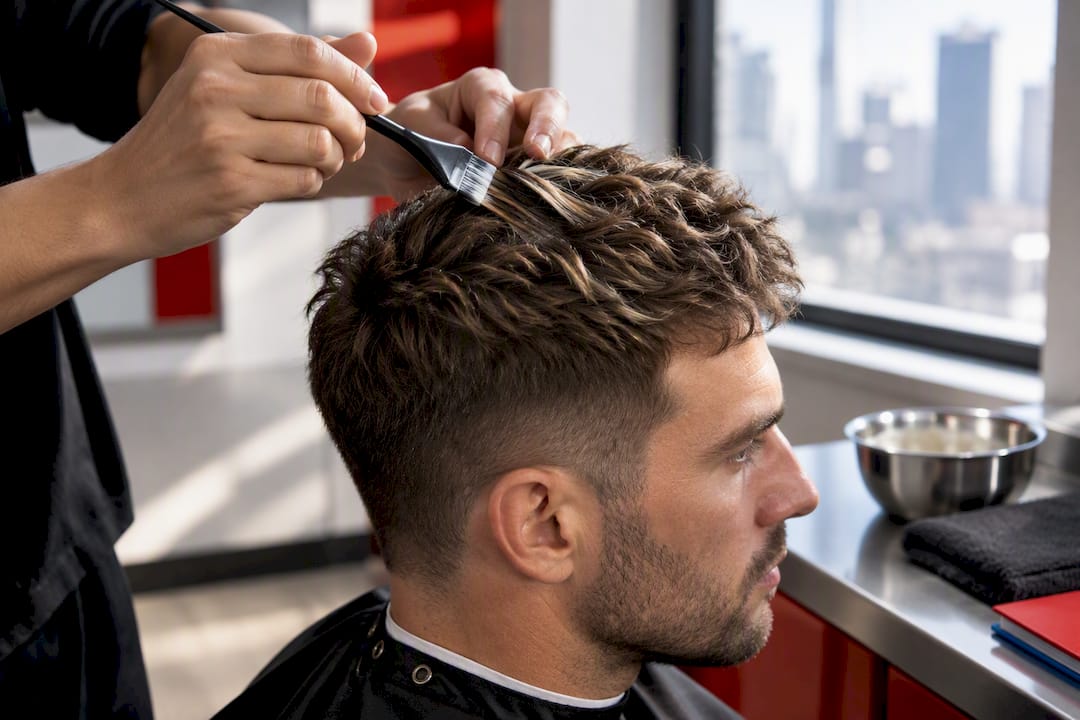
Lightening the whole head one or two shades softer than your natural color, rather than adding streaks, also reduces contrast without the upkeep highlights demand. This works best on men with lighter or graying hair already, since the color shift is smaller and less noticeable at the root as it grows out. Anyone considering a real color change should talk to a colorist about how their specific scalp tone and hair color will interact under different lighting, since what looks subtle in a salon can look different in daylight or under fluorescent office lights.
Grey camouflage services split the difference for men who aren’t full-gray but want less contrast between scalp and hair without committing to ongoing highlight maintenance.
Scalp Health Matters As Much As The Haircut
A great cut on an unhealthy scalp still looks thin. Flaking, excess oil, and product buildup all sit on top of the hair shaft and visibly weigh strands down, which flattens the exact texture your barber just spent twenty minutes creating.
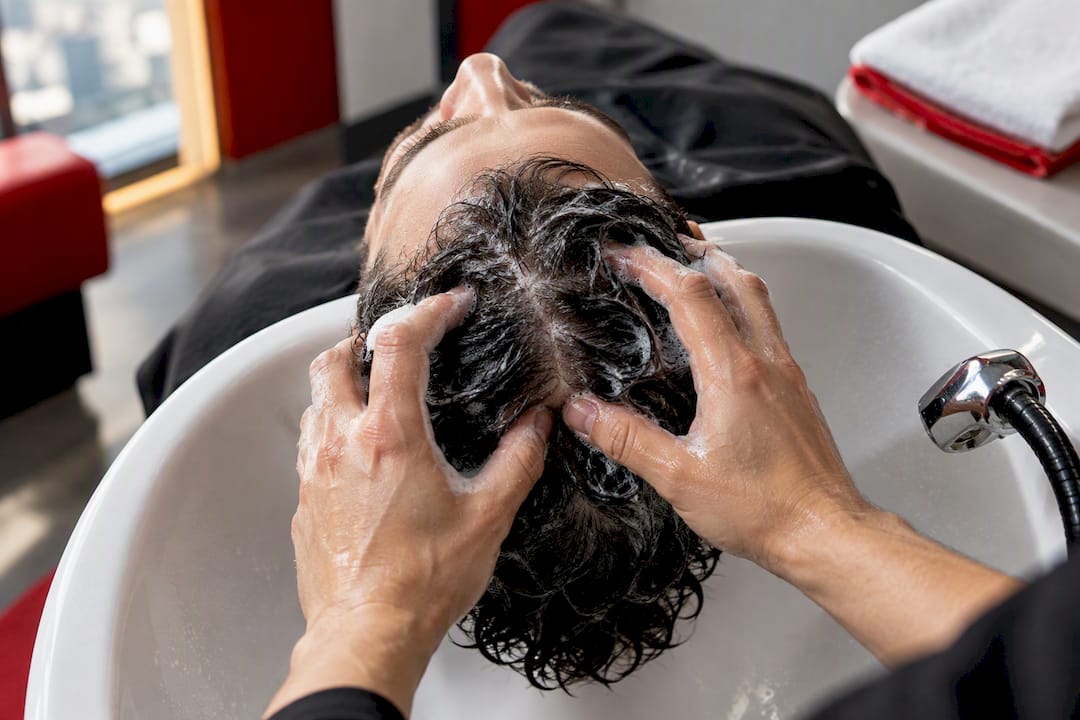
Washing every two to three days with a clarifying shampoo, rather than daily with a heavy moisturizing formula, keeps buildup from accumulating without stripping the scalp dry. Dry, flaky scalps make thinning look worse under any light, since flakes sit against the same pale scalp tone you’re trying to visually break up with texture and color.
Gentle scalp massage during washing, thirty seconds to a minute, improves circulation and helps loose product residue release from the roots. It’s not a cure for hair loss on its own, but it does keep the scalp environment clean enough for whatever hair is there to sit at its fullest natural volume. Skip heavy leave-in conditioners and rich oils applied close to the roots. They’re built for length and dryness, not for the fine, thinning hair that needs lift more than moisture.
A Realistic Take On Choosing Your Style
Confidence usually comes from picking a cut that matches how much effort you’re actually willing to put in every morning, not from finding the one “correct” style for thinning hair. A guy who’s honest about wanting a five-minute routine is usually happier with a Caesar or a buzz than with a pompadour he’ll resent maintaining by week three. There’s no wrong answer between owning a shaved head and working a textured crop, only a mismatch between the cut and your patience for upkeep.
— Evgenii
Book A Cut Built For Thinning Hair
The barbers spend real time understanding your density, growth pattern, and how much styling effort you’re actually up for, then cut to that, not to a generic photo. Whether that means a scissor-textured crop, a clean buzz cut, or a crop with soft tapering on the sides, the goal is a style that still looks sharp four weeks from now, not just on the walk out of the shop.
Bring the three photos mentioned earlier, front, side, and crown, to your consultation so your barber can plan the guard length and fade height before the clippers ever touch your head. Ready to see what fits your growth pattern? Book your appointment online and tell the front desk you’re looking for a thinning-hair consultation.
Sources
FAQ
Should I Cut My Hair Short If It’s Thinning?
Yes, in most cases. Short, textured cuts reduce the visible gap between scalp and hair and are widely recommended over longer styles for men dealing with thinning, which tend to expose sparse areas rather than hide them.
What Does The 3:2:1 Haircut Guideline Mean?
Definitions of this rule vary across barbershops and aren’t standardized, but it generally refers to graduating guard lengths from the crown down to the neckline, roughly a 3 on top blending to a 2 and then a 1 toward the hairline. Ask your barber to confirm the exact numbers they use, since the specifics shift by shop and by head shape.
What Haircut Makes Thinning Hair Look Thicker?
Short, textured cuts like the textured crop, crew cut, and Caesar work best because point cutting and scissor texture create micro-variations in length that catch light and add apparent lift. This scissor-led approach to texture follows this same principle.
Is Longer Or Shorter Hair Better For Thinning Hair?
Shorter almost always wins. Longer hair adds weight that flattens strands against the scalp and creates a sharper contrast between thick and thin areas, while short buzz cuts and crew cuts reduce that contrast and read as a deliberate style choice.
How Much Does A Haircut At Manhattan Barbershop Cost?
A Regular Haircut runs $42, and specialty styles like the Crop or Buzz Cut are priced the same. Grey Camouflage is $45, and full current pricing is available on the booking page.
Recommended
Comments