13 Wavy Haircuts for Men and Exactly What to Tell Your Barber

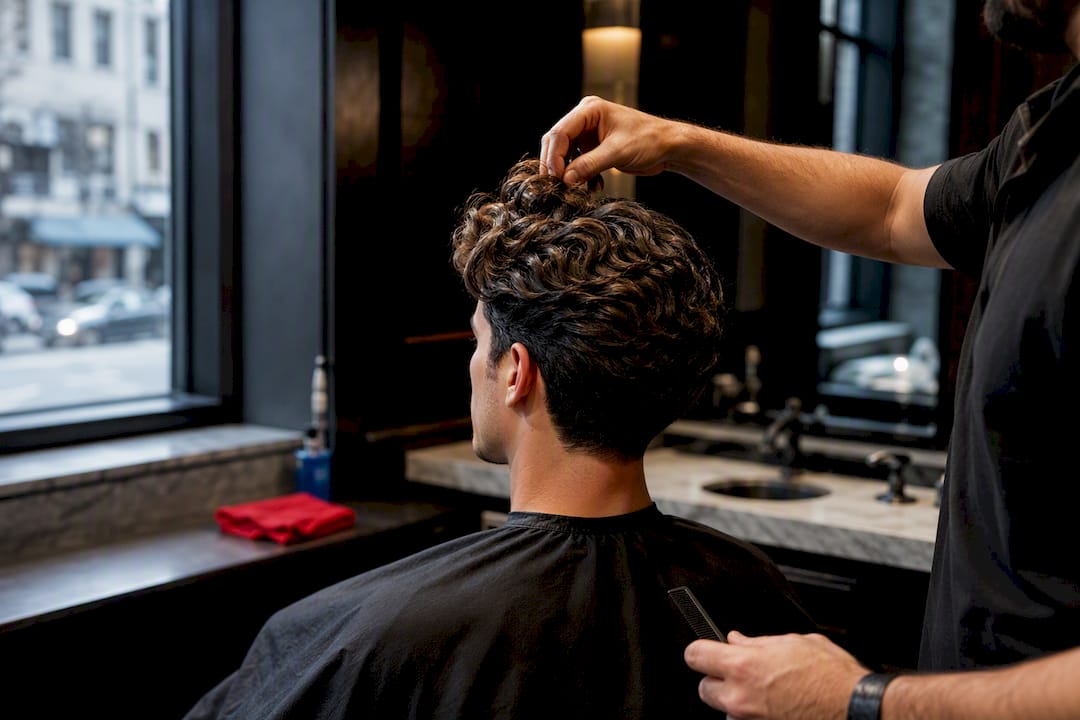
The most reliable haircuts for wavy hair are the textured crop, a medium layered “bro flow” and a controlled taper or fade with length left on top. Which one works best comes down to your wave pattern (2A, 2B, or 2C) and how dense your hair grows in. Before you sit in the chair, know your wave type and how much upkeep you’re willing to do. That single piece of information changes what your barber cuts.
TL;DR:
The best haircuts for wavy hair depend on wave type, density, face shape, and maintenance willingness, with options ranging from textured crop to long shag.
Short styles like textured crop or buzz are low maintenance and suit looser waves, while medium cuts like bro flow and curtains offer more styling room.
Longer cuts such as shag or surfer flow emphasize natural texture but require internal layering and shorter trims every 8 to 12 weeks.
Proper cutting techniques involve tailored layering, avoiding over-thinning, and clear communication of wave type and desired upkeep to the barber.
Wavy hair responds best to minimal styling and natural textures, with routine trims, sulfate-free shampoo, and diffusing or air-drying to maintain shape and reduce frizz.
Table of Contents
Best Haircuts for Wavy Hair Men, by Length
Wavy hair behaves differently depending on how tight the S-pattern is and how much hair you’re working with, so the right cut is really a match between your waves and how much shape you want to hold. Below is a practical rundown organized short to long, with the exact language to use in the chair.
Short cuts: low maintenance, high payoff
1. Textured crop. This is the default recommendation for most 2A to 2B waves because it lets the natural texture show without fighting gravity. Ask for 1.5 to 2 inches on top with a scissor cut, tapered sides using a #2 or #3 guard, and a matte finish. Say this: “Keep the top textured, don’t over thin it, and taper the sides tight.”
2. French crop. A denser, blunter cousin of the textured crop, built for guys with thicker hair who want a fringe that sits low on the forehead. Ask for a straight-across fringe with a hard part on the sides. Say this: “Blunt fringe, low taper, minimal layering underneath.”
3. Short taper. Best for 2A waves that are closer to a loose bend than a defined curl, since a shorter length keeps thin waves from looking flat. Ask for a #3 on top blended into a #1 taper. Say this: “Light taper, no fade line, just a smooth blend.”
4. Wavy buzz. For 2B to 2C hair that holds shape even at short lengths, this is the lowest maintenance option on this list by a wide margin. Ask for a uniform #2 all over, or a #2 on top and #1 on the sides for slight contrast. Say this: “Even length, no lines, let the wave show through the buzz.”
Medium cuts: room to style, still manageable
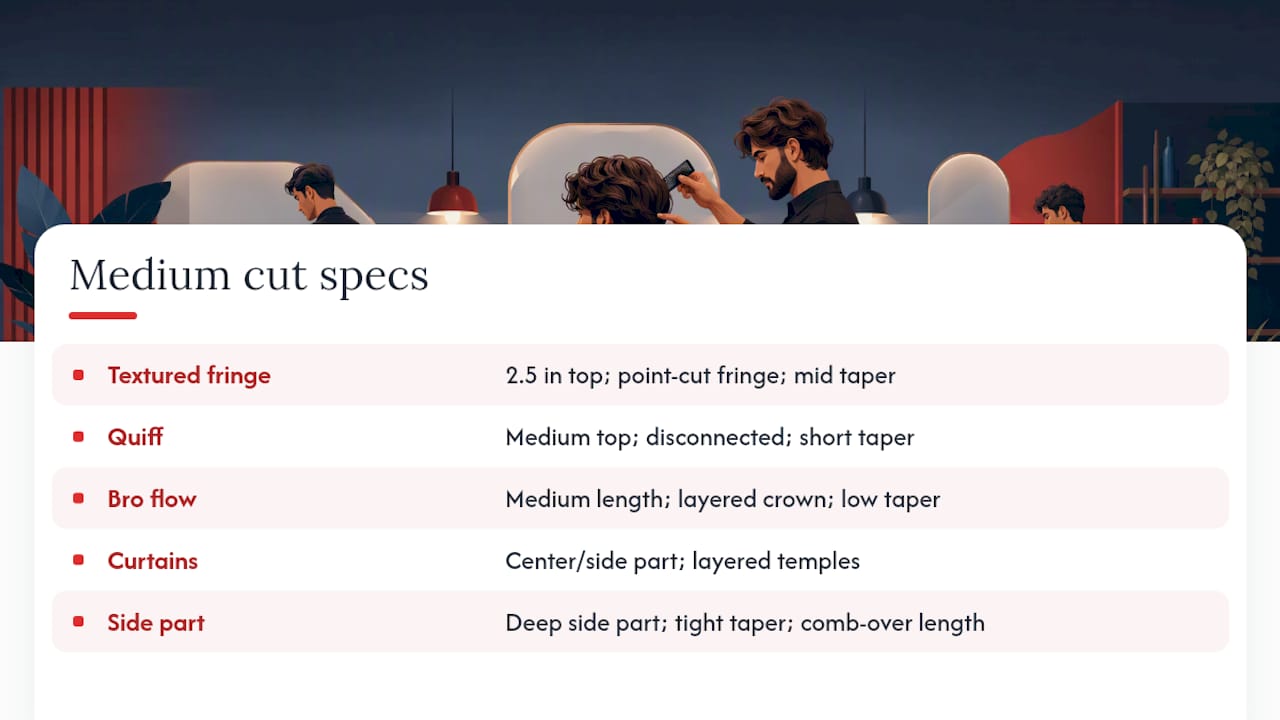
5. Textured fringe. A step up in length from the crop, this style favors 2B to 2C waves that hold a curved shape at 2 to 3 inches. Ask for 2.5 inches on top, point cut ends, and a mid taper on the sides. Say this: “Point cut the fringe, don’t blunt cut it, mid fade on the sides.”
6. Quiff. Works well when you have enough density to build height without a diffuser or heavy product. Ask for medium length on top, disconnected from a short taper. Say this: “I want lift at the front, keep the crown length long enough to push up.”
7. Bro flow. The medium layered cut that shows up constantly in barbershop reference photos for a reason: it lets 2B and 2C waves fall naturally with almost no styling effort. Ask for medium length all over, heavier layering through the crown, and a low taper. Say this: “Layer the crown so it doesn’t sit heavy, taper low, leave the length.”
8. Curtains. A parted, face framing style that flatters wavy hair because the natural bend does half the styling work. Ask for a center or slight side part with layering around the temples. Say this: “Part it down the middle, soften the pieces around my face.”
9. Side part. The most office-friendly option on this list, and a strong pick if your workplace leans conservative. Guides to professional haircuts for office settings cover how to keep a side part sharp without looking stiff. Say this: “Deep side part, tight taper, enough length on top to comb over.”
Long cuts: texture takes center stage
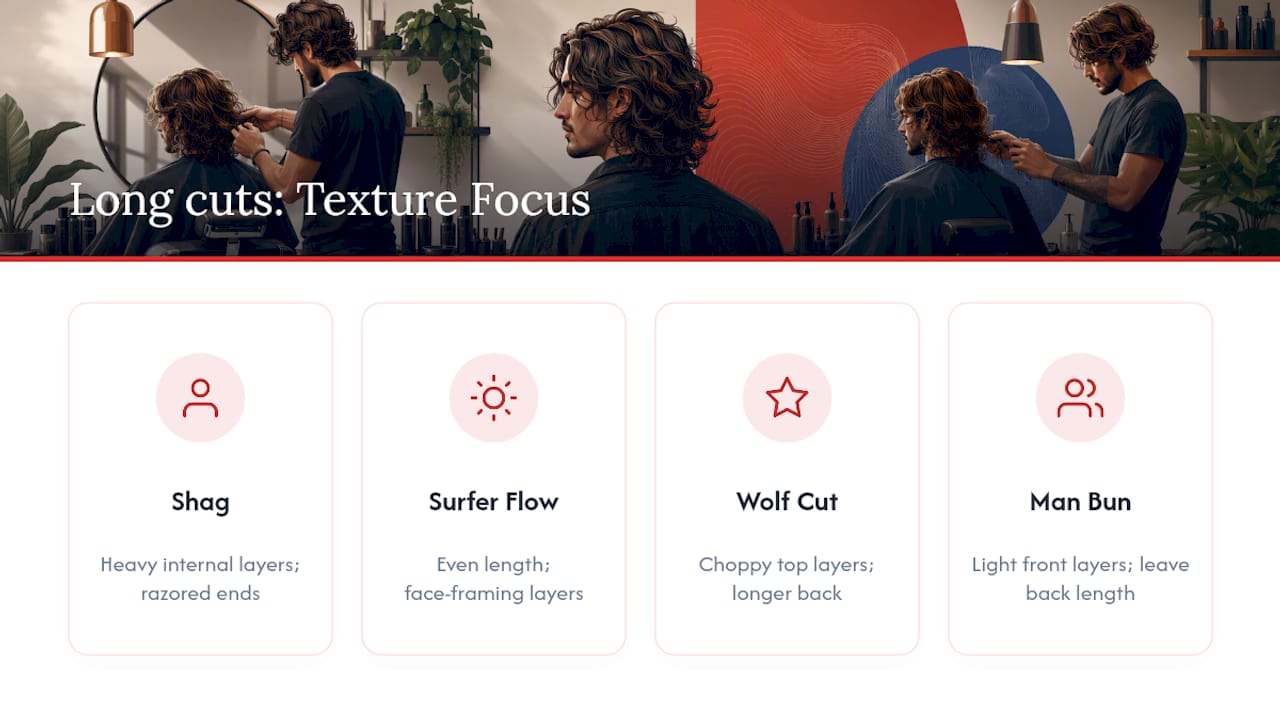
10. Shag. Heavy, choppy layering built specifically for wavy and curly texture, and one of the few long cuts that actually needs waves to look intentional rather than shaggy in the bad sense. Ask for longer length with heavy internal layering and razored ends. Say this: “Lots of internal layers, razor the ends, I don’t want it to sit as one solid mass.”
11. Surfer flow. Long, center-parted, air-dried texture that leans on 2B to 2C waves for its whole look. Ask for longer length with face-framing layers. Say this: “Keep the length even, just soften around the face, no heavy thinning.”
12. Wolf cut. A mullet-shag hybrid that needs internal layering or it turns into a triangle of hair by month two. Ask for shorter, choppy layers on top blending into longer length at the back. Say this: “Heavy layers on top, length stays in the back, blend don’t blunt.”
13. Man bun setup. Not a cut so much as a growing-out strategy, best paired with light layering around the crown so the front doesn’t look flat when pulled back. Ask for face-framing layers only, leaving the back and crown untouched. Say this: “Just clean up the front and sides, leave the length alone.”
How Do You Choose the Right Wavy Haircut?
Your wave pattern is the starting point. Stylists use a simple visual system: 2A waves form a loose, barely-there S shape, 2B waves have a more defined bend starting mid-shaft, and 2C waves are close to a loose curl with a well-defined S from root to tip. Tighter waves (2B, 2C) hold more shapes at more lengths. Looser waves (2A) usually look better shorter, where the texture reads as intentional instead of just messy.
Density decides how much weight your barber removes. Thick, dense hair usually needs internal thinning to avoid a triangular, helmet-like silhouette, while fine or thin waves often need weight left in to avoid looking sparse. A guide to hair density in barbering breaks down how barbers read this before the first cut.
Face shape narrows the list further:
Round faces benefit from height on top (quiff, textured fringe) to elongate the face.
Square faces usually look sharper with softer, layered sides (curtains, bro flow) that break up strong angles.
Long faces do better with length on the sides and less height (side part, short taper).
Oval faces can wear almost anything on this list without much risk.
Maintenance is the honest trade-off nobody skips past. A wavy buzz needs a trim every three weeks but zero daily styling. A shag or wolf cut needs almost no barber visits for two months but demands five minutes of product and diffusing every single day. Pick the trade-off you’ll actually keep up with, not the one that looks best in a photo.
Pro Tip: Stop saying “thin it out” to your barber. Stylists point out that specifying layer density gets you a far more predictable result. Say “light internal layers for a soft look” or “heavier texturing for a choppier shape” instead, and describe how it should sit, not just how much to remove.
Practical Styling Routine and Product Recommendations for Wavy Hair
Wavy hair is prone to frizz and dryness because of an uneven cuticle structure, which is why the order of operations in the shower matters as much as the products themselves.
Shampoo with a sulfate-free formula, focusing on the scalp, not the length.
Condition the full length, and detangle only while conditioner is still in, since brushing dry hair breaks up the wave pattern.
Apply leave-in conditioner right after towel-squeezing, while hair is still soaking wet.
Add your styling product to that same soaking-wet hair. Timing matters more than product choice: sea salt spray builds texture, a light cream or air-dry lotion adds definition, and a lightweight oil tames frizz without weighing waves down.
Scrunch upward toward the scalp to encourage clumping, then either air-dry or diffuse on low heat.
Diffusing speeds up drying while holding the curl pattern better than a regular blow dryer nozzle, which scatters airflow and creates frizz. Air-drying works fine when you’re not in a rush and want the lowest-effort result. For short styles that need texture rather than movement, a matte clay is the better finish. Avoid heavy, petroleum-based pomades across the board. They’re built for straight hair and tend to clump waves together, flattening the bounce instead of enhancing it.
On day two, a water spritz followed by a scrunch and a light texture spray usually revives the pattern without a full rewash.
How Often Should You Trim Wavy Hair?
Trim frequency tracks directly with how short and structured the cut is:
Textured crops and short tapers: every 3 to 6 weeks to keep the shape from growing shaggy at the edges.
Medium cuts like bro flow or curtains: every 6 to 12 weeks, since the layering gives more room before it looks unkempt.
Long layered shags or surfer flow: every 8 to 12 weeks, mostly to maintain the internal layering rather than the overall length.
Maintenance visits aren’t just about length. A good barber rebalances weight, cleans up a fade line before it grows out blurry, and refreshes layers that have started to fall flat. Grow-out problems are predictable: a triangular “poof” at the sides usually means the sides need more layering, not more length removed, and uneven length at the ends usually means it’s been too long between trims. Going from short to medium length typically takes four to six months; medium to long takes another five to eight months on top of that, depending on how fast your hair grows.
Chair-Ready Tips from a Working Barber
Tell your barber whether you want layers that “blend” (soft, gradual transitions, good for natural movement) or “texturize” (choppier, more separation, good for definition). Point cutting softens ends for movement; thinning shears remove bulk but can leave hair stringy if overused on already-fine waves. The most common mistake we see: guys asking for heavy thinning on already-fine hair, which kills the wave pattern completely, or piling on heavy product that a lighter cream would have handled better. Bring two reference photos, name your wave type, and state your maintenance limit before the first cut goes in.
Pro Tip: Write down three things before your appointment: your wave type (2A, 2B, or 2C), your maintenance limit in minutes per day, and one reference photo. That’s the entire brief a good barber needs.
Why We Favor Texture-Forward Cuts for Wavy Hair
We assess wave type and density before touching clippers, because guessing leads to the same triangular, overworked shapes you see on guys who got a straight-hair cut on wavy hair. Minimal product, tailored layering, and natural texture beat heavy styling every time. Bring photos, tell us your maintenance limit, and we’ll build the cut around it.
— Evgenii
Ready for a Cut Built Around Your Waves?
Most style guides can tell you what a bro flow or textured crop should look like. What they can’t do is put scissors to your actual hair. The barbershop works from scissor and clipper craftsmanship built around your specific wave pattern and density, not a generic template pulled from a photo. If you’ve been getting the same cut every visit regardless of how your hair is actually behaving that month, that’s usually the gap.
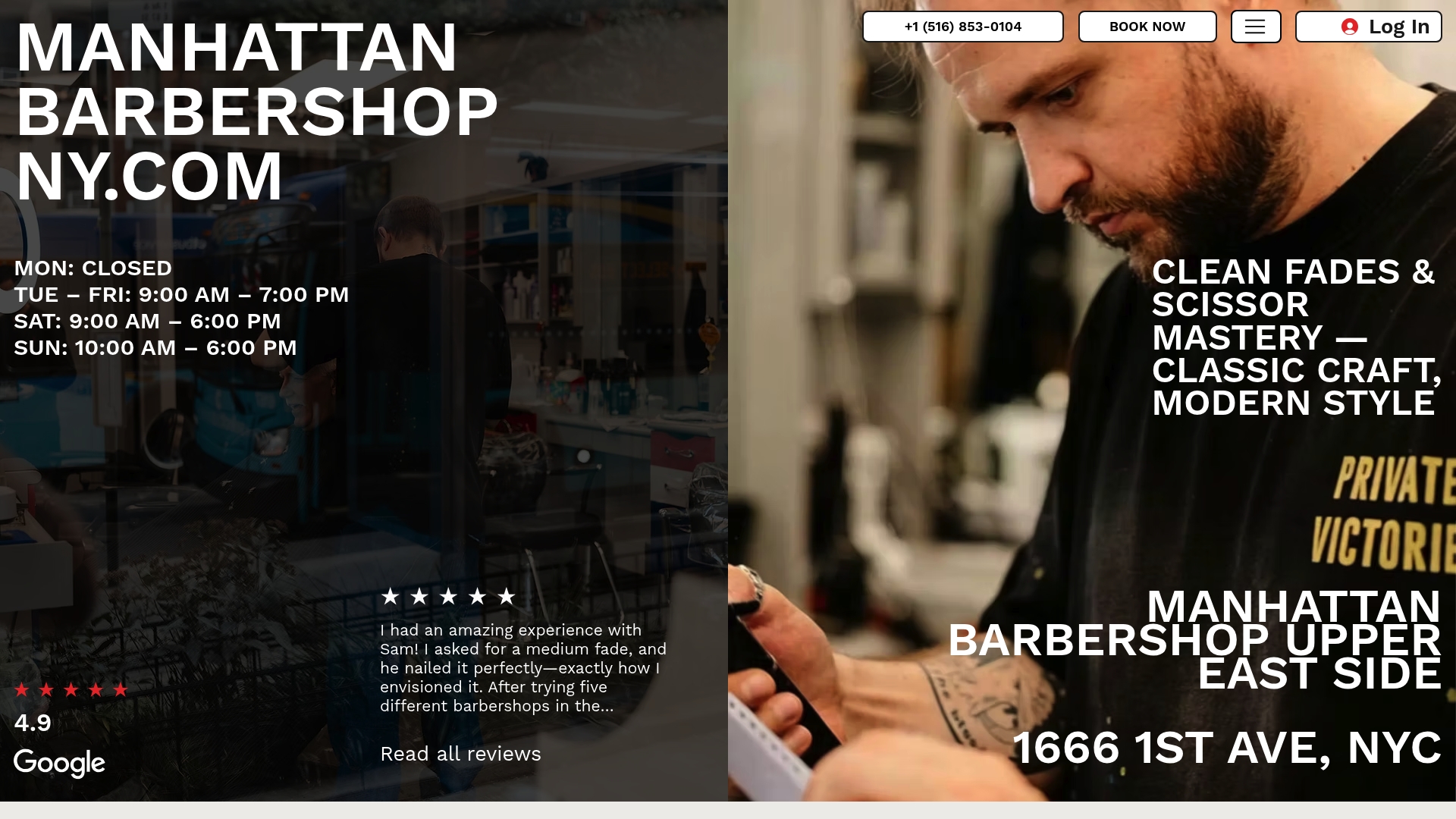
Bring two reference photos and be ready to name your wave type (2A, 2B, or 2C) and how much daily styling time you’re willing to spend. That’s everything needed to plan the cut properly. Walk-ins are welcome, but if you want a guaranteed slot, book your appointment online ahead of time. First-time clients curious about the shop’s approach can also check the free model haircut details before committing to a full session.
Sources
FAQ
Which haircut is best for wavy hair on men?
There’s no single best cut, but the textured crop, bro flow, and controlled taper cover most wave types and densities. Your specific pick depends on whether your waves are 2A, 2B, or 2C and how much daily styling time you want to spend.
What does the 3:2:1 haircut rule mean?
It’s a common shorthand for tapering length gradually down the head, roughly 3 inches on top, 2 in the middle, and 1 on the sides, though exact numbers vary by barber and hair type. Treat it as a starting reference point to describe fade progression, not a fixed formula.
Is wavy hair attractive on men?
Wavy hair is widely considered one of the more versatile textures for men’s haircuts, since it holds shape at short, medium, and long lengths without heavy styling. The right cut for your density and wave pattern matters more than the texture itself.
What are popular wavy haircuts for men in 2026?
The bro flow, textured crop, and shag remain popular styles, with curtains and the wolf cut trending for guys who want more length and movement. Manhattanbarbershopny sees steady demand for taper-fade combinations that keep the top textured and natural.
Recommended
Comments