3 Barber Scripts for Soft Blends: Long Top, Short Sides in Manhattan

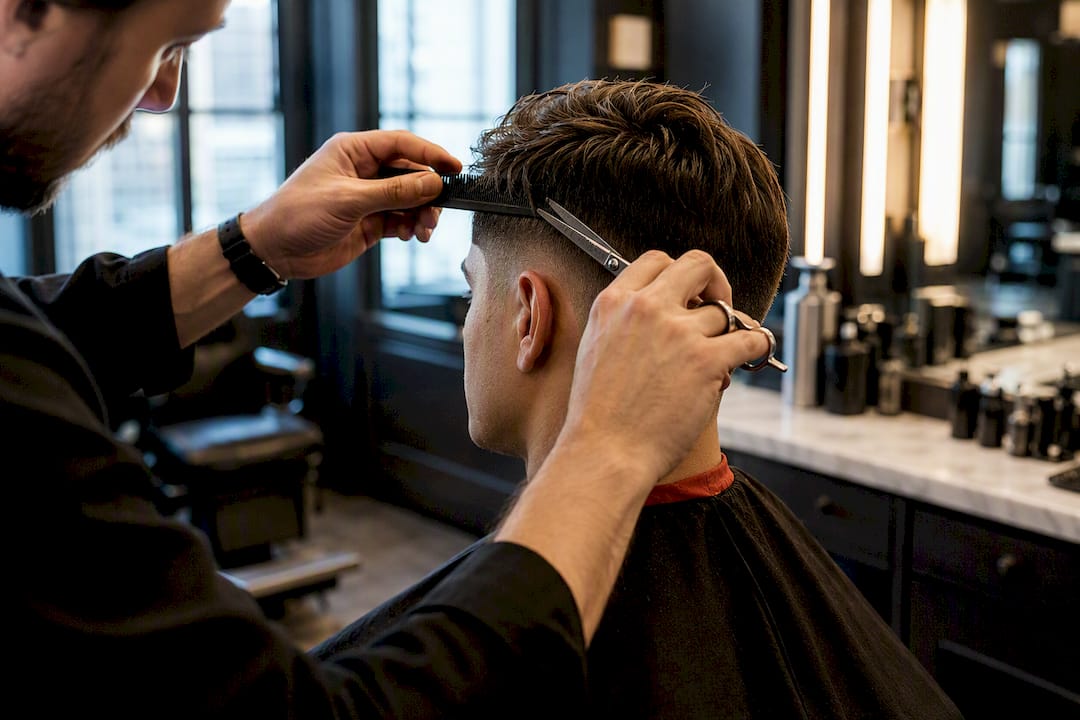
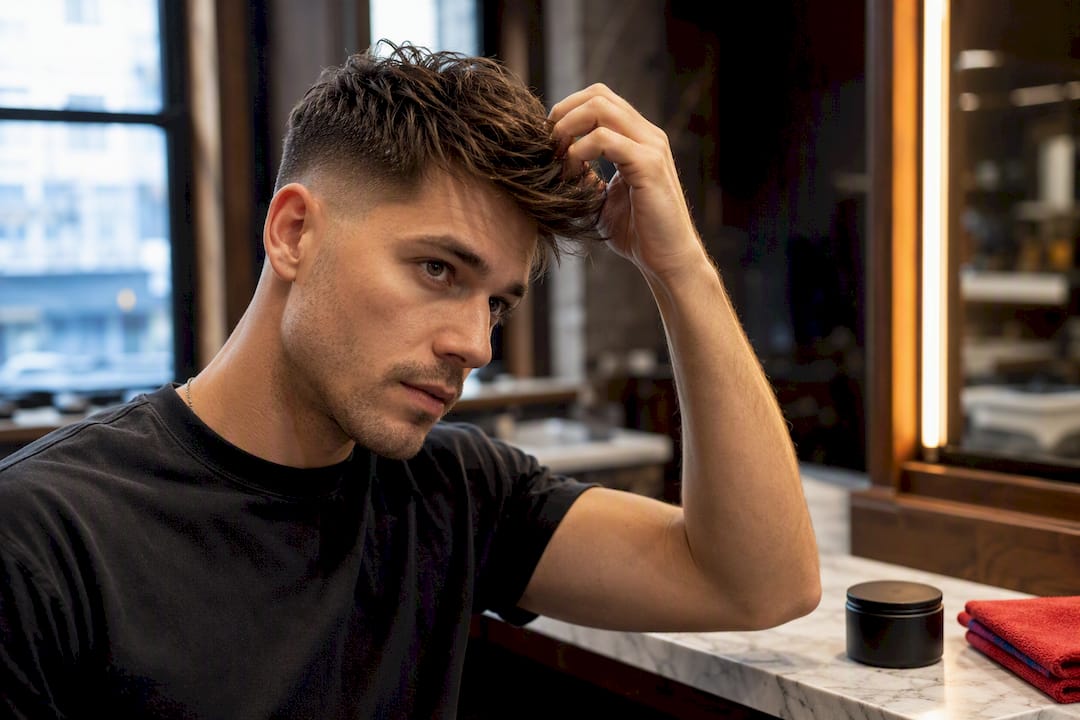
Long top, short sides means exactly what it sounds like: length and texture preserved up top, a tight taper or fade cut into the back and sides. It flatters nearly every face shape because the contrast itself does the sculpting, though thick or wavy hair carries it best. The trade-off is upkeep: the shorter the sides, the sooner you’re back in the chair.
TL;DR:
Choosing a soft, blended fade or taper is advisable for irregular trim schedules, as they grow out more naturally compared to harsh disconnects.
Styles like pompadours or quiffs work best on straight or wavy hair and require more frequent trims to maintain volume and shape.
Side treatments such as high-contrast disconnects demand precision and frequent touch-ups, making them less suitable for infrequent maintenance.
Styling habits favor less product and textured finishes, with finger-styled movement replacing high-shine looks for a natural appearance.
Clarifying your actual grooming routine and preferred visit interval ensures your haircut style and side treatment choices are sustainable.
Table of Contents
What Are the Best Long Top Short Sides Haircut Styles?
The long top, short sides haircut isn’t one style. It’s a framework, and barbers keep coming back to it because a dozen distinct looks fit inside it. Here are the variations worth bringing to your next appointment.
Pompadour. Swept-back volume up top, built on a foundation blow-dry. Best for straight to wavy hair and oval or square faces; sides usually run mid to high fade.
Quiff. A shorter, less formal cousin of the pompadour, pushed up and slightly forward. Works on nearly any face shape, forgiving for fine hair.
Textured crop. Choppy, matte, finger-styled fringe. Suits straight and wavy textures, softens angular faces, and pairs with a low or mid taper.
Modern mullet. Longer length at the nape blended into short sides. A bold statement piece, best on round or oval faces with thicker hair.
Curtains. Middle part with hair falling on either side of the forehead. Flatters oval and heart-shaped faces; needs some natural wave to hold the part.
Disconnected undercut. Sharp visual break between long top and buzzed sides. High-contrast and best suited to square or diamond faces.
Curly top. Natural curls or coils left long, sides tapered close. Works for any face shape since curl volume balances most proportions.
Slick back with fade. Combed straight back, no part, high-shine or matte finish depending on the product. Suits long or oval faces.
Named variations like these have staying power because they translate across hair types. The one real shift heading into 2026 is a preference for soft, blended sides over harsh disconnects: fewer stark lines, more graduated transitions that photograph well and grow out without looking patchy.
How Do You Pick the Right Style for Your Face and Hair?
Start with your face shape, then filter by what your hair actually does.
Round face: height on top (quiff, pompadour) elongates the face; avoid heavy curtains that add width.
Square face: textured crop or disconnected undercut plays well with strong jawlines.
Long face: curtains or a fringe-forward crop shorten visual length; skip extreme height.
Diamond face: almost anything works, but soft-blended sides balance cheekbone width better than a hard fade.
Hair type narrows it further. Fine, straight hair struggles to hold a mullet’s weight but takes to a quiff easily. Curly or coily hair does best left as a curly top or loose crop. It has natural volume and resists the flat look that heavier styling causes. If you’ve only got five minutes in the morning, rule out anything that needs a round brush and a blow-dryer daily; that’s a pompadour and quiff problem, not a crop or curtain one.
Pro Tip: If you’re unsure which face shape you have, take a photo pulling your hair fully back and trace the outline. Most men are surprised to find they’re oval, not round, which opens up more style options than they thought.

Taper, Fade, or Undercut: Which Side Treatment Fits?
The side treatment decides both the look and how often you’ll need a touch-up.
Taper: gradual shortening with no hard line, blending into the neck. Grows out slowly and evenly, making it the safest office choice.
Low fade: short hair near the skin starting just above the ear. Subtle enough for most workplaces, visible enough to sharpen the shape.
Mid/high fade: the skin line climbs higher on the head, creating stronger contrast. Statement territory, and it shows regrowth faster.
Drop fade: curves downward behind the ear, following the skull rather than a straight line. Reads as more natural than a straight high fade.
Disconnected undercut: an abrupt jump from long to buzzed with no blend at all. Bold, but the grow-out phase between weeks two and four looks rough.
A taper or drop fade stays presentable for the full grow-out window. A disconnected undercut looks sharp on day one and increasingly awkward by week three.
How Do You Style Long Top Short Sides Hair?
Every long-top style follows the same basic sequence, then branches based on the finish you want.
Dampen the hair. Product grips towel-dried hair better than soaking wet or bone-dry strands.
Shape it while drying. Use a blow-dryer with your fingers or a round brush to push hair in the direction you want it to fall or lift.
Apply product to your palms first, then work it through from root to tip so it distributes evenly instead of clumping.
Finish and set. A quick blast of cool air locks the shape once you’re happy with it.
That dampen, dry, apply, finish sequence is the backbone, but the product changes everything. For a textured crop, work a matte paste through with your fingers to break up uniformity. A quiff or pompadour wants a volumizing mousse before drying and a medium to strong hold cream after. Curtains need only a light cream to control frizz without weighing down the part. Curly tops do best with a salt spray or curl cream, scrunched in and diffused rather than brushed.
Pro Tip: 2026’s dominant styling trend leans toward less product, not more. Matte texture and finger-styled movement are replacing high-shine pomade almost everywhere.
How Often Should You Get a Trim?
Sides grow out faster than tops, so your visit schedule depends on how tight you go.
Skin fades and high-contrast sides usually require more frequent maintenance to keep the line crisp.
Low tapers tend to hide regrowth longer and can last several weeks.
Mid-length tops with any side treatment often need a full reshape with a longer interval between trims.
Between visits, a quick trim around the ears and neckline with clippers at home buys extra time. Barbers who work with men on tighter budgets often push clients toward tapers for exactly this reason. It stretches the maintenance interval without letting the cut look unkempt.
What Should You Tell Your Barber?
Vague requests produce vague results. Bring one of these three scripts, adjusted to your own numbers.
Goal | What to say |
Clean and professional | “Low taper on the sides, soft blend, leave 2 to 3 inches on top, matte finish, no shine.” |
Low-maintenance and modern | “Textured crop, low to mid taper, 1.5 to 2.5 inches on top, point-cut texture through the ends.” |
Volume and shape | “Quiff or pompadour, mid fade, 3 to 4 inches on top, round-brush blow-dry, medium-hold paste.” |
Bring two or three reference photos and tell your barber how many minutes you’ll actually spend styling each morning. That single number often changes the texture and length recommendation more than the photos do.
How Do Pro Barbers Actually Handle Soft Blends?
At Manhattan Barbershop, the sides rarely come purely off clippers. A scissor-over-comb finish layered over the initial clipper work softens the transition line, so the cut grows out looking intentional rather than patchy at week three. Consultations focus on hair type and skull shape before a single guard gets picked, and product recommendations stay minimal by design, favoring natural movement over heavy hold.
What Actually Matters More Than the Style You Pick
Most guides treat the haircut as the whole decision. It isn’t. The side treatment you choose determines your barber-chair schedule for the next year, and that’s the variable men underweight most. A disconnected undercut photographs beautifully at the two-week mark and looks like a mistake by week four. A drop fade or low taper barely changes in that same window.
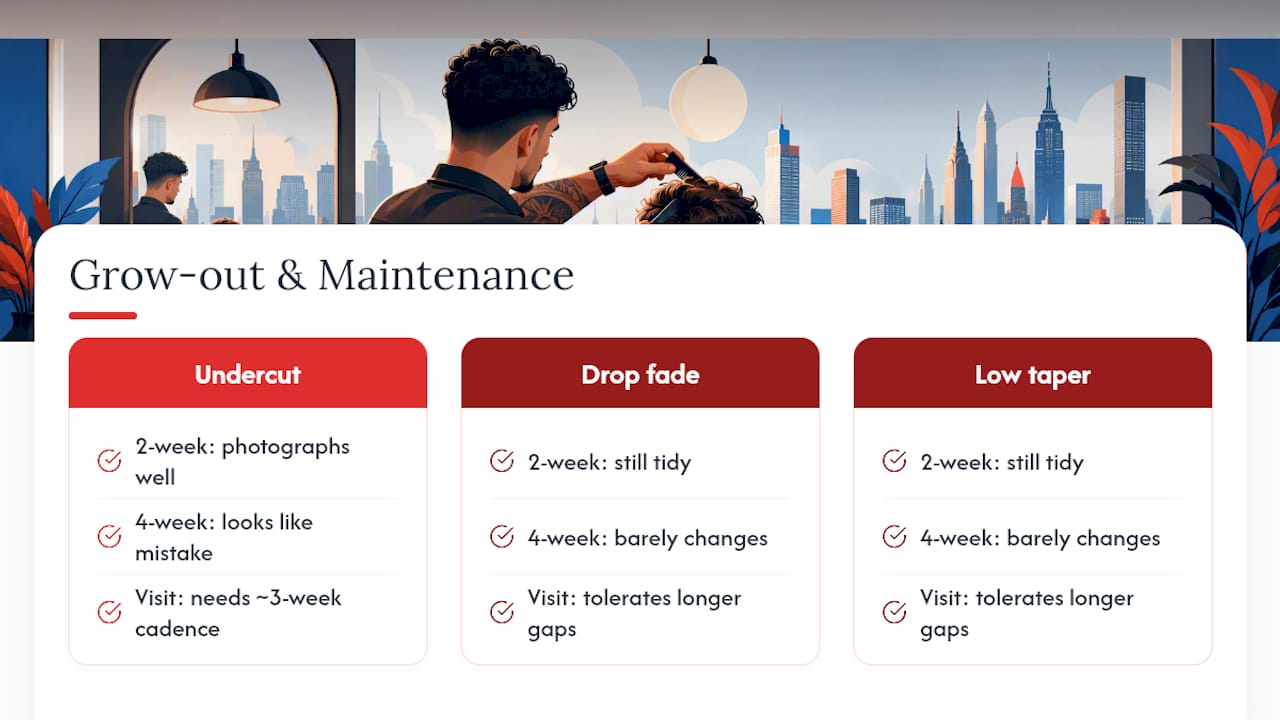
The conventional advice to “pick the style you like best” skips the real question: what’s your actual visit frequency going to be? If you’re not booking every three weeks without fail, a hard-line fade is the wrong bet regardless of how sharp it looks in the reference photo. Soft, blended sides aren’t a compromise. They’re the more forgiving choice for anyone who doesn’t treat haircuts as a monthly ritual.
Prioritize the grow-out behavior first, the exact style second. Everything else, the product, the part, the length on top, is easy to adjust once the foundation fits your real life.
— Evgenii
Ready for the Cut? Book Your Long Top, Short Sides Appointment
This exact haircut is handled regularly, though the sides are often rushed in many shops. A tailored fade, real texturizing, and an actual consultation before the clippers come out means you walk in with a script and walk out with the shape you asked for, not the shop’s default. Bring your reference photos, pick one of the scripts above, and tell your barber how many minutes you’ll spend styling each morning.
If you’re trying the style for the first time, the model haircut offer is the lowest-risk way to test a soft-blend taper or fade before committing to a longer-term look. Ready to lock in a time instead? Book your appointment online and bring your script with you.
Sources
Real Men Real Style covers 2026 trends; TheRightHairstyles catalogs variations; GQ explains scissor-over-comb technique; AXE details styling steps.
Recommended
Comments