Match Your Face to a Fade with Barber Backed Scripts and Exact Upkeep

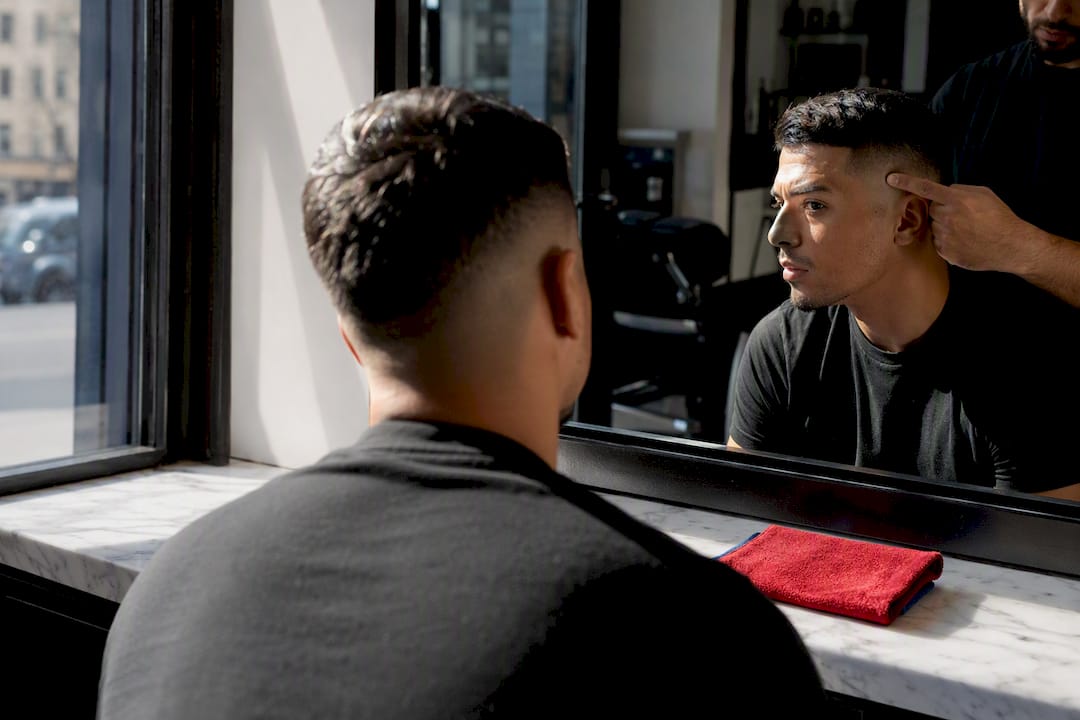
Pick a low fade if you want a cleaner, low-maintenance look that softens a long face. Pick a high fade if you want sharp, high-contrast styling that shortens a round face and shows off the top. If you’re not sure which camp you’re in, a mid fade splits the difference and works for most guys, which is why many barbershops see more mid fades walk out the door than either extreme.
TL;DR:
High fades require more frequent touch-ups every 1 to 2 weeks to maintain sharp contrast, while low fades can extend up to 4 weeks before needing a trim.
The starting point of a fade significantly impacts the look: low fades begin just above the ear, blending subtly, whereas high fades start near the temple or crown for bolder contrast.
Face shape guides fade choice: high fades elongate round faces, while low fades soften features on long or oval faces, but style flexibility remains based on personal preference.
Mistakes like asking for a fade but receiving a taper, or neglecting hair type and growth patterns, can ruin the intended style; clear communication with your barber is essential.
A mid fade is the common default for first-timers due to its balance of contrast and maintenance, with adjustments made based on face shape, hair texture, and personal style.
Table of Contents
Low Fade vs High Fade: Quick Comparison
The fastest way to see the difference is to line them up side by side.
Starting point: low fades begin roughly 0.5 to 1 inch above the ear; high fades start about 2 to 3 inches up, near the temple or crown.
Visual contrast: low fades blend subtly into longer top hair; high fades create a sharper line and expose more scalp, which reads bolder from across a room.
Best hair types: low fades suit thick, wavy, or curly hair that already has volume; high fades show off texture on straight or fine hair where contrast matters more.
Maintenance: low fades hold their shape for 3 to 4 weeks, high fades need touch-ups every 1 to 2 weeks.
Grow-out: low fades fade into a natural, unstructured look; high fades grow out into a noticeably shaggy line that needs a trim to stay sharp.
What Exactly Is a Fade, and Where Do Low and High Diverge?
A fade is a blending technique, not a haircut shape. A barber uses clippers to gradually shorten hair from longer on top to skin or near skin at the bottom, with no visible line between lengths. That’s different from a taper, which follows your natural hairline and removes less hair overall. Mixing up those terms is one of the most common sources of a haircut that doesn’t match what you pictured.
The starting point is what separates a low fade from a high fade: low fades begin near the bottom of the head, right above the ear, while high fades start much higher, closer to the temple or even the crown. Finish matters too. A skin fade (sometimes called a bald fade) blends all the way down to bare scalp using a razor or a zero-gapped clipper, while a guard fade stops at a short clipper length like a #1 or #2. That finish choice changes both the look and the upkeep, regardless of whether the fade starts low or high.
How Do You Choose a Fade for Your Face Shape?
Face shape is the single best predictor of which fade will actually flatter you, and the logic is simple geometry. A high fade adds visual height, pulling the eye upward and slimming a round face. A low fade preserves width along the sides, which softens features on long, oval, or diamond faces that don’t need more length added to them.
Here’s how it breaks down by shape:
Round faces: a high fade elongates the face and adds sharp lines where round features lack them.
Long or oval faces: a low fade keeps width at the sides and avoids stretching the face further.
Square faces: a low or mid fade preserves jaw balance instead of amplifying an already strong jawline.
Heart or diamond faces: low to mid fades avoid over narrowing a face that’s already tapered at the chin or forehead.
Thinning or receding hairlines: a low fade preserves the appearance of density; a high fade can draw attention directly to recession at the temples.
None of these are hard rules. A guy with a round face and a strong jaw can carry a high fade just fine if the top length is styled to add width rather than height. That’s the kind of call a barber makes in the chair, not from a chart.
Pro Tip: Bring a front-on photo of your face without hair styled forward. It’s the fastest way for a barber to spot your actual proportions instead of guessing from your usual part or fringe.
How Much Upkeep Does Each Fade Actually Require?
Hair grows about half an inch a month, or roughly 2 to 3 millimeters a week, and that single fact explains almost everything about fade maintenance. A high fade starts close to the skin, so even a few millimeters of regrowth blurs the sharp line fast. A low fade has more room to breathe before it looks unkempt.
Here’s the realistic visit schedule:
High fade: every 1 to 2 weeks to keep the contrast crisp.
Mid fade: every 2 to 3 weeks, a comfortable middle ground.
Low fade: every 3 to 4 weeks, since the blend sits lower and grows out more gracefully.
Statistic Callout: With hair growing about half an inch monthly, a high fade’s clean line can visibly soften in under two weeks, while a low fade holds its shape almost twice as long before it needs attention.
Daily styling differs too. High fades paired with short, textured tops often need a small amount of matte paste or clay to define movement. Low fades paired with longer tops can get away with a light pomade or nothing at all, especially on wavy or curly hair that holds shape naturally. Skin fades cost more than guard fades in most shops because razor or foil finishing takes real precision and extra time in the chair, not because the barber is padding the bill.
How Do You Describe a Fade to Your Barber?
Vague requests like “give me a fade” are how guys end up with a haircut they didn’t ask for. Barbers work off specifics: fade height, starting guard, top length, and finish.
Try a script like this: “Low taper to a #1 above the ear, fading to skin at the hairline, with 1.25 inches on top and a clean edge around the ears.” That single sentence covers everything a barber needs to execute the cut without guesswork.
Before your appointment:
Bring two or three reference photos, ideally from the front, side, and back.
Know your approximate top length in inches, not just “short” or “medium.”
Point out any thinning or receding areas so the barber can adjust the fade height around them.
Clarify skin fade versus guard fade by name, since “clean” means different things to different barbers.
The single biggest miscommunication is confusing a taper with a fade. If you want the sides gradually shortened without exposing skin, say “taper,” not “fade.”
Why Do So Many Barbers Default to a Mid Fade?
A mid fade starts at the temple, right between the two extremes, and it’s the closest thing to a universal recommendation in the chair. It balances contrast and upkeep well enough to flatter most face shapes without demanding weekly visits or looking flat.
That balance is exactly why mid fades function as the modern default for first-time fade clients. You get enough definition to look intentional and enough forgiveness in growth to skip a week if life gets busy. Once you’ve lived with a mid fade for a cut or two, it’s easy to nudge lower for a subtler look or higher for more drama. Save the immediate jump to a high fade for guys who already know they want maximum contrast, or the immediate drop to a low fade for guys prioritizing low upkeep above all else.
Where Did the Low Fade and High Fade Come From?
The fade itself traces back to military barbering in the mid-20th century, where short, uniform sides made grooming standards easy to enforce and kept hair off the collar in tight quarters. That practical origin is why early fades were almost always high and tight, cut for function rather than style.
Low fades and high-contrast skin fades took a different path through Black barbershop culture in the 1980s and 1990s, where fades became a canvas for personal expression rather than a regulation cut. Hip hop culture pushed the high-top fade and the gradually more dramatic skin fade into mainstream fashion during that era, turning a once-utilitarian cut into a statement.
The low fade’s rise is more recent and tracks with the broader shift toward natural-looking, easy-growing styles rather than aggressive high-contrast blends. As workplace grooming norms loosened and barbering trends favored versatility, low and mid fades became the everyday choice, while high fades stayed reserved for guys who specifically want that sharper, more deliberate look. Both versions borrow the same underlying technique. What changed over decades is where barbers chose to start the blend and how much contrast clients wanted to wear to work on a Monday.
What Mistakes Ruin a Low or High Fade?
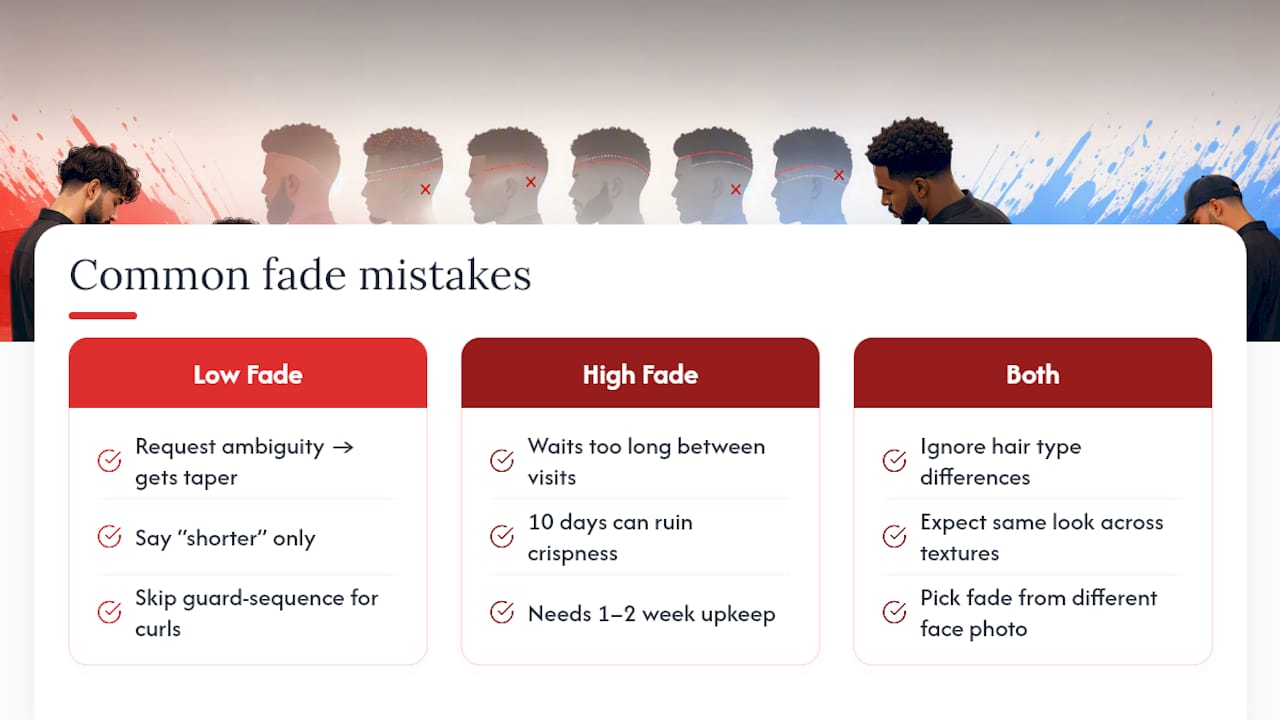
The most common low fade mistake is asking for one and getting a taper instead, because the two terms get used interchangeably even though they produce different results. If you want the classic low fade look, specify a fade to skin or to a very short guard, not just “shorter on the sides.”
High fades come with their own trap: waiting too long between visits. Because the starting point sits so close to the skin, even ten days of growth can turn a crisp high fade into a fuzzy, undefined mess that looks worse than a longer style would at the same growth stage. If you can’t commit to visits every one to two weeks, a high fade will fight you the whole way.
Another mistake on both ends is ignoring hair type. Guys with thick, coarse hair sometimes ask for a high fade expecting the same sharp look they saw on someone with fine, straight hair, without accounting for how much more the top will push out and change proportions. And guys with curly or coily hair who choose a low fade sometimes skip the guard-sequence conversation entirely, ending up with a blend that looks patchy because the barber wasn’t told how the curl pattern changes shrinkage.
The last mistake is cosmetic but common: choosing a fade height based on a photo of someone with a completely different face shape. A high fade that looks incredible on a round face can look unbalanced on someone with a naturally long, narrow head.
Which Celebrities Wear Low and High Fades Well?
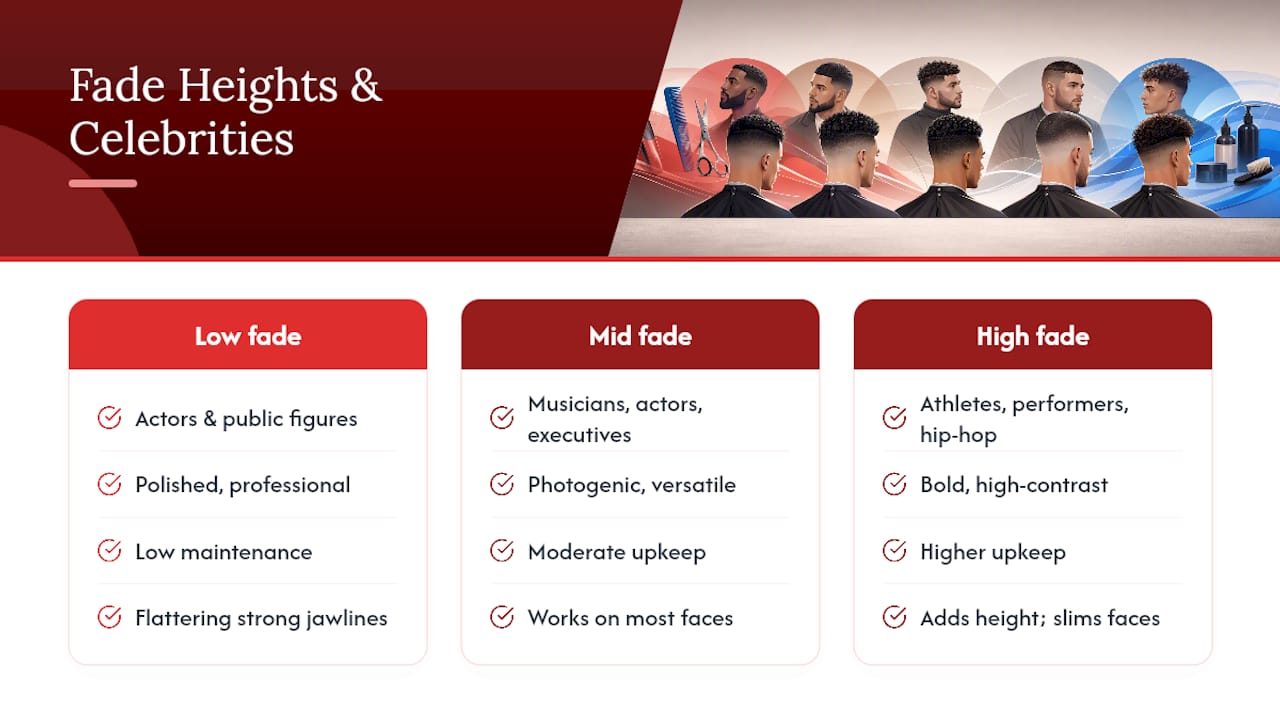
Low fades show up constantly on actors and public figures who want a polished, professional look without much daily fuss. Idris Elba has worn a low fade for years, keeping the sides tidy while letting slightly longer top hair do the styling work, a combination that flatters his stronger jawline without adding harsh lines.
High fades get more airtime in music and sports, where bold styling reads well on camera. Athletes and performers with round or fuller faces often lean into high fades specifically because the added height slims the face on screen, the same geometry principle that works in a barbershop mirror. The high-top fade of the late 1980s and 1990s, popularized by hip hop artists, remains the most extreme version of this idea: maximum height, maximum contrast, minimal blending toward the skin.
Mid fades dominate red carpets and boardrooms alike precisely because they photograph well without demanding a specific face shape to succeed. You’ll see them on musicians, actors, and executives who want to look sharp in photos without needing a touch-up every ten days.
None of these examples mean you should walk in with a printout and expect an identical result. Hairlines, hair density, and face proportions vary enough that the same fade height can look completely different from one guy to the next, which is exactly why the face-shape guidance above matters more than any single celebrity reference.
How I Advise First-Time Fade Clients
My rule of thumb: if you’re unsure, start at mid and adjust from there. It’s the fastest way to learn what actually flatters you without committing to a look you might regret in a week. Some barbershops walk clients through guard sequences and photo references before the clippers ever touch hair, because a five-minute conversation prevents almost every bad outcome. Clients who come back with the same request every cut are the best proof that a clean, well-communicated fade holds up far better than a guess.
— Evgenii
Ready to Get Your Fade Done Right?
Manhattan Barbershop is the place to skip the guesswork entirely. Instead of trying to translate “low fade” or “high fade” into the right guard sequence yourself, you sit in the chair and a barber reads your face shape, hair type, and hairline before making a single cut. If you want a modern take on a fade with precise top styling, the Mod Cut service is built exactly for that.

Before your visit, jot down your ideal top length in inches and save one or two reference photos, even if they’re rough. That five-minute prep turns into a haircut that actually matches what you pictured, and it holds its shape for weeks instead of days. Book your appointment online and get a fade that’s fitted to your face, not copied from someone else’s.
Sources
For more on the topic, GQ’s fade haircuts guide covers the broader style landscape, L’Oréal Paris breaks down styling and maintenance, MensHairstyleEmpire details technical starting points, HaircutVibes maps out practical style pairings, and Hairbond explains skin fade razor work in more technical detail.
FAQ
Which fade is most attractive?
There’s no single most attractive fade. The most flattering choice depends on your face shape: high fades tend to suit round faces by adding height, while low fades suit long or angular faces by preserving width.
Is a low fade attractive?
Yes, a low fade is widely considered a versatile, attractive option, especially for long, oval, or diamond face shapes where it softens features without adding extra height. It’s also one of the lower-maintenance choices, which makes it a popular default for busy schedules.
What hair ages you?
Overgrown, undefined styles with no clear shape tend to age a face more than a well-maintained short cut, since a fuzzy hairline and unstructured sides make features look less defined. A fresh, properly blended fade, low, mid, or high, generally reads as more youthful than long, unstructured hair regardless of face shape.
What is the 3:2:1 rule for haircuts?
Definitions of this rule vary across barbershops and aren’t standardized, so treat any specific ratio you see online with caution. The consistent idea behind most versions is proportional tapering, gradually shortening length from top to sides rather than jumping between two very different lengths.
What’s the difference between a low taper and a low fade?
A low taper follows your natural hairline and removes less hair, without exposing skin, while a low fade blends down to skin or a very short guard starting around 0.5 to 1 inch above the ear. Both start low on the head, but a fade creates more visible contrast at the base.
Recommended
Comments