Barber Backed: Match Matte or Shiny Pomade to Your Hair

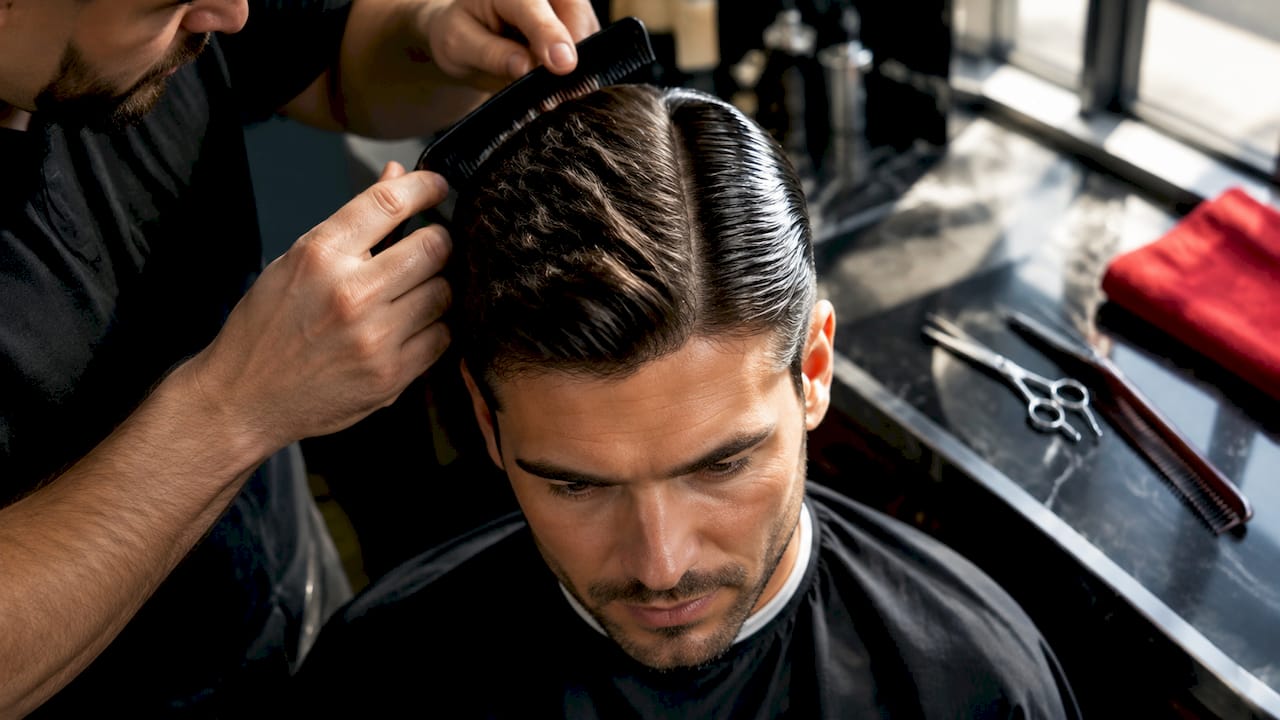
Choose matte pomade for everyday, textured, natural-looking styles, and shiny pomade for structured, formal looks like slick-backs or pompadours. Fine hair usually looks better with a little shine, while thick or coarse hair holds up better under a matte, clay-based product. Plenty of men keep both in the cabinet and switch depending on the day.
TL;DR:
Shiny pomades are better for structured, formal styles, especially on fine or thin hair, because they add a polished, reflective finish.
Matte pomades, often clay-based, are ideal for thick, curly, or coarse hair and casual, textured looks due to their ability to control volume and texture.
Applying matte requires dry hair and rough hand work, while shiny formulas are best applied on damp hair with a comb for cleaner lines.
Using both finishes together, such as matte at the roots and shine on mid-lengths, can create a customizable, layered look that suits medium to long hair.
A barber’s consultation based on your hair type and lifestyle can help determine the most appropriate finish, rather than relying solely on trends or product labels.
Table of Contents
Matte vs Shiny Pomade: What Each Finish Actually Does to Your Hair
The difference comes down to light. Matte pomade absorbs it, which is why a well-styled matte look reads as natural, almost like you didn’t use anything. Shiny pomade reflects light, which is exactly what gives a slicked side part or pompadour that polished, deliberate look.
That optical difference matters more than most guys realize. A matte finish creates the illusion of thicker hair because light doesn’t bounce off individual strands the way it does with shine, which tends to expose the scalp on thinning hair.
Formulation drives the look. Matte products often rely on clays like kaolin or bentonite, which soak up excess oil and rough up the hair’s texture for grip. Shiny pomades traditionally leaned on petroleum or heavy waxes, but water-based formulas now deliver that same glossy look with an easier washout and less risk of clogging pores.
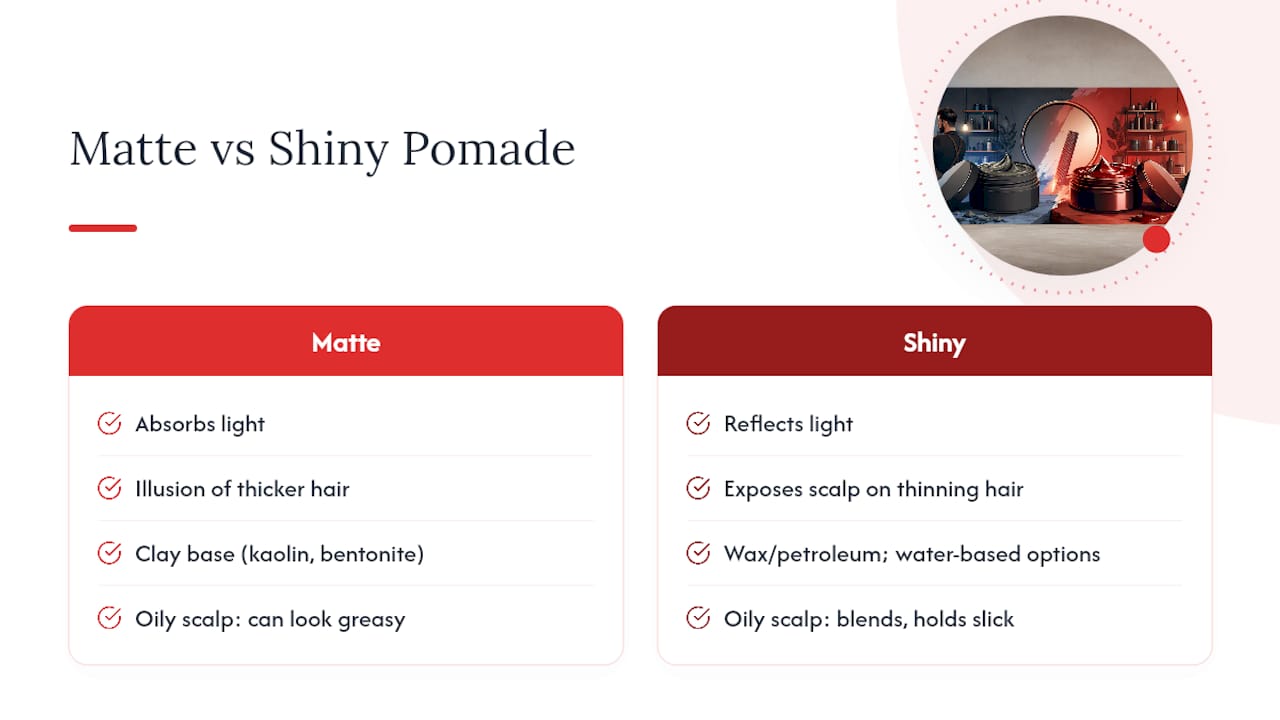
Scalp oil interacts differently with each. Oily scalps can make matte pomade look flat and greasy by midday, while that same oil actually helps a shiny pomade blend and hold its slick look longer.
Which Hair Types Benefit Most from Matte or Shiny Pomade
Hair type narrows the decision faster than any style trend.
Fine or thinning hair: shine can work in small amounts for a deliberate slick look, but go easy. Too much and the scalp shows through, undercutting the fuller look you’re after.
Thick or coarse hair: matte or clay-based pomade usually wins here. It tames volume without weighing hair down, and matte finishes are genuinely effective at controlling bulk texture.
Curly or wavy hair: matte enhances natural texture and curl definition without the greasy look a shine product can create on waves. Shine can flatten curl pattern if overapplied.
Medium hair: this is the wildcard. Your choice depends more on the specific style you’re going for than on the hair itself.
Styles and Occasions: Match the Finish to the Look You Want
Certain finishes are simply built for certain looks. Matte suits casual, textured styles where you want it to look like you rolled out of bed with good hair. Shine belongs where the goal is precision and polish.
Everyday and casual: a textured crop, messy quiff, or natural fringe calls for matte. Ask your barber for a “textured finish with no shine” and a light application.
Business and formal settings, weddings: a slick-back or pompadour benefits from a reflective, wet-look finish. Request a “high-shine, comb-through finish” so your barber knows to use a water-based glossy product and finish with a comb.
Side parts and classic cuts: these split the difference. A light shine gives it a sharp, deliberate line, which is why the side part remains one of the most versatile structured styles for both office and evening settings.
Decision Checklist: How to Choose Between Matte and Shiny
Run through these before you grab a tub off the shelf:
Hair type: fine hair leans shine, thick or curly hair leans matte.
Desired vibe: natural and undone versus sharp and intentional.
Maintenance tolerance: matte generally restyles easier by hand throughout the day; shine needs a comb and a bit more care to keep clean lines.
Washability: water-based shine formulas wash out easier than old-school petroleum pomades.
Scent and feel: some men care as much about how a product smells and feels on the scalp as how it looks.
The real trade-off is buildup versus visibility. Matte pomade can flake or cake if you overapply, and it shows scalp less but shows product residue more. Shine shows scalp more but hides application error better once it’s combed through.
Pro Tip: Don’t pick a finish because it’s trending. Pick it because it matches the actual silhouette you’re trying to create. A viral slick-back photo means nothing if your hair type fights the shine.
How to Apply Matte vs Shiny Pomade, Step by Step
Application timing changes the result more than the product itself.
Matte: apply to completely dry hair. Wet hair dilutes clay-based pomades and kills the texture you’re going for. Warm a dime-sized amount between your palms, work it from root to tip, then rough it up by hand instead of combing.
Shiny: apply to damp, towel-dried hair for the smoothest gloss. Use a comb to create clean, defined lines, and go light. Modern water-based formulas give a strong shine with a small amount, so overdoing it just turns polished into greasy.
Washing: a standard shampoo clears both finishes, though matte formulas with heavier clay content sometimes need a second pass to fully rinse out.
Mixing Finishes to Get a Custom Look
Cocktailing is the move once you’ve got the basics down: apply a matte product at the roots for lift and volume, then run a small amount of shine through the mid-lengths and ends for controlled polish. Apply the matte first while hair is dry, then finish with shine, working it in with a comb rather than your hands.
This combination works best on medium to longer hair, where you actually have enough length to show both textures. Barbers commonly recommend this exact root-to-tip layering for guys who want volume without losing a sharp finish.
How Barbers Actually Pick a Finish During a Consultation
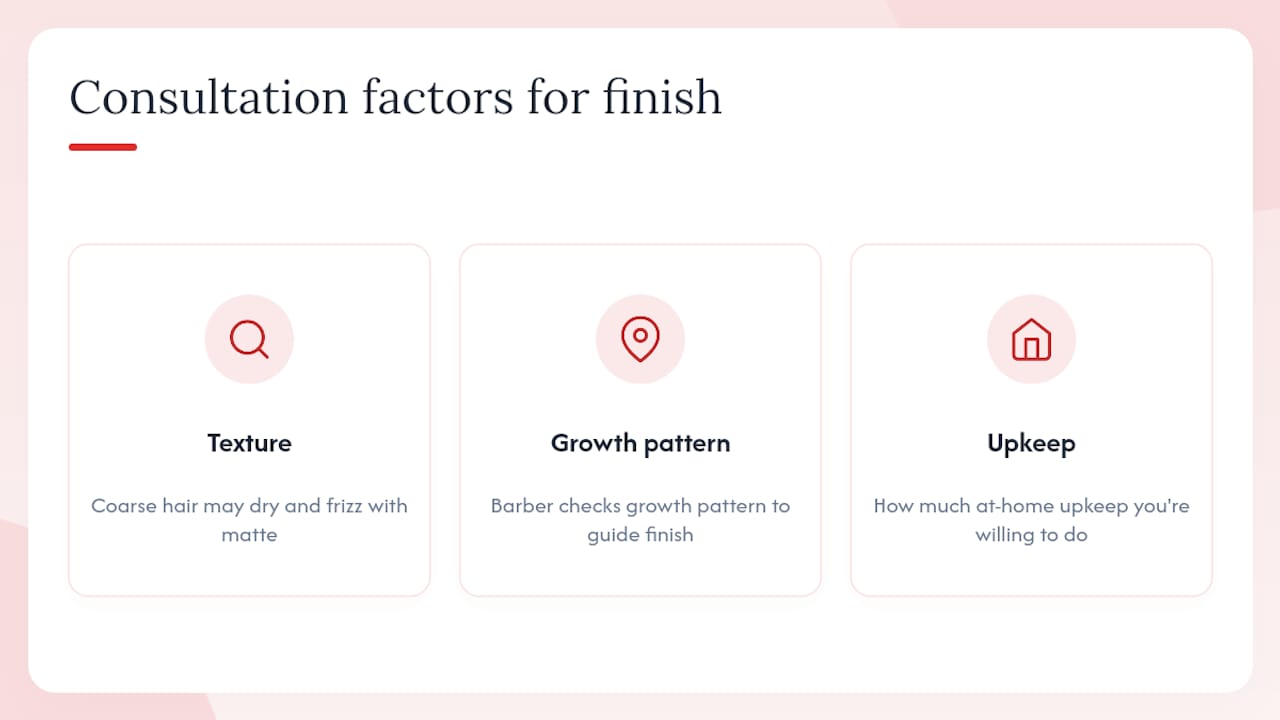
A good consultation starts before a single product touches your hair. At Manhattan Barbershop, the process starts with a look at texture, growth pattern, and how much upkeep you’re realistically willing to do at home, an approach barbers who take the time to understand your hair type tend to build into every cut.
That matters because the “right” finish on paper doesn’t always hold up in practice. Coarse hair that looks great with matte in the chair can dry out and frizz by afternoon without the right product underneath. A trained eye catches that before you walk out the door, not after you’ve already bought the wrong tub.
Try Both, Then Pick Your Favorite for the Occasion
Matte and shiny pomade aren’t rivals. They’re two tools solving two different problems, and treating this as a permanent choice misses the point. Keep both on hand. Reach for matte on a Tuesday, shine before a wedding, and let the occasion decide, not brand loyalty to one finish. That’s really the whole decision checklist boiled down to one habit.
— Evgenii
Get a Finish Consultation That Actually Fits Your Hair
Reading about matte versus shiny only gets you so far. Manhattan Barbershop gives you what a product review can’t: a barber who checks your hair type in person, demos a finish on your actual head, and sends you home knowing exactly how to recreate it. That beats guessing off a label every time.
A finish consultation starts with a quick texture and lifestyle check, moves into a demo styling with the recommended product, whether that’s a matte crop or a glossy pompadour, and ends with take-home guidance so the look holds up past day one. Book your appointment online or stop in, walk-ins are welcome for anyone who wants to sort this out today instead of scrolling through more product pages.
Sources
FAQ
Which finish is better, glossy or matte?
Neither is universally better. Glossy suits structured, formal styles and fine hair that needs a fuller look, while matte suits casual, textured styles and thick or curly hair.
Should hair be shiny or matte?
That depends on the look you’re building. Shine reads as polished and intentional, matte reads as natural and effortless, and most men use both depending on the day.
What are the differences between pomade and matte pomade?
“Pomade” is the broad category, and matte pomade is a specific type within it built with clays or waxes for a dry, no-shine finish instead of the glossy look traditional oil-based pomades give.
Which type of pomade is best?
The best type is the one that matches your hair texture and the style you’re after. Typically, barbers start with a texture check before recommending matte or shine, since coarse and fine hair respond very differently to the same product.
Recommended
Comments