Best Professional Men's Haircuts for Office Settings


The best professional men’s haircuts for office settings share three traits: clean tapered sides, moderate length on top, and a finish that holds up from the morning commute to the last meeting of the day. Not stiff, not trendy, just controlled and intentional.
Whether you work in finance, tech, or a creative studio, the right cut does quiet, consistent work for your image. Here is what actually belongs in your rotation.
What makes a great professional haircut for office settings?
The strongest office haircuts share a recognizable silhouette: neat sides, a tidy neckline, and enough structure on top to look deliberate without requiring a full styling routine every morning. Business professional cuts look controlled and intentional without feeling stiff or outdated.
Popular styles that fit this description include:
Classic taper — short sides blending into longer hair on top, suits nearly every face shape and hair texture
Ivy League — a refined, slightly longer version of the crew cut, almost always paired with a side part
Side part — timeless and versatile, works across conservative and modern workplaces
Crew cut — longer on top, short on the sides and back, low maintenance and sharp
Buzz cut — clipped close to the scalp, clean and effortless
Slick back — hair combed away from the face and set with pomade or a light gel, works across hair types
The common thread is balance: structured enough to read as professional, natural enough to avoid looking like you tried too hard. A good office haircut should still look intentional when the product fades by 5 PM.
Short professional haircuts that work in any office
Short cuts dominate professional environments for a reason. They require less daily effort, grow out more gracefully, and rarely cross any workplace dress code line.
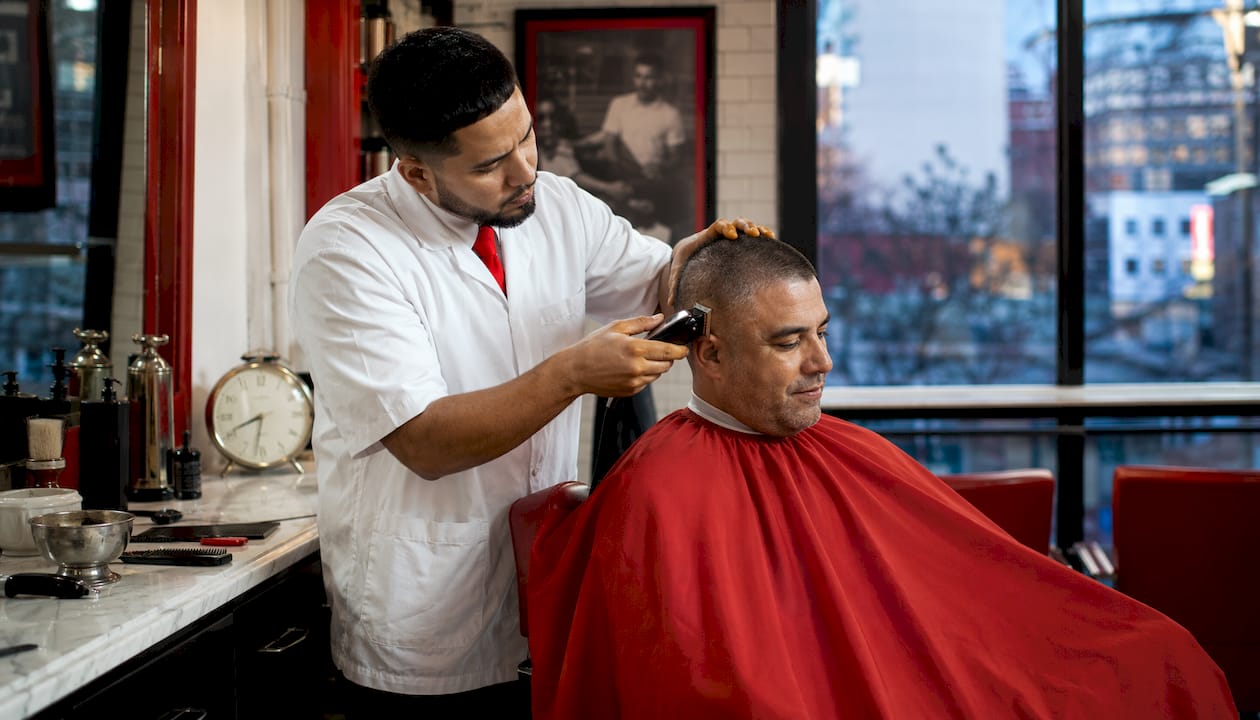
The crew cut and buzz cut remain the go-to choices for busy professionals who want a sharp appearance with minimal upkeep. The crew cut gives you a little more to work with on top, which means you can add a small amount of texture or a slight side sweep on days when you want a polished edge. The buzz cut removes that decision entirely. Both work well for men with fine to medium density hair, and the crew cut particularly suits oval and square face shapes.
The classic taper is the most versatile short option. It gradually shortens from the top down to the neckline, creating a natural transition rather than a hard line. Low-maintenance tapered cuts like this are ideal for men with busy schedules who want a polished look without a complicated morning routine. For straight or slightly wavy hair, a taper with a soft side part is about as clean as it gets.
Styling tips for short cuts:
Use a light pomade or matte clay, not gel. Gel creates a wet look that reads as dated in most offices.
Apply product to slightly damp hair, not soaking wet, for better distribution and a more natural finish.
A small amount of product goes a long way. Start with less than you think you need.
Keep the neckline clean between visits with a trimmer or ask your barber to tighten it at the four-week mark.
Pro Tip: For short haircuts for office settings, ask your barber to leave a touch more length on top than feels necessary. It gives you styling flexibility on presentation days and grows out more cleanly over the following weeks.
Medium-length styles that balance polish and personality
Medium-length hairstyles give you more room to express personal style while staying firmly within professional norms. Styles like the Ivy League, side part, and tapered comb over suit various hair types and allow subtle modern styling without sacrificing a polished look.
The Ivy League is the standout here. It keeps the clean spirit of a crew cut but adds enough length on top for a natural side part or a soft forward brush. Some mornings you part it. Some mornings you brush it forward. The cut accommodates both without looking like two different hairstyles. It is particularly well-suited to straight and lightly wavy hair, and it is one of the few cuts that looks equally appropriate in a law firm and a tech company.

The side part with taper fade is the modern executive option. A soft taper fade gives a polished, contemporary look suitable for many professional workplaces without the high-contrast drama of a skin fade. The side part defines facial symmetry and communicates confidence. For men with thicker hair, this cut also manages volume without requiring heavy product.
The comb over works especially well for men with wavy or slightly coarse hair. Paired with a low fade on the sides, it reads as current without veering into fashion territory. The pompadour with a taper is worth considering for men with curly or wavy hair who struggle to find a work-appropriate style. Keep it short and set it with a light pomade rather than a heavy wax, and it sits comfortably in most professional environments.
Medium-length styling considerations:
Wavy hair benefits from a diffuser or air drying before applying product, which prevents frizz and enhances natural texture.
For straight hair, a boar bristle brush and a small amount of pomade creates a clean side part that holds all day.
Curly hair works best with a curl-defining cream applied to damp hair, then left to air dry.
Avoid heavy waxes or gels for medium-length styles. They weigh the hair down and create an oily appearance by midday.
Pro Tip: If you have a conservative office but want a medium-length style, ask for a “soft taper with controlled texture on top.” That phrasing tells your barber you want something current but not casual.
What expert barbers know about cuts that last
A professional haircut is not just about how it looks walking out of the chair. The real test is how it holds up two weeks later, after a commute, after a long day, after the product has worn off.
A style should still look intentional if product hold fades by 5 PM. The best business haircuts are built to survive real working life: two weeks of growth, a morning without 15 minutes to style, and a commute that does not cooperate.
At Manhattanbarbershopny, owner Eugene Solod approaches each cut by assessing the client’s hair type, face shape, and daily routine before picking up the clippers. The goal is a cut that holds its form for weeks, not just hours. That means prioritizing natural movement over stiff structure, and choosing a silhouette that grows out cleanly rather than one that looks sharp only on day one.
Professional haircuts should maintain a respectable shape and style over two to four weeks before the next trim. For most office professionals, that means scheduling appointments every 3–4 weeks. Men with fades or very short cuts may need to come in closer to every 2–3 weeks, since the contrast grows out faster and becomes noticeable sooner.
On product: less is almost always more. Enough to control shape is ideal. Too much product makes a haircut look heavy or oily by afternoon, which undermines the polished impression you built in the morning.
Bringing reference photos and specifying your office dress code helps your barber tailor the cut precisely. Saying “I work in finance and need something conservative” gives your barber different information than “I’m in tech and want something modern but still clean.” Both are useful. Be specific about what you want the cut to do, not just what it should look like.
Pro Tip: Tell your barber how much time you realistically spend styling each morning. Five minutes and fifteen minutes produce very different cuts. Honesty here saves you from a style that looks great in the chair but frustrates you every weekday.
How to choose and maintain your office haircut
Picking the right cut starts with three honest assessments: your workplace culture, your hair texture, and your face shape. Get those right and the specific style almost selects itself.
Matching cut to workplace:
Finance, law, or corporate management: classic taper, Ivy League, or executive side part. Conservative and reliable.
Tech, marketing, or creative roles: soft taper with texture, textured crop, or modern side part with fade. Current but still clean.
Client-facing sales roles: anything polished and approachable. The Ivy League and crew cut both work well here.
Matching cut to face shape:
Round faces benefit from added height and tapered sides, which create the illusion of length.
Square faces suit structured tops and clean edges, which complement strong jawlines without competing with them.
Oval faces are versatile and suit most professional styles.
Longer faces look better with moderate volume and fuller sides, which add width and balance.
Matching cut to hair texture:
Straight hair: side parts, slick backs, classic tapers.
Wavy hair: Ivy League, comb over, soft pompadour.
Curly hair: controlled shorter cuts, textured crops, or a well-managed pompadour with taper.
Fine hair: crew cut or taper, which avoid adding weight and keep the cut looking intentional.
Maintenance habits that keep you sharp:
Schedule trims every 3–4 weeks. Consistent appointments are the single biggest factor in maintaining a clean, office-ready look.
Wash hair regularly but avoid daily washing if your scalp is not oily. Over-washing strips natural oils and makes hair harder to style.
Keep the neckline and temple area tidy between visits. A small trimmer handles this in under two minutes.
Use lightweight styling products only when needed. A quality grooming product that provides natural hold without stiffness is worth the investment.
For a deeper look at haircut longevity strategies that keep you looking sharp between visits, the approach is simpler than most men expect. The right cut, maintained consistently, takes less daily effort than a mediocre cut that needs constant product to look presentable.
Communicating with your barber is the final piece. Use specific language: mention your dress code, how much time you have each morning, and whether you want something that grows out conservatively or something that needs more frequent maintenance. Bring a reference photo if you are aiming for something between two styles. The more your barber knows about your life, the better the cut fits it. You can also read up on documenting your preferred style before your next appointment to make that conversation even more productive.
Manhattanbarbershopny brings precision to your professional look
Getting a great professional haircut in New York City is not about finding the trendiest shop. It is about finding a barber who listens, understands your hair, and delivers a cut that holds up through your actual week.
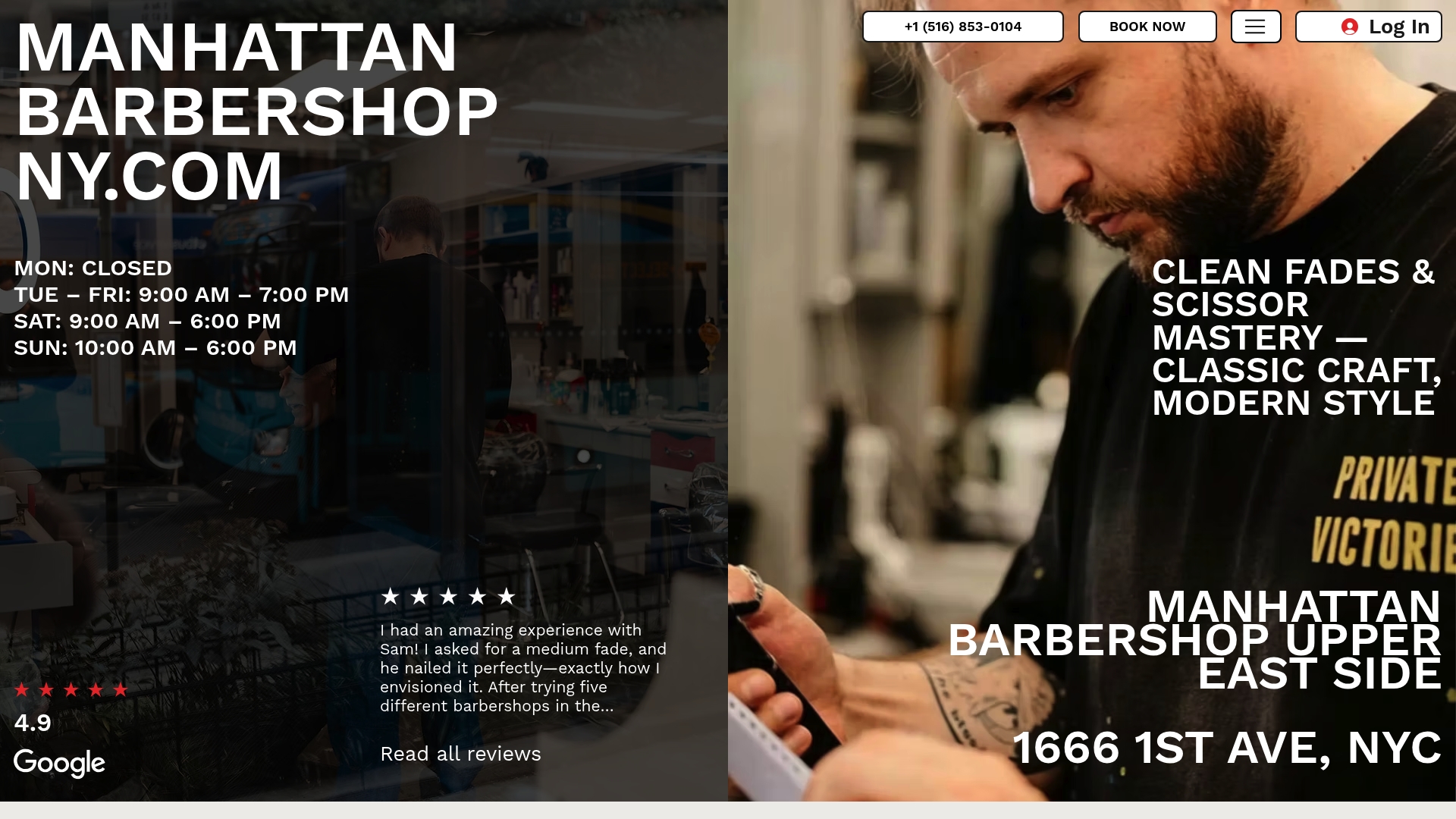
Manhattanbarbershopny, led by owner Eugene Solod, specializes in exactly the kind of work this article describes: clean fades, classic cuts, and tailored styles that prioritize natural movement over heavy product. The barbers here take time to understand each client’s hair type and daily routine before making a single cut. The result is a style that looks sharp on day one and still looks intentional on day eighteen. Walk-ins are welcome, or you can book your appointment online to lock in your preferred time. If you want to experience the craftsmanship firsthand, Manhattanbarbershopny also offers a free model haircut for new clients on the Upper East Side.
Key Takeaways
The most effective professional men’s haircuts for office settings combine clean tapered sides, moderate top length, and a natural finish that holds its shape through a full workday and two to four weeks of growth.
Point | Details |
Core silhouette matters most | Neat sides, a tidy neckline, and controlled top length define every strong office haircut. |
Short cuts lead in practicality | Crew cuts, classic tapers, and buzz cuts require minimal product and grow out cleanly over 3–4 weeks. |
Medium styles offer more versatility | The Ivy League and side part with taper fade suit a wider range of hair types and workplace cultures. |
Trim schedule is non-negotiable | Regular appointments every few weeks maintain a sharp, office-ready appearance between visits. |
Manhattanbarbershopny | Offers tailored classic and modern cuts on the Upper East Side, with walk-ins welcome and online booking available. |
Recommended
Comments