Red Flags Cheap Barbershop Checklist: Avoid Bad Cuts

A bad haircut is one of the most avoidable grooming mistakes you can make. The red flags cheap barbershop checklist covers the warning signs that separate a shop worth your money from one that will leave you wearing a hat for three weeks. Poor hygiene, vague pricing, rushed barbers, and inconsistent portfolios are the four core failure points. Knowing them before you sit down puts you in control of the outcome.
1. What are the most common hygiene issues at cheap barbershops?
Dirty tools are the clearest signal that a shop does not take its work seriously. Unclean tools and disposed blades strongly indicate low-quality service. That connection is direct: a barber who skips sanitation also skips precision.
Walk in and look around before you commit to the chair. Watch for these specific hygiene failures:
Clippers and scissors sitting on the counter without visible disinfectant
Used blade guards or single-use razors left on the workstation
Hair clippings on the floor from previous clients, not swept between cuts
Capes and neck strips reused without washing
No barbicide jar or UV sterilizer visible at the station
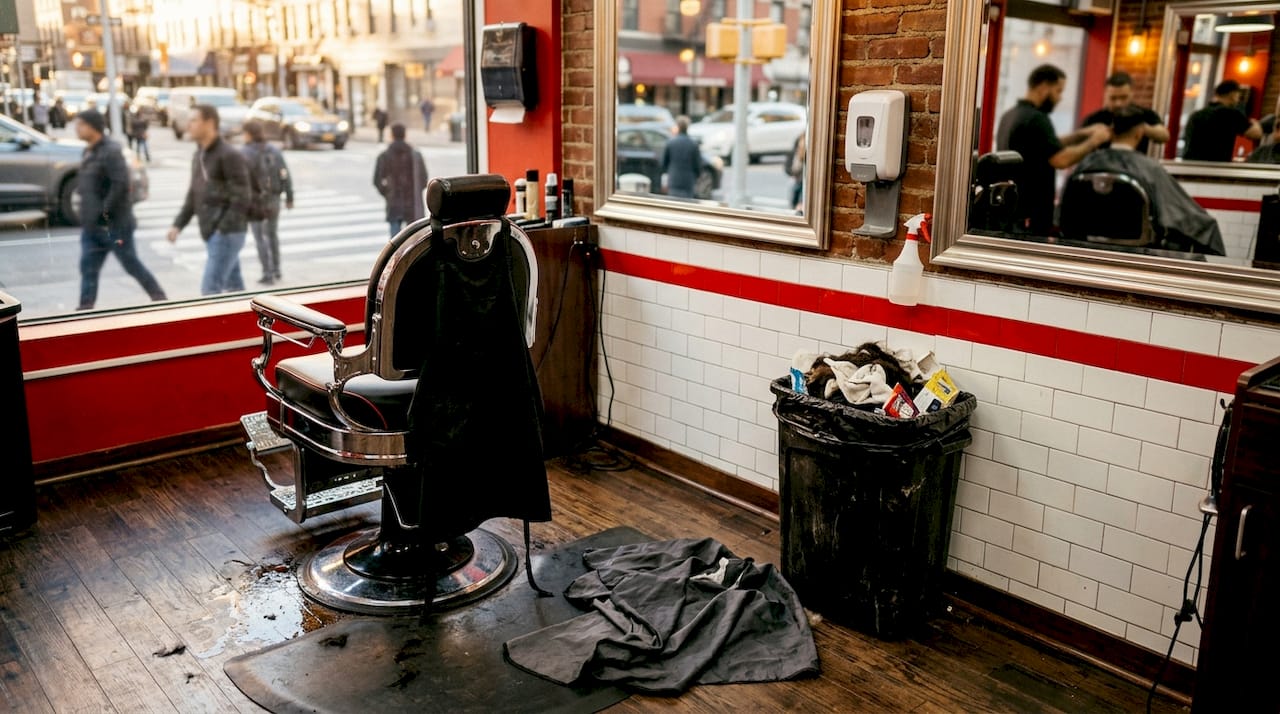
Safety hazards in barber shops include risks from scissors, chemicals, and slipping on wet floors caused by poor cleanliness. A cluttered, wet floor is not just unpleasant. It tells you the shop has no cleaning protocol at all.
Pro Tip: Arrive five minutes early and watch how the barber finishes with the client before you. If they do not wipe down the chair, swap the cape, or sanitize their tools, leave.
2. How to spot transparency and pricing warning signs
Clear, consistent pricing is a sign of professionalism. Pricing shown visibly onsite or online signals that a shop respects its clients. A shop that hides its prices until after the cut is set up to overcharge you.
Watch for these pricing red flags before you book:
No price list posted on the wall or the shop’s website
Prices that differ between the phone quote and the chair
A barber who cannot explain what is included in the service price
Pressure to pay the full amount upfront before any work begins
Vague add-on fees for “product” or “finishing” that were never mentioned
Industry guidance recommends a 25–50% deposit for complex hair services, with a written quote always requested to avoid bait-and-switch pricing. Paying the full amount upfront with no written confirmation gives you no recourse if the result is wrong.
Appointment-based shops absorb cost increases better than walk-in discount models. That matters to you because a shop that relies on constant discounting is often cutting corners somewhere else to survive.
Before you sit down, check out the questions to ask a new barbershop to protect yourself from hidden fees and last-minute price changes.
3. What behaviors signal a rushed or inattentive barber?
A barber who skips the consultation is telling you they do not care about your result. Barbers who rush, skip consultations, or do not ask questions are frequently associated with poor haircut results and dissatisfied clients. The consultation is not small talk. It is how a skilled barber maps your hair type, growth pattern, and style goals.
Look for these service red flags during your visit:
No questions asked about your preferred length, texture, or style
The barber starts cutting within seconds of you sitting down
No check-in during the cut to confirm you are happy with the direction
Distracted behavior such as phone use or talking to other barbers while cutting
No mirror check offered at the end of the service
The impact of a rushed cut compounds over time. A barber who does not listen during the first visit will not remember your preferences on the second. That pattern produces inconsistent results every time.
Pro Tip: Bring a reference photo. A barber who dismisses it or does not look at it carefully is signaling they plan to cut what they want, not what you asked for.
Good quality barbershop service always starts with a real conversation before the scissors come out.
4. How to evaluate a barber’s portfolio and customer feedback
A single great photo proves nothing. True skill is demonstrated by repeated execution on diverse hair types, not one viral cut. When you review a barber’s portfolio, look for consistent results across at least 10–15 different clients with different textures and lengths.
Use this framework when reviewing a portfolio and reviews:
What to check | What to look for |
Portfolio variety | Multiple hair types, not just one style repeated |
Photo recency | Posts from the last 60–90 days, not just older work |
Review detail | Mentions of communication, not just “great cut” |
Review recency | Feedback from the last 90 days due to stylist turnover |
Style match | Barber’s specialty aligns with your hair type |
Focus on reviews from the last 90 days to accurately assess barber quality, because high-performing stylists often change shops. A shop with strong reviews from two years ago may have a completely different team today.
Clients increasingly check reviews and online profiles before selecting barbershops, making visible recent feedback critical for trust. If a shop has no recent reviews at all, that silence is itself a warning sign.
Read the full guide on reading barber portfolio quality to sharpen your eye before you book.
5. What practical steps reduce risk on a first visit?
Treat the first visit as a test, not a commitment. Seasoned clients avoid high-stakes cuts on first appointments to reduce risk. A simple trim or shape-up gives you a low-cost way to evaluate the barber’s communication, hygiene, and attention to detail before you trust them with a major change.
Follow these steps to vet a new budget barbershop before you commit:
Book a simple service first. A trim or beard line-up costs little and reveals a lot about the barber’s habits and precision.
Arrive with a reference photo. A clear visual removes ambiguity and tests whether the barber listens.
Observe the shop before sitting. Check for clean stations, organized tools, and professional behavior between clients.
Avoid the visit before a big event. Never try a new barber the week before a wedding, interview, or important occasion.
Verify contact details and booking systems. A shop with no working phone number or booking confirmation is a reliability risk.
Ask for a referral. A recommendation from someone with similar hair type and style is the most reliable vetting shortcut available.
Experienced clients vet barbers by portfolio consistency, recent reviews, communication skills, and scheduling convenience before committing to major changes. That process takes 15 minutes of research and saves hours of frustration.
One more detail worth knowing: a quality haircut keeps its shape and looks intentional even two weeks after the appointment. If your cut falls apart in five days, the barber’s technique was the problem, not your hair.
For a deeper look at how to read feedback before you book, the guide on reading barbershop reviews walks through exactly what to look for.
Key Takeaways
Avoiding a bad haircut comes down to checking hygiene, pricing clarity, barber communication, and portfolio consistency before you ever sit in the chair.
Point | Details |
Hygiene is non-negotiable | Dirty tools and reused linens signal broader unprofessionalism that affects your cut. |
Pricing must be visible upfront | Hidden fees and full upfront payment with no written quote are clear warning signs. |
Consultations reveal skill | A barber who skips questions before cutting will deliver inconsistent results. |
Recent reviews matter most | Focus on feedback from the last 90 days because stylist turnover changes shop quality fast. |
First visits should be low stakes | Book a simple trim first to test communication, hygiene, and attention to detail. |
Why the cheapest cut almost always costs you more
I have sat in enough chairs to know that the price on the sign rarely tells the whole story. The shops that charge the least tend to make it up somewhere: faster cuts, skipped consultations, tools that have not been cleaned since the morning rush. You do not notice it immediately. You notice it five days later when the fade has grown out unevenly or the line looks crooked in natural light.
The relationship with a good barber is worth more than any single discount. The best barbers I have seen work remember what you asked for last time without you saying a word. That kind of consistency does not happen at a shop that treats every client as a transaction. Price and quality are not always opposites, but at the very low end of the market, the tradeoff is almost always real.
My honest advice: use the checklist in this article as a filter, not a guarantee. A shop can pass every hygiene and pricing test and still have a barber who does not listen. The first visit is your data point. Use it.
— Evgenii
Manhattanbarbershopny: where the checklist works in your favor
Manhattanbarbershopny on the Upper East Side of Manhattan is built around the exact opposite of every red flag on this list. Owner Eugene Solod and his team take time with every client, starting with a real consultation before any cutting begins. Pricing is clear, tools are clean, and the results hold their shape for weeks.
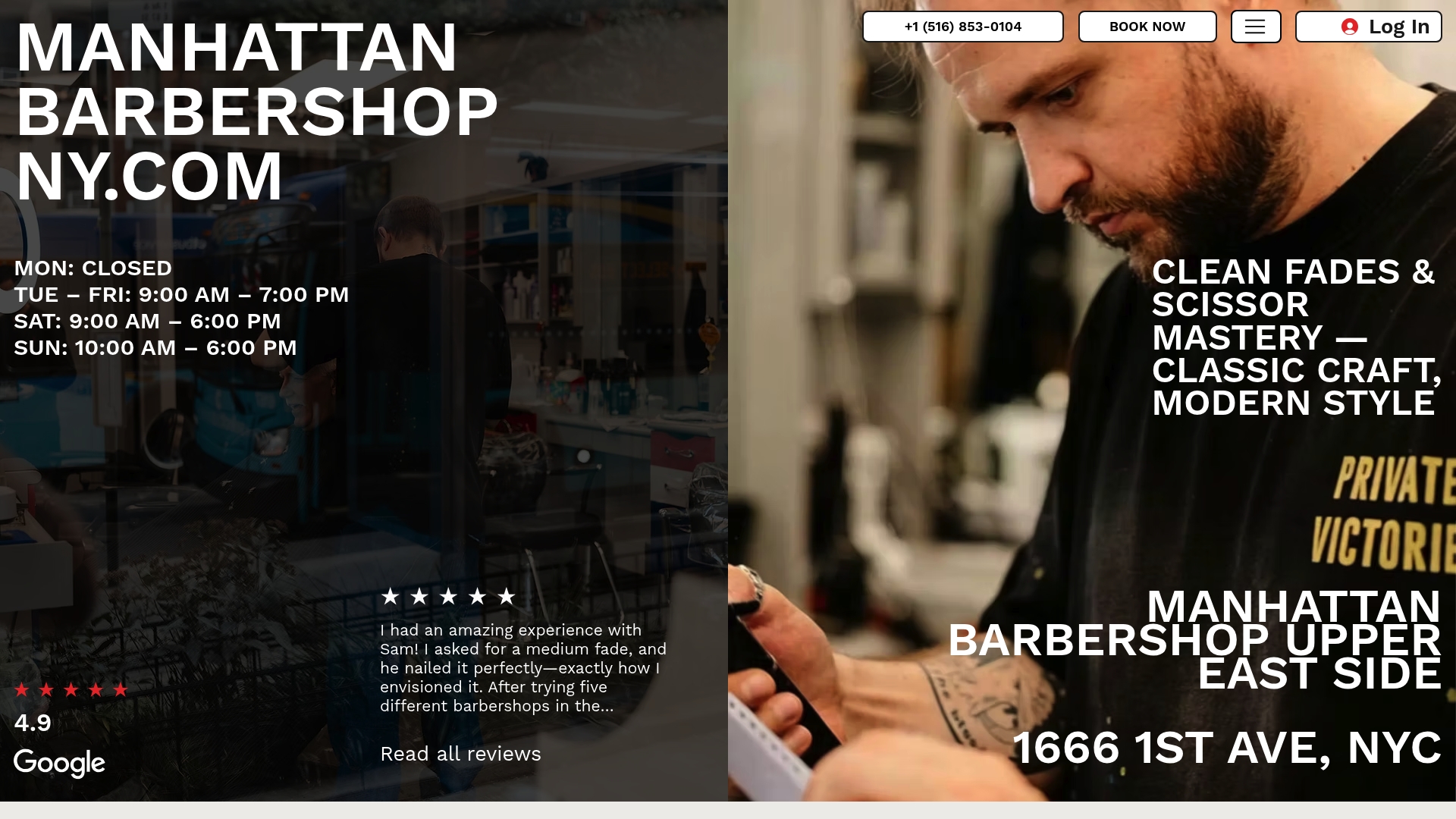
Whether you want a High-Top Fade or a classic cut tailored to your hair type, Manhattanbarbershopny delivers the kind of consistent, attentive service that makes the checklist easy to pass. Walk-ins are welcome, and online booking takes less than two minutes. No hidden fees, no rushed cuts, no surprises.
FAQ
What are the biggest red flags at a cheap barbershop?
The biggest red flags are dirty tools, no visible price list, barbers who skip the consultation, and reviews older than 90 days. Any one of these signals a shop that prioritizes speed over quality.
How do I know if a barber is actually skilled?
Look for consistent results across multiple clients and hair types in their portfolio, not just one standout photo. A quality cut also holds its shape for at least two weeks after the appointment.
Is it safe to pay a deposit at a barbershop?
A 25–50% deposit for complex services is standard industry practice. Paying the full amount upfront with no written confirmation is a warning sign and leaves you with no recourse if the result is wrong.
How recent should barbershop reviews be?
Focus on reviews from the last 90 days. Stylists change shops frequently, so older reviews may reflect a team that no longer works there.
What should I do on my first visit to a new barbershop?
Book a simple trim or shape-up rather than a major cut. This lets you evaluate the barber’s hygiene, communication, and attention to detail before committing to a bigger change.
Recommended
Comments