Ask Your Barber: Skater Haircut for Men, 1 inch sides 2–3 inches top

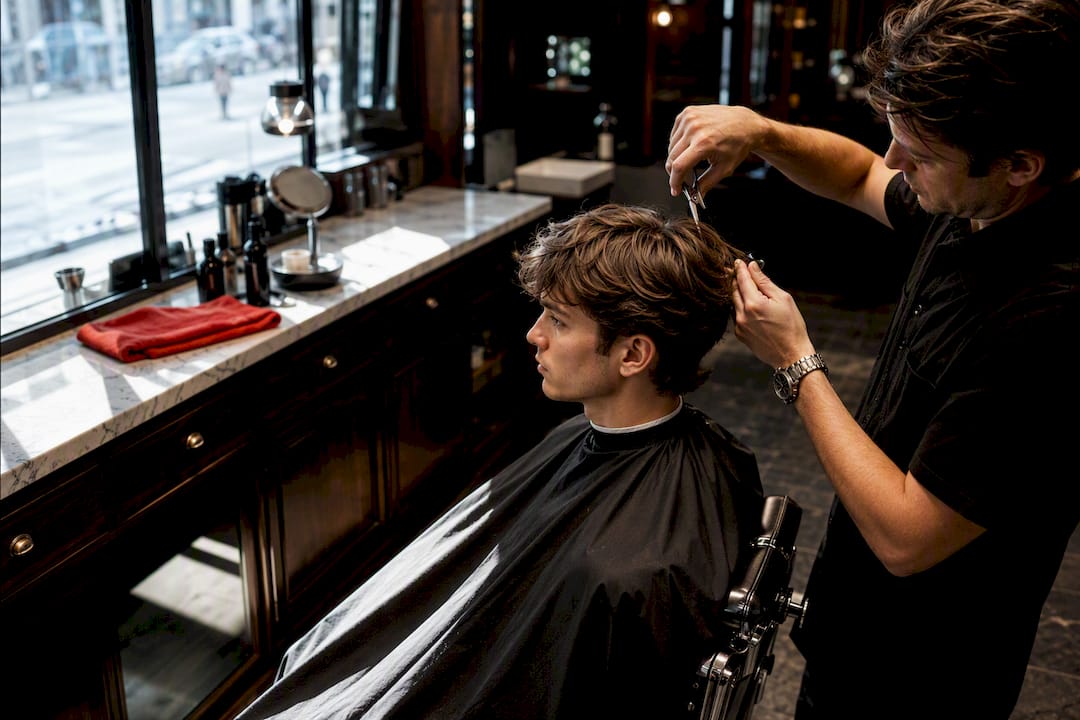
A skater haircut is medium-length hair cut and texturized so the ends flip out naturally at the ears and neckline, often called “wings” or “flow” by barbers. Ask for scissors-layering with about 2 to 3 inches on top and sides kept close to an inch, then let it dry naturally instead of gelling it flat. Bring a photo. That single move solves most of the miscommunication that ruins this cut.
TL;DR:
The classic skater haircut typically features sides around 1 inch and a top length of 2 to 3 inches, with scissors layering and point-cut ends to create flip-out texture.
Helmet-friendly variations like the taper fade curtain and short messy fringe maintain shape better during helmet use compared to wings or mullet styles, which may require more upkeep.
Proper cutting technique emphasizes scissors over clippers on top to preserve the flip, with layer adjustments tailored to individual hair texture and face shape for an optimal look.
Styling should involve natural drying, sea salt spray or grooming cream, and finger styling to enhance movement and achieve the unbothered, textured finish.
Regular maintenance every 6 to 8 weeks, focusing on internal thinning and avoiding heavy products, is essential to keep the shape and avoid uneven grow-out.
Table of Contents
What Is a Skater Haircut and Its Main Style Variations
The term “skater haircut” is shorthand. In barbering, this look has real names: wings, flow, or flippies), depending on who’s cutting it and where. Older barbers might call it a “mop top” or reference the Mod haircut lineage, since those names describe the same swept, flipped silhouette that’s been recycled through decades of youth culture. Understanding both the slang and the technical terms helps when you’re standing in a barber chair trying to explain what you want.
The style has splintered into distinct variations, each suited to different hair types, face shapes, and lifestyles.
Classic wings/flow — Medium length all over with ends that kick out at the temples and nape. Works best on straight to slightly wavy hair; round and oval faces wear it well.
Curtain cut — A center-parted version with length framing both sides of the face. Great for oval or square faces; needs enough natural wave or a light perm to hold the part.
Shag — Heavily layered throughout with choppy, textured ends. Forgiving on thinner hair since the layers create the illusion of volume.
Bro flow — A slightly more polished, gym-and-office-friendly take on wings, with less aggressive flipping and more controlled length.
Taper fade curtain — Short, faded sides paired with longer curtain-style length on top. This pairing has become one of the most requested modern skater variations because it reads as clean at work and loose on a board.
Short messy fringe — A cropped version for guys who want the texture and movement without committing to length. Low maintenance, helmet-friendly.
Skater mullet — Longer at the back, shorter and textured on top and sides. Polarizing, but it’s had a real resurgence among younger riders.
Wolf cut / long shag — Longer, shaggier, and more layered than a standard shag, blending mullet and shag traits. Best for guys with naturally thick or wavy hair who want maximum texture.
If you wear a helmet regularly, the taper fade curtain and short messy fringe compress the best under padding and bounce back with a quick finger comb. The classic wings and skater mullet need more rebuilding after helmet hair, since the flip depends on length that helmets tend to flatten. For a deeper look at how face shape should guide your pick, a face-shape cut guide breaks down which silhouettes flatter which jawlines and foreheads.
How to Ask Your Barber for a Skater Haircut
Precision here saves you a bad haircut and an awkward six weeks. Barbers work off numbers and reference photos, not vibes.
Sides: roughly 1 inch of length, blended rather than faded hard into the skin unless you specifically want a taper fade curtain.
Top: 2 to 3 inches, a range barbering guides consistently point to for the classic skater silhouette.
Technique: request an all-scissors cut with internal layering and point-cut ends. Clippers can shape the sides, but the flip at the crown and neckline needs scissor work to move correctly.
Phrases to use: “wings” or “flow,” “curtain with textured ends,” “all-scissors layers, please skip the heavy pomade.”
Scissors matter more than most guys realize. Clipper-cut ends lie flat and blunt; scissor-cut, point-cut ends have broken tips that catch air and flip outward when they dry. Barbering sources are consistent on this: aggressive clipper work kills the exact texture that makes this cut recognizable.
Statistic Callout: Sides around 1 inch, top at 2 to 3 inches. That’s the baseline most barber guides converge on for a wings/flow silhouette, though your barber should still adjust for your natural growth pattern and hair density.
Pro Tip: If your barber reaches straight for the clippers on top, stop them and ask for a comb-and-scissors approach instead. Clipper-over-comb is faster for the barber but it removes the weight distribution that makes hair flip rather than just fall. A barber who reads your growth pattern before touching scissors will save you a return trip.
Styling Skater Hair: A Daily Routine That Actually Works
The whole point of this cut is that it looks unbothered. Overworking it with product defeats the purpose.
Dry naturally or towel-dry most of the way, then finish with a low-heat blow-dry pointed at the roots for lift.
Sea salt spray on damp hair adds grit and texture, especially useful for straight or fine hair that needs help holding a shape.
Grooming cream works better than gel for fine hair, since it adds definition without weight.
Fiber cream or matte paste suits thicker hair that needs more grip to hold the flipped ends in place.
Finger-style the top instead of combing. A comb flattens the exact texture you’re trying to build.
Skip pomade and gel entirely. Barbering sources agree that heavy, shiny products flatten the flip and make the cut look dated instead of current. A matte fiber cream or light sea salt spray keeps the movement and the slightly undone finish that defines the look. One small dab worked through damp hair, applied the same way most practitioners describe, goes further than most guys expect.
Maintenance and Grow-Out: Keeping the Shape Without Losing Length
This cut holds its shape for roughly 6 to 8 weeks before the layers start losing definition, a cadence barbers regularly point to for trims that remove interior bulk while keeping the outline intact.
Book a trim every 6 to 8 weeks focused on thinning internal weight, not shortening the overall length.
During the awkward grow-out months (usually months two and three), a taper or fade on the sides keeps the whole thing looking intentional instead of shaggy.
Deep condition weekly if your hair runs dry, since longer layered styles show split ends fast.
See your barber for a full reshape if the flip has stopped working entirely; a quick trim won’t fix layers that have grown out unevenly.
For more on stretching time between cuts without losing shape, longer-lasting cut strategies cover the trade-offs worth knowing before you commit to a longer growth cycle.
What a Skater Haircut Consultation Actually Looks Like
Manhattan Barbershop approaches this cut the way most good barbershops should: scissors first, minimal product, and a real conversation about your hair before anyone touches a comb. The layering gets tailored to your texture and face shape rather than copied blindly off a reference photo, since the same “wings” cut looks completely different on thick wavy hair versus fine straight hair.
A skater cut only works if the barber reads your hair’s natural fall before cutting. Copy a photo exactly and it can look wrong on a different head of hair entirely.
Pro Tip: Come in with damp or freshly washed hair if possible. It’s easier for a barber to see your natural part and cowlicks before styling product masks them.
Where the Skater Haircut Actually Came From
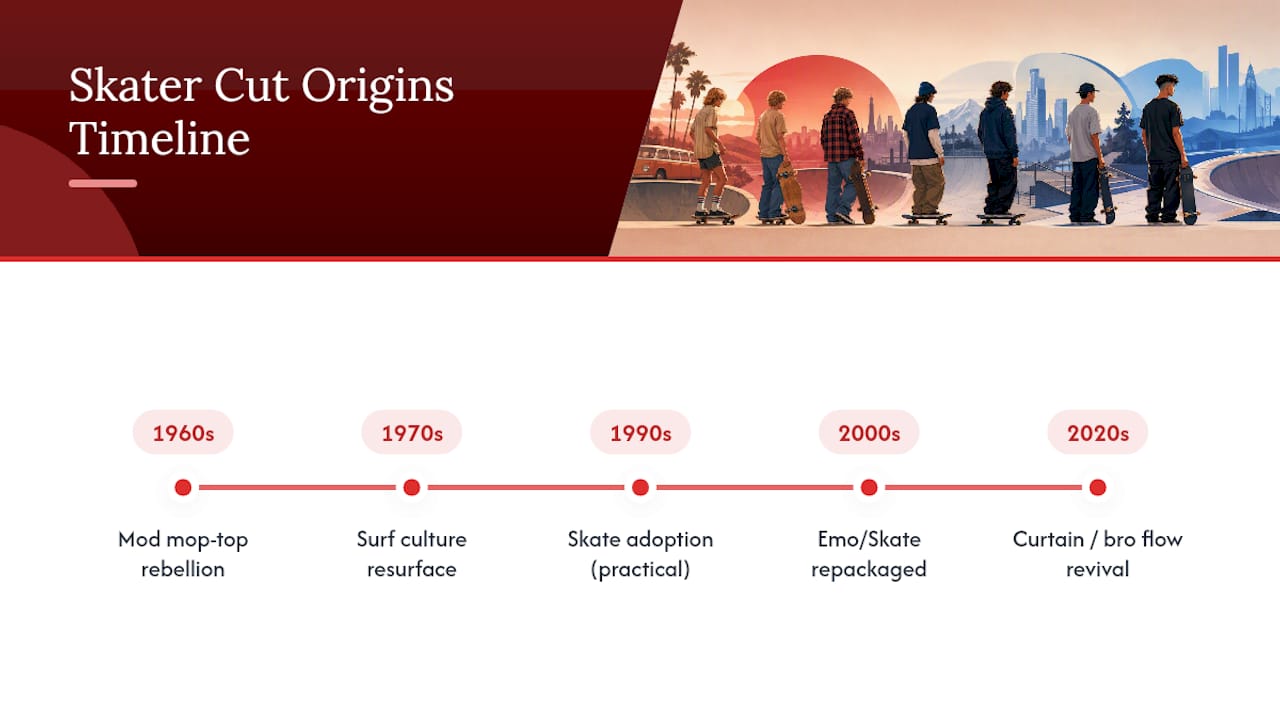
The skater haircut didn’t start on a skateboard. Its roots trace to the 1960s Mod movement in Britain, where mop-top styling and swept, layered hair became a rebellion against the clean-cut, short-back-and-sides standard of the previous decade. The same silhouette resurfaced under different names for decades, from surf culture in the 1970s to skate parks in the 1990s and 2000s.
Skateboarding culture adopted the look because it made practical sense. Longer, layered hair that flips instead of falling flat handled helmet compression and sweat better than a tight crop, and it signaled belonging to a specific subculture: punk-adjacent, anti-establishment, deliberately unpolished. The style overlapped heavily with early punk hairstyles for men, sharing the same disregard for symmetry and structure that defined that era’s fashion.
What’s interesting is how the cut kept resurfacing under new labels without much changing structurally. Emo and skate scenes in the 2000s repackaged it with heavier fringe and darker styling. The 2020s version, leaning into curtain cuts and bro flow, is really the same bones: longer top, flipped ends, minimal product, dressed in a slightly cleaner cut. The cultural context shifted from rebellion to versatility, but the haircut itself barely moved.
Which Celebrities and Athletes Made This Cut Popular Again
Skater and surf pros have quietly kept this style alive for longer than most trend cycles last. Professional skateboarders in the 1990s and early 2000s wore their hair long and loose specifically because it worked with helmets and didn’t require daily upkeep between sessions, and that practical origin story is part of why the look still feels authentic rather than manufactured.
The style’s mainstream comeback owes a lot to actors and musicians who wore some version of the curtain cut or bro flow in the 2010s and 2020s, pulling it out of skate parks and into everyday street style. Once a cut gets adopted by people who aren’t skating at all, it tends to soften. Sides get tighter, the top gets more deliberately shaped, and the finished look reads more “styled” than “just rolled out of bed,” even though the core flip is identical.
Athletes outside skateboarding have picked it up too, particularly in sports where long hair under a helmet or cap is common. That crossover is part of why barbers now see requests for this cut from guys who’ve never stepped on a board. They just like how it looks and how little daily work it takes once it’s cut correctly.
Adapting the Skater Cut for Curly, Wavy, and Straight Hair
Hair texture changes almost everything about how this cut behaves, which is why the same request can produce three completely different results depending on who’s sitting in the chair.
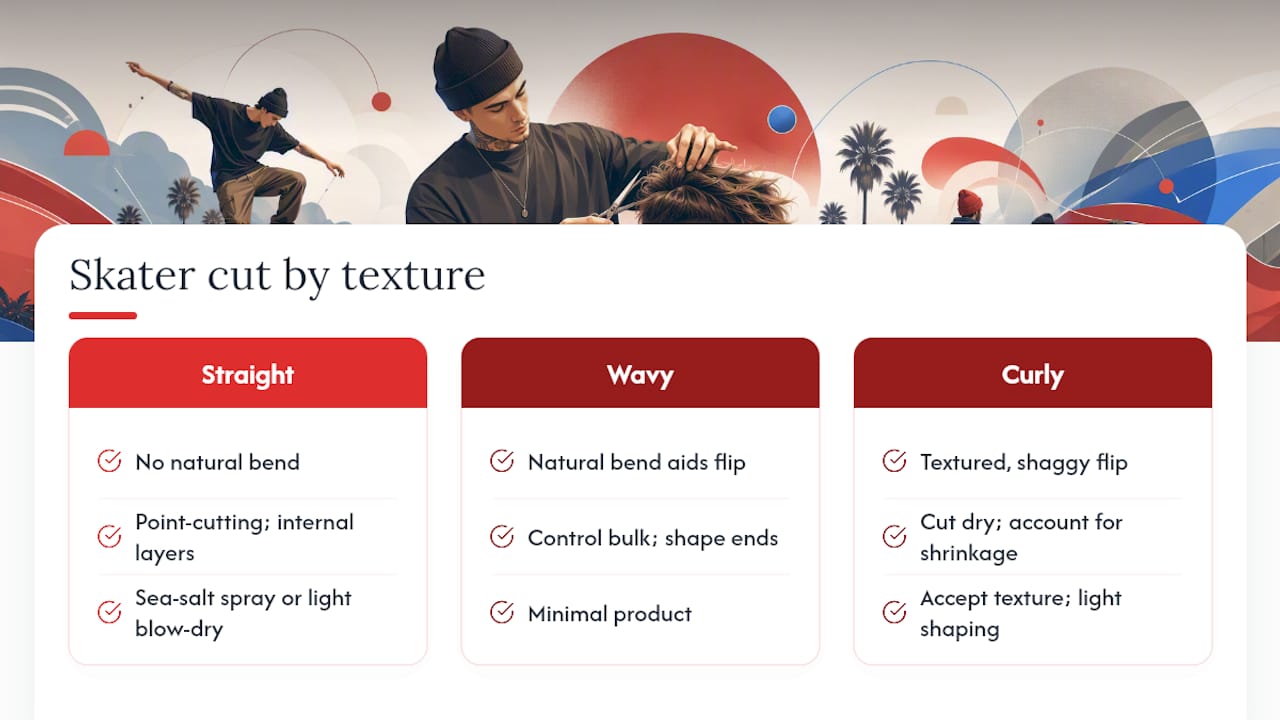
Straight hair needs the most help. It has no natural bend to work with, so the flip has to come almost entirely from the scissor work: heavy point-cutting, internal layering, and enough length on top for gravity and a light styling product to do the rest. Straight-haired guys usually need sea salt spray or a light blow-dry with a round brush to get any lift at all.
Wavy hair is the easiest texture for this cut. The natural bend does a lot of the flipping on its own, so the barber’s job is mostly about controlling bulk and shaping the ends rather than fighting the hair’s tendency to lie flat. A curtain cut or classic wings style tends to look effortless on wavy hair with minimal product.
Curly hair flips differently. Instead of a clean outward kick, curls create a more textured, shaggy version of the same silhouette, closer to a wolf cut or shag than a sleek curtain. Barbers cutting curly hair for this style typically cut dry, since curl pattern changes shape between wet and dry, and length needs to account for how much the curl will pull up once it dries.
Why the Skater Haircut Still Works
The skater haircut has outlasted plenty of trends because it evolved instead of staying frozen in one look. Curtain cuts and bro flow variations made it wearable for guys who’d never touch a skateboard, which is really the whole story of why it keeps coming back under new names. None of that matters, though, if the barber doesn’t read your texture and face shape first. The cut on a photo and the cut on your head are only the same haircut if someone actually adjusts for the hair in front of them.
— Evgenii
Book a Skater Haircut at Manhattan Barbershop
This style is best cut with all-scissors work, internal layering, and a finish that skips the heavy product many places default to. You get a haircut shaped for your actual texture, not a generic template copied off a photo.
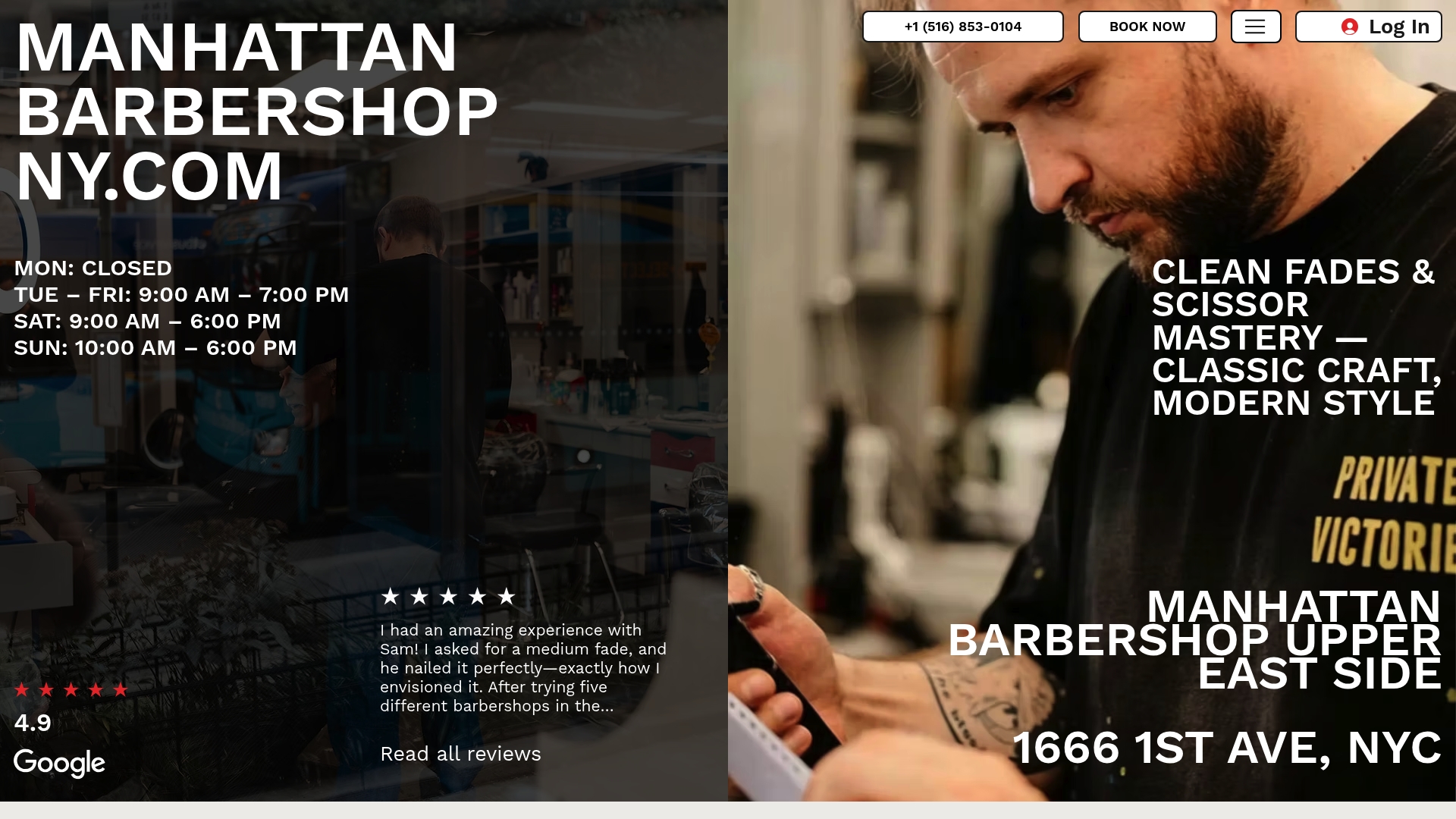
Bring a reference photo and let your barber know your hair-wash routine, since some barbers prefer cutting damp hair while others want it fully dry to see the natural fall. Services relevant to this cut include scissor-based styling, textured layering, and full styling guidance so you know how to maintain it at home. Walk-ins are welcome, but booking online guarantees you get the barber and time slot you actually want. If you’re weighing a sharper option, the shop’s high-top fade page shows the kind of precision scissor and clipper work that goes into every cut here. Book your appointment now and walk out with a skater cut built for your hair, not someone else’s.
Sources
Recommended
Comments