0.5mm Difference: Exact In Chair Script to Get a Skin or Bald Fade

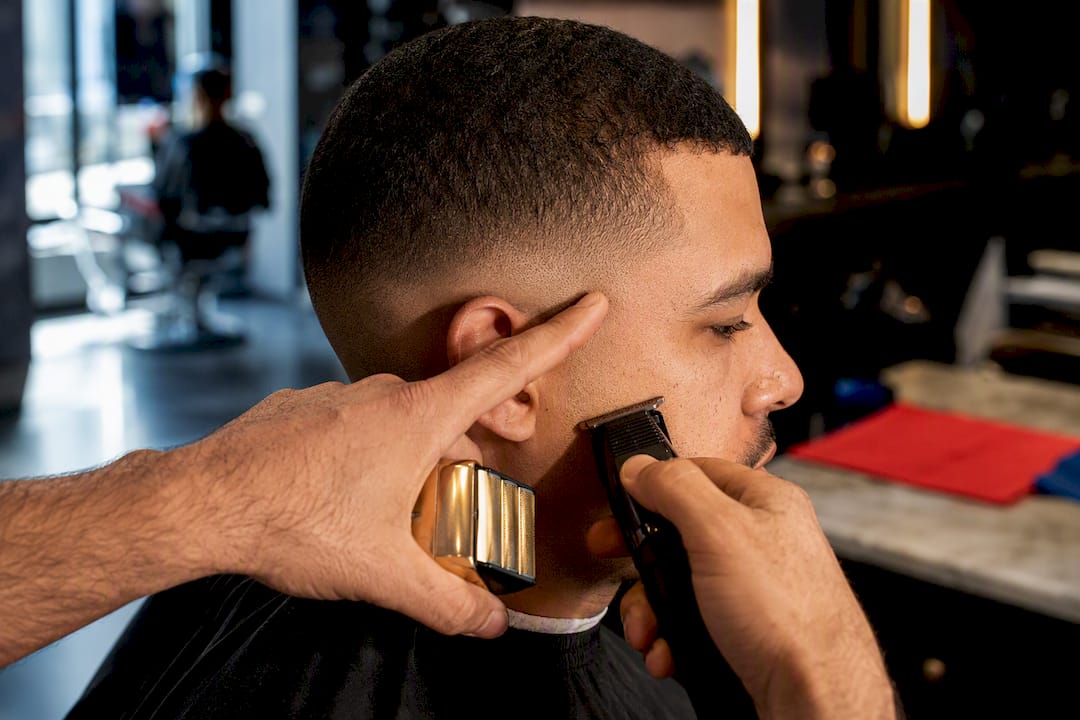
Skin fade and bald fade almost always mean the same thing: a fade cut down to bare, smooth skin at the base, with no visible hair line. The real difference that matters isn’t the name, it’s the finish and the height. Skip the terminology debate and just tell your barber the exact height and finish you want, because that’s the one phrase that guarantees you get what you pictured.
TL;DR:
A zero fade is achieved with clippers alone, leaving about 0.5mm of stubble, while a true skin or bald fade is shaved down to skin using a razor or foil shaver.
Clarify your desired height and finish separately when describing the cut, and specify if you want a razor finish to avoid miscommunication.
The terms “skin fade” and “bald fade” are interchangeable in most shops, with regional and cultural differences influencing terminology rather than technique.
Maintenance frequency varies: bald fades generally need touch-ups every 1 to 2 weeks, while zero fades can last up to 3 weeks due to less dramatic grow-out.
For sensitive skin or low-maintenance needs, request a clipper-only zero fade, and bring reference photos to ensure an accurate result.
Table of Contents
Skin Fade, Bald Fade, and Zero Fade: What Barbers Actually Mean
Barbers use these three terms loosely, and that’s exactly why miscommunication happens. Here’s how each one actually breaks down at the chair.
A skin fade and a bald fade both describe hair tapering down to bare skin at the bottom, with zero visible hair growth at the fade line. Most shops treat these two terms as interchangeable, and plenty of barbers will nod along no matter which one you say. Where the terms diverge slightly comes down to tradition. “Bald fade” has deeper roots in Black and urban barbershop culture, while “skin fade” became the go-to phrase in mainstream and European-influenced shops. Neither is more correct.
A zero fade is the one worth knowing separately. It leaves a faint whisper of stubble rather than true bare skin, so it reads as almost skin close without actually being razor smooth.
Quick reference for your next appointment:
Skin fade = tapered to bare skin, smooth finish
Bald fade = same result as skin fade, different regional name
Zero fade = closest clipper setting, faint stubble remains, not fully bare
Regional habit explains most of the confusion. If your barber says one term and means the other, it’s not a mistake. It’s just local vocabulary.
The Technical Difference: Tools, Baseline Length, and How to Spot It
The gap between a true skin fade and a zero fade isn’t stylistic, it’s mechanical. A zero fade is built with clippers alone, usually finished on a #0 or #000 guard, leaving a thin layer of stubble that barber-education guides put at roughly 0.5mm. A true skin or bald fade goes a step further: the barber switches to a foil shaver or a straight razor to shave the base down to 0mm, actual bare skin.
Statistic to remember: the practical gap between “close” and “bare” comes down to that half millimeter of stubble. It sounds tiny, but it’s the difference between hair you can feel with your fingertips and skin you can’t.
Three quick checks tell you which one you actually got:
Touch test: run your palm against the grain near the neckline. Stubble means zero fade. Smooth means true skin.
Bright light test: skin fades catch light and shine slightly at the base. Zero fades look matte.
Photo test: skin fades photograph with a crisper, whiter line at the taper. Zero fades show a softer gray transition.
If you care about how the cut looks in photos or under office lighting, the razor step is the detail that shows up.
Matching the Finish to Your Face, Skin, and Lifestyle
Not every face or scalp handles a razor-close fade the same way, and picking blind is how people end up back in the chair within days asking for a fix.
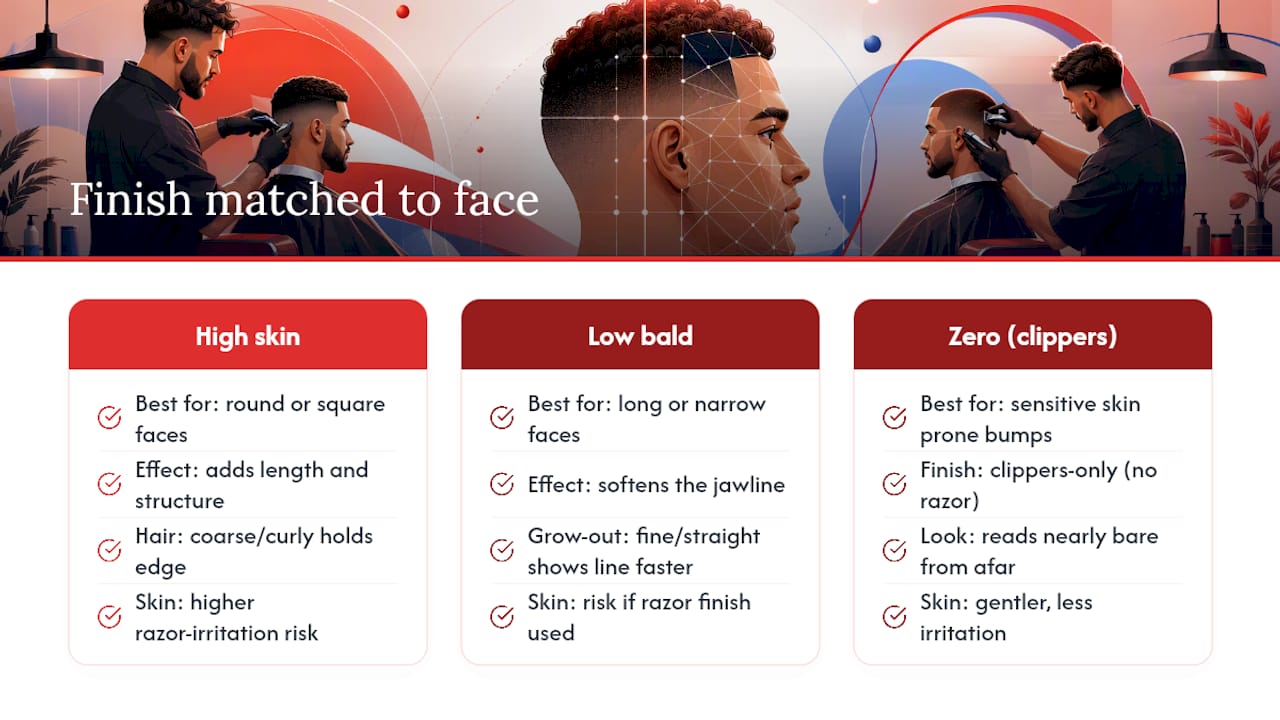
Face shape and hair texture: round or square faces often benefit from a higher, sharper skin fade because the crisp line adds visual length and structure. Longer or narrow faces sometimes look better with a lower bald fade that softens the jawline instead of elongating it further. Coarse or curly hair tends to hold a skin fade’s clean edge longer than fine, straight hair, which can show the fade line growing out faster.
Skin sensitivity: anyone prone to razor bumps or ingrown hairs takes on real risk with a foil shaver or straight-razor finish. A zero fade, done entirely with clippers, is the gentler option and still reads as nearly bare from a few feet away.
Lifestyle and setting: a sharp, high skin fade makes more of a statement. A lower, subtler bald fade or a zero fade blends into a business setting without drawing attention.
Pro Tip: If you’ve had razor bumps before, ask your barber for a zero fade with a clipper only finish. It gives you almost the same look with far less irritation.
Quick decision list: sensitive skin points to clippers only, workplace conservatism points to low and subtle, and a desire for maximum contrast points to a true razor finish up high.
How Often You’ll Need a Touch-Up, and What Grow-Out Looks Like
Maintenance is where a lot of guys pick the wrong finish for their schedule, then get frustrated when it doesn’t hold.
Bald fade (razor finish): plan on a refresh roughly every 1 to 2 weeks. New growth at the bare-skin line shows up fast and reads as messy sooner than any other finish.
Skin fade: similar territory, though a slightly higher fade line can stretch you closer to the 2 to 3 week mark before it looks like it needs work.
Zero fade: because it never went fully bare, new growth blends in more forgivingly. Most guys stretch this one to 2 to 3 weeks comfortably.
The most noticeable shift happens in the first 4 to 14 days, when regrowth at the base starts closing the gap between skin and hair. That’s the window where a bald fade goes from crisp to soft fastest.
For aftercare, a light daily moisturizer on the faded skin and an alcohol-free aftershave cut down on irritation, especially if you’re getting the razor treatment regularly.
What to Say in the Chair So There’s No Guessing
Here’s the actual script that removes ambiguity, because “give me a fade” is not specific enough for any barber to get it right on the first try.
Say the height and the finish as two separate instructions, not one combined phrase:
“I want a low fade, finished to skin, with the top left at [your preferred length].”
“Give me a mid fade, taken down to zero with the razor, not just clippers.”
“High fade, but leave a faint stubble at the bottom, don’t take it fully bare.”
Also ask directly whether they’ll finish with a foil shaver or straight razor, since that single question confirms whether you’re getting a true skin fade or a clipper only zero fade.
Height and finish, stated separately, solve nearly every miscommunication that happens in a barber’s chair. The word “fade” alone tells your barber almost nothing about what you actually want.
Bring 2 to 3 reference photos, ideally side, back, and front angles of the exact look you want. This guide to describing fade style walks through more phrasing if you want extra scripts before your next appointment. Before you leave, ask what the shop recommends for a touch-up schedule so you’re not guessing later.
Where These Names Actually Came From
The fade itself is old. Military barbers were tapering sides down to bare skin decades before either term existed in common use, and the style migrated into civilian barbershops through returning servicemen. What changed over time wasn’t the cut, it was the vocabulary describing it.
“Bald fade” carries the older lineage, particularly inside Black barbershop culture where the razor-finished taper became a signature look long before mainstream media picked it up. “Skin fade” gained traction later, especially as European and UK barbering styles spread through social media and pushed the cut into broader fashion conversations. Both terms describe the identical technical result. The split is cultural and generational, not technical.
Zero fade is the newest addition to the vocabulary, largely a product of barbers needing a way to describe the in-between look once clipper-only fades became popular as a lower-maintenance alternative to full skin fades. It didn’t exist as a distinct category until barbers needed language to separate “close” from “bare.”
Understanding this history matters for one practical reason: if your barber uses one term and you grew up hearing the other, you’re both describing the same haircut. Nobody’s wrong. It just helps to know why the naming split happened in the first place, so you don’t assume you’re asking for something unusual when you’re really asking for something standard.
The Misconceptions That Cause the Most Confusion
The biggest misconception is that “skin fade” and “bald fade” describe two different haircuts. They don’t, in the overwhelming majority of shops. Some newer barbers or younger clients occasionally treat “bald fade” as meaning a shorter overall haircut rather than a specific finish, which isn’t accurate but does happen enough to cause confusion.
Another common mix-up: assuming “zero fade” means the same as “skin fade” because both sound extreme. They’re not close. Zero fade keeps a visible layer of stubble; skin and bald fades don’t. Ordering a “zero fade” when you actually want fully bare skin will leave you disappointed.
Regionally, shops in different cities lean toward different defaults. Some urban barbershops default to calling every close taper a bald fade regardless of finish, while suburban or chain shops often default to “skin fade” as their catch-all term. Neither convention is more correct, but it does mean the same request can get you slightly different results depending on which shop you walk into.
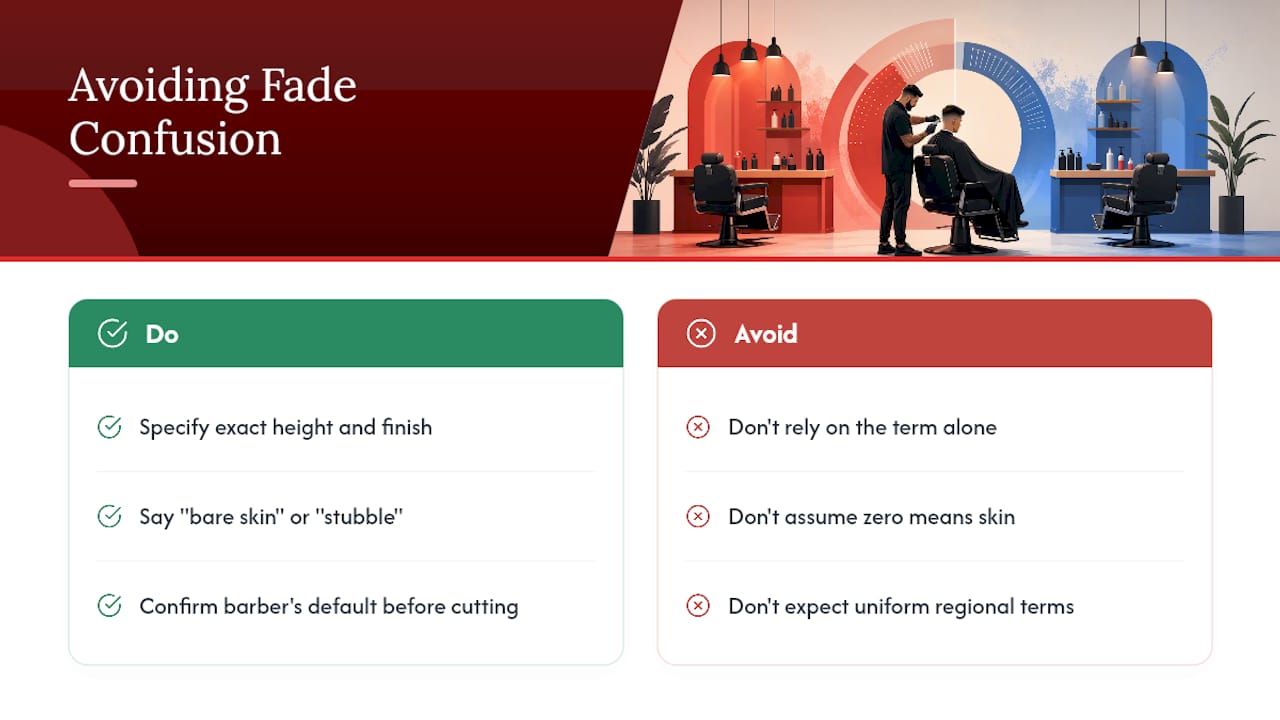
The fix for all of this confusion is the same fix mentioned earlier: stop relying on the term alone. Specify height and finish every time, and the regional or generational gap in vocabulary stops being a problem at all.
Pairing Your Fade With a Top Style
The fade is the base, but the top is where your personality shows, and both skin and bald fades pair cleanly with almost any top length.
A high skin fade under a pompadour creates sharp contrast, letting the volume and sweep on top read clearly against the bare sides. A low bald fade under the same pompadour softens things slightly, better suited to a more polished office look than a statement style.
Buzz cuts and skin fades are a natural match because the short, uniform top mirrors the crispness of the fade line. A zero fade under a buzz cut, by contrast, creates a more blended, low-contrast look that reads as understated rather than sharp.
Crew cuts sit somewhere in between. A mid skin fade under a crew cut gives you enough contrast to look intentional without tipping into “statement haircut” territory, which is part of why it’s a common request for guys who want something professional but not plain. If you want a longer read on how different top styles pair with fade height, this breakdown of low fade versus high fade covers the pairing logic in more detail.
A Barber’s View From the Chair
The most common mistake I see isn’t picking the wrong fade, it’s describing it wrong. A guy says “skin fade” and points to a photo of a zero fade, and now the barber has to guess which one he actually meant. Fix it by naming the height and the finish out loud, every single time, even if you think the barber already gets it.
On upkeep: pick your fade height based on how often you’re realistically going back. High and bare looks sharpest for the shortest stretch. Lower and softer buys you extra days before it looks unkempt.
— Evgenii
Get the Exact Fade You Pictured at Manhattan Barbershop
Many barbershops start every fade with a real consultation, walking through height, finish, and top style with you before starting, so you leave with the fade you actually asked for, not whatever the barber assumed you meant.
Bring your reference photos, mention whether you want a foil shaver or straight razor finish, and the cut can be built around your hair type and skin tolerance from there. Services like the Regular Haircut and other fade options are built to hold their shape for weeks, not days, which matters if you’re trying to stretch out the time between visits. If you’re leaning toward something sharper on top, the High-Top Fade page shows what that pairing looks like in practice.
Book online now, bring your photos, and walk out with a fade that matches the picture in your head instead of a rough approximation of it.
FAQ
What’s the difference between a skin fade and a zero fade?
A skin fade goes fully bare at the base using a foil shaver or straight razor, while a zero fade stops at the shortest clipper guard and leaves a faint layer of stubble. The zero fade is gentler on sensitive skin since it skips the razor step entirely.
What is the difference between a skin fade and a regular fade?
“Regular fade” is a vague term that could mean any taper, while a skin fade specifically means the fade ends at bare skin. A regular or standard fade might stop at a longer clipper guard and never reach that bare-skin finish at all.
Is a skin fade attractive?
A skin fade is widely considered a sharp, clean look because the crisp line at the base creates strong contrast with the top length. Whether it flatters you personally depends more on face shape and hair texture than on the style itself, which is why a consultation before cutting matters.
What’s the most attractive fade?
There’s no single fade that works best for everyone since it depends on face shape, hair texture, and how much contrast you want. A high skin fade tends to suit rounder or squarer faces, while a lower bald fade or zero fade often flatters longer face shapes better.
How much does a fade cost at Manhattan Barbershop?
Pricing depends on the specific cut. A Regular Haircut runs $42, and a more detailed Face Control consultation cut is $67, with current pricing always listed on the booking page.
Recommended
Comments