Stop Saying 'Taper Fade': Ask 'Low Taper to #1' and Bring Photos

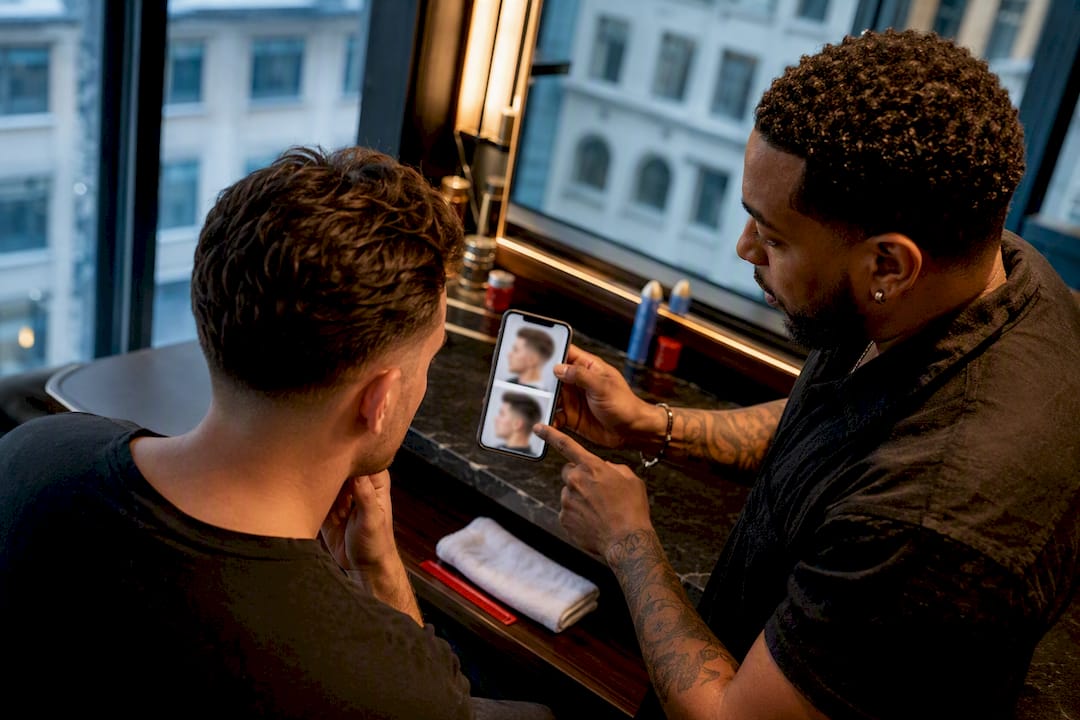
A taper keeps hair gradually shorter around the sideburns and neckline but never touches skin. A fade blends the sides and back down to bare scalp for sharp contrast. “Taper fade” sits between the two and means different things to different barbers, so confirm the shortest guard number and coverage area before the clippers start. If you want low maintenance, ask for a taper. If you want bold contrast, ask for a fade.
TL;DR:
The term “taper fade” lacks a standard meaning and can refer to a classic taper, a low or mid fade, or a softer, non-bald fade.
A taper never exposes skin, typically ending at guard numbers like #2 or #3, while a fade gradually cuts down to skin or near-skin for high contrast.
Maintenance intervals differ: tapers last over four weeks, while skin fades may require touch-ups every two to three weeks.
Describing the desired haircut with specific guard numbers, coverage areas, and reference photos ensures clearer communication with barbers.
Most barber shops customize the cut based on hair type and face shape, emphasizing personalized communication over relying solely on “taper fade” terminology.
Table of Contents
What Is a Taper Haircut?
A taper is a gradual shortening of hair around the sideburns, neckline, and edges of the ears, while the top and most of the sides keep more length and blend smoothly into the shorter perimeter. The key detail: a true taper never exposes skin. Even at its shortest point, you see hair, not scalp, which is exactly what makes it look natural as it grows out.
Barbers execute a taper two ways. Scissors-over-comb creates a soft, textured blend and is common in classic barbershop training, while clipper-over-comb with a longer guard, typically a medium guard length, gets a cleaner, faster result. Neither method takes the sides very short. That restraint is the whole point of the style.
Common taper variants:
Low taper — the blend starts just above the ear, keeping length everywhere else and reading as the most conservative option.
Mid taper — the blend begins around the middle of the side of the head, a balanced choice for most face shapes.
High taper — the blend starts higher, closer to the temple, giving more definition without going full fade.
Skin taper — a middle-ground variant where only the sideburns and neckline get taken to skin, while the rest of the sides stay at guard length. It sharpens the jawline without the all-over contrast of a true fade, a nuance TaperEmpire’s comparison lays out clearly.
Because a taper avoids skin, it holds its shape longer. Most guys stretch a taper to over a month between visits, since the grow-out blends naturally instead of leaving a hard line at the roots.
What Is a Fade Haircut?
A fade blends the entire side and back of the head down to skin or near-skin, creating the visible contrast between scalp and hair that defines the style. Where a taper stops at a guard number, a fade keeps cutting shorter as it moves down toward the ear and neckline, sometimes all the way to 0mm.
Getting that gradient right takes tool control a taper doesn’t demand. Barbers work through a progression of clipper guards, adjust the clipper lever mid cut to soften transition lines, and often finish with a straight razor or foil shaver to get true bare-skin contrast at the bottom.
Common fade variants:
Skin (bald) fade — the most extreme version, taken down to bare scalp at the shortest point.
Shadow fade — a softer take that leaves a light dusting of hair instead of going fully bald.
Drop fade — curves downward behind the ear, following the head’s natural shape.
Burst fade — fades around the ear in a rounded shape, popular with curly and coily hair.
Temple fade — contained to the temple area, often paired with longer hair on top.
That precision has a cost in upkeep. A skin fade typically needs a touch-up every two to three weeks, roughly half the interval of a taper, and the appointment itself usually runs longer because of the extra blending and razor work involved.
What Does Taper Fade Actually Mean?
Here’s the frustrating truth: “taper fade” isn’t a standardized cut. It’s a compound term that different barbers, shops, and regions have absorbed into three distinct interpretations, and none of them is wrong. That ambiguity is exactly why StyleSeat’s guide for clients recommends never relying on the term alone.
A classic taper with an unusually clean neckline. Some barbers use “taper fade” just to mean a sharp, defined perimeter, with no skin contrast anywhere else on the head.
A taper on top with an actual low or mid fade at the bottom. This is the true hybrid: length preserved through most of the side, then a real fade kicks in near the ear.
A softer, overall fade that never goes fully bald. Some shops use “taper fade” as shorthand for what others would just call a shadow fade.
None of this is barber incompetence. It’s a byproduct of how barbering language spreads informally through training, regional shops, and word of mouth, without a single body ever standardizing the vocabulary. The fix is simple: skip the compound term and describe the actual result. Name the shortest guard number, the coverage area, and bring a photo. A barber who sees the reference photo and hears “low, sides only, down to a #1” will land closer to your intent than one who just hears “taper fade” and has to guess which version you mean.
Taper vs Fade vs Taper Fade at a Glance
The differences that actually matter come down to four things: how short the shortest point goes, how much of the head that shortness covers, how much contrast it creates, and how often you’ll be back in the chair.
Factor | Taper | Fade | Taper fade |
Shortest point | Skin or near-skin (0mm) | Varies, often #1 or skin at the bottom only | |
Coverage | Perimeter only (sideburns, neckline) | Entire sides and back | Depends on barber’s interpretation |
Contrast/vibe | Conservative, subtle | Bold, high-contrast | Moderate, depends on execution |
Maintenance | Every 4 weeks | Every 2 to 3 weeks | Every 2 to 4 weeks |
The maintenance gap is the number most guys underestimate going in. A taper’s grow-out behaves naturally because it never hits skin, while a skin fade needs a touch-up roughly twice as often just to keep the line crisp. That’s the real cost of the extra contrast, not the haircut itself.
Which Style Actually Fits Your Hair and Schedule?
Hair texture changes how each cut reads once it’s done. Straight to wavy hair shows off a fade’s contrast cleanly because the hair lies flat against the gradient, while a taper works well here too if you want a lower-maintenance option that still looks sharp. Curly or coily hair tends to pair especially well with burst fades or drop fades, since the rounded fade line follows the curl pattern instead of fighting it, though a skin taper is a solid choice if you want definition without going full fade.
Face shape matters just as much as texture:
Oval faces can wear almost anything, taper or fade, without much risk.
Round faces usually look better with a higher fade, since the added height and vertical line elongate the face.
Longer faces tend to look best with a low taper, which avoids adding extra length up top.
If you’re genuinely torn, start with a taper. It’s the more forgiving, reversible option, since you can always ask for a fade added at your next visit, but going the other direction (growing out a skin fade) takes real patience.
Pro Tip: If your schedule only allows a haircut every five or six weeks, skip the skin fade altogether. It’ll look overgrown and patchy well before your next appointment, while a taper stays presentable the whole stretch.
How Do You Ask Your Barber for the Right Cut?
Walking in and saying “taper fade” is the fastest way to get a result you didn’t picture. Here’s a script that actually works:
Bring two or three photos on your phone, ideally from the front and side, showing the exact fade height and edge detail you want.
State the coverage explicitly. Say “perimeter only” if you want a taper, or “sides and back, all the way down” if you want a fade.
Name the fade height and guard number. “Low fade, take it to a #1” or “high fade, to skin at the bottom” leaves no room for interpretation.
Ask how the barber plans to blend it before the clippers touch your head. A barber who walks you through the guard progression is paying attention; one who brushes past the question is a red flag.
Pro Tip: Say the word “skin” out loud if that’s what you want. Barbers often default to a #1 guard unless you specifically ask for bare scalp, so “short” and “skin” are not interchangeable instructions.
A quick rundown on how to describe fade placement covers the same ground in more detail if you want to rehearse the conversation before your appointment.
How We Handle Tapers and Fades in the Chair
Manhattan Barbershop treats “taper fade” the same way this guide does: as a starting point for conversation, not a fixed instruction. We specialize in clean fades and classic tapers, and every appointment opens with a real consultation, photos included, before a clipper touches your head.
In practice, that means a barber might steer a client toward a mid taper instead of a low fade simply because his hair grows in thick and dense, or because his schedule only allows visits every six weeks. Customization based on hair type and head shape isn’t an upsell here. It’s how we avoid the exact miscommunication this whole guide is about.
Why “Just Say Taper Fade” Is Bad Advice
Most grooming content treats “taper fade” as a real, third category of haircut, as if naming it settles the ambiguity. It doesn’t. The term is a linguistic shortcut that papers over a genuine communication gap between client and barber, and repeating it back to your barber without qualification just outsources the guesswork to whoever’s holding the clippers that day.
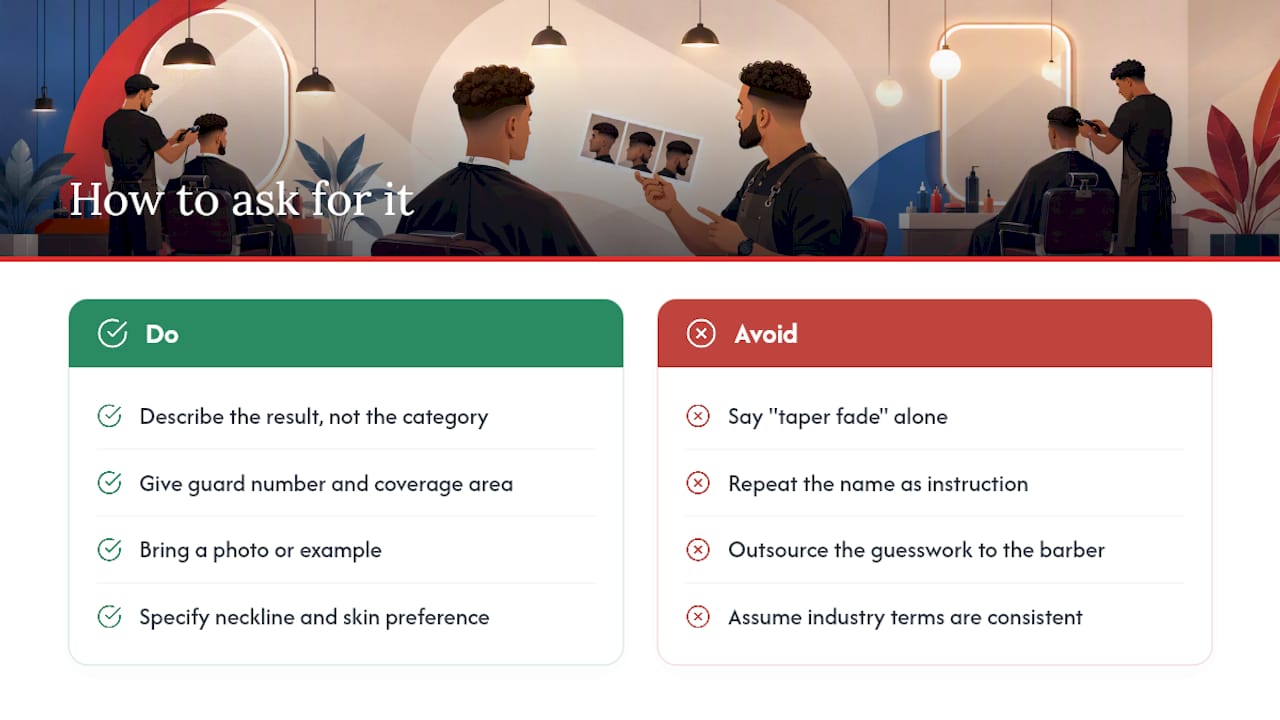
The better move, and the one this guide has pushed from the start, is to stop treating the name as the instruction. The name is just an opener. The real instruction is the guard number, the coverage area, and the photo. Barbers aren’t inconsistent because they’re bad at their jobs. They’re inconsistent because the industry never agreed on what the compound term means, and no client-facing glossary is going to fix that faster than a client just being specific.
If there’s one habit worth building from this article, it’s this: describe the result, not the category. “Low taper, clean neckline, no skin anywhere” will get you the same haircut in any shop in the country. “Taper fade” might get you three different haircuts in three different chairs.
— Evgenii
Ready to Get the Cut You Actually Described?
Manhattan Barbershop is built around exactly the problem this guide addresses: getting the fade or taper you pictured, not the one a barber guessed at. Every appointment starts with a consultation, photos welcome, so the guard number and coverage area get confirmed before anything gets cut.

If you’re after the classic look, book the regular haircut service and note your preferred fade height or guard number when you schedule. Bring your reference photos to the appointment, mention whether you want skin contact anywhere, and the consultation handles the rest. New clients can also check out the free model haircut opportunity to experience the shop’s approach firsthand. Ready to lock in a time? Book online and skip the guesswork entirely.
Sources
Definitions and maintenance timelines came from StyleSeat, TaperEmpire, ReadySleek, and Expert Hairstylist, each of which specializes in men’s grooming technique and client communication.
Recommended
Comments