Say This in the Chair: Temple Fade vs Taper in Manhattan

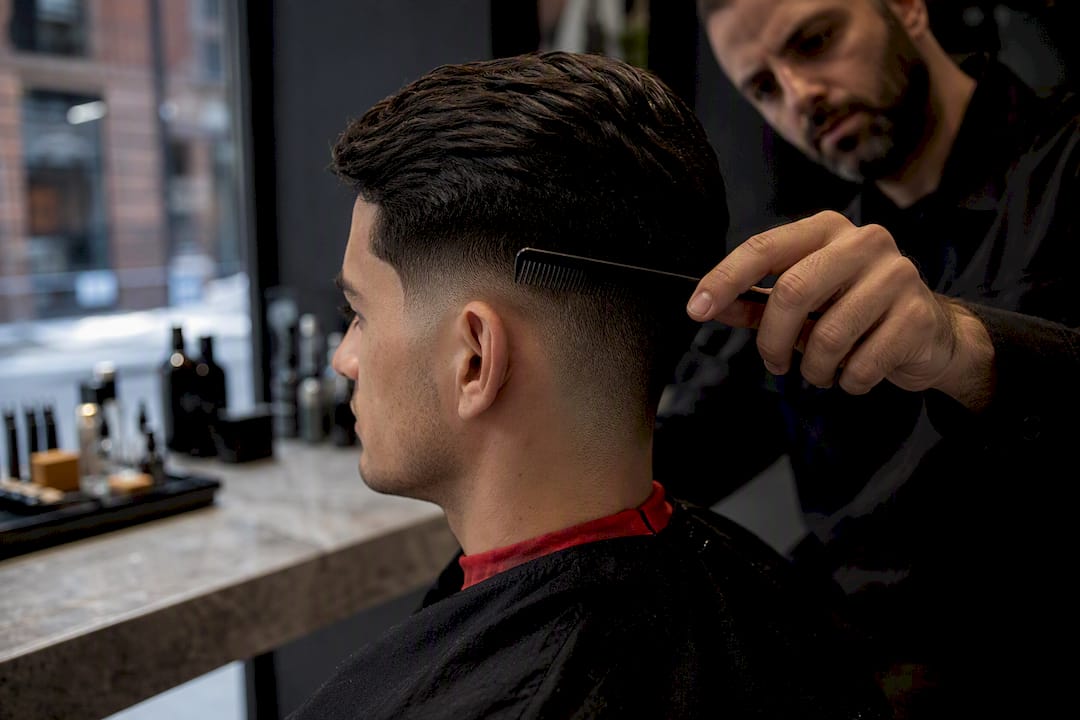
A taper is a gradual, all-sides blend that keeps your hairline soft and natural. A temple fade isolates a sharp, high-contrast cut at the temples and sideburns while leaving the rest longer. Pick a taper for something you can wear to a client meeting without a second thought; pick a temple fade when you want your hairline doing some of the work of framing your face. Keep reading for the exact words to use in the chair and how each one ages between visits.
TL;DR:
Temple fades typically require bi-weekly visits to maintain their crisp, high-contrast lines, while tapers can stretch to four weeks and still look clean.
A taper blends hair gradually around the entire head, usually without going down to skin, making it more subtle and professional for office settings.
A temple fade isolates the sharp, high-contrast blend at the temples, with variations that curve behind the ear, often needing more frequent touch-ups.
For best results, specify exact guard numbers, zone descriptions, and bring photos to avoid confusion between the two styles during the cut.
Regular at-home touch-ups can extend the freshness of either cut, but understanding regrowth rates helps plan timely visits for maintaining the desired look.
Table of Contents
Temple Fade vs Taper: A Quick Side-by-Side
Both cuts remove length gradually, but where they remove it and how sharply changes everything about the look.
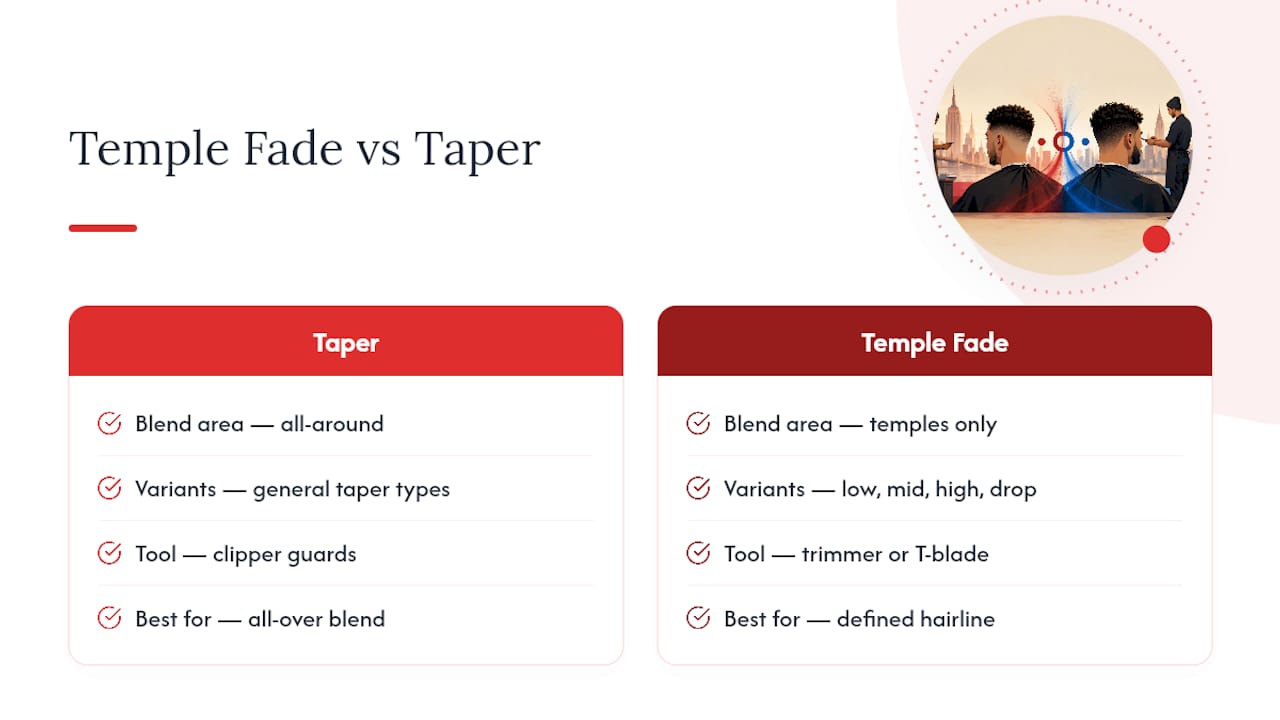
Where it starts: A taper blends length down the sides and back of the whole head. A temple fade concentrates the blend at the temples and around the ear, often leaving the back longer or untouched.
Contrast level: Tapers rarely drop below a #2 or #3 guard on the shortest point. Temple fades often go to skin at the temple before blending into longer hair above.
Maintenance cadence: Tapers typically stretch 3 to 4 weeks between visits. Temple fades usually need a refresh every 2 to 3 weeks to keep the line crisp.
Formality: Tapers read as classic and office-safe. Temple fades read as trend-forward and more casual, though a subtle version can still work in professional settings.
Best for: Choose a taper if you want low upkeep and a look that ages gracefully between cuts. Choose a temple fade if you want your hairline to frame your face, and consider a hybrid temple-taper if you want a bit of both.
What a Taper Actually Is
A taper is a gradual reduction of hair length along the sides and back, blending smoothly into the length on top without ever hitting bare skin. Barbers usually work in the low, mid, or high range. A low taper stays close to the ear and neckline, a mid taper climbs partway up the side, and a high taper blends higher toward the crown for more visible shape. Guard numbers commonly run from a #1 or #2 at the shortest point up to a #3 or #4 where it meets the top. Because the transition is soft, a taper reads as clean and professional even a few weeks after the cut, which is exactly why it’s the default request in corporate offices and client-facing jobs. As it grows out, it just looks like slightly longer hair rather than a cut that’s “falling apart.”
What a Temple (Temp) Fade Actually Is
A temple fade, sometimes called a temp fade or Brooklyn fade, isolates the fading to the temple area instead of wrapping a gradient around the entire head. That’s the core distinction in the temple fade vs taper debate: a taper blends everywhere, a temple fade blends in one focused zone. Variants include the high temple fade (aggressive, near the hairline’s peak), mid temple, low temple, and the drop fade, which curves the fade line down behind the ear for extra shape around the neckline. Barbers typically reach for a precision trimmer or T-blade to carve the temple line, since standard clipper guards don’t give the same crisp edge. This is the cut to request when you want a defined hairline rather than an all-over blend, and it’s why barbers often recommend it to clients who already keep a short, styled top.
Matching the Cut to Your Face and Hair
Face shape and hair texture change how each style actually looks once it grows in, not just how it looks on cut day.
Round faces often benefit from a temple fade with more height, since the vertical line at the temple visually elongates the face.
Square or angular faces tend to look sharper with a taper, which softens the jawline instead of adding more hard edges.
Oval and diamond faces can wear either one comfortably, so the decision often comes down to maintenance tolerance rather than fit.
Straight and fine hair shows a temple fade’s contrast clearly and holds a taper’s blend without much effort.
Curly or coarse hair can make a temple fade line blur faster between cuts, so barbers sometimes suggest starting slightly higher and less severe before going full skin.
If your schedule doesn’t allow for cuts every two weeks, that alone might settle the temple fade vs taper question before face shape even enters the conversation.
How Fast Each One Grows Out
Regrowth speed is where a lot of first-timers get surprised, and it’s worth knowing before you commit to either style.
Temple fades show regrowth fastest right at the temple, since that’s the shortest, highest-contrast point on the whole head.
Tapers hide regrowth longer because the blend is gradual everywhere, so a few weeks of growth just softens the line instead of erasing it.
At-home touch-ups like trimming stray sideburn hair or a quick edge-up with a beard trimmer can stretch either cut by several days.
Book a refresh once you see the temple line blur into the surrounding hair, or once a taper starts looking like it has no shape left at all.
Pro Tip: If it’s your first temple fade, ask your barber to keep the temple “high and subtle” rather than skin-level. You can go sharper at your next visit once you know how fast your temples actually grow back.
Barbers who work a lot of temple fades will tell you regrowth at the temple tends to outpace regrowth on a taper’s sides, which is part of why the two cuts land on such different upkeep schedules in the first place.
What to Say to Your Barber (So You Get the Right Cut)
Vague requests are how a taper turns into a fade you didn’t ask for. Use specifics.
Name the zone, not just the word. Say “temple fade, skin at the temple, blending to a #2 behind the ear” instead of just “fade.”
Give a guard number for the shortest point. For a taper, something like “#1 on the sides, blending into a #3 on top” removes the guesswork.
Bring photos from three angles. Front, side, and crown shots let your barber see the exact line height and where the blend needs to land.
Ask where the fade starts before the clippers touch your head. A quick confirmation avoids surprises once the cut is underway.
Speak up mid-cut if something looks off. If the temple line is climbing higher than you expected, say so before it’s finished, not after.
Clear phrasing like this is also the fastest way to sort out the shape up vs taper or line up vs taper confusion, since a lineup is really just a separate step for sharpening the hairline itself.
Keeping the Shape: Styling for Each Cut
The right cut still needs the right product, or it won’t hold its shape past day one.
Tapers usually pair well with a light matte cream or pomade, since the goal is texture on top without drawing attention to the sides.
Temple fades often look best with a stronger hold product on top, which keeps the contrast between the styled top and the sharp temple line intentional rather than sloppy.
Either style takes under five minutes to style most mornings if the cut was done well in the first place.
Shorter top lengths need less product; longer, textured tops need a stronger hold to keep from flopping over the fade line.
How Manhattan Barbershop Approaches This Decision
Most clients who ask about a temple fade vs taper haven’t actually settled on one, and that’s the right instinct. Manhattan Barbershop customizes both based on hair density, growth pattern, and how the face reads from the front versus the side, not just what looks good in a reference photo. First-timers are usually steered toward a conservative taper, since it’s forgiving as it grows out and gives the barber a read on how your hair behaves before pushing into higher-contrast territory. Clients who already know their hair regrows slowly at the temples tend to move to a temple fade faster. The shop’s approach leans on clean, low-product finishes rather than styling your way around a rough cut.
— Evgenii
Book Your Cut at Manhattan Barbershop
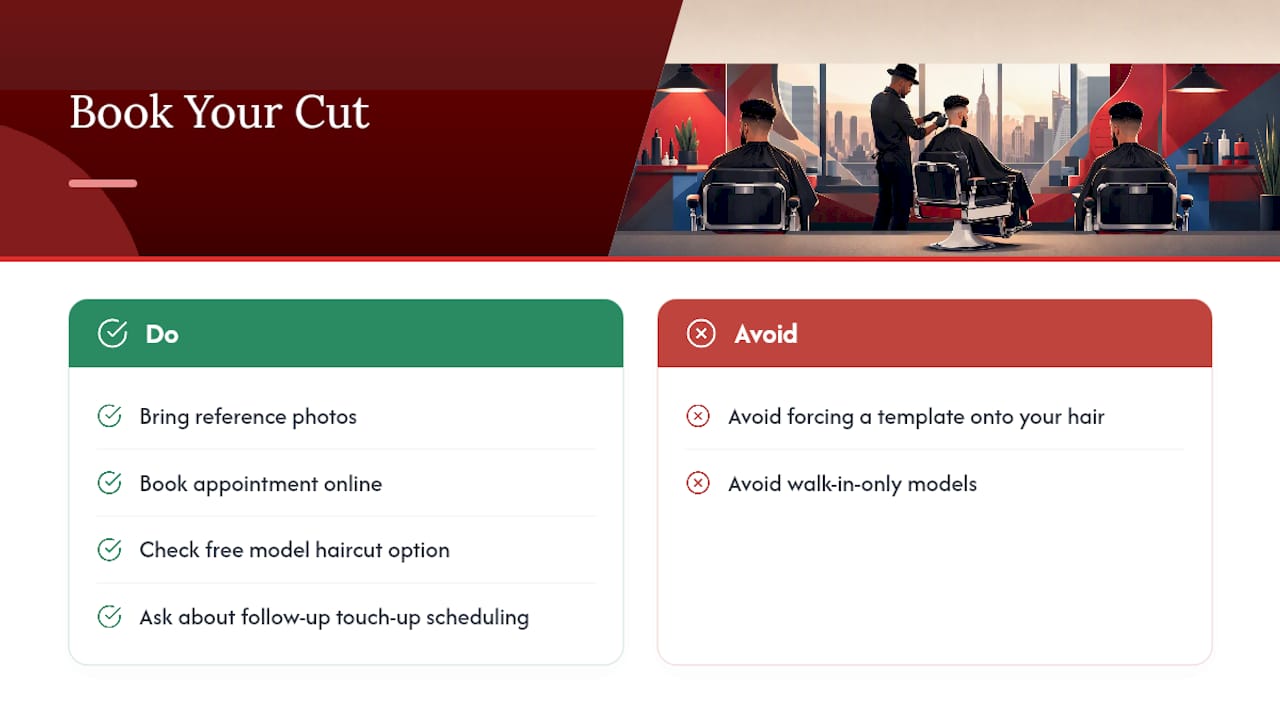
Manhattan Barbershop cuts both looks daily and customizes the blend to your hair type instead of forcing a template onto it. If you’re still torn on temple fade vs taper, bring a couple of reference photos to your appointment. It gives your barber a clear target instead of a guess, and it’s the fastest way to walk out with the cut you actually pictured. New clients can book an appointment online or check the free model haircut option if you’re open to trying a fresh style. Ask about follow-up touch-up scheduling at your visit, since temple fades and tapers hold their shape on different timelines. For shops managing their own booking flow, tools like barber booking software show how appointment scheduling has evolved beyond walk-in-only models.
Sources
For more technical grounding, see StyleSeat’s breakdown of taper vs fade, Wikipedia’s entry on the temple fade, and wikiHow’s guide on asking for a temp fade. Manhattan Barbershop’s own posts cover shop-specific phrasing and styles.
Recommended
Comments