Buzz Cut for Boys: The 2026 Parent's Style Guide

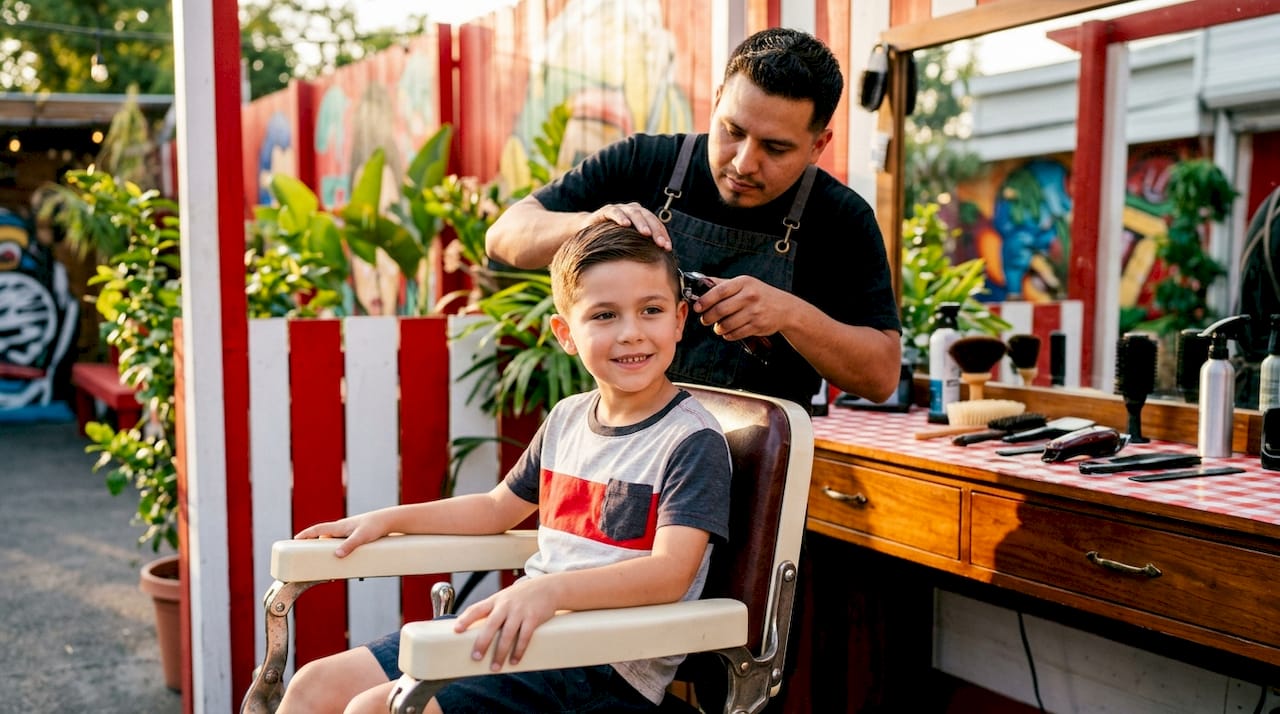
What is a buzz cut for boys?
A buzz cut is a short, uniform haircut achieved with electric clippers, where hair is trimmed to the same length across the entire head. For boys, it’s one of the most practical cuts around: no styling products, no morning tangles, and no fuss before school. The length is controlled entirely by clipper guard settings, allowing parents to adjust how short or soft the final look ends up.
Unlike adult military versions, which often go extremely close to the scalp, boys’ buzz cuts typically use longer guards to keep the style age-appropriate and gentle on young scalps. The cut works across nearly all hair types, from straight and fine to thick and curly, and it grows out evenly without awkward in-between phases. That predictability is a big part of why so many parents keep coming back to it.
Key characteristics of a boys’ buzz cut:
Uniform length all over the head using a single clipper guard
Guard numbers #1 through #4 are the most common range for boys, with #3 and #4 being the most school-friendly
Minimal styling required after the cut, just wash and go
Suitable for sensitive scalps when longer guards are used
Grows out cleanly without creating awkward shapes or uneven patches
Types of buzz cuts for boys and how guard length shapes the style
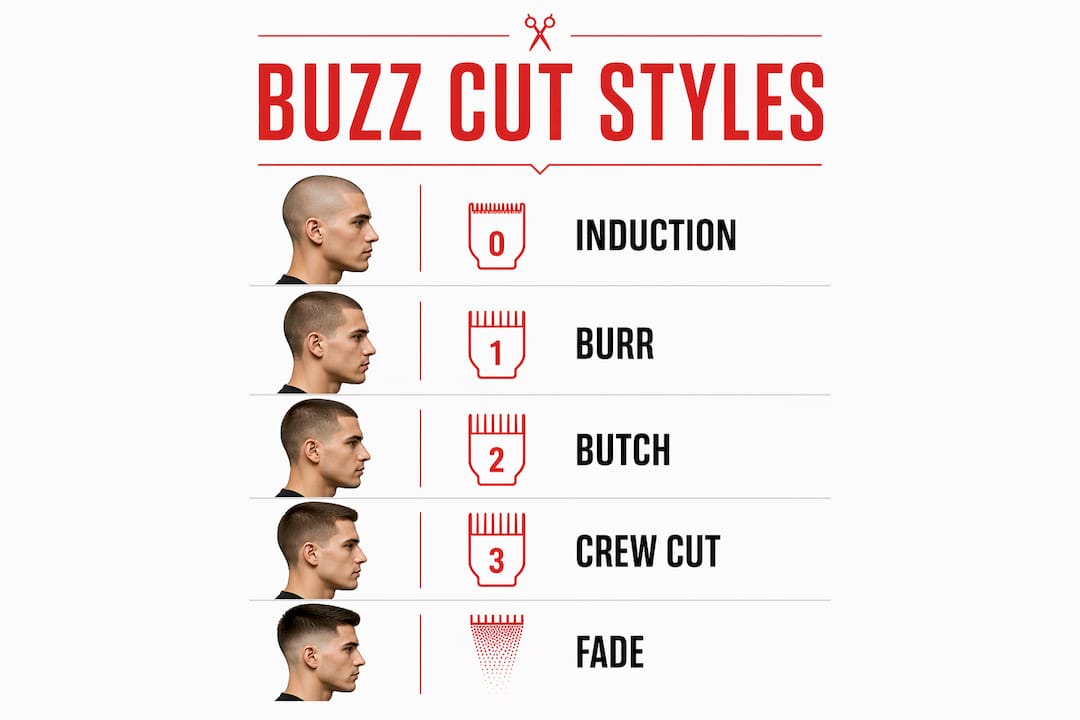
Guard length is the single biggest variable in any buzz cut. Moving just one guard number up or down changes the entire feel of the cut, from near-military to relaxed and casual. Here are the main styles parents and barbers work with:

Induction cut is the shortest option, leaving only a shadow of hair on the scalp. It’s rarely the right call for young boys since it can look harsh and exposes the scalp fully to sun and cold. Most barbers reserve this length for older teens or adults.
Burr cut leaves just enough hair to show color and texture. It’s a step up from the induction cut and works well for summer or for boys who run hot during sports. The scalp is still fairly visible, so it’s worth considering your son’s head shape before going this short.
The butch cut is the classic boys’ buzz, with popular medium guard lengths giving a balanced, intentional look. Both lengths look intentional rather than accidental, and the #3 in particular hits a sweet spot: short enough to stay out of the way, long enough to soften the overall look. Buzz cut styles for boys at this length are consistently the most requested at kids’ barbershops.
Crew cut variation (guard #3 on top, shorter on sides)
Technically a close relative of the buzz cut, the crew cut uses a slightly longer guard on top and blends down to shorter sides. It adds a little shape without requiring much extra maintenance. For boys who want something slightly more styled than a flat buzz, this is a natural next step.
Fade buzz cut (tapered sides)
A fade pairs a standard buzz on top with gradually shorter sides that taper toward the ears and neck. The 3:2:1 rule is a useful starting framework: guard #3 on top, #2 on the sides, and #1 along the edges. Fades look sharp and modern, but they require more frequent upkeep than a single-length cut since the blended lines grow out faster.
High and tight
The hair on top stays at a moderate length (usually #3 or #4) while the sides are cut very close or faded down to nearly nothing. It’s a clean, structured look that works well for older boys or those who want something with a bit more edge.
How to choose the right buzz cut based on hair texture and face shape
Not every buzz cut works equally well on every boy. Hair texture and face shape both play a role in which guard length and style will look best.

Fine or thinning hair actually benefits from a buzz cut. Clipping hair to a uniform short length removes the wispy, uneven appearance that fine hair can create when it’s longer, giving it a fuller, denser look overall. A #2 or #3 guard works particularly well here.
Thick or coarse hair holds a buzz cut cleanly and tends to look sharp at almost any guard length. Boys with thick hair can go shorter without the scalp showing through, which gives more flexibility in choosing a style.
Curly or wavy hair can look slightly fuller at a given guard length compared to straight hair, so parents sometimes go one guard shorter than they think they need. A #2 on curly hair often looks similar to a #3 on straight hair.
Sensitive scalps need a longer guard. A #4 guard provides enough coverage to avoid irritation from the clipper blades running close to the skin, and it still delivers a clean, neat look. Boys with scalp bumps, eczema, or other skin sensitivities should always start with a longer guard and only go shorter if the scalp tolerates it well.
For face shapes, the general guidance from barbers is straightforward:
Round faces benefit from slightly longer hair on top (guard #3 or #4) to add vertical length, while keeping the sides shorter
Oval faces suit almost any buzz cut length since the proportions are already balanced
Square or angular faces look great with a slightly softer, fuller cut like a #3 or #4 butch, which avoids emphasizing sharp jawlines too strongly
Long or narrow faces do better with a uniform length all over rather than a fade, which can make the face appear even longer
Pro Tip: If your son has never had a buzz cut before, start one guard longer than you think you need. You can always go shorter on the next pass, but you can’t add length back once it’s cut.
Benefits of buzz cuts for boys including practical and aesthetic advantages
The buzz cut’s popularity with parents comes down to a few very practical realities, not just aesthetics.
Morning routines get dramatically shorter. Parents who switch their sons to a buzz cut often report that styling battles disappear almost immediately. There’s nothing to comb, nothing to gel, and nothing to argue about before school. Wash it, dry it, done.
Sports and physical activity become easier. Short hair stays out of the eyes during football, swimming, or wrestling practice. It also dries faster after a swim, which matters for kids moving between activities. Sweat and heat are less of an issue when there’s less hair to trap them.
Hygiene is simpler to maintain. Shorter hair means less surface area for dirt, sweat, and product buildup. For boys who aren’t yet in the habit of thorough hair washing, a buzz cut is genuinely forgiving.
Growth is predictable and even. A uniform buzz cut grows out at the same rate across the whole head, so there’s no awkward phase where one part looks longer than another. Parents can stretch the time between cuts without the hair looking unkempt.
School dress codes are rarely an issue. Most school grooming policies have no problem with a neat, short buzz cut. A #3 or #4 guard length reads as tidy and well-maintained in almost any school setting.
Maintenance and care tips to keep a boy’s buzz cut looking neat and healthy
A buzz cut is low maintenance, but “low” doesn’t mean “none.” A few consistent habits keep it looking sharp between visits.
Trim frequency depends on the style. A single-length buzz cut can go several weeks before it needs a refresh, since the growth is even and the shape remains intact. Fade styles require more frequent touch-ups to keep the blended lines clean, since contrast between lengths becomes obvious as hair grows.
Scalp care matters more with short hair. When hair is long, the scalp is protected and moisturized naturally. With a buzz cut, the scalp is more exposed, so using a gentle, sulfate-free shampoo two or three times a week helps prevent dryness and flaking. A light, fragrance-free moisturizer applied after washing keeps the scalp comfortable, especially in winter.
At-home touch-ups are straightforward with the right tools. Hair must be clean and dry before cutting to prevent clipper clogging. Check the scalp beforehand for any bumps or moles, and work around them carefully. Clean the clipper blades before and during the cut to maintain an even, precise result.
Avoid patchiness by using consistent strokes. Move the clippers against the direction of hair growth in smooth, overlapping passes. Rushing or using uneven pressure creates patches that are hard to fix without going shorter all over.
Pro Tip: Use a handheld mirror to check the back of your son’s head after each pass. Missed patches at the crown or neckline are the most common home-trimming mistake, and catching them early saves a second full pass.
What professional barbers say about getting boys’ buzz cuts right
Barbers who specialize in children’s haircuts consistently point to a few things that separate a clean buzz cut from a sloppy one.
Precision in the cleanup lines makes the biggest difference. The actual clipping is straightforward, but the neckline and around-the-ear edges define whether the cut looks professional or rushed. A barber who takes time on those edges produces a result that holds its shape for weeks. Parents looking for a barber with the right skills for kids should check for experience with children’s cuts specifically, since the patience and technique involved differ from adult cuts.
Use the right tool for the job. Specialized hair clippers are built for scalp hair and won’t snag the way beard trimmers do. Starting with a longer guard and working down is the professional approach, since you can always remove more length but you can’t put it back. For boys with sensitive scalps or skin conditions, a barber familiar with those considerations is worth seeking out specifically.
One-length cuts are more forgiving for home maintenance. Fades look great, but they require consistent, skilled blending to stay sharp. A uniform buzz cut grows out evenly and is much easier for a parent to touch up at home between professional visits. Barbers often recommend starting boys on a simple one-length cut and introducing fades once the child is older and more comfortable sitting still in the chair.
Blade maintenance affects the cut quality directly. Clean clipper blades cut more evenly and reduce the risk of pulling or snagging. Professional barbers clean and oil their blades between clients; parents doing home cuts should do the same between sessions.
Pro Tip: Before starting any home buzz cut, run a fine-tooth comb through your son’s hair and look for any scalp bumps or irritated patches. Clipping over an undetected bump can nick the skin and cause discomfort. A 30-second scalp check prevents most at-home accidents.
Where the buzz cut actually came from
The buzz cut’s origins are tied directly to the invention of the mechanical hair clipper in the late 19th century. Before electric clippers existed, cutting hair this short uniformly was time-consuming and difficult. Once clippers became widely available, the military adopted the style almost immediately, using it as a practical solution for hygiene, uniformity, and ease of maintenance among large groups of recruits.
The buzz cut became standard issue in armed forces across multiple countries, where it was given to new recruits as part of the induction process. The association with discipline and practicality stuck, and the style crossed over into civilian life throughout the mid-20th century. By the 1950s and 1960s, it was a common choice for boys and men who wanted a clean, no-effort look.
The cut’s cultural meaning has shifted considerably since then. Public figures across music, film, and sports have worn versions of the buzz cut, pulling it away from its purely military associations and into mainstream style. Today it reads as clean and contemporary rather than strictly institutional, which is part of why it remains one of the most requested cuts for boys at barbershops across the country.
When boys typically get a buzz cut
The buzz cut tends to show up at specific moments in a boy’s life, and understanding those contexts helps parents decide whether the timing is right.
Summer is the peak season. Heat, swimming, and outdoor sports make short hair genuinely practical from june through august. Many parents schedule a buzz cut at the start of summer specifically to reduce the hair maintenance load during the busiest months.
Back-to-school season drives a lot of requests. A fresh buzz cut before the school year starts is a classic move. It’s neat, it meets dress code requirements without any effort, and it sets up a low-maintenance routine for the fall semester.
Sports seasons prompt the switch. Boys joining swim teams, wrestling programs, or football leagues often get a buzz cut at the start of the season for practical reasons. Coaches and teammates frequently sport the same look, which makes it feel like a natural choice rather than a parent’s decision.
First haircuts sometimes go this route. For very young boys getting their first real haircut, a simple buzz cut removes the anxiety of scissors near the face and produces a clean, even result quickly. The speed matters when a toddler’s patience is limited.
Lice outbreaks, unfortunately, are another trigger. A buzz cut makes treatment and prevention significantly easier, and many parents choose it as a practical response to a school lice situation.
What to consider before committing to a buzz cut for your son
A buzz cut is a great choice for most boys, but there are a few things worth thinking through before the clippers come out.
It’s a significant change that takes time to grow back. If your son has longer hair and isn’t sure about going short, starting with a moderate length like a #3 or #4 is smarter than going all the way to a #1 on the first try. Hair grows at a steady rate, so a very short cut takes some time to reach a medium length again.
Head shape becomes more visible. A buzz cut removes the softening effect that longer hair provides. Boys with prominent ears, an unusual head shape, or scalp irregularities will have those features more on display. This isn’t necessarily a problem, but it’s worth a conversation with your son before the cut.
Sun exposure increases. Short hair offers less protection from UV rays. During summer, applying a light sunscreen to the scalp or having your son wear a hat outdoors becomes more relevant, especially for boys who spend long hours outside.
Your son’s preference matters. Some boys love the idea of a buzz cut; others are attached to their longer hair. Forcing a style change tends to create more conflict than it resolves. If your son is hesitant, showing him photos of different guard lengths and letting him pick one can make the whole experience feel like his decision rather than yours.
For boys with sensitive scalps or specific skin concerns, a professional barber’s assessment before the first buzz cut is genuinely useful. A skilled barber can spot potential issues and recommend the right guard length before any clippers touch the scalp.
Ready to book your son’s buzz cut in NYC?

Manhattanbarbershopny on the Upper East Side specializes in exactly this kind of cut. Eugene Solod and the team take the time to assess each boy’s hair type, scalp condition, and face shape before picking up the clippers, so the result is a clean, tailored buzz cut that holds its shape for weeks. Walk-ins are welcome, or you can book an appointment online to skip the wait. For parents who want to try the experience before committing, Manhattanbarbershopny also offers a free model haircut option that’s a great way to see the quality firsthand.
Key Takeaways
A buzz cut for boys is the most practical short haircut available, and the right guard length makes all the difference between a harsh military look and a clean, school-friendly style.
Point | Details |
Guard length controls everything | |
Hair type shapes the choice | Fine hair benefits from a uniform buzz; sensitive scalps need a #4 guard for adequate coverage. |
Fade cuts need more upkeep | Fades require a touch-up every 2–3 weeks, while single-length cuts can go four weeks or more. |
Clean, dry hair cuts best | Always cut on clean, dry hair and inspect the scalp for bumps before starting any home trim. |
Face shape guides the length | Round faces benefit from slightly more length on top; oval faces suit nearly any guard number. |
Recommended
Comments