Why Children Need Specialized Barbers: A Parent's Guide

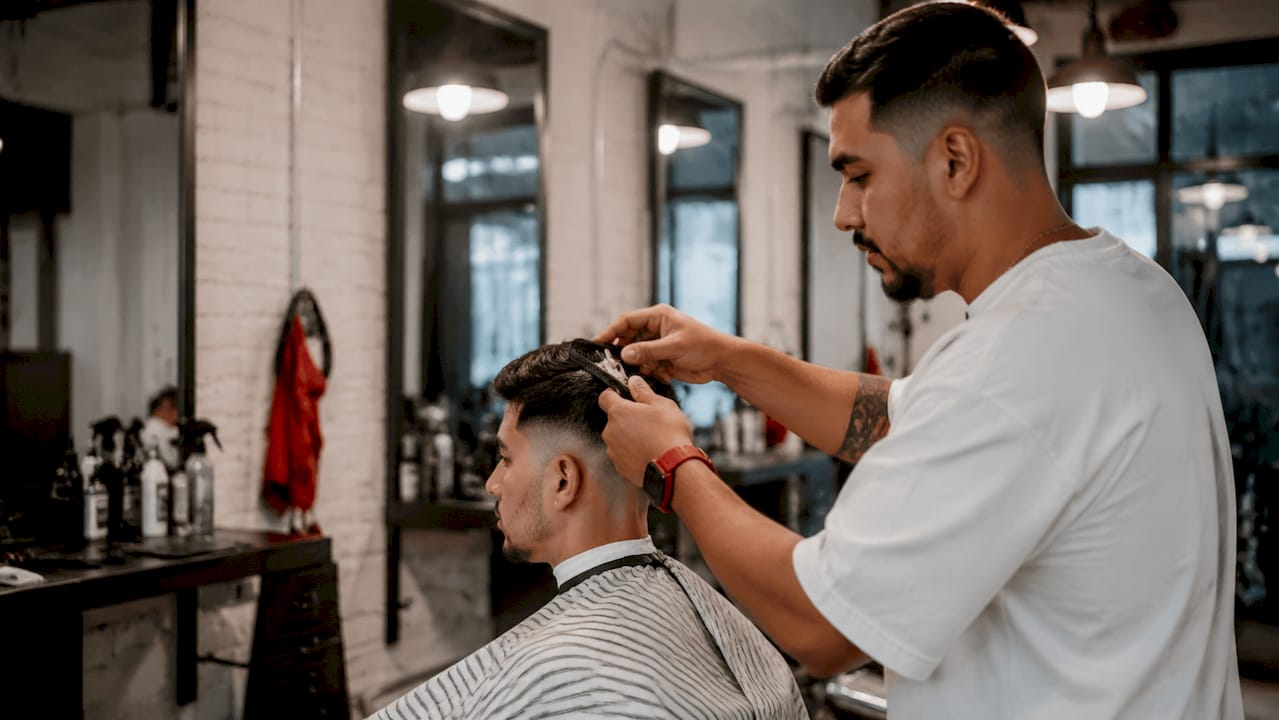
Specialized barbers for children are trained professionals who redesign the entire haircut environment to accommodate sensory sensitivities, neurodivergent behaviors, and developmental differences. Standard barbershops are built for adults, and that mismatch is why children need specialized barbers who understand how noise, touch, and unpredictability can trigger distress. Programs like Sensory Safe Solutions and guidance from occupational therapists like Kelly Marie Christiansen have formalized this training, giving barbers concrete tools to turn a dreaded appointment into a calm, successful experience. For parents of children with autism, sensory processing differences, or anxiety, finding the right barber is not a luxury. It is a necessity.
Why children need specialized barbers: the sensory challenge explained
A standard barbershop is a sensory minefield for many children. Loud clippers, the tactile sensation of hair falling on skin, bright overhead lights, and the demand to sit perfectly still are common cut triggers that can push a child into a fight-or-flight state before the first snip. Children with autism spectrum disorder are particularly vulnerable, but sensory sensitivity affects a much broader population, including kids with ADHD, anxiety disorders, and sensory processing disorder.
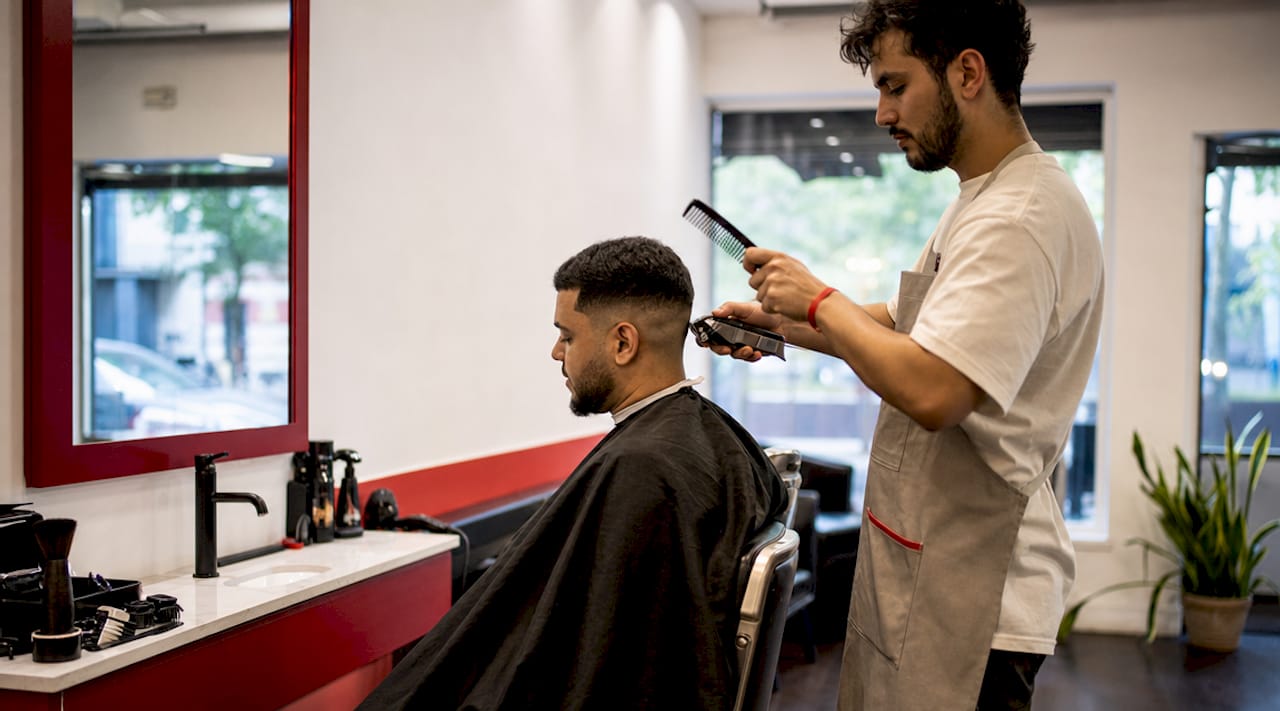
The behaviors parents see, including crying, bolting from the chair, or complete refusal to enter the building, are not defiance. They are the nervous system’s response to overwhelming input. When untrained staff label these children as “fussy,” the family often stops trying, and the child goes months without a haircut. Occupational therapist Kelly Marie Christiansen notes that staff without sensory training routinely misread these cues, which leads to failed appointments and lasting negative associations with haircuts.
Specialized barbers approach this differently. Their training focuses on recognizing early distress signals and adjusting the environment before the child reaches overwhelm. The goal is never speed or compliance. The goal is keeping the child’s nervous system regulated throughout the entire visit.
Common sensory triggers during a child’s haircut include:
Loud clippers and buzzing tools near the ears and neck
Tactile overload from capes, falling hair, and unfamiliar touch
Bright or flickering salon lighting that increases visual stimulation
Unpredictable movement from mirrors, other clients, or staff
Demand to remain still for extended periods without preparation
Pro Tip: Before your child’s first appointment, ask the barber to show your child the clippers while they are turned off. This single step, called tool familiarization, reduces the startle response significantly.
What techniques do specialized barbers actually use?
The most effective specialized barbers do not simply swap in kid-friendly scissors and call it done. They redesign the entire sensory environment, adjusting noise levels, lighting, seating, and the sequence of the haircut itself to match each child’s tolerance. This holistic approach is what separates a trained specialist from a well-meaning generalist.
Here is how a structured specialized haircut session typically unfolds:
Pairing session first. Before any cutting happens, the barber spends time with the child in a low-pressure visit. These 30 to 40 minute sessions focus entirely on building comfort, not completing a haircut. The child explores the space, handles tools, and builds trust with the barber.
Environmental adjustments. Quiet rooms, adjustable lighting, fidget toys, and weighted capes are standard accommodations. Trimmy’s barbershop in North Texas, for example, uses weighted capes specifically to provide calming deep pressure input during the cut.
Flexible positioning. If a child cannot tolerate the chair, the barber cuts hair at a train table, on the floor, or in a parent’s lap. Occupational therapist Christiansen emphasizes unconventional locations as a legitimate and effective strategy, not a workaround.
Communication scaffolding. Barbers use counting, high-fives, and social stories to give children predictability. Knowing “three more snips and we’re done” is far less threatening than an open-ended appointment.
Parent coaching. Barber Henry Amoloja at Trimmy’s works to calm parents before the appointment because parental anxiety transfers directly to the child. Preliminary consultations address parent stress as much as child preparation.
Pro Tip: Ask your barber whether they use social stories or visual schedules. Showing your child a picture sequence of what happens during a haircut, from walking in to getting a treat at the end, reduces anticipatory anxiety before you even arrive.
Specialized barbers vs. general children’s haircut services
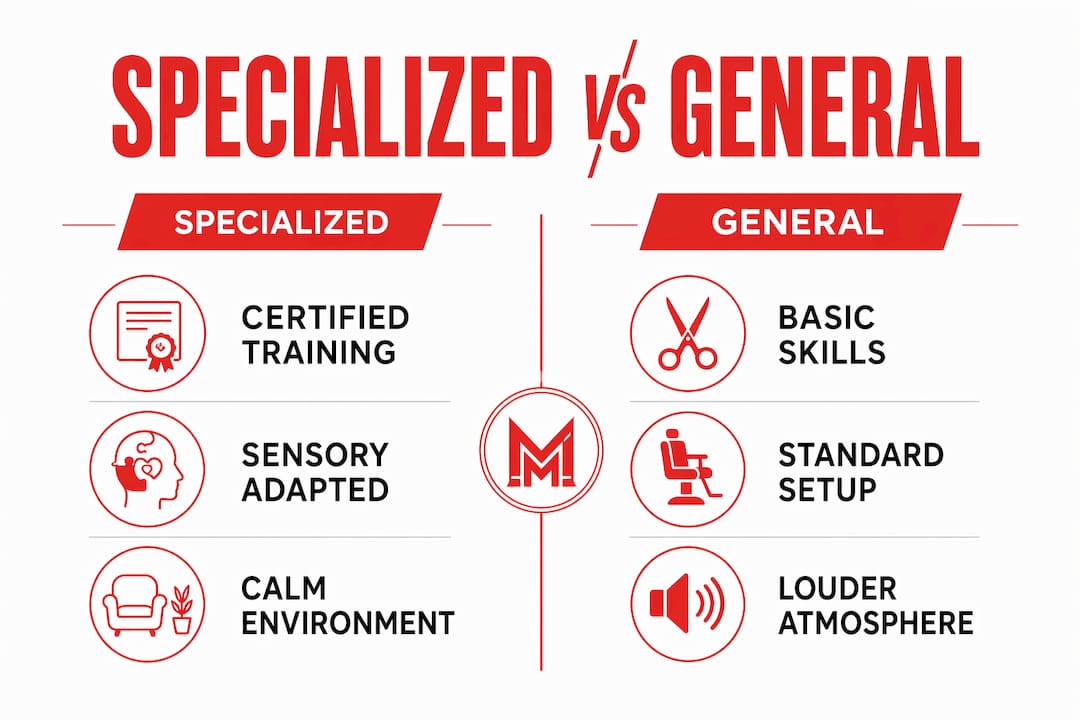
The difference between a specialized children’s barber and a standard salon offering kids’ cuts is not just about décor or a cartoon chair. It comes down to training, appointment structure, and measurable outcomes.
Factor | Specialized barber | Standard children’s salon |
Training | Certified programs like Sensory Safe Solutions; occupational therapist collaboration | General cosmetology or barbering license only |
Appointment structure | Pairing sessions, pre-visit consultations, flexible timing | Standard timed slots, no pre-visit preparation |
Environment | Quiet rooms, adjustable lighting, weighted capes, fidget tools | Standard salon environment, often loud and busy |
Haircut location | Chair, floor, parent’s lap, or train table as needed | Chair only |
Appointment duration | Varies by need; 10 to 15 minutes once trust is built | Fixed slot, often 20 to 30 minutes with potential distress |
Outcome focus | Child regulation and comfort first, haircut second | Haircut completion as primary goal |
Sensory Safe Solutions has certified over 4,000 professionals and built nearly a million safe haircut spaces globally. That scale reflects genuine demand, not a niche trend. The two-hour certification course, developed from over 5,000 hours of sensory cutting data, teaches gradual desensitization and flexible settings. A barber with this credential brings a fundamentally different skill set than one who simply enjoys working with kids.
The outcome difference is striking. What typically takes a family two hours of distress can become a 10 to 15 minute positive experience once a specialized barber has built rapport and trust with the child. That transformation matters for the child’s confidence and for the family’s willingness to maintain regular haircut routines.
How to choose the right kids’ barber for your child
Choosing a barber who matches your child’s needs requires more than reading reviews. You are evaluating a professional’s training, environment, and communication style before your child ever sits in the chair.
Start with these criteria:
Verify certification or specialized training. Ask directly whether the barber has completed Sensory Safe Solutions training or worked with an occupational therapist. Vague answers about “experience with kids” are not the same as structured training.
Assess the physical environment before booking. Visit the shop without your child first. Is the lighting adjustable? Is there a quieter area away from the main floor? Are there sensory tools like fidget items or weighted capes available?
Request a pre-visit consultation. A barber serious about specialized services will offer a call or in-person meeting to discuss your child’s specific triggers, preferences, and history with haircuts. This is standard practice at shops like Trimmy’s in North Texas.
Check for flexible procedures. Ask whether the barber will cut hair on the floor or without a cape if needed. Rigidity about procedure is a red flag when working with sensory-sensitive children.
Use community referrals. Parent groups for autism, ADHD, and sensory processing disorder are the most reliable source of barber recommendations. These communities share firsthand accounts of sensory-safe experiences that no review platform captures fully.
Prepare your child with visual schedules. Showing pictures or videos of the barbershop before the visit, and practicing pretend haircuts at home, reduces anticipatory anxiety and sets realistic expectations.
Understanding what distinguishes great barber skills goes beyond technical cutting ability when children are involved. Patience, observation, and the ability to read nonverbal cues are as important as scissor technique.
Key takeaways
Specialized barbers for children succeed because they prioritize sensory regulation over speed, using certified training, environmental design, and trust-building sessions to make haircuts genuinely manageable for neurodivergent and sensory-sensitive kids.
Point | Details |
Sensory triggers are real barriers | Loud clippers, touch, and bright lights can push children into fight-or-flight before the cut begins. |
Pairing sessions build lasting trust | Spending 30 to 40 minutes in non-cutting visits reduces overwhelm and prevents failed appointments. |
Certification matters | Programs like Sensory Safe Solutions have trained over 4,000 professionals using data-backed desensitization methods. |
Environment design is the core skill | Adjusting noise, lighting, seating, and tools holistically is what separates specialists from standard barbers. |
Parent preparation improves outcomes | Calming parental anxiety and using visual schedules before the visit directly reduces child stress during the appointment. |
What I’ve learned watching this field grow
I’ve spent years watching parents walk into barbershops with children who are visibly terrified, and I’ve seen the look on a parent’s face when a barber simply doesn’t know what to do. The honest truth is that most barbers, even good ones, were never trained to handle sensory needs. That is not a character flaw. It is a gap in traditional barbering education that programs like Sensory Safe Solutions are now filling.
What strikes me most about the specialized barbers I’ve observed is that their best skill is not cutting hair. It is reading a room. They notice when a child’s shoulders tighten, when eye contact drops, when breathing changes. They slow down or stop before the child reaches the point of no return. That kind of attentiveness cannot be faked, and it cannot be learned in a single afternoon.
The wider industry needs to take this seriously. A child who has a traumatic haircut experience at age four may avoid barbers for years. A child who has a calm, successful experience builds a routine that serves them for life. The confidence a child gains from looking good and feeling safe in a barber’s chair is real and lasting. I’ve seen it firsthand at Manhattanbarbershopny, where the team’s commitment to understanding each client’s individual needs extends naturally to younger clients who require more patience and preparation.
My advice to parents: do not settle for a barber who simply tolerates your child’s behavior. Find one who understands it, prepares for it, and adapts to it. Your child deserves that standard of care.
— Evgenii
How Manhattanbarbershopny supports your child’s haircut experience
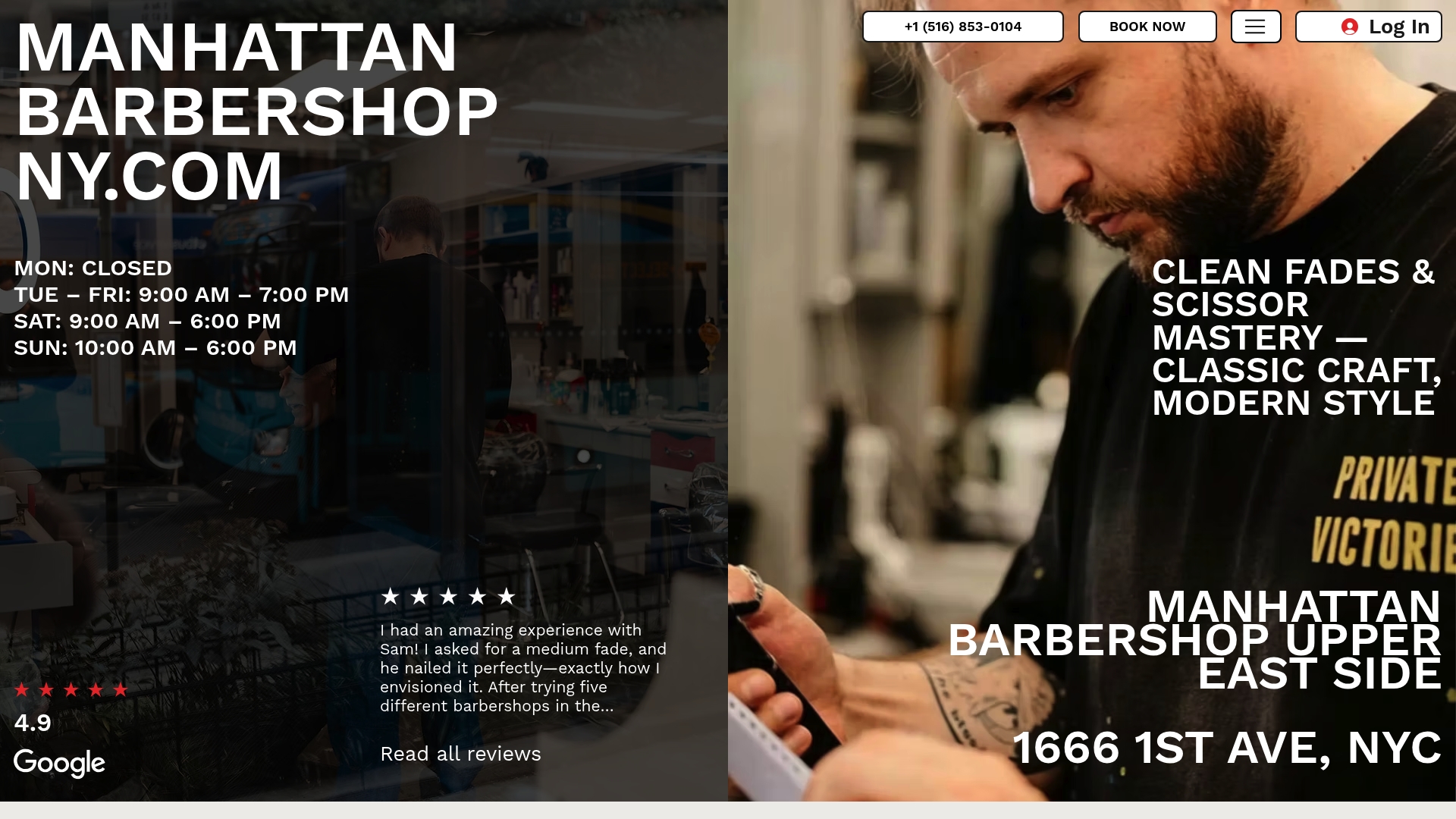
At Manhattanbarbershopny on the Upper East Side, the approach to every client starts with listening. Owner Eugene Solod built the shop around understanding individual hair types and personal needs, and that philosophy extends directly to younger clients. The barbers here take the time to understand what makes each child comfortable, adjusting pace, tools, and environment to match. If your child needs a calm, unhurried experience with a barber who pays attention, you can book a kids’ haircut online and discuss your child’s specific needs before the appointment. Walk-ins are welcome, but a scheduled visit gives the team time to prepare the right experience for your child. Reserve your appointment today and give your child a haircut they will not dread.
FAQ
What is a specialized children’s barber?
A specialized children’s barber is a trained professional who uses sensory-aware techniques, environmental adaptations, and trust-building sessions to make haircuts manageable for children with sensory sensitivities, autism, ADHD, or anxiety. Certification programs like Sensory Safe Solutions provide formal training in these methods.
How long does a specialized kids’ haircut take?
Initial visits often include a 30 to 40 minute pairing session with no cutting, focused entirely on building comfort. Once trust is established, the actual haircut can take as little as 10 to 15 minutes, compared to much longer and more stressful appointments at standard salons.
What should I look for in a child-friendly barbershop?
Look for adjustable lighting, quiet spaces away from the main floor, sensory tools like weighted capes or fidget toys, and a barber willing to cut hair in unconventional positions such as the floor or a parent’s lap. Certified training in sensory-safe methods is the strongest indicator of genuine expertise.
Can a regular barber learn to work with sensory-sensitive children?
Yes. Programs like Sensory Safe Solutions offer a two-hour certification course built from over 5,000 hours of sensory cutting data, covering gradual desensitization and flexible haircut settings. Collaboration with occupational therapists also helps barbers understand sensory processing and prevent fight-or-flight responses.
How do I prepare my child for a first specialized haircut?
Use visual schedules showing each step of the visit, practice pretend haircuts at home, and visit the barbershop without a haircut scheduled so your child can explore the space. Strategies like walking around the salon and handling tools before the cut significantly improve first-visit success.
Recommended
Comments