Barbershop Pricing Quality Comparison Guide 2026

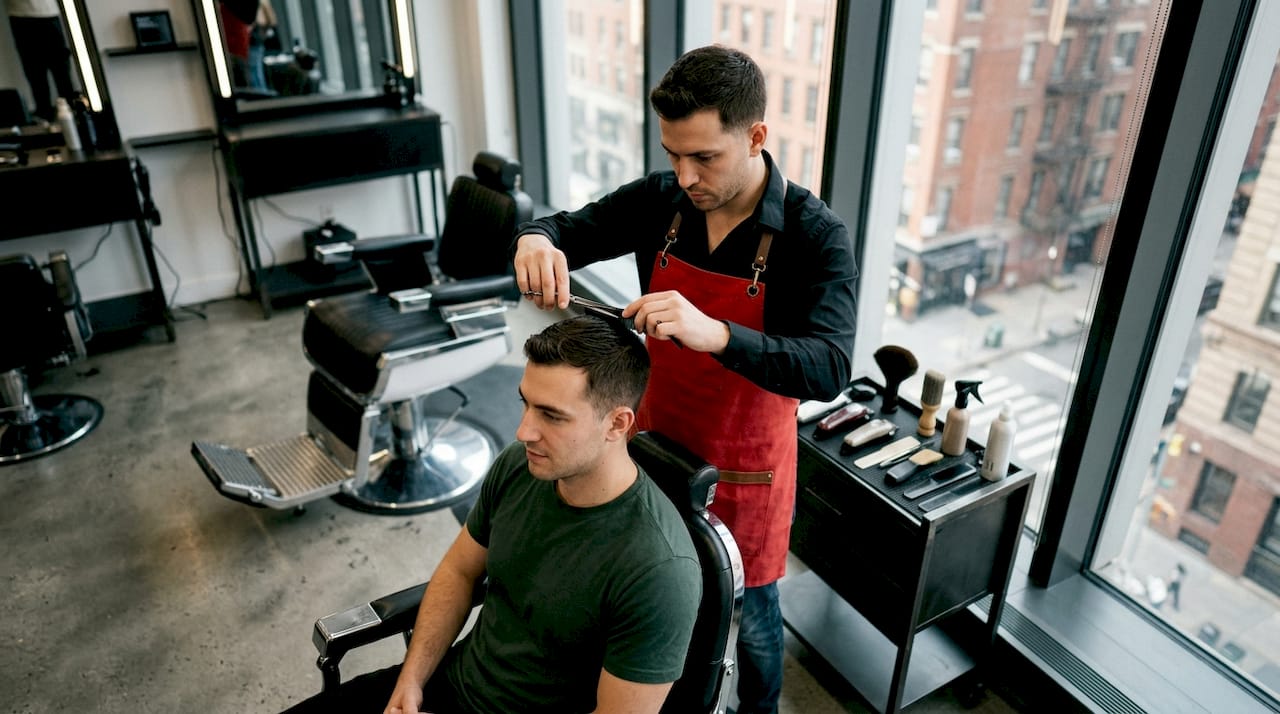
Barbershop pricing is a direct signal of the service quality, time, and skill you can expect from your haircut. The average men’s haircut in major U.S. cities runs $38.52, with most shops falling between $35 and $45. That range tells you something important: the market has a clear midpoint, and shops that price well above or below it are making a deliberate choice about who they serve. This barbershop pricing quality comparison guide breaks down what those numbers actually mean, what drives them up or down, and how to evaluate quality so you get a cut worth every dollar.
What does barbershop pricing actually cover?
Price is not arbitrary. Every dollar in a barbershop ticket reflects a real cost: the barber’s time, the shop’s overhead, the tools used, and the skill level behind the scissors.
Base cuts vs. add-on services
A base haircut covers the cut itself, typically 20–30 minutes at a budget shop and 45–60 minutes at a premium one. Add-ons change the math fast. Fades add $10–$20 to a base price because they require technical skill and longer chair time to execute cleanly. Beard trims, hot towel treatments, and styling consultations each carry their own cost. A shop advertising a $20 haircut may charge $45 by the time you add a skin fade and a beard line-up.
How overhead and expertise shape the price
Rent in a prime urban location, quality clippers, licensed barbers, and proper sanitation supplies all cost money. A shop in Midtown Manhattan carries higher overhead than one in a suburban strip mall, and that difference shows up in the menu. Barber expertise matters just as much. A barber with ten years of experience in textured hair or classic taper cuts commands more per hour than someone fresh out of cosmetology school. You are paying for both the environment and the person holding the clippers.
The real cost of tipping
Tipping is part of the total price, not an optional extra. U.S. tipping norms run 15%–20% for standard service and 20%–25% for exceptional or complex work. On a $45 haircut, a 20% tip brings your total to $54. Budget that into your comparison from the start, or your “affordable” shop may not be as affordable as the menu suggests.
Pro Tip: Always calculate tip into your total before comparing two shops on price. A $35 cut with a $7 tip beats a $30 cut with a $9 tip only if the quality matches.
How to assess barbershop quality beyond the price tag
Price tells you the tier. The actual quality of a shop shows up in details that have nothing to do with the menu.
The consultation is the clearest quality signal
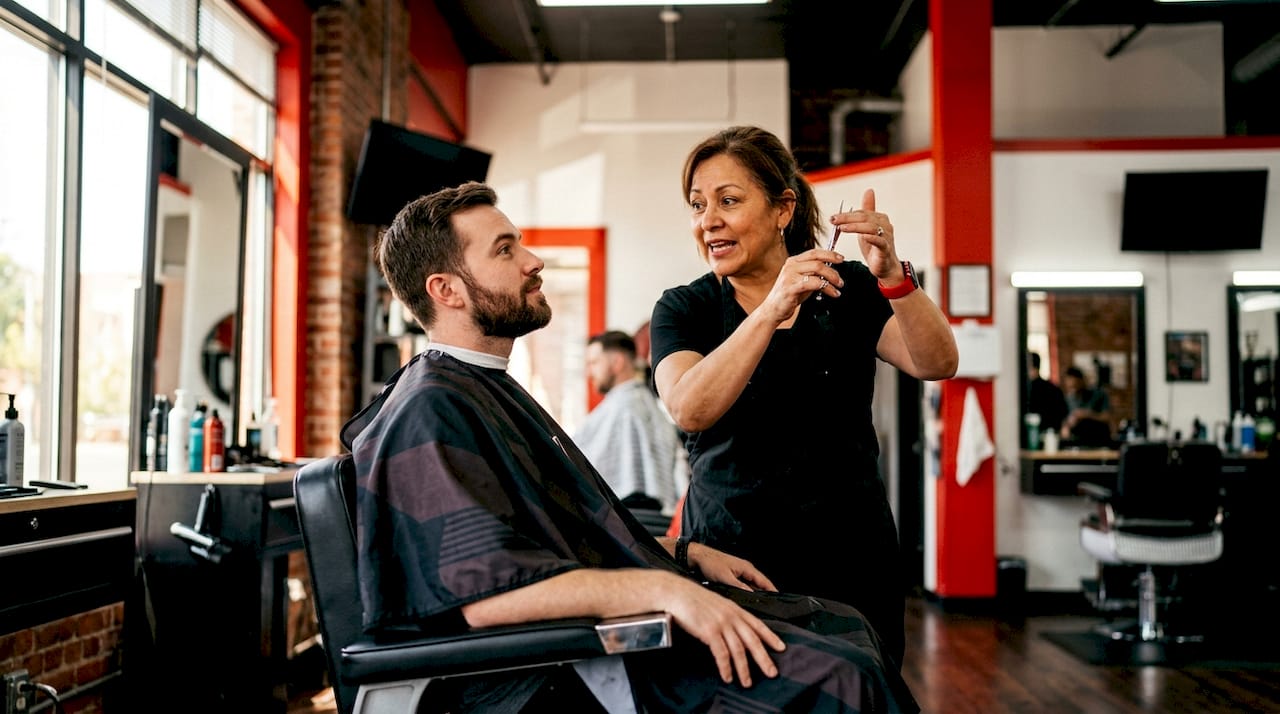
A skilled barber asks questions before picking up a clipper. Quality barbers consult on face shape, hair density, and your daily styling routine before making a single cut. That conversation is not small talk. It tells the barber how the cut needs to behave when you leave the chair. A barber who skips this step is guessing, and guessing produces inconsistent results. The consultation process is a stronger quality indicator than a shop’s license or its Instagram feed.
Sanitation and hygiene as quality markers
Clean tools are non-negotiable. Visible sanitation practices, such as fresh capes for each client, barbicide jars with clean combs, and wiped-down chairs, signal that a shop takes its standards seriously. A shop that cuts corners on hygiene cuts corners everywhere. Walk in before booking and look at the workstations. If the tools look dirty or the floor has not been swept, leave.
What to look for in your first visit
Consultation depth: Does the barber ask about your hair type, lifestyle, and style goals before starting?
Tool hygiene: Are clippers wiped down between clients? Are combs stored in disinfectant?
Communication during the cut: Does the barber check in as the cut progresses, or work in silence without confirming the direction?
Finish quality: Does the barber clean up the neckline and edges before calling it done?
Atmosphere: Is the shop calm, organized, and professional, or rushed and chaotic?
Pro Tip: Book a simple trim or a consultation appointment with a new barber before committing to a full style change. This is standard industry advice for assessing skill and comfort without risking a major cut.
Budget vs. premium barbershops: what you actually get
The difference between a $25 shop and a $75 shop is not just price. It is a fundamentally different business model.
How budget shops operate
Budget shops run on volume. The goal is to move clients through the chair quickly, typically in 20 minutes or less. Prices stay low because appointment times are short and barbers handle more clients per day. The trade-off is consistency. When a barber has 15 minutes per client, there is no time for a detailed consultation, precise blending, or a careful finish. You get a functional haircut, not a tailored one.
What premium shops deliver
Premium shops charge $60–$100 because they invest in longer appointment times, which creates space for meticulous work and personal attention. A 45-minute appointment allows for a full consultation, careful blending on a fade, and a clean finish on the neckline. The barber learns your hair over time. That relationship compounds in value. Loyal grooming clients spend approximately 67% more per visit than first-time clients, but they also get styles that last longer and require fewer corrective visits.
The true cost comparison
A $30 budget cut that fades out in two weeks costs $780 per year at 26 visits.
A $50 premium cut that holds its shape for six weeks costs $433 per year at fewer than nine visits.
The premium cut is more cost-effective over a full year, even before factoring in the time saved.
The $40–$45 price range creates a real problem. Shops priced in this band often fail to signal clearly whether they are budget or premium, which confuses clients and makes it harder to set expectations. If a shop charges $42, ask directly what is included and how long the appointment runs.
Shops that use AI-assisted scheduling tools often signal a premium orientation, since the investment in client experience technology reflects a focus on retention over volume.
How to compare barbershop options step by step
A structured approach saves you from wasting money on a bad fit.
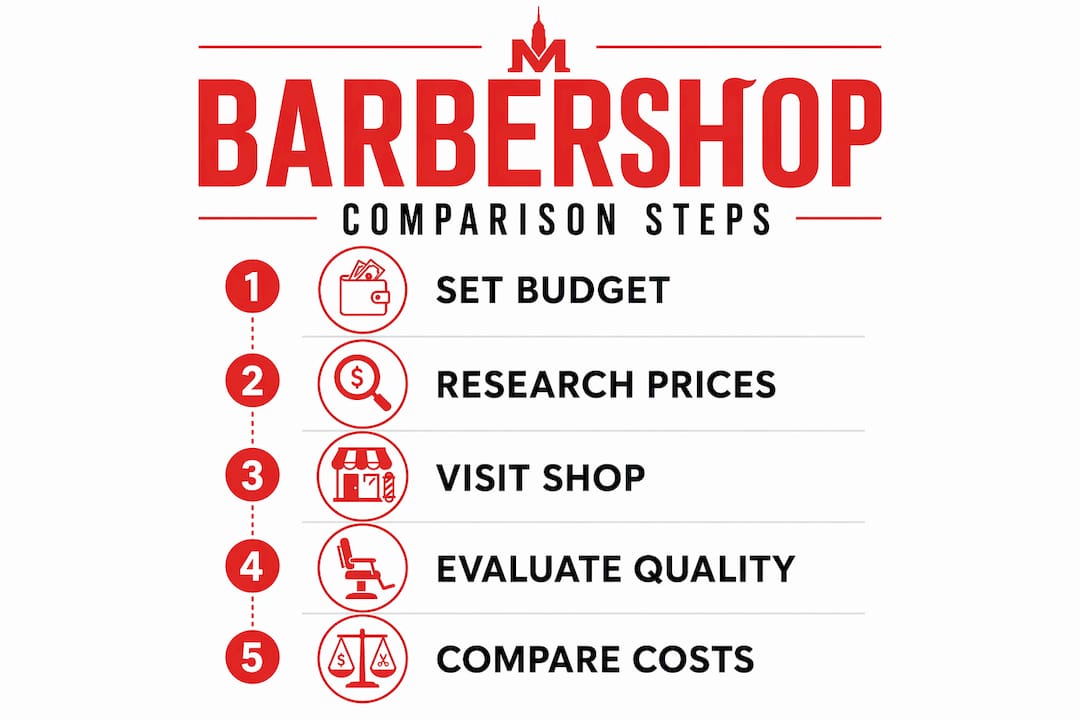
Step 1: Set your real budget
Calculate your monthly grooming budget including the haircut price, tip, and any add-ons like a beard trim or hot towel. A $40 base cut with a $8 tip and a $15 beard trim costs $63 per visit. Know that number before you walk in anywhere.
Step 2: Research prices, services, and reviews
Check each shop’s website or booking page for a full service menu with prices. Read recent reviews on Google, not just the star rating. Look for comments about consistency, wait times, and whether the barber listened to the client. Reviews that mention a specific barber by name signal a shop where clients build real relationships. Client retention and barber relationships drive long-term grooming value more than any single visit.
Step 3: Visit before committing
Walk into a shop before booking a full appointment. Observe the cleanliness, the pace, and how barbers interact with clients. Ask to see the service menu in person. A shop that welcomes questions is a shop that values transparency. You can also check out what to ask a new barbershop before sitting down, so you go in prepared.
Step 4: Ask the right questions
What is included in the base haircut price?
How long does a standard appointment run?
Does the barber specialize in any particular hair types or styles?
How do you sanitize tools between clients?
Step 5: Compare total cost over multiple visits
Factor | Budget shop | Premium shop |
Price per cut | $25–$35 | $55–$100 |
Appointment length | 15–25 minutes | 40–60 minutes |
Style longevity | 2–3 weeks | 5–7 weeks |
Annual visits needed | 20–26 | 8–10 |
Estimated annual cost | $650–$910 | $550–$1,000 |
Pro Tip: Track how long your cut looks sharp after each visit. If it fades within two weeks, you are likely overpaying for the frequency, not the quality. A personalized barbershop experience consistently produces cuts that hold their shape longer.
Key Takeaways
Barbershop pricing reflects service quality, appointment depth, and style longevity, making a structured comparison the most reliable way to find lasting value.
Point | Details |
Price signals service tier | Shops priced $35–$45 sit in the midpoint; those above $60 invest in time and craftsmanship. |
Consultation defines quality | A barber who asks about face shape and lifestyle before cutting delivers a more consistent result. |
Calculate total cost | Include tip and add-ons in every price comparison to get the real per-visit number. |
Premium cuts save money annually | A $50 cut lasting six weeks costs less per year than a $30 cut lasting two weeks. |
Sanitation signals standards | Visible clean tools and fresh capes indicate a shop that maintains quality across the board. |
What I’ve learned about price, quality, and finding the right barber
Evgenii here. After years of watching clients walk in frustrated after bad cuts from cheap shops, I have one clear takeaway: the biggest mistake men make is treating barbershop price as the primary filter.
Price is a starting point, not a verdict. The shops that consistently produce great results are the ones where the barber talks to you before touching your hair. That conversation, about your face shape, your hair texture, how much time you spend styling in the morning, tells you everything about whether this person will deliver. A shop with a $70 ticket and a barber who skips that step is worse value than a $45 shop where the barber genuinely listens.
The other thing I tell every client: build a relationship with one barber and stick with it. Your annual grooming spend depends far more on visit frequency and add-ons than on the base price of a single cut. A barber who knows your hair cuts it right the first time, every time. That consistency is worth more than saving $10 per visit by rotating through whoever is available.
Red flags are simple: no consultation, dirty tools, and a barber who does not check in during the cut. Green flags are equally simple: questions before the cut starts, clean workstations, and a finish that includes a careful neckline cleanup. Trust those signals over the price on the menu.
— Evgenii
Where Manhattanbarbershopny delivers on every standard in this guide
Manhattanbarbershopny on the Upper East Side is built around the principles this guide covers: transparent pricing, genuine consultations, and cuts that hold their shape for weeks.
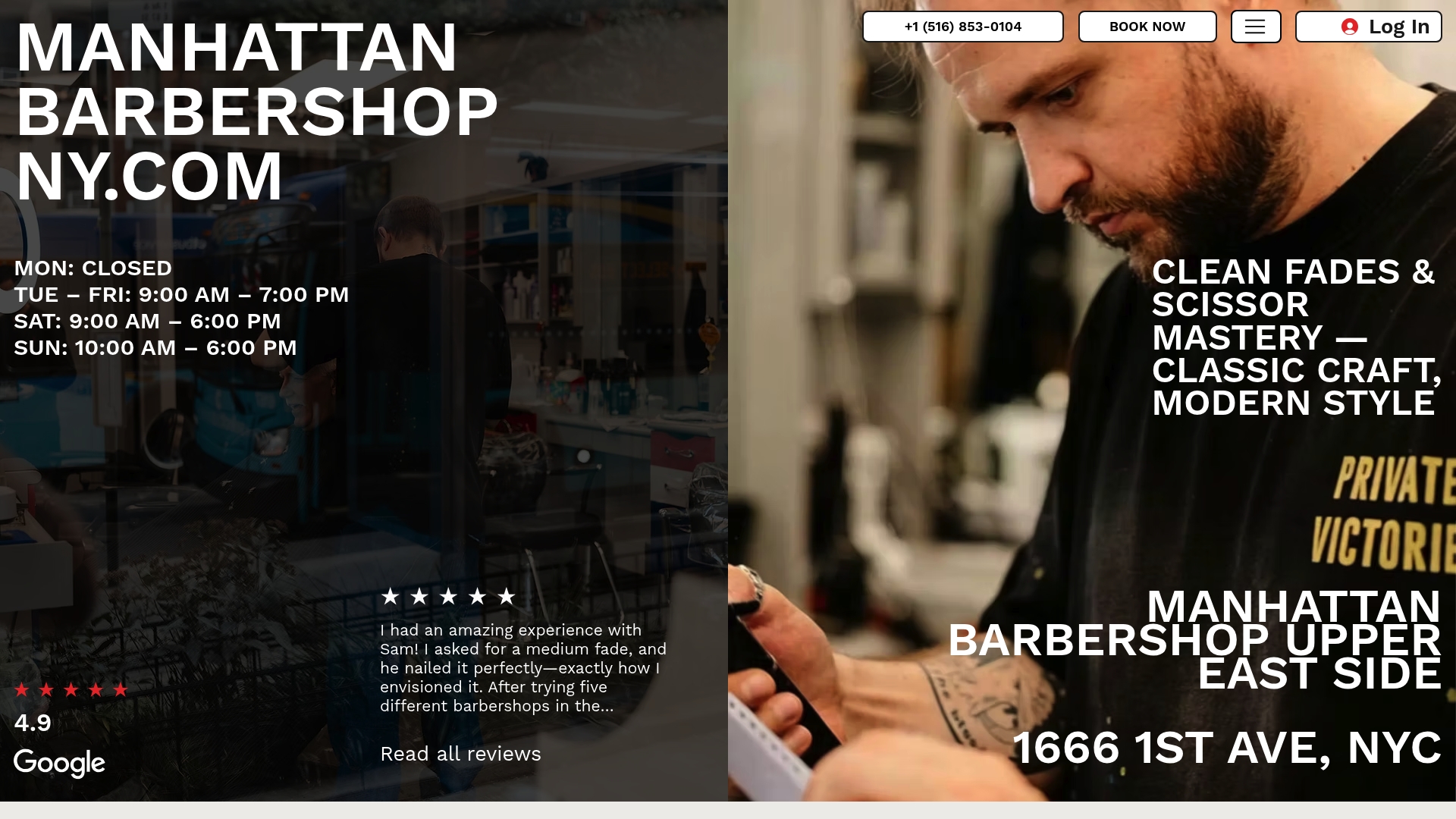
Owner Eugene Solod and his team take the time to understand each client’s hair type, face shape, and lifestyle before picking up a clipper. The shop specializes in clean fades and classic cuts that look natural and stay sharp without heavy product use. Walk-ins are welcome, and online booking is available for clients who prefer a scheduled appointment. Whether you want a model haircut appointment or a straightforward trim, Manhattanbarbershopny offers the kind of quality barbershop service that justifies every dollar. You can also book your appointment online in under two minutes.
FAQ
What is the average cost of a men’s haircut in the U.S.?
The average posted price for an adult men’s haircut in major U.S. cities is $38.52, with most shops ranging between $35 and $45.
How much should I tip my barber?
Standard U.S. tipping runs 15%–20% for a regular haircut and 20%–25% for complex or exceptional service. Always factor the tip into your total budget before comparing shop prices.
Does a higher price always mean a better haircut?
Not automatically. Price reflects time, overhead, and expertise, but the consultation process is the strongest quality indicator. A barber who asks about your hair type and goals before cutting will outperform a more expensive barber who skips that step.
How do I know if a barbershop is worth the price?
Look for visible sanitation practices, a pre-cut consultation, and a barber who communicates during the cut. These signals predict consistent results more reliably than the price on the menu.
Why do fades cost more than a standard haircut?
Fades require technical skill and additional chair time to blend cleanly from skin to length. That complexity typically adds $10–$20 to the base haircut price at most shops.
Recommended
Comments