What Is a Hard Part Haircut? Your Complete Style Guide

Updated: Sep 19
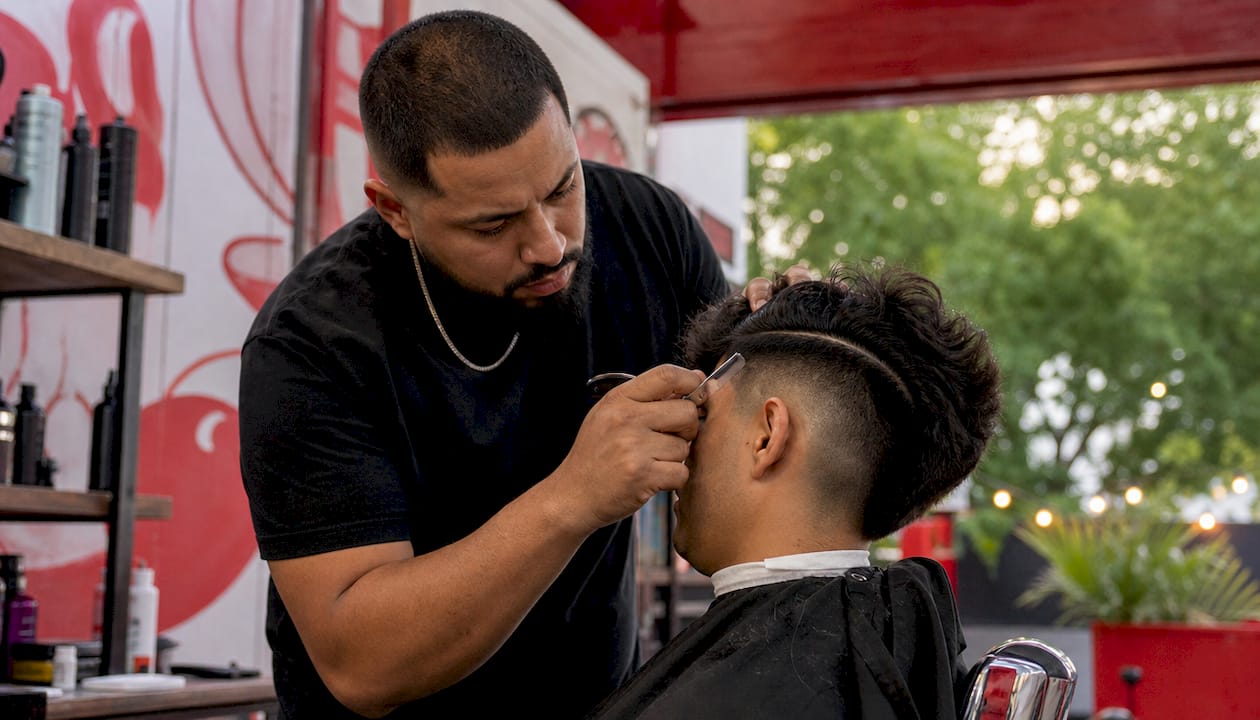
A hard part haircut is a precisely shaved line cut directly into the scalp along the hair’s natural parting, creating a permanent, sharp division between two sections of hair. Unlike a natural part formed by combing, the hard part is carved by a barber using trimmers or a straight razor, making it a fixed architectural feature of the cut itself. This style acts as a permanent grooming roadmap, so you never spend time hunting for your part in the mirror each morning. Manhattanbarbershopny specializes in this kind of precision work, delivering clean, lasting results that hold their shape for weeks.
What is a hard part haircut and how is it created?
A hard part is defined as a shaved groove in the scalp, not a styling choice made with a comb. That distinction matters because it changes how you think about the cut entirely. The part is built into the hair, not applied on top of it.
Barbers create the hard part using one of two tools: a detail trimmer or a straight razor. The trimmer approach is faster and works well for thicker hair. The straight razor delivers a finer, more defined line and is preferred for clients who want maximum sharpness. The choice of tool affects how crisp the final line looks, especially in the first few days after the cut.
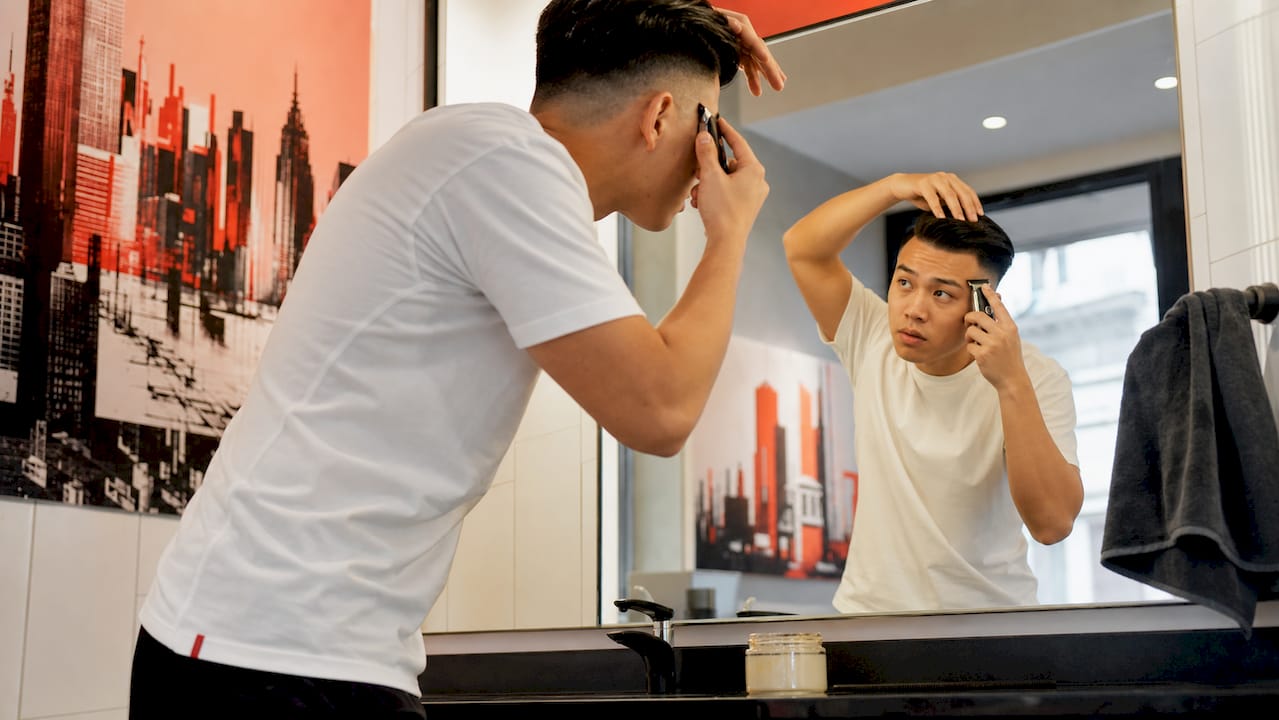
Line thickness is a major styling decision. A subtle thin line reads as refined and works in professional settings. A bold wide line creates high contrast and reads as more fashion-forward. High-skin fades provide maximum contrast, while low tapers yield a conservative look. Most barbers recommend keeping 3–4 inches of length on top to give the hard part a proper frame.
The hard part also works as a permanent visual anchor that guides hair flow, especially for unruly or resistant hair types. Grooming experts treat it as a structured styling element, not just a haircut feature. That framing is worth keeping in mind when you sit down in the barber’s chair.
Pro Tip: Tell your barber exactly where you want the line placed, how wide you want it, and what fade style you prefer before the clippers come out. A quick conversation saves a lot of regret.
How often does a hard part haircut need maintenance?
Maintenance frequency is the most underestimated part of owning this style. Hair grows back into the shaved groove within days, and once that happens, the sharp definition starts to blur. The style’s impact depends entirely on keeping that line clean.
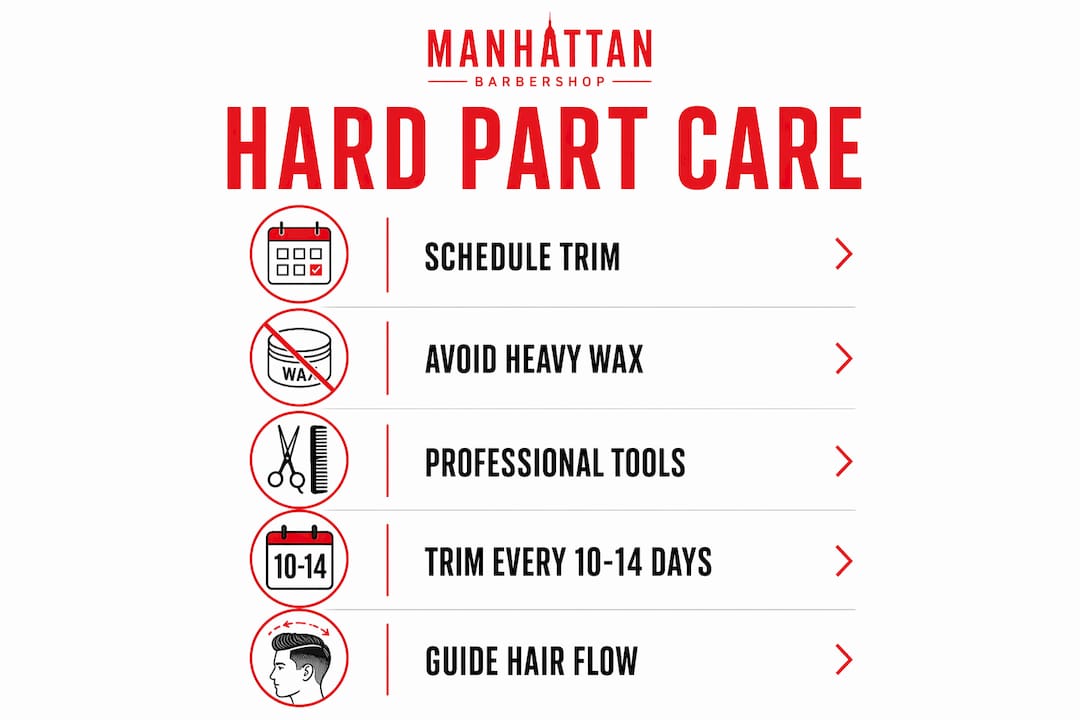
Bold, wide lines need professional touch-ups every 10–14 days to stay crisp. Subtle thin lines give you a bit more flexibility, but even those benefit from a refresh every two to three weeks. The good news is that many barbers offer quick line-up appointments focused solely on the hard part and edges, without charging for a full cut.
Here is a practical maintenance schedule to follow:
Days 1–5: The line is at peak sharpness. Style freely and enjoy the contrast.
Days 6–10: Light regrowth begins to soften the groove. The style still looks intentional.
Days 11–14: For bold lines, this is the window to book a touch-up before the part loses definition.
Days 15–21: Thin lines may still hold, but a professional refresh is recommended for anyone who wants the style to look deliberate.
Beyond 21 days: The hard part begins to look like a grown-out natural part, losing its defining feature entirely.
DIY maintenance risks uneven lines and scalp nicks. Standard household trimmers lack the precision of professional clippers, and a single shaky pass can throw off the symmetry of the line. The cost of a line-up appointment is far lower than the cost of fixing a botched DIY attempt.
Pro Tip: Schedule your line-up appointment before you think you need it. Waiting until the line is fully grown out means your barber has to re-establish the part from scratch, which takes longer and costs more.
One more rule that most people learn the hard way: do not apply heavy pomade or wax directly into the shaved groove. Product fills the groove and blurs the line, which defeats the entire purpose of the style. Apply product to the hair on either side of the part, not into the groove itself.
Who does the hard part haircut suit best?
The hard part works across a wide range of hair types and personal styles. Straight, wavy, and some coarse hair textures all hold the style well. Very fine or thinning hair can struggle to provide enough visual contrast between the shaved line and the surrounding hair, though a skilled barber can still make it work with the right fade.
Face shape plays a real role in where the part should sit. A part placed higher on the head elongates the face, which benefits rounder face shapes. A part placed lower and closer to the temple creates width, which suits longer or narrower face shapes. Placement is not arbitrary. It is a deliberate choice that changes the proportions of your entire look.
The style also adapts to different settings depending on the fade and line choices:
Conservative settings: A low taper fade with a thin line reads as polished and professional.
Casual or creative settings: A high skin fade with a bold line creates a strong, fashion-forward statement.
Versatile middle ground: A mid fade with a medium-width line works in most contexts and requires moderate upkeep.
The hard part suits both edgy and conservative contexts depending on those choices. That flexibility is one of its strongest selling points. You can wear the same basic cut to a job interview and a weekend out, simply by adjusting how you style the hair on top.
The style also has a historical dimension worth knowing. The hard part blends 1940s and 1950s aesthetics with modern precision fades. Smoother fade transitions make the hard part appear more dramatic and professionally styled. That vintage-meets-modern quality is part of why the style has stayed relevant across decades.
How to style a hard part at home between barber visits
Daily styling with a hard part is genuinely faster than styling without one. The line is already there. You do not need to find it, create it, or maintain it with a comb each morning. Clients consistently report that the hard part eliminates daily styling guesswork, turning their morning routine into a quick comb-and-go process. For anyone with a busy schedule, that time savings adds up fast. A deeper look at haircut longevity for busy people explains exactly why precision cuts pay off over time.
Follow these habits to keep the style looking sharp between visits:
Use a fine-tooth comb to sweep hair away from the part on both sides. Work with the direction of the fade, not against it.
Apply a light pomade or clay to the hair above and beside the part, not into the groove. A matte clay works well for a natural finish. A light pomade adds shine for a more classic look.
Avoid heavy waxes or thick creams that can migrate into the groove throughout the day and blur the line.
Comb gently along the scalp near the part line. Aggressive combing can irritate the skin in the shaved groove, especially in the first few days after a fresh cut.
Rinse the groove daily in the shower to remove any product residue that settles there overnight.
A solid everyday grooming routine makes the difference between a hard part that looks intentional and one that looks neglected. The cut does the heavy lifting. Your job is to keep the surrounding hair clean and product-free near the line.
Book your next professional trim before the line fully grows out. Catching it at the 10-to-14-day mark keeps the re-establishment process quick and affordable.
Key Takeaways
The hard part haircut is a shaved, permanent line in the scalp that acts as a fixed styling guide, reducing daily grooming time while delivering a sharp, structured look that suits straight, wavy, and coarse hair types.
Point | Details |
Definition | A hard part is a barber-shaved groove in the scalp, not a comb-created part. |
Maintenance window | Bold lines need a professional touch-up every 10–14 days to stay crisp. |
Product rule | Never apply pomade or wax directly into the shaved groove. It blurs the line. |
Suitability | Works best on straight, wavy, and coarse hair; placement depends on face shape. |
Daily styling | The permanent line removes guesswork and cuts morning styling time significantly. |
Why the hard part is more than just a trend
I have seen a lot of styles come and go over the years, and the hard part keeps coming back because it solves a real problem. Most people do not struggle with finding a style they like. They struggle with maintaining it. The hard part removes that friction by making the structure permanent.
What surprises most clients is how much the style simplifies their mornings. They come in expecting a sharp look. They leave realizing they also got back ten minutes every day. That is not a small thing. Over a month, that is real time returned to your life.
The commitment piece is where people hesitate. A hard part is not a low-maintenance cut if you want it to look intentional. You are signing up for regular touch-ups, and that is a fair trade-off to understand before you commit. But for clients who follow through, the feedback is almost always the same: they would not go back.
The style also rewards a good fade. A mediocre fade makes the hard part look like an afterthought. A clean, well-executed fade makes the line look like the centerpiece of the entire cut. The two elements are inseparable. If you are going to invest in a hard part, invest in the fade that surrounds it.
— Evgenii
Getting a hard part haircut at Manhattanbarbershopny
Manhattanbarbershopny brings the kind of attention to detail that a hard part demands. Eugene Solod and the team specialize in precision haircuts that hold their shape for weeks, with clean fades and sharp lines that reflect genuine craftsmanship. Every client gets a consultation before the clippers come out, so the part placement, line width, and fade style all match your face shape and lifestyle.

Walk-ins are welcome, and online booking is available for anyone who wants to lock in a time. Whether you are getting your first hard part or refreshing an existing one, the shop offers quick line-up appointments alongside full cuts. Book your appointment and see why clients keep coming back.
FAQ
What is a hard part haircut exactly?
A hard part haircut is a shaved line cut directly into the scalp by a barber, creating a permanent, sharp separation between two sections of hair. Unlike a natural part, it does not require daily re-creation with a comb.
How long does a hard part last before it needs a touch-up?
Bold hard part lines need a professional touch-up every 10–14 days as hair grows back into the groove. Subtle thin lines may last slightly longer but still benefit from regular professional maintenance.
Can I maintain a hard part at home?
DIY maintenance is not recommended. Household trimmers lack the precision of professional clippers, and an uneven pass can destroy the symmetry of the line. Barbers use precision tools and straight razors to keep the line crisp and symmetrical.
What hair types work best with a hard part?
Straight, wavy, and some coarse hair textures hold the hard part style well. Very fine or thinning hair can make the contrast between the shaved line and surrounding hair less visible, though skilled placement and fade choices can still make it work.
Does the hard part suit women as well as men?
The hard part works for any client regardless of gender. Placement, line width, and fade style can all be adjusted to suit different aesthetics, making it a flexible choice for anyone who wants a structured, low-maintenance part.
Recommended
Comments