CLEAN FADES ONLY

A Masterclass on What Fades Really Are — and Why They’re Not a Haircut
What Is a Fade?
A fade isn’t a haircut — it’s a technique. It’s the art of blending hair from one length to another so smoothly that the transition looks like velvet under light.
The term “fade” originated in the mid-20th century U.S. military, where clean gradients became part of discipline and uniformity. Later, in the 1980s, Black barbers refined the technique — turning the fade into visual geometry and cultural identity.

But the true revolution happened when clipper blades became adjustable. Once barbers could control the blade length by a lever instead of changing guards, a new world of precision opened up. Now, for the first time, you could “build” the gradient — moving from skin to full length by hand, using the lever to sculpt a seamless, silky transition. That mechanical innovation is what made the modern fade possible.
Skin Fades — The Art of Contrast
A skin fade (or bald fade) brings the blend all the way down to bare skin before the gradient begins. It’s not just short hair — it’s contrast, light, and texture working together.
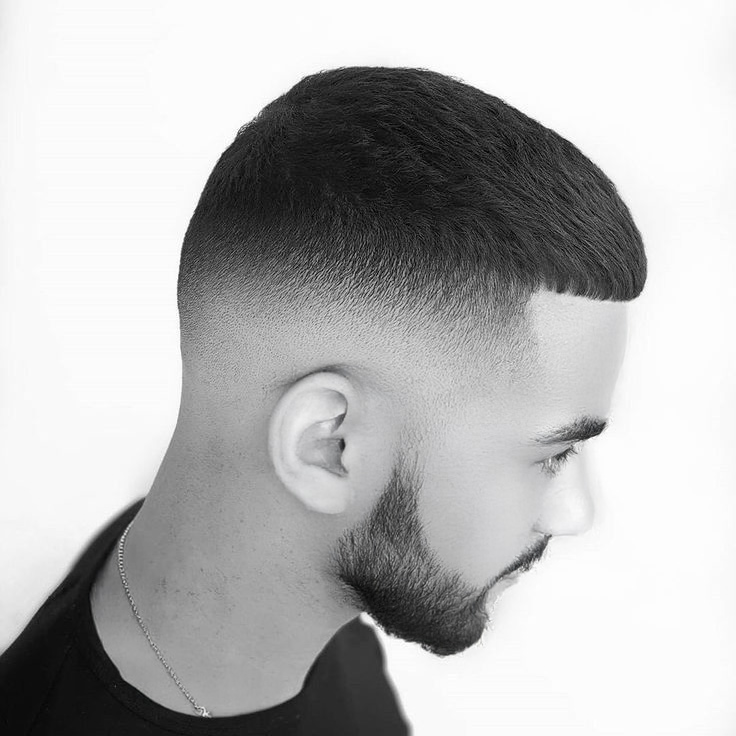

Skin fades come in three levels of intensity:
Low Skin Fade — soft, subtle, the clean edge sits just above the ear.
Medium Skin Fade — balanced, visible contour along the parietal ridge.
High Skin Fade — bold and sharp; the fade climbs high, creating a graphic silhouette.
Each one frames the head differently — it’s the difference between shadow and spotlight.
Taper Fades — Subtle Precision
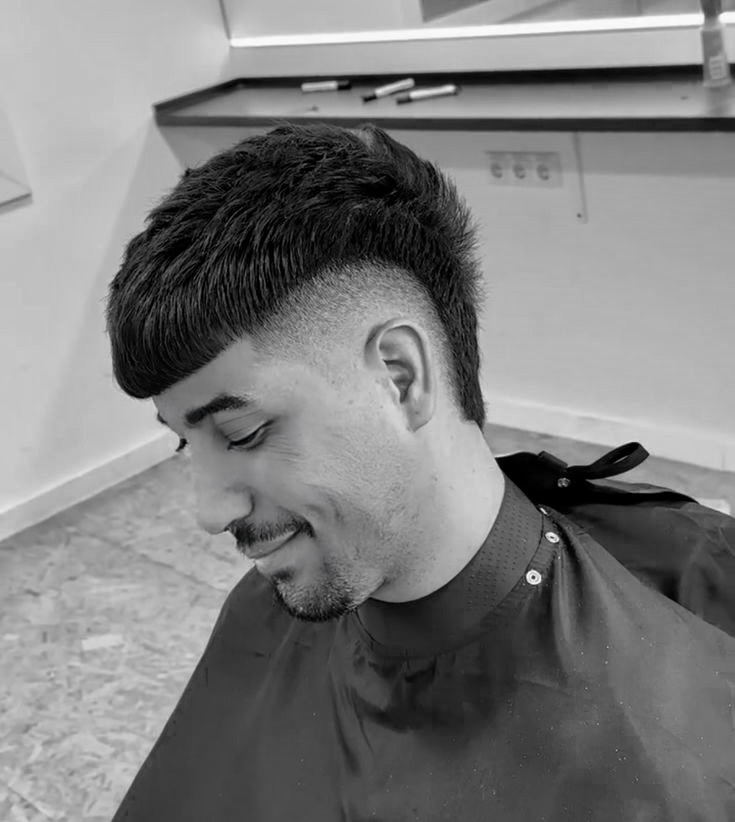
A taper fade is more refined — the fade only touches key points: the temples, sideburns, and neckline. It’s cleaner than a classic haircut but less exposed than a full fade. It’s often chosen by clients who want freshness without extremity.
Taper fades also come in levels:
Low Taper — minimal transition at the edges; conservative, timeless.
Medium Taper — stronger but balanced, adds flow and clarity.
High Taper — visible contrast at the temples, structure and energy.
Ice-Peak Taper — an advanced variant where the nape fade forms a defined V-point — a precision line carved in ice.
The Technology Behind the Technique
Before adjustable blades, barbers relied on detachable guards and fixed-length clippers. There was no real “fade” — only steps of length. But when lever-controlled blades appeared, barbers gained micro-adjustment control — fraction-by-fraction fading. This allowed the creation of that “velvet gradient” effect — a fade so smooth it looked airbrushed.

That’s why the fade is not just a style. It’s a symbol of progress — a marriage between craft and engineering.
From the Barber’s Chair
A fade isn’t drawn — it’s built. It follows the skull, the light, the bone structure, and the movement of the hair itself. Every fade I do starts the same way: silence, focus, and the sound of the blade sliding through shadow.
Clients ask, “Can I get a skin fade with a pompadour or an old-school cut?” The answer: always yes. Because a fade isn’t the haircut — it’s what frames the haircut. It’s the fine edge between precision and personality.


Comments