The History of the Mod Haircut

The Birth of a Movement The word Mod comes from Modernist — a youth movement born in late-1950s London among young people obsessed with jazz, Italian tailoring, scooters, and the idea of modern style. It was rebellion without chaos — precise, neat, and deliberate.

These young men rejected the rugged, greasy rock ’n’ roll look of the Teddy Boys and embraced clean silhouettes, minimalism, and refinement. Their haircuts became a visual declaration of their philosophy: smart, modern, and sharp.
The Form — A Handcrafted Discipline The Mod haircut was never done with clippers. It was a purely scissor-crafted shape, sometimes refined with a razor for texture.
It featured:
Controlled volume on top.
Clean, natural taper on the sides and nape — achieved only with scissors.
A defined, often heavy fringe or soft forward flow, cut straight or slightly curved.
It was geometric but soft, almost architectural in balance — a haircut that required skill, patience, and a keen eye for proportion.
The 1960s — Iconic Era of Mods In the early 60s, London’s Carnaby Street and Soho became centers of Mod fashion. Tailored suits, Chelsea boots, and Italian scooters — every element was curated, including hair. Bands like The Who, The Small Faces, and The Kinks carried the Mod aesthetic into pop culture. Actors like Michael Caine became icons of the clean, controlled Mod silhouette — short, crisp, intellectual, slightly mysterious.
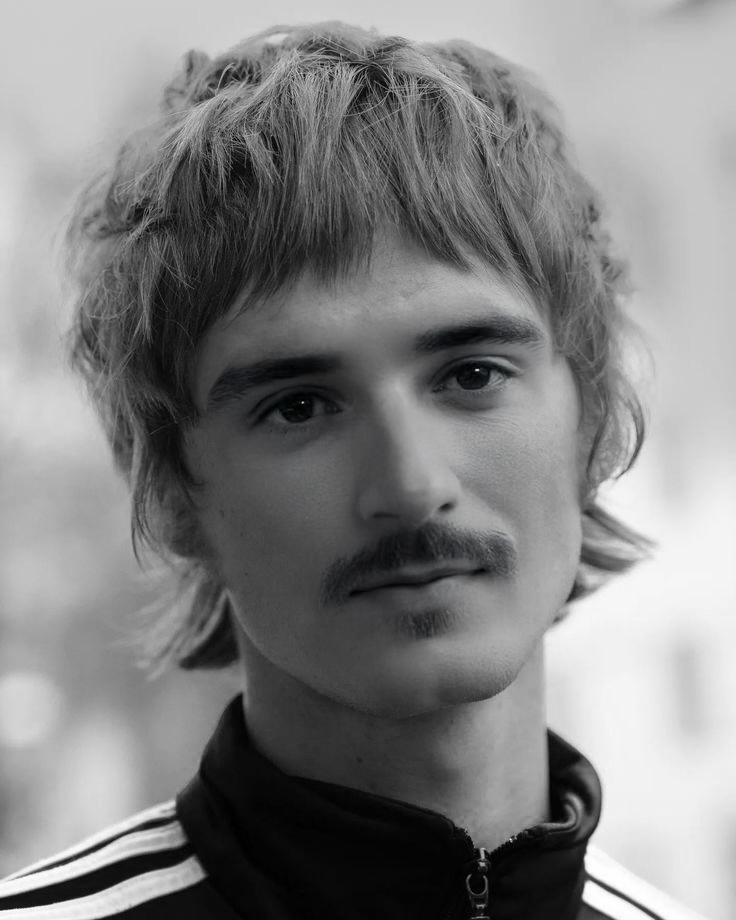
Unlike other styles of the era, the Mod cut never aimed for volume or flashiness. It was understated — the hair equivalent of a fine suit.
Decline & Revival After the 60s, the Mod aesthetic faded as psychedelic and long-haired styles took over. But the precision and refinement of the Mod cut survived. It resurfaced in the Mod revival of the 1980s, adopted by The Jam and the “New Wave” scene — again, always scissors, never clippers. Today, modern barbers and stylists revisit it as a heritage cut — a nod to craftsmanship in an era obsessed with machines.
From the Barber’s Chair — Mod Haircut
The Mod haircut is precision made visible. Every line is intentional, every angle sculpted by hand — no clippers, no shortcuts, just pure control and balance.

For me, this cut is a ritual: the sound of scissors, the clean geometry, the discipline it takes to create something so simple and perfect. It’s not a haircut for noise — it’s for those who speak quietly but look razor sharp.
In the 60s it was worn by men who wanted to separate themselves from chaos.
Today, it’s for those who understand that real rebellion is refinement.


Comments