How Barbers Correct Previous Mistakes in Your Cut

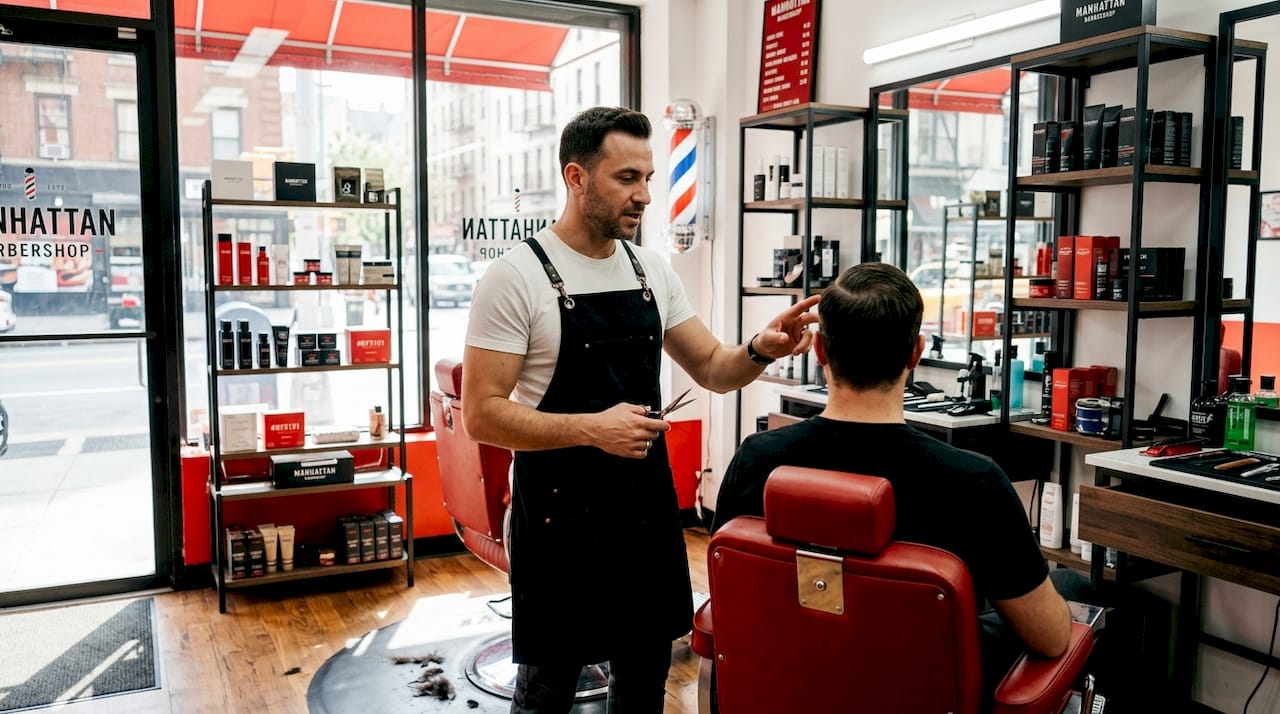
A bad haircut doesn’t just look wrong. It follows you around, showing up in every mirror and photo until the hair grows back out. The good news is that understanding how barbers correct previous mistakes changes the entire situation. Most errors are fixable, and many can be addressed in a single appointment. The misconception that a bad cut is permanent keeps a lot of people suffering in silence when a skilled barber could resolve the issue quickly. This guide walks you through the assessment process, the actual repair techniques professionals use, how to communicate your concerns clearly, and what to do in the meantime.
Table of Contents
Key takeaways
Point | Details |
Wait before acting | Give your hair 3 to 7 days to settle before deciding a correction is needed. |
Most fixes are doable | Minor errors like harsh lines or uneven layers can often be fixed in one appointment. |
Communication matters | Bringing reference photos and using specific language leads to much better correction outcomes. |
Temporary solutions help | Changing your part, adding texture, or using styling products can improve appearance while you wait. |
Find the right barber | A skilled professional with proper tools can correct most common haircut mistakes precisely. |
How barbers correct previous mistakes: start with assessment
Before any barber touches your head for a repair, there is a step most clients skip entirely. Waiting. Giving hair 3 to 7 days after a cut lets it settle into its natural fall, which often changes how a style looks significantly.
Freshly cut hair behaves differently than hair that has been washed once or twice. The scalp oils redistribute, the hair stops reacting to the clipper heat, and the real shape of the cut becomes visible. What looks choppy on day one sometimes looks intentional by day four. Rushing into a correction appointment the same afternoon can lead to over-correcting, which usually makes things worse.
Here is what to watch for during those first few days:
Does the unevenness remain after washing and air-drying naturally?
Are there specific spots that look wrong, or does the whole shape feel off?
Does the issue come from the cut itself, or from how you are styling it?
Is the length the real problem, or is it the blend between sections?
Pro Tip: Take a photo in natural daylight on day one and again on day four with the same styling approach. Comparing the two images gives you a much clearer, less emotional read on what actually needs fixing.
Most salons and barbershops offer complimentary adjustment appointments within 7 to 10 days for clients who are unhappy. Knowing this timeline exists removes the urgency to panic immediately. You have a window. Use it to get clear on what the actual problem is before you walk back in.
Core barber repair techniques used on problem cuts
This is where the real work happens. Professional barber repair techniques cover a wide range of problems, from a crooked hairline to layers that sit at completely the wrong length. The approach a barber takes depends on two things: what went wrong and how much hair is actually left to work with.
Fixing uneven layers and bulk
Uneven layers are one of the most common complaints. When one side is noticeably longer or heavier than the other, a skilled barber uses point-cutting or razor work to remove weight selectively rather than taking length off the whole head. This technique creates movement and blends the discrepancy without making the cut shorter overall.
Correcting harsh or crooked hairlines
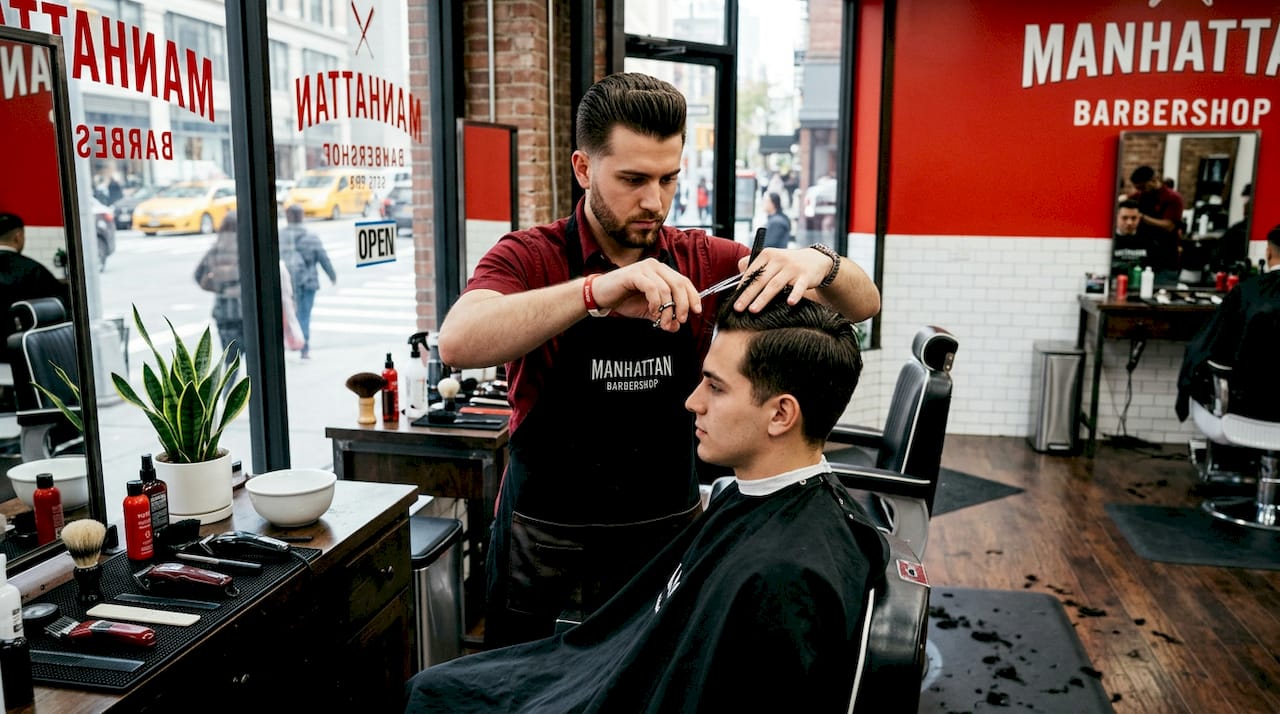
A harsh or poorly shaped hairline stands out immediately, especially on a fresh cut with no growth covering the edges. Adjustable guard trimmers, straight razors, and fine-tooth combs are the tools barbers use to soften and reshape these lines. The goal is a gradual fade into skin rather than a hard edge, which reads as much more natural on every face shape.
When a single appointment is enough vs. when it is not
Issue type | Single visit fix? | Notes |
Harsh hairline or hard edge | Yes | Razor and guard work softens it quickly |
Uneven side lengths | Usually | Depends on the size of the discrepancy |
Wrong overall shape | Sometimes | May need a slight grow-out first |
Too short all over | No | Time is the only real solution |
Choppy or blunt ends | Yes | Point-cutting or texturizing resolves this |
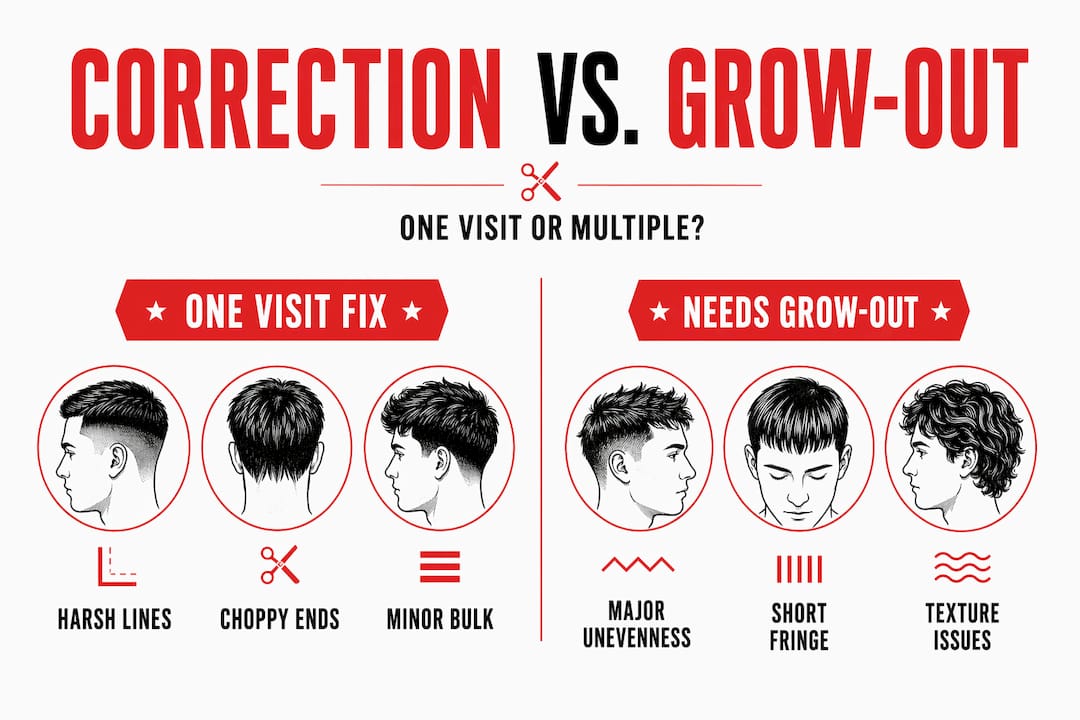
Some haircut issues require multiple visits or a partial grow-out before the barber has enough to work with. This is not a failure. It is just the reality of working with hair that has already been shortened. A good barber will tell you honestly which category your situation falls into.
Hair texture and growth pattern matter here too. Curly or coarse hair is more forgiving of length discrepancies because the curl pattern absorbs small differences. Straight, fine hair shows every millimeter of unevenness, which means corrections need more precision and often more time. Understanding how barber skills translate to different hair types helps you set realistic expectations going into a correction appointment.
Pro Tip: If your barber assesses the situation and says a grow-out period is needed, ask them to schedule a light shaping appointment in three to four weeks. This keeps the overall form looking intentional while the problem areas fill in.
Talking to your barber about a bad haircut
This part makes people more uncomfortable than the bad cut itself. Nobody wants to tell a professional that their work missed the mark. But clear communication about past experiences and specific dislikes is the single biggest factor in getting a better result the second time around.
Here is a practical approach to that conversation:
Start with what you like. Even a bad cut usually has one or two things that worked. Naming those first puts the barber at ease and helps them understand your actual preferences.
Be specific about what went wrong. “It feels too short on the sides compared to the top” is useful. “I just don’t like it” gives the barber nothing to work with.
Bring a reference photo. Using reference photos as a shared visual goal removes the ambiguity from any description. Show the photo and ask directly: “Is this achievable with my hair right now?” That question alone prevents a lot of miscommunication.
Ask what they recommend. Framing it as a collaboration rather than a complaint opens the door to creative solutions you might not have considered.
Raise concerns before the blowout. Once the styling is done and you are standing at the register is the wrong time to mention dissatisfaction. Speak up while you are still in the chair and the cut is fresh.
Pro Tip: Learn the basic vocabulary before your correction appointment. Knowing the difference between a taper and a fade, or between a hard part and a natural part, lets you describe your fade style with enough precision that the barber can act on it immediately.
Waiting a few days and pinpointing your specific dislikes before walking back in leads to much sharper feedback. Barbers respond to clarity. The more precise you are, the better the result.
Temporary fixes while waiting for regrowth or correction
Sometimes the hair is too short to correct yet. Sometimes your correction appointment is two weeks out. Either way, you do not have to look at something you hate in the mirror every morning. There are real solutions that work in the interim.
Styling tricks like changing your part, adding waves, or lifting the roots can shift the appearance of a cut enough to feel presentable. A part change alone can redistribute visible unevenness. Waves and texture break up blunt ends that look choppy when left flat.
Here are the most effective options:
Change your part. Moving the part even half an inch can cover an uneven section or redirect volume away from a problem area.
Add texture with a salt spray or paste. These products break up the uniformity of a too-blunt cut and make awkward lengths look intentional.
Use clip-in extensions for length. Clip-in extensions and styling tricks add immediate length and volume when a cut went too short.
Try a different styling direction. Brushing hair forward instead of back, or parting on the opposite side, creates an entirely different silhouette with the same cut.
Avoid repeated trimming of the same areas. Trimming while growing out the same sections delays regrowth to the length you need for a proper reshaping.
Pro Tip: A light-hold pomade or wax applied to dry hair gives you more control over where pieces sit than any spray. Use it to push problem sections in a more flattering direction until your correction appointment.
Maintaining hair health during the grow-out phase also matters. Regular deep conditioning keeps the hair looking intentional and healthy rather than unkempt, which makes a real difference in how the interim period feels.
My take on corrections and what they actually reveal
In my experience working with clients at Manhattanbarbershopny, the most common thing I see is people coming in overwhelmed and not knowing how to describe what they want fixed. The frustration is completely valid. But that emotional state is also the thing that most often gets in the way of a good correction.
I have found that the clients who get the best results from correction appointments are the ones who waited a few days before calling, came in with a photo, and approached the conversation as a collaboration rather than a complaint. That is not just good manners. It is strategy. A barber who understands exactly what went wrong and what you actually want can deliver a result that often looks better than the original appointment would have even if it had gone right.
What I have also learned is that repeated corrections on the same client reveal something important about the relationship between client and barber. If you are coming back for the same fix over and over, the communication is broken somewhere. It might be that the barber is not listening closely enough. It might be that the client is not describing what they want with enough specificity. Either way, that pattern is the signal to change something.
Normalize asking for a fix. Every skilled barber expects it and respects clients who speak up rather than just disappearing. The ones who never say anything and never come back are the real loss. The ones who come back with clear feedback are the ones we grow with.
— Evgenii
Get a correction done right at Manhattanbarbershopny
If you are dealing with a cut that missed the mark, Manhattanbarbershopny specializes in exactly this kind of work. The barbers here take the time to assess what actually went wrong before picking up any tool, which is what separates a real correction from a rushed trim that creates new problems. Whether it is a harsh hairline that needs softening, uneven layers, or a shape that just does not suit your face, the precision work done here addresses the root of the issue.
You can book your correction appointment online in minutes, or walk in if you need a quick fix sooner. For clients interested in a clean precision style that restores structure and confidence, the Iroquois Cut service is worth exploring. Eugene Solod and the team at Manhattanbarbershopny work with your specific hair type and growth pattern to give you a result that actually holds its shape. That is the standard for every chair, every appointment.
FAQ
How long should I wait before getting a haircut corrected?
Wait 3 to 7 days after your cut so the hair settles naturally. This gives you a clearer, less reactive read on what actually needs to be fixed.
Can a barber fix a bad haircut in one visit?
Many issues like harsh lines, choppy ends, and minor unevenness can be resolved in a single appointment. More significant shape or length errors may require a grow-out period before full correction is possible.
What should I bring to a correction appointment?
Bring at least one reference photo showing what you actually want and be ready to describe specifically what went wrong. Reference photos as shared visual goals remove guesswork and give the barber a concrete target.
What tools do barbers use to fix a bad hairline?
Barbers use adjustable guards, straight razors, and fine-tooth combs to soften harsh edges and reshape crooked or uneven hairlines with precision.
What can I do while waiting for hair to grow back after a bad cut?
Changing your part, adding texture with a salt spray or paste, and using clip-in extensions are the fastest ways to improve how a cut looks between appointments. Avoid repeatedly trimming problem areas, as this delays the grow-out needed for a proper reshaping.
Recommended
Comments