How Barbers Develop Signature Techniques That Last

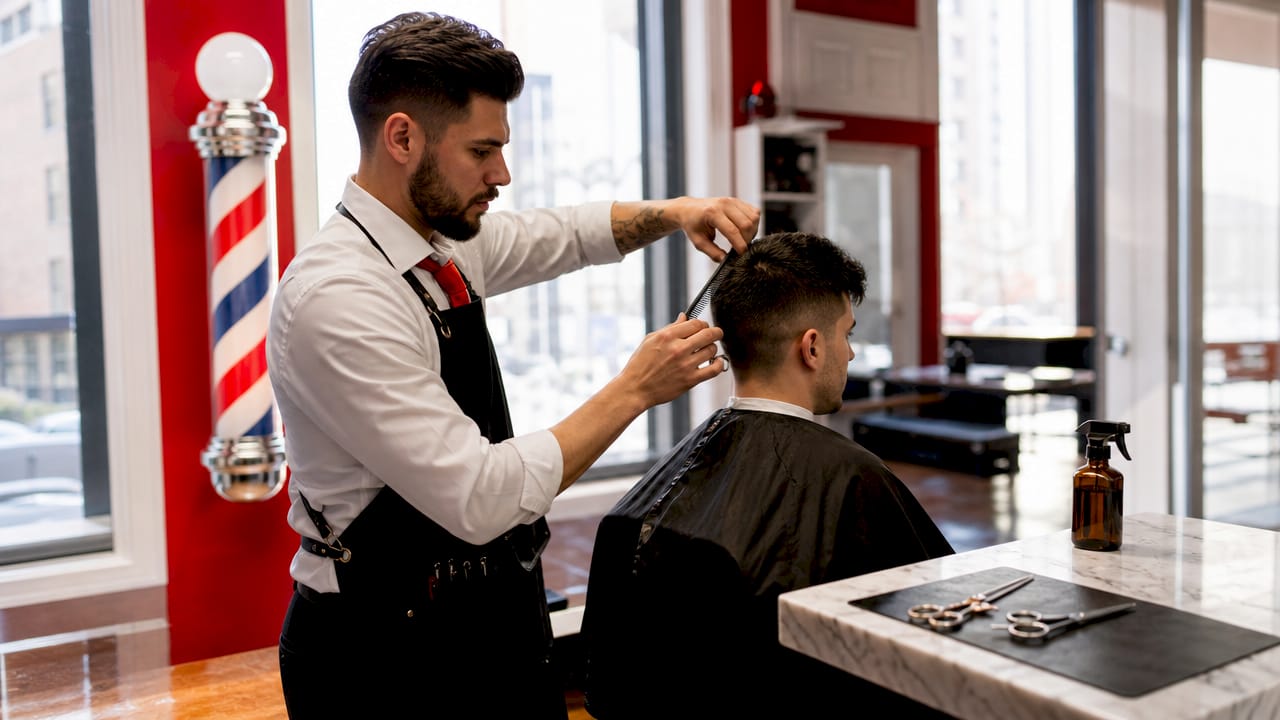
Signature barbering techniques are unique cutting methods a barber builds through mastering foundational skills, applying advanced methods, and cultivating a personal artistic vision. The industry term for this process is barber artistry development, and it sits at the intersection of technical discipline and creative expression. Barbers who understand how barbers develop signature techniques know that no shortcut exists. The process demands thousands of repetitions, honest client feedback, and the courage to experiment. Manhattanbarbershopny, led by owner Eugene Solod, treats this process as a non-negotiable standard, producing tailored styles that hold their form for weeks.
How barbers develop signature techniques through foundational skills
Every signature style starts with the same building blocks. Scissor-over-comb is a core precision technique that gives barbers infinitely variable control beyond what clippers alone can achieve. It is quieter, less intimidating for clients, and produces the refined blending that defines high-end fades and tapers. Without it, a barber’s range stays narrow.
Point cutting is the other essential tool in this foundation. It removes bulk without harsh lines by cutting hair ends at varying angles and depths. Mastered together, scissor-over-comb and point cutting give a barber the control to shape both perimeter and internal texture with consistency.
Clipper work rounds out the core trio. Knowing when to switch between a clipper and a scissor, and why, is what separates a competent barber from one with a recognizable style. Each tool has a specific role, and fluency with all three creates the technical vocabulary a barber draws from when building something original.
Practice structure matters as much as the tools themselves. Barbers build muscle memory and rhythm through thousands of repetitions, typically starting on mannequin heads before moving to live clients. The goal is fluency: completing a graduation cut in under 20 minutes is one benchmark professionals use to measure real mastery.
Master scissor-over-comb before relying on clippers for blending
Use point cutting to refine texture without creating harsh perimeter lines
Practice clipper transitions on mannequin heads until the movement feels automatic
Track your cut times to measure progress toward fluency benchmarks
Pro Tip: Record yourself cutting on a mannequin once a week. Watching the footage reveals grip tension, uneven rhythm, and wasted motion that you cannot feel in real time.
What advanced cutting methods build a unique barbering style?
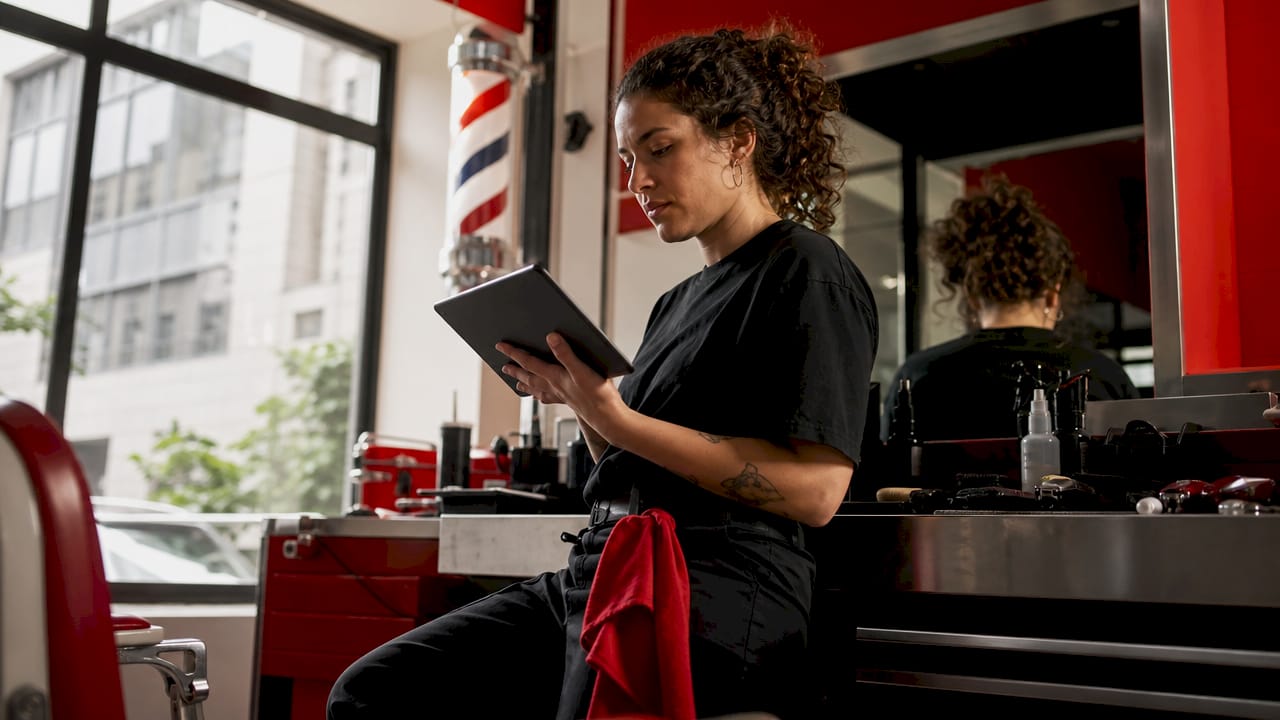
Once the fundamentals are locked in, the real differentiation begins. Freestyle design cuts require spatial awareness and steady hand-eye coordination to create hair art that functions as a personal status symbol. As of 2026, freestyle design work has grown in popularity because digital culture rewards exclusivity and bespoke aesthetics. A barber who can execute a clean geometric design or a custom line pattern owns a skill that no algorithm can replicate.
Precision dry cutting adds a different dimension. The five-phase philosophy developed by precision cutting experts breaks the process into dry assessment, perimeter establishment, precision dry layering, advanced texturizing, and final dry refinement. Each phase builds on the last. The result is a cut that moves the way the client’s hair actually moves, not the way wet hair behaves in the chair.
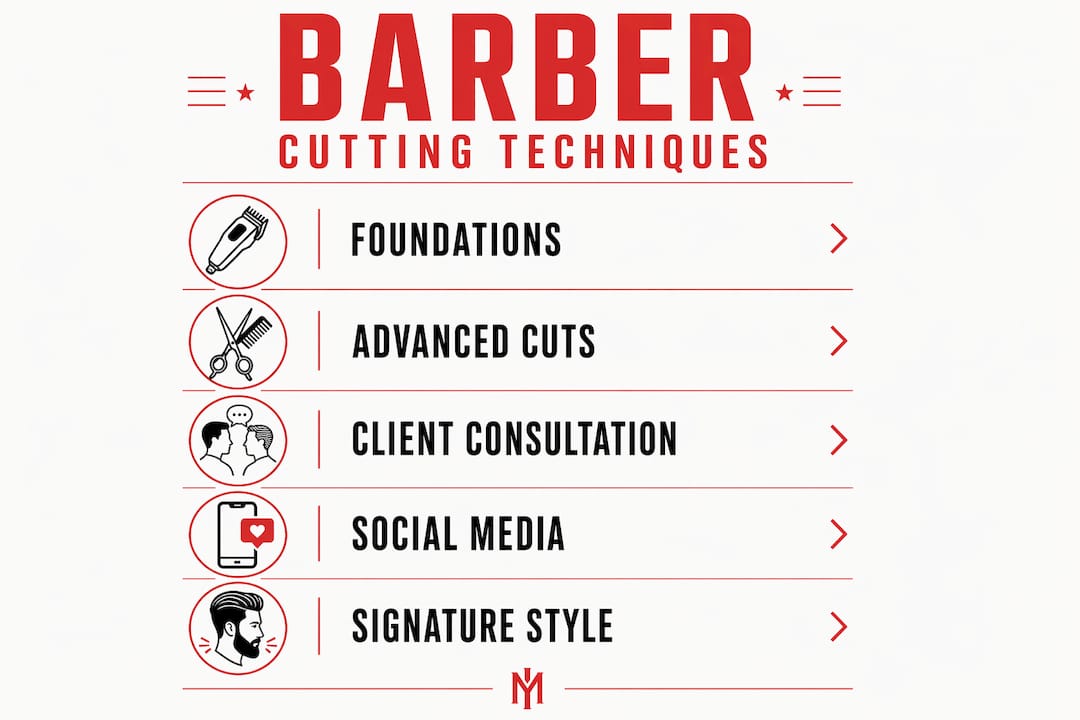
Channel cutting, slide cutting, and razor etching each serve specific finishing roles. Channel cutting removes interior weight without disturbing the surface. Slide cutting creates soft, graduated movement along the length. Razor etching defines edges and adds detail that elevates a standard cut into something memorable. Used together, these methods form the technical toolkit behind most signature haircut methods.
The five-phase precision cut process, applied in order:
Dry assessment. Observe the hair in its natural state before touching it.
Perimeter establishment. Set the shape that frames the face and guides all subsequent cuts.
Precision dry layering. Build internal structure that supports movement.
Advanced texturizing. Remove weight selectively to create flow and reduce bulk.
Final dry refinement. Check the cut as the client will actually wear it and correct any inconsistencies.
Technique | Primary purpose |
Freestyle design cuts | Personal branding and bespoke client identity |
Precision dry layering | Natural movement tailored to hair behavior |
Channel cutting | Interior weight removal without surface disruption |
Razor etching | Edge definition and fine detail work |
What role does client consultation play in developing barber skills?
A barber’s signature style only holds value if it works on the person sitting in the chair. Dry assessment before any cut is the single most critical step for achieving predictable, high-quality results. Reading natural growth patterns, cowlicks, and density while the hair is dry tells a barber what the hair will do after the client walks out the door. Skipping this step leads to unpredictable results, regardless of technical skill.
Client lifestyle shapes every layering and texturizing decision. A client who air-dries and uses no product needs a cut that looks clean without effort. A client who blow-dries daily can carry more structure. Understanding how barbers adapt styles to real-world routines is what turns a technically correct cut into one the client returns for.
The consultation itself is a data-gathering session. A skilled barber asks about morning routines, product use, and how long the client wants the cut to last. That information directly informs which texturizing technique to use and how aggressively to layer.
Assess hair dry before picking up any tool
Ask about daily styling time and product preference
Note cowlick direction and density variations before establishing the perimeter
Revisit the dry assessment at the final refinement phase to confirm the cut behaves as intended
Manhattanbarbershopny applies this consultation model on every visit. Eugene Solod’s approach prioritizes natural looks that require minimal product, which means the dry assessment is not optional. It is the foundation of every personalized result the shop delivers.
How do barbers use social media to refine and promote their signature styles?
Social media is now a professional portfolio, a training log, and a client acquisition tool at the same time. Posting every haircut on social media is foundational for attracting high-profile clients and building a premium brand reputation. Self-taught barbers have documented that consistent social media posts directly contributed to celebrity bookings and premium pricing. Visibility creates credibility before a client ever sits in the chair.
The branding benefit goes beyond follower counts. A barber who posts consistently builds a visual record of their style evolution. Clients can see the range of work, the consistency of quality, and the specific techniques that define that barber’s output. That record is more persuasive than any verbal description.
Social media as a showcase also creates a feedback loop. Comments, saves, and shares tell a barber which techniques resonate most with their audience. That data shapes what to practice next and what to feature in future posts.
Post every completed cut, not just the exceptional ones
Use consistent lighting and angles so your style reads clearly across posts
Engage with comments to understand which techniques attract the most interest
Build a content rhythm: daily posts during peak booking seasons, at minimum three per week otherwise
Pro Tip: Film a short before-and-after clip for every signature cut. Video content generates significantly more engagement than static photos and gives potential clients a clearer picture of your technical range.
Key Takeaways
Barbers develop signature techniques by combining disciplined foundational practice, advanced cutting methods, client-specific adaptation, and consistent professional branding.
Point | Details |
Master the fundamentals first | Scissor-over-comb and point cutting are non-negotiable before any advanced work begins. |
Use the five-phase dry cut process | Dry assessment through final refinement produces cuts that behave predictably outside the shop. |
Consult before you cut | Understanding client lifestyle and hair behavior shapes every layering and texturizing decision. |
Post every cut on social media | Consistent posting builds a visual portfolio that attracts premium clients and validates your style. |
Validate techniques through repetition | Only methods that survive thousands of repetitions and mentor scrutiny earn a place in your signature repertoire. |
What I have learned about building a signature style that actually lasts
The barbers I respect most share one habit: they treat every cut as a test of a specific technique, not just a service to complete. That mindset is what separates barbers who develop a recognizable style from those who stay technically competent but interchangeable.
The discipline piece is harder than most people admit. Techniques earn their place in a master barber’s repertoire only after rigorous testing and mentor scrutiny. That standard exists for a reason. A technique that looks good once is not a signature technique. A technique that holds up across different hair textures, densities, and growth patterns, cut after cut, is.
The creative side matters just as much. Collaborative creative partnerships between barbers drive real innovation. The barbers who push the craft forward are not working in isolation. They are watching other artists, absorbing cultural shifts, and letting client personalities challenge their defaults. That combination of technical rigor and cultural awareness is what produces work that feels both original and relevant.
My honest advice: do not rush the signature part. Build your fundamentals until they feel effortless. Then experiment with one advanced technique at a time, get feedback, and refine. The barbers who try to skip to the creative work before the foundation is solid always plateau early. The ones who stay patient with the basics end up with something genuinely worth owning.
— Evgenii
Experience signature technique at Manhattanbarbershopny
Manhattanbarbershopny brings the full process described in this article to every appointment on the Upper East Side. Eugene Solod and his team apply dry assessment, precision layering, and client-specific texturizing on every visit, not just for new clients.
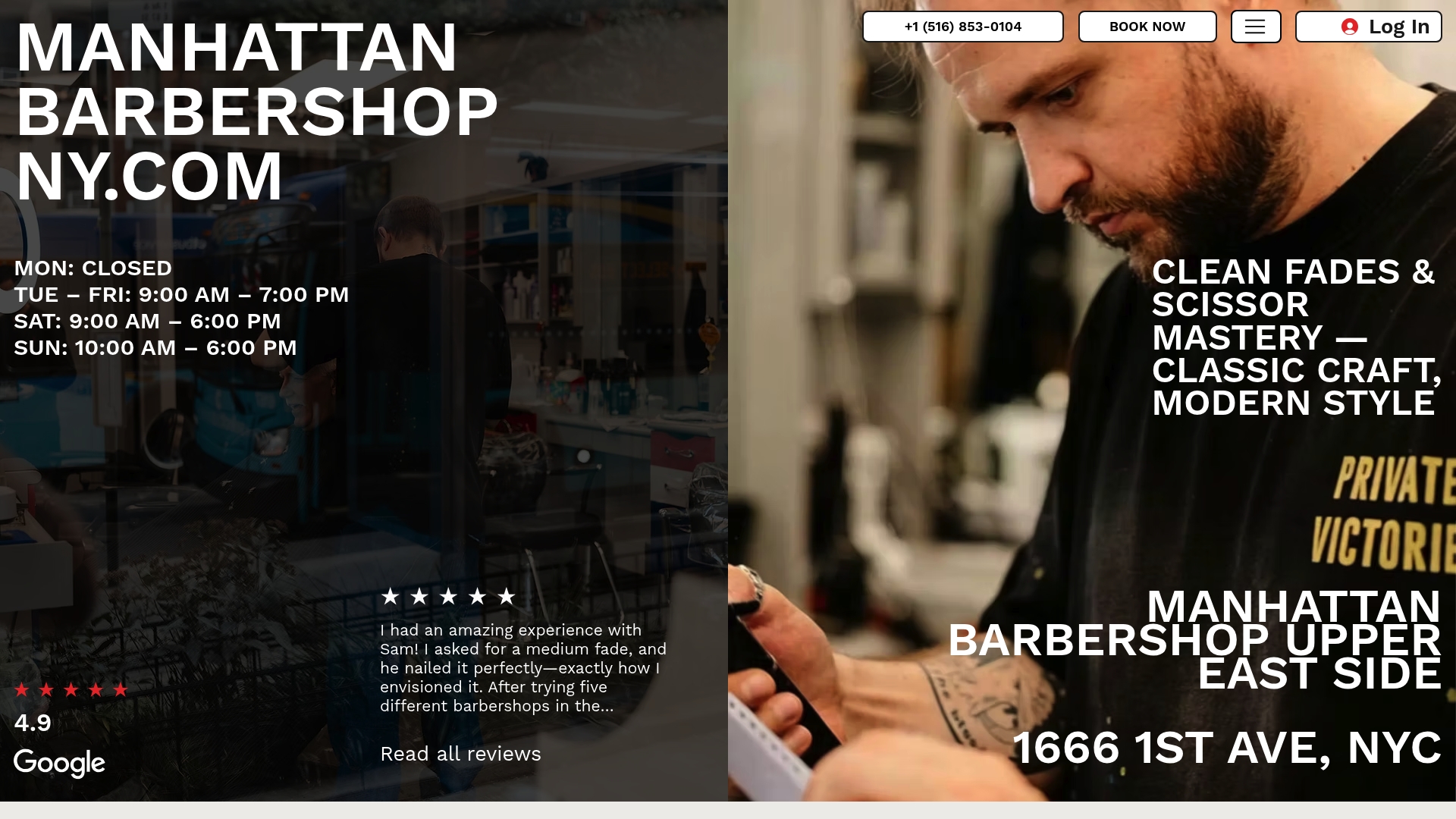
The shop’s Pompadour is a flagship example of what a fully developed signature technique looks like in practice. It combines clean structural lines with natural movement and requires no heavy product to maintain. Walk-ins are welcome, or you can book your appointment online to secure a consultation with a barber who will assess your hair dry before picking up a single tool.
FAQ
What are signature barbering techniques?
Signature barbering techniques are cutting and styling methods a barber develops through disciplined practice, advanced training, and repeated client adaptation. They are recognizable, consistent, and reflect the barber’s personal artistic standard.
How long does it take to develop a signature style?
There is no fixed timeline, but mastery requires thousands of repetitions across different hair types before a technique becomes reliable enough to call a signature. Most barbers report that a recognizable personal style emerges after several years of focused, intentional practice.
Why is dry assessment important before cutting?
Dry assessment reveals natural growth patterns, cowlick direction, and density variations that wet hair conceals. Skipping it leads to unpredictable results even when the cutting technique itself is sound.
Does social media actually help barbers build a signature brand?
Consistent social media posting directly attracts high-profile clients and supports premium pricing by creating a visible, verifiable record of a barber’s technical range and style. The feedback from posts also helps barbers identify which techniques resonate most with their audience.
What foundational skills matter most for developing unique barber techniques?
Scissor-over-comb and point cutting are the two most critical foundational skills. Together they provide the control over blending, texture, and perimeter definition that all advanced signature work depends on.
Recommended
Comments