Questions to Ask a New Barbershop Before You Sit Down


Asking the right questions to ask a new barbershop is the single most reliable way to avoid a haircut you regret. A great cut starts long before scissors touch your hair. It starts with a conversation that covers your hair type, your lifestyle, and your honest expectations. Clients who skip this step walk out with styles that look fine in the chair but fall apart within a week. The questions below give you the exact words to use on your first visit so you leave with a cut that actually fits your life.
1. What style suits my face shape and hair type?
This is the first question to ask a barber before cutting, and it immediately reveals how much the barber knows. A skilled barber does not just repeat what you say. Barbers visually assess hair growth patterns, scalp health, and density before recommending any style. Skipping that assessment to copy a photo directly is a technical red flag.
Face shape determines which cuts flatter and which ones fight your natural structure. A round face benefits from height at the crown and tighter sides. An oblong face needs width, not length. If your barber cannot explain this connection, they are guessing.

2. How much daily styling time will this cut require?
A haircut that looks sharp in the shop but demands 20 minutes of product work every morning is not a good fit for most people. Ask this question directly and listen for a specific answer, not a vague “it’s pretty easy to maintain.” The best barbers connect style complexity to your actual morning routine.
A quality consultation adapts the haircut to the client’s lifestyle, not just style preferences. That distinction matters. A construction worker and a corporate attorney may both want a clean fade, but the maintenance expectations are completely different.
Pro Tip: Tell your barber exactly how many minutes you spend on your hair each morning. That single number shapes the entire style recommendation.
3. How will this cut grow out over the next few weeks?
Most clients judge a haircut on day one. Experienced barbers judge it on day 21. A haircut’s real success depends on how it grows out over three weeks, not just its initial appearance. A cut that ages well saves you money and keeps you looking sharp between visits.
Ask your barber to describe what the style looks like at week one, week two, and week three. If they can answer that with confidence, they understand structure. If they look uncertain, the cut was designed for the chair, not for your life.
4. What products do you recommend for upkeep?
Product recommendations reveal a barber’s philosophy. At Manhattanbarbershopny, owner Eugene Solod specializes in styles that prioritize natural looks without excessive product use. That approach is worth asking about directly: “Do I need product to make this work, or does the cut hold on its own?”
A barber who recommends three products for a simple cut may be overselling. A barber who says “this cut works with just water and a comb” understands low-maintenance styling. Ask for brand names and specific application methods so you can replicate the look at home.
5. How often should I come back for trims?
Trim frequency is one of the most overlooked barbershop first visit questions. The answer tells you the true cost of a haircut over time. A tight fade may need a refresh every two to three weeks. A longer, textured cut can go six weeks without losing its shape.
Scheduling trims is crucial for maintaining your style long term. Ask your barber to give you a realistic rebooking window and write it down. Clients who rebook on the spot leave with better long-term results than those who wait until the cut looks bad.
6. Can I see your portfolio of recent work?
Viewing a portfolio is one of the top questions for choosing a new barber, and most clients never ask it. Checking credentials and viewing a portfolio of recent work on similar hair types is an industry standard as of 2026. A barber confident in their work will show you without hesitation.
Look for photos that match your hair texture and desired style. A portfolio full of straight-hair cuts tells you little if you have coarse, curly hair. Ask specifically: “Do you have examples of cuts on hair like mine?” That question filters out barbers who are skilled in one texture but inexperienced in others.
7. Are you licensed and how long have you been cutting professionally?
Licensing is a baseline, not a bonus. Visible credentials and a clean workspace are industry standards, and any reputable shop displays them. If you do not see a license posted, ask directly. A professional barber will not be offended.
Years of experience matter, but specialization matters more. A barber with three years of focused experience in fades and tapers may outperform a generalist with ten years. Ask what styles they cut most often and whether your desired look falls within that specialty.
8. What do you notice about my hair that I should know?
This question separates good barbers from great ones. A skilled barber performs a non-verbal visual assessment before cutting that covers hair density, growth patterns, and scalp health. Asking them to share those observations out loud gives you insight into their process and builds trust.
You may learn that you have a double crown, an irregular hairline, or a strong growth pattern on one side. That information changes which styles are realistic for you. A barber who spots these details and explains them is doing their job at the highest level.
9. What should I tell you about my lifestyle and job?
Disclosing your occupation is a critical insider tip that shapes haircut style, complexity, and maintenance expectations. A barber who knows you work outdoors in physical conditions will not recommend a style that requires daily restyling. A barber who knows you present in client meetings will factor in formality.
Go beyond job title. Mention your workout schedule, your commute, whether you wear a hat regularly, and how much you sweat. These details help the barber plan a cut that holds up in your actual environment, not just in a climate-controlled shop.
Pro Tip: Bring a photo of a cut you loved and a photo of one you hated. Sharing negative feedback about past haircuts is more valuable to a barber than positive examples because it defines the hard boundaries of what to avoid.
10. What are the red flags I should watch for during the consultation?
A 5–10 minute consultation before the haircut is standard practice, and a refusal to hold one is a red flag. Barbers who rush the consultation, dismiss your questions, or seem annoyed by specifics are signaling how they will handle the cut itself. A good consultation should be welcomed, never rushed or resisted.
Watch for these warning signs:
The barber does not ask about your hair texture or growth patterns before starting
Questions about maintenance or grow-out are met with vague or impatient answers
No portfolio is available or offered
The workspace is disorganized or tools look unclean
Pricing is unclear before the service begins
“Barbers treat the first visit like a mutual interview. Annoyance at questions signals a poor match.” — Tay’s Barbershop
11. What questions should I ask for specific hair types or styling goals?
Different hair types require different questions. Clients with curly or coarse hair should ask whether the barber has specific training in their texture. Clients with thinning hair should ask which cuts add visual density without looking forced. These are not generic questions. They are filters that protect you from a barber who will experiment on your hair.
Curly or coarse hair: “Do you cut dry or wet? How do you account for shrinkage?”
Thinning hair: “Which styles work with my current density rather than against it?”
Color or gray blending: “Do you offer blending services, or do I need a separate colorist?”
Beard and facial hair: “How does my beard shape affect the haircut you recommend?”
Low-maintenance goals: “Can this cut look good with zero product on a rushed morning?”
Clients seeking cuts matched to their lifestyle will find that these targeted questions produce far more useful answers than broad style requests.
Key takeaways
Asking specific, direct questions before your first cut is the most reliable way to get a haircut that fits your hair type, lifestyle, and maintenance capacity.
Point | Details |
Start with a consultation | A 5–10 minute pre-cut consultation is standard; skipping it is a red flag. |
Ask about grow-out, not just day one | A cut’s real quality shows at week three, not the moment you leave the chair. |
Share your lifestyle and job | Occupation and daily routine shape which styles are practical for you. |
Request a portfolio | Ask for examples on hair similar to yours before committing to a barber. |
Negative feedback is more useful | Telling a barber what you hated about past cuts guides them more than what you liked. |
Why I think most people ask the wrong questions at a new barbershop
Most clients walk into a new barbershop and say “just clean it up” or show a photo of a celebrity with completely different hair. I have watched this play out hundreds of times, and the result is almost always the same: a technically fine haircut that does not fit the person sitting in the chair.
The real problem is not that clients are passive. It is that they do not know which questions actually matter. Asking “how much does it cost?” is useful. Asking “how does this cut grow out in three weeks?” is transformative. The second question forces the barber to think about your hair as a living thing, not a static object to be shaped once and forgotten.
The clients who leave consistently satisfied are the ones who treat the consultation like a first-visit conversation with a new doctor. They bring information, they ask follow-up questions, and they push back if an answer is vague. After three or four visits, that depth of conversation becomes unnecessary because the barber already knows your hair. But you have to build that foundation first.
My honest advice: do not be polite to the point of silence. A barber who gets annoyed by your questions is telling you something important about how they work. The right barber welcomes the dialogue because it makes their job easier and your result better.
— Evgenii
Manhattanbarbershopny: where your consultation comes first
At Manhattanbarbershopny on the Upper East Side, every appointment begins with a real conversation. Eugene Solod and his team take the time to assess your hair texture, growth patterns, and lifestyle before a single tool touches your head. That approach is what separates a cut that holds for weeks from one that falls apart in days.
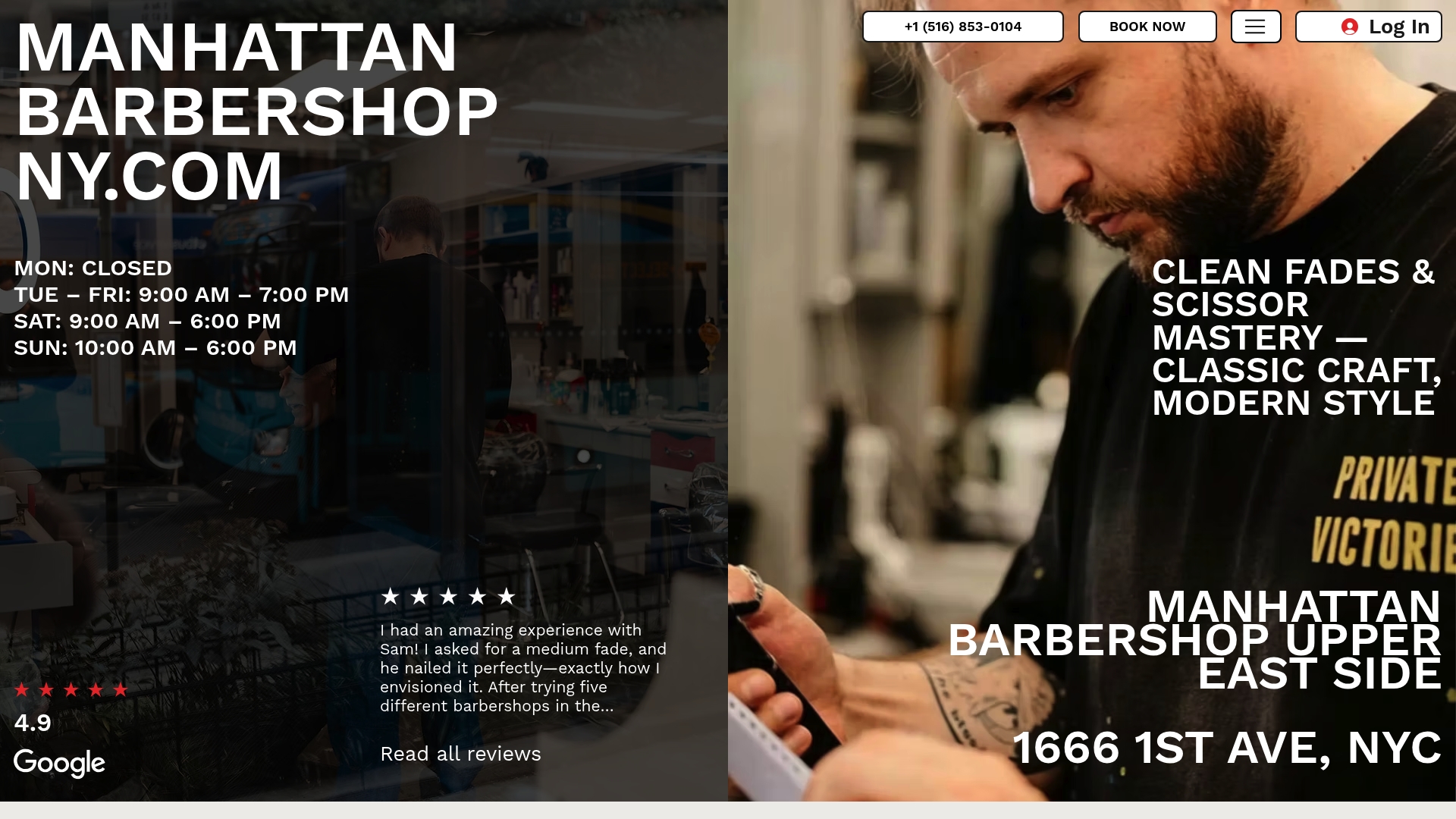
Walk-ins are welcome, and online booking is available for clients who want to reserve their spot in advance. Whether you are coming in for a clean fade, a classic cut, or a style consultation, the team at Manhattanbarbershopny is ready to answer every question you bring. Check the full service menu to see what is available and book your first visit today.
FAQ
What questions should I ask on my first barbershop visit?
Ask about style suitability for your face shape, daily maintenance time, how the cut grows out, and how often you need trims. These five pre-cut questions prevent most haircut failures.
How do skilled barbers assess hair before cutting?
Skilled barbers perform a visual assessment of hair density, growth patterns, and scalp health before recommending any style. Forcing a photo style without this assessment is a technical red flag.
Should I tell my barber what I do for work?
Yes. Disclosing your occupation helps the barber plan a cut that fits your dress code, physical environment, and maintenance reality.
What is a red flag during a barber consultation?
A barber who refuses to hold a consultation, rushes through it, or shows annoyance at your questions is a poor match. A proper consultation runs 5–10 minutes and covers texture, growth, face shape, and maintenance.
How do I know if a barber is right for my hair type?
Ask to see a portfolio of recent cuts on hair similar to yours in texture and density. A barber who cannot show relevant examples may lack the specific experience your hair type requires.
Recommended
Comments