Barber vs Salon: What Professionals Need to Know


The barber vs salon comparison is not a matter of preference. It is a matter of licensing, legal service scope, and technical training that directly determines what a provider can safely and legally do to your hair. For professionals who depend on a sharp, consistent appearance, understanding why barber vs salon matters is the first step toward making grooming decisions that hold up under scrutiny. The wrong choice does not just produce a bad haircut. It can mean receiving a service the provider was never trained or licensed to perform.
Why barber vs salon matters for professionals
Licensure and training shape what services barbers and salons are legally prepared to deliver. This is not a technicality. It is the foundation of every service outcome you experience in the chair.
Barbers complete training programs focused on clipper work, beard shaping, and straight razor techniques. Cosmetologists, who staff most salons, train across a broader curriculum that includes chemical services, color theory, and styling for longer hair. The two licenses are not interchangeable. Each defines a legal boundary around what a practitioner can perform.
For professionals, this distinction has real consequences. If you want a clean fade and a straight razor neck shave, a barber is the correct choice. If you want highlights or a keratin treatment, a licensed cosmetologist is the only legal and safe option. Choosing based on location or price alone ignores the training gap entirely.
How licensing defines the service menu
Straight razor shaving of the face and neck is restricted to barbers in most states. Cosmetologists typically cannot legally perform this service, regardless of how long they have worked in a salon. This is the most practical licensing distinction for professionals who value traditional grooming.
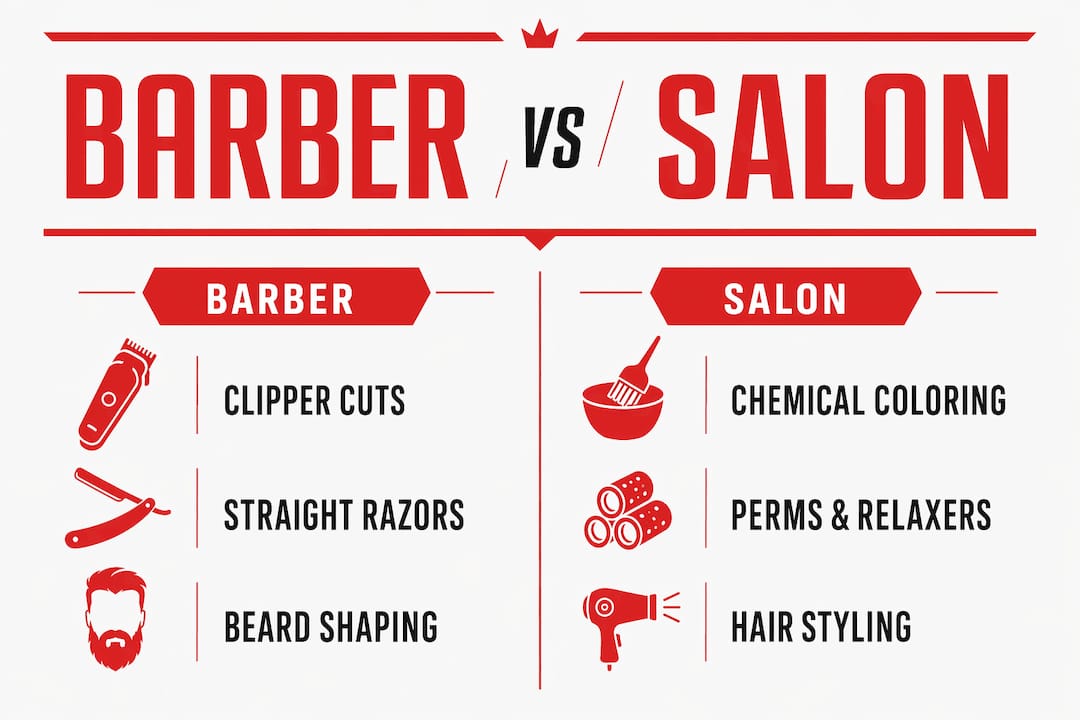
On the other side, chemical services like coloring, highlights, bleach, perms, and relaxers are generally exclusive to cosmetology-licensed professionals. Barbers are not trained or licensed to perform these services. Applying chemicals without the proper license is not just a quality risk. It is a regulatory violation.
Pro Tip: Before booking any appointment, ask directly whether the provider holds a barber license or a cosmetology license. The answer tells you exactly which services are on and off the table.
Service | Barber | Salon (Cosmetologist) |
Clipper fades and tapers | Yes | Limited |
Straight razor shaving | Yes | No (most states) |
Beard design and trimming | Yes | Limited |
Hair coloring and highlights | No | Yes |
Perms and chemical relaxers | No | Yes |
Blowouts and formal styling | Limited | Yes |
What are the real tool and service differences?
The practical gap between a barbershop and a salon goes beyond the license on the wall. It shows up in every tool, technique, and appointment structure.
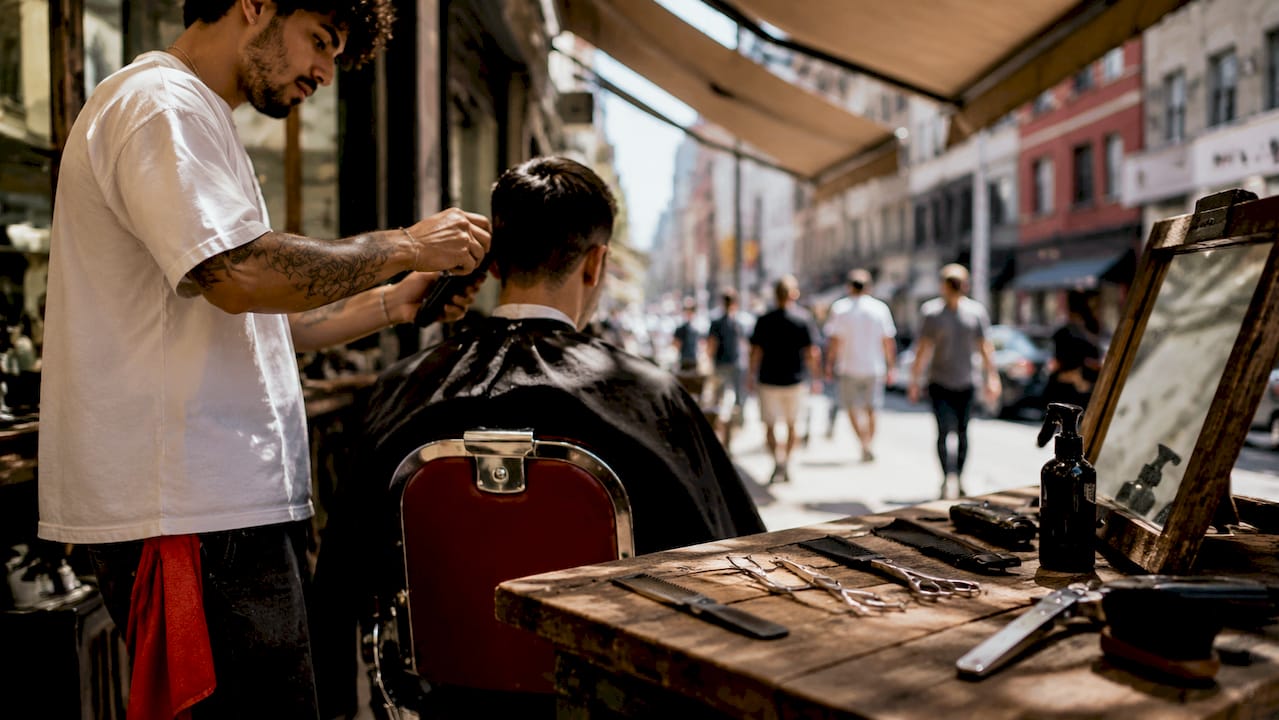
Barbers build their work around clippers, straight razors, and barber scissors designed for dense, short hair. Barber scissors are heavier and built for precision on thick, close-cropped cuts. Hairdresser scissors are lighter and better suited for softer, longer hair where slide cutting and layering are required. Using the wrong tool for the wrong hair type degrades the result. A barber using hairdresser scissors on a tight fade loses control of the line. A salon stylist using barber scissors on fine, long hair risks uneven texture.
Here is how the service focus breaks down in practice:
Barbershop strengths: Fades, tapers, crew cuts, buzz cuts, beard design, straight razor neck and face shaving, lineup and edge work
Salon strengths: Layered cuts, blowouts, keratin treatments, balayage, highlights, color correction, formal styling, longer hair shaping
Barbershop appointments optimize for speed and precision on short, structured cuts. Salons build appointments around consultation, longer processing times, and individualized styling. A barbershop visit for a fade typically runs 20–40 minutes. A salon appointment for color and a cut can run two hours or more.
Pro Tip: If your style requires both a clean fade and color work, plan two separate appointments with two separate providers. Trying to get both from one provider who only holds one license will produce a compromise result at best.
How do pricing models compare between barbershops and salons?
Pricing reflects the operational model, not just the service. Barbershops do 12–20 cuts per chair per day. Salons do 6–10 appointments. That volume difference drives everything from price to wait time to the level of personal attention you receive.
Barbershop cuts typically run $25–$50. Salon cuts run $80–$200 or more, reflecting longer appointment times, higher product costs, and more complex service delivery. Neither price point is inherently better. Each reflects a different business model built around a different service scope.
What this means for professionals:
Barbershops offer predictable pricing, faster turnaround, and consistent results on short styles. Walk-in availability is common.
Salons require advance booking, longer time commitments, and higher per-visit spend. The investment reflects service complexity.
Consistency is easier to achieve at a barbershop for short styles because the high-volume rhythm builds repeatable process efficiency. Salons build consistency through longer client relationships and detailed consultation records.
The business rhythms differ in ways that affect your schedule as much as your budget. A professional who needs a sharp cut before a board meeting can often walk into a quality barbershop and be done in 30 minutes. That same professional cannot walk into a salon and expect a color service on demand.
Does hair type determine which provider you should choose?
Hair type is the most underweighted factor in the barber vs salon decision. Most professionals pick a provider based on location or reputation. The better filter is whether the provider’s tools and training match your specific hair texture and style goals.
Barbers are trained to work with dense, coarse, and curly hair using clippers and razors. Their techniques are built for short, structured cuts that require clean lines and precise blending. If your hair is thick and you wear it short, a skilled barber will outperform most salon stylists on your specific cut every time.
Salon stylists handle a wider range of hair types, particularly fine, straight, wavy, and chemically treated hair. Their training covers the behavior of hair under chemical processing, which requires understanding how different textures absorb and react to color or relaxers. A stylist who specializes in fine hair will produce better layering and movement on that texture than a barber whose training focused on clipper work.
The mismatch problem is real. A salon stylist attempting a tight skin fade without clipper training will struggle with blending. A barber attempting a balayage without cosmetology training is working outside their license. Evaluating a provider’s portfolio for your specific hair type and style is more reliable than reading general reviews. Look for repeatability in their work, not just one impressive result.
How do barbers and salons complement each other?
The barber vs salon question is not always an either/or decision. The choice between barber and salon is about aligning professional grooming needs, hair goals, and service fit. For many professionals, the answer is both.
Here is a practical framework for combining both providers:
Identify your base style. Short, structured styles with fades or tapers belong at a barbershop. Longer styles with layering or color belong at a salon.
Separate maintenance from transformation. Use a barber for regular upkeep every 2–4 weeks. Use a salon for color, chemical treatments, or major style changes every 6–12 weeks.
Check for hybrid establishments. Some modern shops employ both licensed barbers and cosmetologists under one roof. This works well when the licensing is clear and each provider handles only their licensed services.
Plan around your professional calendar. Schedule barbershop visits before high-visibility events. Schedule salon appointments with enough lead time to correct any issues before they matter.
Communicate your full grooming picture. Tell each provider what the other is doing. A barber who knows you color your hair will adjust their clipper tension and technique accordingly. Communicating your style goals clearly prevents the most common grooming mistakes.
Chemical services involve complex interactions and regulatory safety protocols that require cosmetology-licensed practitioners. No amount of barbering skill substitutes for that training. Respecting the specialization of each trade produces better results than expecting one provider to do everything.
Key takeaways
The barber vs salon decision comes down to licensing, service scope, and matching your hair type and style goals to the provider trained to deliver them.
Point | Details |
Licensing defines the service menu | Barbers hold straight razor rights; cosmetologists hold chemical service rights. Know which you need before booking. |
Tools determine quality by hair type | Barber scissors suit dense, short hair; hairdresser scissors suit fine, longer hair. Mismatched tools degrade results. |
Pricing reflects operational model | Barbershops run $25–$50 per cut with high volume; salons run $80–$200+ with longer, complex appointments. |
Repeatability matters more than one result | Evaluate a provider’s consistent work across clients, not a single impressive photo. |
Combining both providers is often the right answer | Use a barber for maintenance and a salon for color or chemical services to get the best of each specialty. |
What i’ve learned after years of watching professionals get this wrong
Most professionals I see make the same mistake. They pick a provider based on convenience and assume the title “barber” or “stylist” covers everything they need. It does not. The licensing gap is real, and it shows up in the results.
The professionals who consistently look sharp do one thing differently. They treat grooming like they treat any other professional service. They ask about credentials, look at portfolios specific to their hair type, and separate maintenance visits from transformation appointments. They do not ask a barber to color their hair, and they do not ask a salon stylist to deliver a skin fade.
I have also seen professionals underestimate the value of finding a barber who specializes in their exact style. A barber who does 15 fades a day will outperform a generalist every time on that specific cut. The same logic applies to salons. A colorist who focuses on balayage will outperform a generalist on that technique. Specialization beats breadth when you know exactly what you need.
The last thing I will say: do not evaluate a provider on one visit. Evaluate them on three. Consistency is the real measure of skill. Anyone can have a great day. The providers worth keeping are the ones who deliver the same result every time, regardless of how busy the shop is.
— Evgenii
Get a precision cut at Manhattanbarbershopny
Manhattanbarbershopny on the Upper East Side of Manhattan delivers exactly what professionals need from a barbershop: clean fades, precise tapers, and beard work performed by barbers who understand your hair type and style goals. Owner Eugene Solod built the shop around craftsmanship and repeatability, not volume for its own sake. Every client gets a cut that holds its shape for weeks without relying on heavy product.
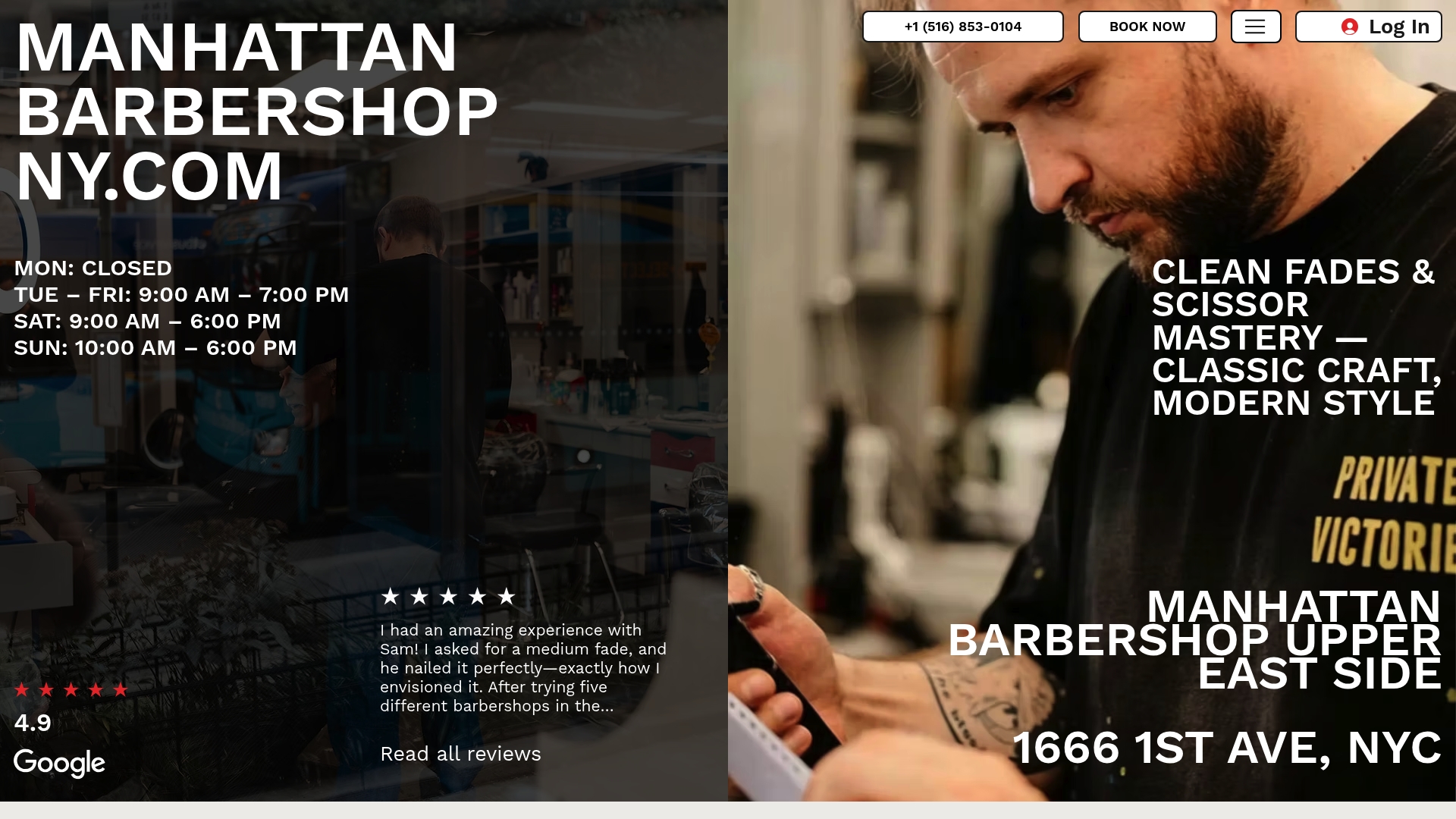
Walk-ins are welcome, and online booking is available for professionals who need to plan around a tight schedule. Services include regular haircuts, beard design, and tailored consultations that match your style to your hair type. When your appearance is part of your professional brand, the right barber is not a luxury. It is a practical decision.
FAQ
What is the main difference between a barber and a salon?
The core difference is licensing and service scope. Barbers are licensed for clipper work, straight razor shaving, and beard grooming, while cosmetologists in salons are licensed for chemical services like coloring, perms, and relaxers.
Can a salon stylist perform a straight razor shave?
No. Straight razor shaving is restricted to licensed barbers in most states. Cosmetologists are not trained or licensed to perform this service.
Why do barbershops charge less than salons?
Barbershops operate on a high-volume model, completing 12–20 cuts per chair per day at $25–$50 per cut. Salons serve 6–10 clients per day with longer, more complex appointments priced at $80–$200 or more.
How do i know which provider is right for my hair type?
Match your hair texture and style goal to the provider’s training. Barbers excel with dense, short hair requiring clipper precision. Salon stylists excel with fine, longer, or chemically treated hair. Review portfolios specific to your hair type before booking.
Can i use both a barber and a salon?
Yes, and for many professionals this is the right approach. Use a barber for regular maintenance on short styles every 2–4 weeks, and a salon for color or chemical services every 6–12 weeks. Each provider handles only the services their license covers.
Recommended
Comments