Beard Shaping's Role in Grooming: A Complete Guide

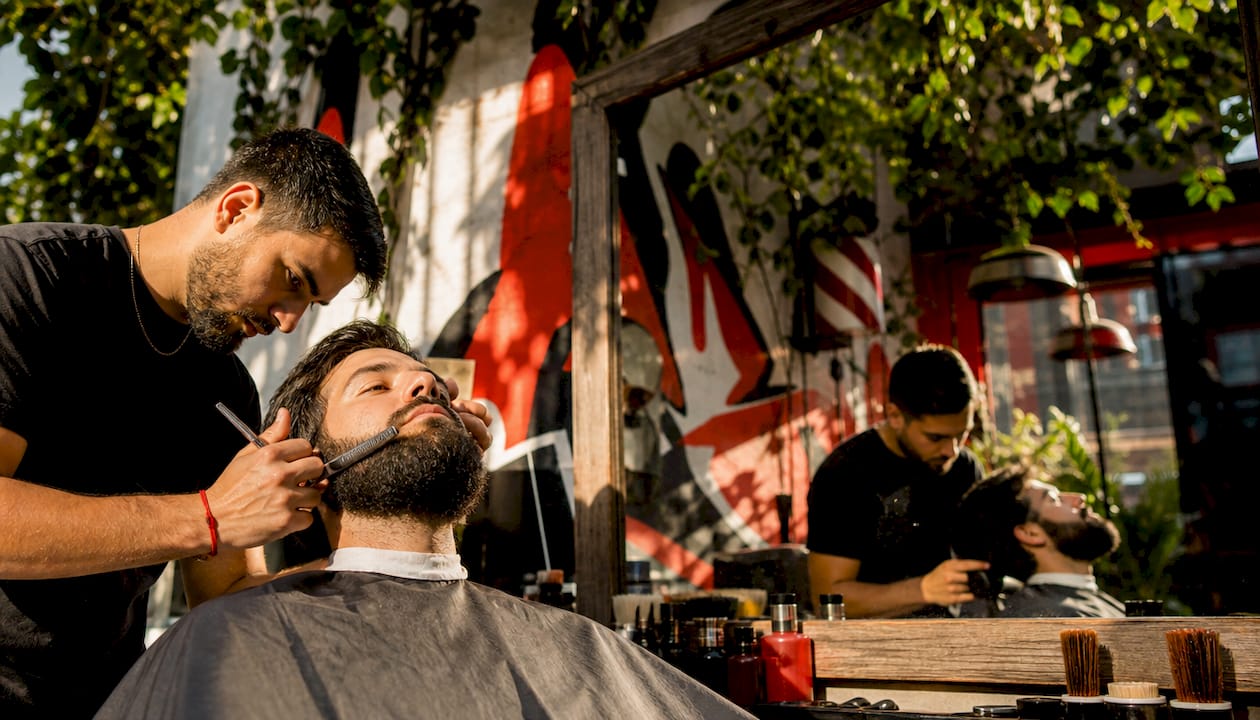
Beard shaping is defined as the practice of sculpting a beard’s edges, neckline, cheek lines, and jawline to create intentional structure and definition. This differs from trimming, which controls length and bulk on a regular schedule. The role of beard shaping in grooming goes far beyond aesthetics. It balances facial proportions, improves beard health, and projects a polished appearance that trimming alone cannot achieve. Manhattanbarbershopny barbers treat shaping as a distinct skill, separate from a standard trim, and the difference shows in the final result.
What is beard shaping and how does it differ from trimming?
Trimming and shaping are two separate grooming actions that work best together. Trimming controls length every 1–3 weeks, reducing bulk and keeping the beard tidy. Shaping defines the neckline, cheek lines, and jawline to give the beard a deliberate, structured outline. Most men do one without the other and wonder why their beard still looks unfinished.
The distinction matters because each task uses different tools and different judgment. Trimming is largely mechanical: set a guard, run the clipper, done. Shaping requires reading your face, deciding where lines should fall, and making cuts that frame your features rather than just reduce hair length. A beard can be perfectly trimmed and still look shapeless if the edges are undefined.
Here is a direct comparison of the two practices:
Feature | Trimming | Shaping |
Primary goal | Length and bulk control | Edge definition and structure |
Frequency | Every 1–3 weeks | Every 2–4 weeks or as needed |
Tools used | Clipper with guards, scissors | Trimmer, straight razor, comb |
Areas targeted | Overall beard surface | Neckline, cheek line, jawline |
Skill level | Beginner friendly | Requires practice or a barber |
Result | Neat, controlled length | Defined, intentional shape |
Common misconceptions trip men up here. Many assume a shorter beard is a shaped beard. Length has nothing to do with shape. A long beard with clean lines looks more groomed than a short beard with ragged edges. The other misconception is that shaping is only for formal styles. Every beard style, from a stubble to a full box beard, benefits from defined edges.
Trimming without shaping leaves edges undefined and the beard looking unfinished.
Shaping without trimming creates clean lines but uneven length throughout.
Both practices together produce a beard that looks intentional and well maintained.
Professional barbers treat shaping as a separate service for good reason.
How does beard shaping enhance facial features and style?
Beard shaping enhances balance, hides or emphasizes facial features, and creates a groomed look sharper than trimming alone. This is the core reason shaping matters beyond simple maintenance. The right shape can make a round face appear longer, a square jaw appear softer, or an oval face appear more defined. Shape is the tool that connects your beard to your bone structure.

Face shape guides every shaping decision. Men with round faces benefit from a beard that adds length at the chin and keeps the sides close. Men with square faces can soften their jawline with rounded edges and fuller sides. Men with oval faces have the most flexibility and can carry most beard styles. Knowing your face shape before picking up a trimmer saves you from a shape that fights your natural features.
Pro Tip: Use a facial mapping technique before shaping. Stand in front of a well-lit mirror and trace the outline of your face with a dry-erase marker on the glass. This gives you a clear picture of your face shape and where your beard lines should fall to create balance.
Round face: add length at the chin, keep sides trimmed close.
Square face: round the edges slightly, allow fuller sides.
Oval face: most styles work; focus on clean lines.
Oblong face: add width at the sides, avoid extra length at the chin.
Diamond face: fuller chin beard balances a narrow jaw.
The impact on personal style is direct. A shaped beard signals that a man pays attention to detail. That perception carries into professional settings, social situations, and first impressions. Shaping transforms raw growth into a style choice rather than a grooming oversight.
What are the best beard shaping techniques and tools?
The right tools make shaping accurate and repeatable. Five tools cover all grooming needs: a boar-bristle brush, a wide-tooth comb, beard scissors, an adjustable trimmer, and beard oil. Each serves a specific function. The brush trains hair direction and reveals true length. The comb lifts hair for even cutting. Scissors handle detail work around the mustache and cheek line. The trimmer handles bulk and edge definition. Beard oil conditions the hair and skin after shaping.
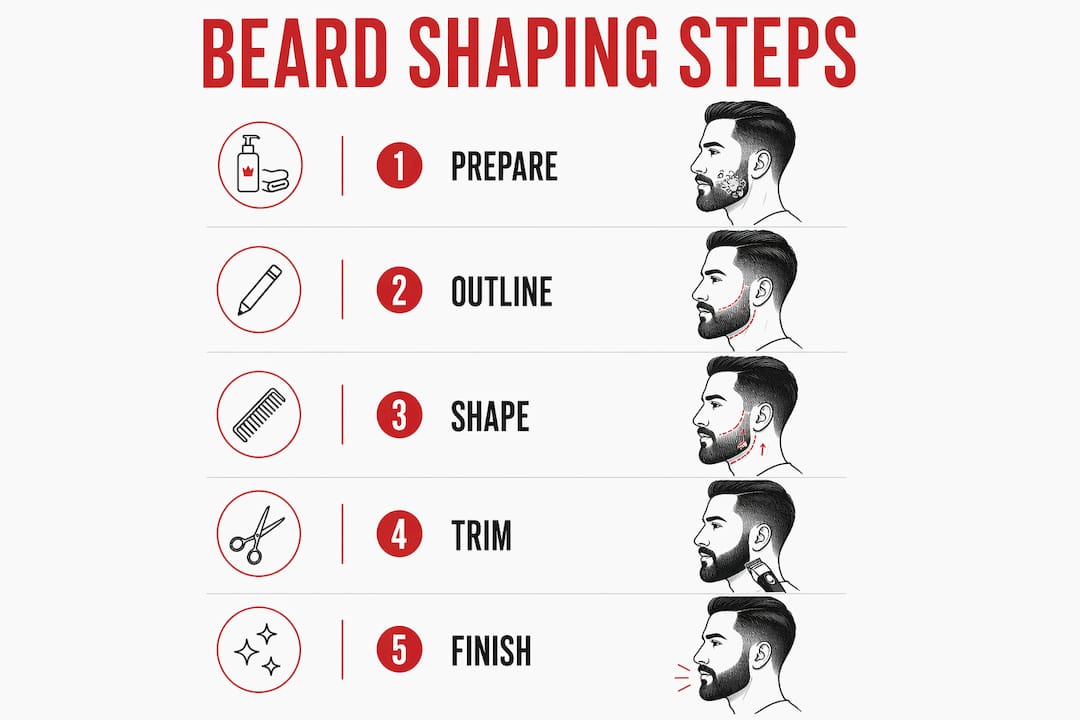
The step-by-step process for shaping follows a clear order:
Dry and brush the beard first. Wet hair expands and causes over-trimming and uneven lines. Always shape a dry, brushed beard for accurate results.
Set the neckline. Place two fingers above your Adam’s apple. That point is your neckline. Shave or trim everything below it. This measurement creates a natural, masculine transition from beard to neck.
Define the cheek lines. Draw an imaginary line from the corner of your mouth to your sideburn. Trim any hair above that line. Keep the line straight or with a slight curve depending on your face shape.
Shape the jawline. Follow the natural curve of your jaw with the trimmer. Avoid cutting too far inward, which narrows the beard and makes the jaw look smaller.
Trim the mustache. Comb it downward and trim any hair that falls over the lip line. Use scissors for detail work here.
Apply beard oil. Work a few drops through the beard after shaping to condition the skin and add a light finish.
Pro Tip: Avoid over-washing your beard. Washing 2–3 times weekly with a beard-specific shampoo preserves the natural oils that keep your beard soft and hold its shape between sessions. Daily washing strips those oils and makes shaping harder to maintain.
Using varied clipper guards or freehand techniques preserves natural facial contours. A single guard length across the entire beard flattens the natural three-dimensional structure of the face. Barbers at Manhattanbarbershopny use this approach to maintain depth and dimension in every beard style they shape.
What are the most common beard shaping mistakes?
The most damaging mistake is setting the neckline too high. A neckline placed too high creates a double chin effect and makes the beard look disconnected from the face. The fix is simple: always use the two-finger rule above the Adam’s apple and never go higher.
Other frequent errors include:
Trimming a wet beard. Wet hair looks longer than it is. Cutting wet leads to removing more length than intended and creates uneven lines once the beard dries.
Uneven cheek lines. Most men have one side that grows slightly higher than the other. Shaping both sides to the same height without accounting for this creates visible asymmetry. Symmetry is about visual balance, not exact mirroring. Minor differences are rarely noticeable when the overall shape looks balanced.
Over-trimming in one session. Removing too much at once is irreversible until the beard grows back. Make gradual adjustments and step back from the mirror frequently to check the overall shape.
Shaping too early. Waiting 4–6 weeks before the first shaping session lets natural growth patterns appear. Early shaping risks poor alignment with your actual growth direction and patches.
Poor lighting. Shaping in dim light hides unevenness until it is too late. Use a bright, direct light source and a second mirror to check both sides simultaneously.
Maintaining shape between barber visits requires small, consistent corrections rather than full reshaping sessions. A trimmer along the neckline and cheek lines every week or two keeps the structure intact without requiring a full session. Learning to read your growth patterns helps you predict where lines will drift and correct them before they become noticeable.
A properly shaped beard is also healthier. Trimming removes split ends, and shaping prevents ragged growth that traps dirt and debris. Good shaping practice is as much about beard health as it is about appearance.
Key Takeaways
Beard shaping is the single most effective grooming practice for creating facial structure, balancing features, and projecting a polished appearance that trimming alone cannot deliver.
Point | Details |
Shaping differs from trimming | Trimming controls length; shaping defines neckline, cheek lines, and jawline for structure. |
Face shape guides every decision | Match your beard shape to your face shape to balance and enhance your natural features. |
Dry beard before shaping | Wet hair expands and causes over-trimming; always shape a dry, brushed beard. |
Neckline placement is critical | Set the neckline 1–2 fingers above the Adam’s apple to avoid the double chin effect. |
Consistency beats perfection | Small weekly corrections maintain shape better than infrequent full reshaping sessions. |
Why I think most men are shaping their beards wrong
Most grooming advice treats beard shaping as a finishing touch. After years of watching men sit in the barber chair, I see it differently. Shaping is the foundation. Everything else, the trimming, the oiling, the styling, supports the shape. When the shape is wrong, nothing else fixes it.
The mistake I see most often is men treating shaping like trimming. They run a clipper over the whole beard, clean up the edges a little, and call it done. The result is a beard that looks maintained but not intentional. There is a real difference between a beard that was groomed and a beard that was shaped. You can see it immediately.
What changed my thinking was watching how a personalized barbershop experience handles shaping versus how most men handle it at home. A skilled barber reads the face first. They look at bone structure, growth direction, and natural asymmetry before touching a tool. That diagnostic step is what most men skip entirely.
My advice: treat your first shaping session as a learning experience, not just a grooming task. Pay attention to where the barber sets your lines and why. Ask questions. A consistent barber relationship builds a style that fits your face over time, not just a one-time result. That investment pays off every time you look in the mirror.
— Evgenii
Professional beard shaping at Manhattanbarbershopny
Manhattanbarbershopny specializes in beard shaping that fits your face, not a template. Eugene Solod and the team take the time to read your growth patterns, assess your face shape, and set lines that hold their form for weeks.

If you want a shaped beard that actually enhances your features, book a session with the team at Manhattanbarbershopny. New clients can take advantage of a free model haircut to experience the difference professional shaping makes. Walk-ins are welcome at the Upper East Side location, or you can book your appointment online and skip the wait.
FAQ
What is the role of beard shaping in grooming?
Beard shaping defines the neckline, cheek lines, and jawline to create intentional structure and balance facial features. It goes beyond trimming by sculpting the beard’s outline to enhance your natural face shape.
How often should you shape your beard?
Most men benefit from shaping every 2–4 weeks, depending on growth rate. Small neckline and cheek line corrections can be done weekly to maintain structure between full shaping sessions.
Should you shape a beard when it’s wet or dry?
Always shape a dry beard. Wet hair expands and makes hair appear longer than it is, which leads to over-trimming and uneven lines once the beard dries.
Where should the beard neckline sit?
The neckline should sit 1–2 fingers above the Adam’s apple. Setting it higher creates a double chin effect; setting it lower looks unkempt and disconnected from the jawline.
When should you start shaping a new beard?
Wait 4–6 weeks before the first shaping session. This allows natural growth patterns and any patches to appear, so shaping decisions align with your actual hair growth and face structure.
Recommended
Comments