How Barbers Customize Cuts Individually: a 2026 Guide
- Evgenii Solod
- Jun 2
- 8 min read

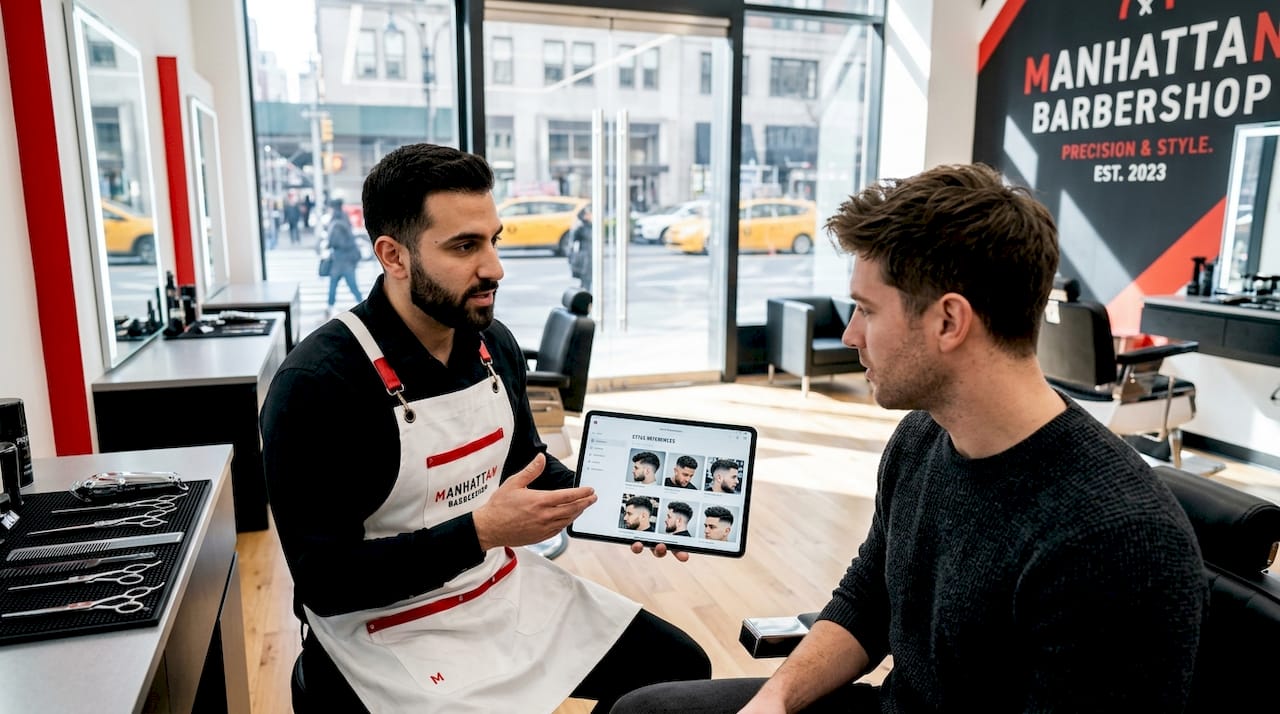
Individual haircut customization is the practice of adapting every cut decision, from guard selection to perimeter length, to a specific client’s hair type, face shape, and daily lifestyle. How barbers customize cuts individually separates a skilled craftsman from someone who simply runs clippers on autopilot. The process combines a structured consultation, precise barbering techniques like scissor-over-comb and clipper fading, and a documented cutting formula that makes results repeatable. Understanding this process helps you walk into any barbershop with the right information and walk out with a cut that actually fits you.
How barbers customize cuts individually through consultation
The consultation is where vague ideas become precise instructions. Most clients arrive saying “clean it up” or “something like this guy,” which gives a barber almost nothing to work with. A structured consultation converts those phrases into specific parameters: guard numbers, fade height, texture removal percentage, and part placement.
The most effective tool in this process is the 3-photo rule: bring a photo of your dream cut, a photo of someone with your actual hair texture getting a similar style, and a photo of a cut you absolutely do not want. That third photo is the one most clients skip, and it is often the most useful. It tells the barber where the hard boundaries are before scissors touch your head.
Beyond photos, a skilled barber asks three questions that most clients do not expect:
What did you like about your last cut, and what would you change? The key to customization lies more in understanding what the client wants to change than what they liked previously.
How do you style your hair at home? This reveals whether a cut needs to work with air drying, a blow dryer, or a specific product routine.
How much time do you spend on your hair each morning? A client who spends two minutes gets a different internal layering structure than one who spends fifteen.
After gathering this information, a good barber reads the plan back to the client before picking up a single tool. This “readback” technique catches misunderstandings before they become bad haircuts.
Pro Tip: If your barber does not ask about your styling routine before cutting, volunteer the information. Clients who disclose realistic styling habits allow barbers to design cuts that fit daily life, which directly improves how long the style holds its shape.
Which cutting techniques enable precise individual customization
Barbers do not use one technique for every client. They select from a toolkit of methods based on the hair data gathered in the consultation. The three most important techniques for personalized results are scissor-over-comb, clipper fading, and texturizing.
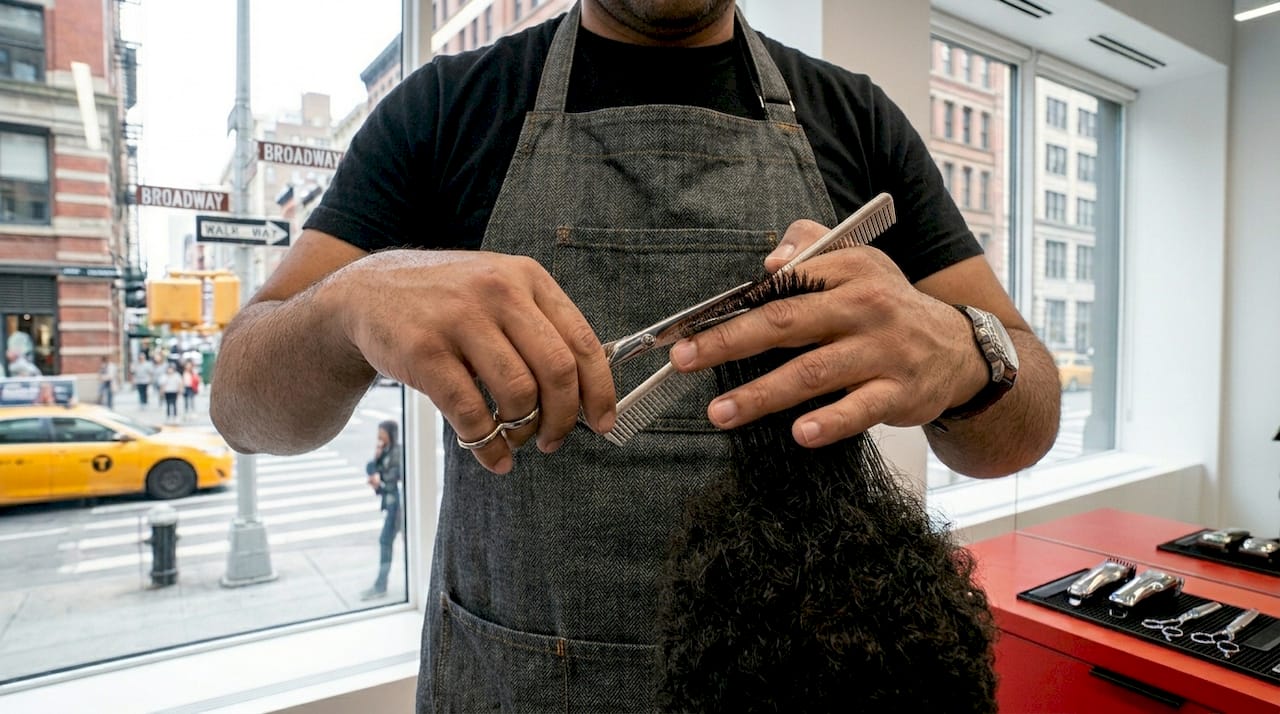
Scissor-over-comb is the primary precision tool for graduated cuts. The comb acts as a guide while the scissors cut only the hair that extends beyond the comb teeth. Longer scissors and blade stability are critical here because they produce smooth fades and tapers without the hard lines that clipper guards can leave. The barber works bottom-up with continuous movement and overlapping cuts to avoid lines and manage irregular growth patterns or cowlicks. This technique is especially effective on clients with thick, coarse hair where clipper guards alone cannot produce a natural graduation.
Clipper fading relies on lever control and guard progression rather than a fixed setting. Micro-adjustments to lever positions and comb angles produce gradients that look airbrushed rather than stepped. A barber might use four different guard sizes across a single fade, blending each transition zone before moving to the next.
Texturizing changes the weight and movement of hair without changing the overall length. The three main methods are point cutting (snipping into the ends at an angle), slide cutting (drawing the scissors along the hair shaft while cutting), and notching (removing small chunks to reduce bulk). Each method produces a different result on different hair types.
Technique | Best for | Key tool |
Scissor-over-comb | Thick or coarse hair, natural graduations | Long shears, wide-tooth comb |
Clipper fading | Short sides, skin fades, tapers | Adjustable clippers, multiple guards |
Point cutting | Fine or medium hair needing movement | Thinning shears, standard shears |
Slide cutting | Reducing bulk in dense hair | Sharp shears with smooth pivot |
Notching | Removing weight from specific zones | Standard shears, texturizing shears |
Pro Tip: Ask your barber which technique they plan to use on your hair before the cut starts. A barber who can name the method and explain why it suits your hair type is demonstrating real technical knowledge, not just confidence.
How face shape, hair type, and lifestyle shape the final cut
A cut that looks perfect on a square jaw can flatten a round face. Barbers trained in proportional design translate your facial geometry into haircut geometry, adding volume where the face needs length and reducing bulk where it needs width. Framing requests by face shape and proportional goals leads to better personalization than using photos alone, because photos rarely show a face that matches yours exactly.
Hair type adds another layer of complexity. The same cut behaves completely differently on straight fine hair versus curly dense hair. Texture-matched reference photos prevent mismatches and unrealistic expectations. A client with 3B curls showing a photo of a straight-haired model is asking the barber to design two different cuts and hope they converge. The barber who catches this mismatch early and redirects the conversation is the one worth returning to.
Lifestyle factors that directly affect cut design include:
Styling time per morning. Clients with under five minutes need cuts with strong natural shape that require no product to look intentional.
Heat tool usage. Clients who blow dry daily can carry more internal weight because heat controls volume. Air-dry clients need weight removed so the hair does not puff or frizz.
Product preference. A client who uses no product needs a different perimeter length than one who applies pomade or clay every day.
Physical activity level. Clients who sweat heavily need cuts that reset quickly after washing, which affects both length and layering decisions.
Sharing face shape and maintenance routines enables barbers to adapt cuts that enhance natural features in a way that holds up across the full grow-out cycle, not just on the day of the cut.
How barbers build repeatable personalized styles over time
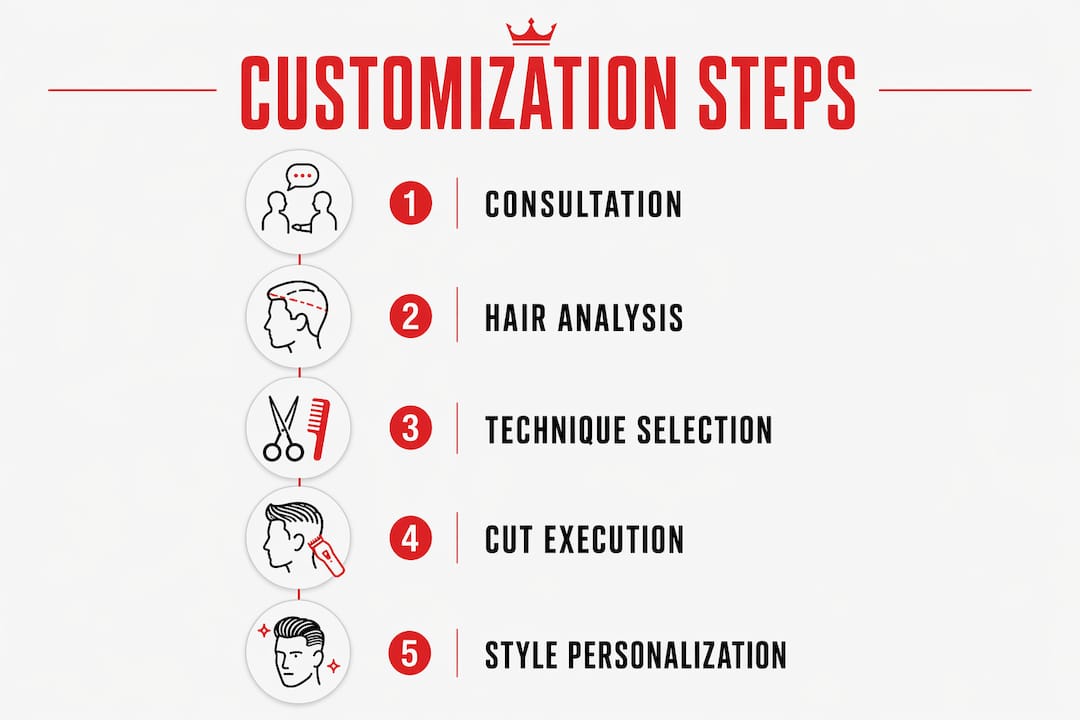
A one-time great haircut is luck. A great haircut every visit is a system. Skilled barbers convert client requests into precise parameter sets, including guard progression, sectioning maps, and weight removal patterns, rather than trying to replicate a photo from memory. This parameter set is the cutting formula, and it is what separates a barbershop with loyal clients from one with constant turnover.
Here is how a cutting formula gets built and maintained across appointments:
Document the first successful cut. After a cut the client loves, the barber records the guard sequence, the fade height relative to a fixed reference point (usually the ear or occipital bone), the texturizing method used, and any adjustments made for growth patterns.
Note grow-out behavior. At the second appointment, the barber observes how the cut grew out. Did the sides get heavy? Did the top lose shape? This information refines the formula for the next cut.
Adjust for seasonal changes. Hair density and texture shift with humidity and season. A formula that works in January may need a weight adjustment in July.
Use consistent tools. Multiple clippers and shear types allow switching methods mid-cut without compromising precision. A barber who uses the same two clippers for every client is not customizing. They are approximating.
Incorporate client feedback explicitly. At each visit, ask “what would you change?” rather than “did you like it?” The first question generates specific data. The second generates a polite yes.
This system is also what allows a barbershop to maintain consistency when a client sees a different barber. At Manhattanbarbershopny, Eugene Solod built the shop’s reputation on exactly this kind of documented craftsmanship, where great barber skills show up not just in the cut itself but in the process behind it.
Key takeaways
Barbers customize cuts individually by combining structured consultations, technique selection matched to hair data, and documented cutting formulas that produce repeatable results across every appointment.
Point | Details |
Consultation drives precision | The 3-photo rule and lifestyle questions convert vague requests into exact cut parameters. |
Technique selection is data-driven | Scissor-over-comb, clipper fading, and texturizing are chosen based on hair type and face shape. |
Face shape informs cut geometry | Proportional framing produces better results than photos alone when faces do not match. |
Cutting formulas enable consistency | Documented guard progressions and sectioning maps make great results repeatable, not accidental. |
Lifestyle determines structure | Styling time, heat tool use, and activity level directly shape internal layering and perimeter decisions. |
Why most clients are leaving results on the table
I have watched hundreds of consultations, and the pattern is consistent. Clients who get the best results are not the ones with the clearest photos. They are the ones who tell the barber something honest and specific about their life. “I wake up late and never use product” is more useful than a photo of a celebrity with a perfectly styled quiff.
The biggest misconception I see is that a great haircut is about copying a reference image. It is not. The photo is a starting point for a conversation, not a blueprint. When a client shows me a photo of someone with completely different hair density and expects an identical result, the problem is not the barber’s skill. The problem is that no one explained how the process actually works.
The other mistake is treating the consultation as a formality. Clients who give one-word answers and then express disappointment afterward are skipping the step that makes everything else possible. A barber who asks “how do you style at home?” is not making small talk. They are collecting the data that determines whether your cut looks good on day one or on day ten.
My advice: treat your barber like a professional photographer treats a LinkedIn headshot session. Preparation and honest communication before the work starts determines the quality of the result. The technical skill is already there. Your job is to give it something precise to work with.
— Evgenii
Experience a cut built around you at Manhattanbarbershopny
Manhattanbarbershopny brings every element of this process together under one roof on the Upper East Side. Eugene Solod and his team specialize in cuts that prioritize natural shape and easy maintenance, using the consultation and cutting formula approach described above to deliver results that hold their form for weeks, not days.
Whether you are looking for a classic regular haircut built around your hair type or something more distinctive like the Iroquois cut tailored to your bone structure and texture, the process starts with a real conversation. Walk-ins are welcome, or you can book your appointment online and come in knowing exactly what to expect.
FAQ
What does a barber need to know before cutting your hair?
A barber needs your styling routine, maintenance time, face shape goals, and at least one reference photo that matches your actual hair texture. These details allow the barber to build a cutting formula specific to your hair and lifestyle rather than working from a generic template.
How does scissor-over-comb differ from clipper cutting?
Scissor-over-comb uses the comb as a guide to create smooth, natural graduations without hard lines, making it ideal for thick or coarse hair. Clipper cutting uses guard sizes and lever adjustments to produce fades and tapers, and works best for short sides and skin fades.
Why do barbers ask about your styling routine?
Styling time and heat tool usage directly determine how a barber structures internal layering and perimeter length. A client who air-dries needs weight removed to prevent frizz, while a client who blow-dries daily can carry more internal volume.
How do barbers keep your cut consistent across visits?
Skilled barbers document a cutting formula after your first successful cut, recording guard progression, fade height, sectioning, and texturizing patterns. This formula is updated at each visit based on how the cut grew out and any feedback you provide.
What is the 3-photo rule in a barber consultation?
The 3-photo rule means bringing one photo of your dream cut, one photo of someone with your hair texture in a similar style, and one photo of a cut you want to avoid. The third photo is the most overlooked and often the most useful for setting clear boundaries before the cut begins.
Recommended
Comments