How Barbers Manage Curly Kids Hair: A Parent's Guide
- Evgenii Solod
- Jun 29
- 8 min read

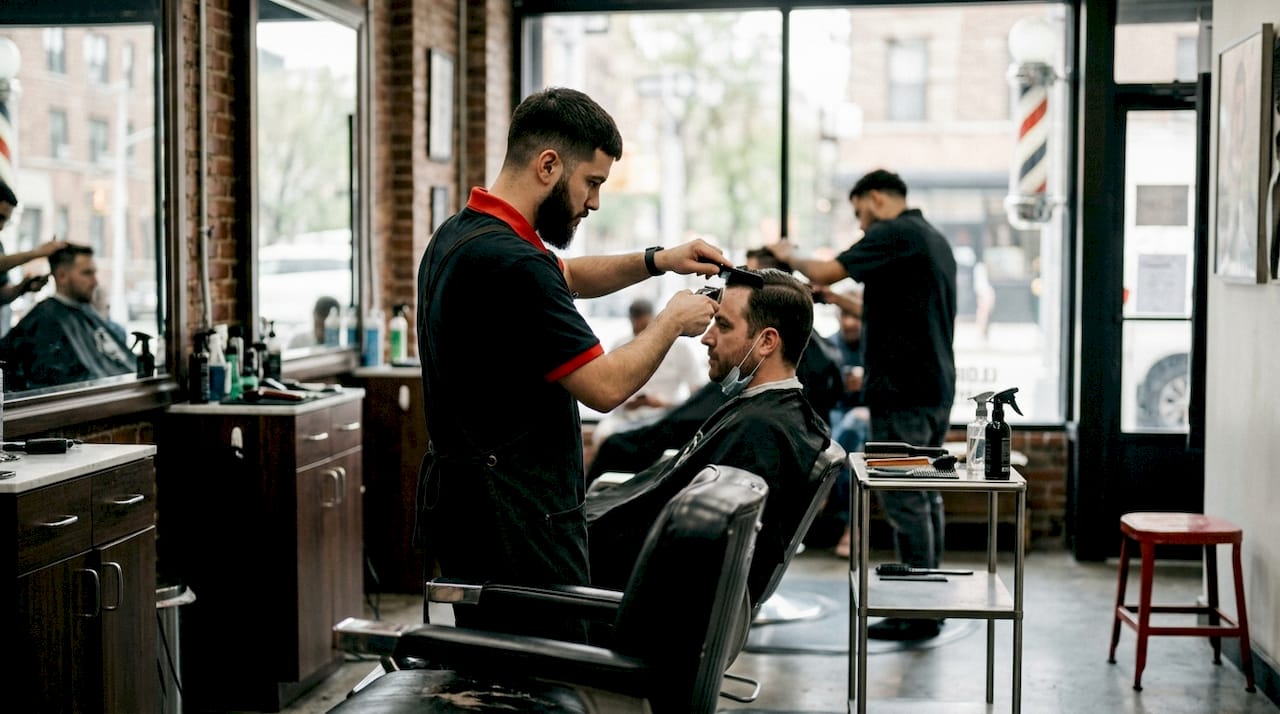
Knowing how barbers manage curly kids hair starts with one core principle: cut dry, cut by curl. Professional barbers trained in textured hair treat children’s curls as a living structure, not a uniform mass to trim straight across. The industry standard technique is dry cutting, which lets the barber see the true curl shape and shrinkage before a single snip. Curl-by-curl sculpting, freehand blending, and sensory-friendly tools are the three pillars every parent should understand before booking a kids’ cut. Manhattanbarbershopny applies all three to deliver curly haircuts that hold their shape and keep children comfortable throughout.
How barbers manage curly kids hair with dry cutting
Dry cutting is the single most important technique for managing children’s curly hair. When hair is wet, curls stretch and appear longer than they actually are. A barber who cuts wet is essentially guessing where the curl will land once it dries. Wet cutting distorts curls and produces unpredictable results, which is why parents often leave a salon confused about why the cut looks nothing like what they requested.
Dry cutting solves this by letting the barber work with the curl in its natural state. The barber can see exactly how much shrinkage each section has, where volume clusters, and how the curl falls on the face and neck. This is especially critical for curl types 2C through 4C, where shrinkage can reduce apparent length by a significant amount. Curl-by-curl sculpting is an advanced skill that requires reading each curl’s density and spring in real time.
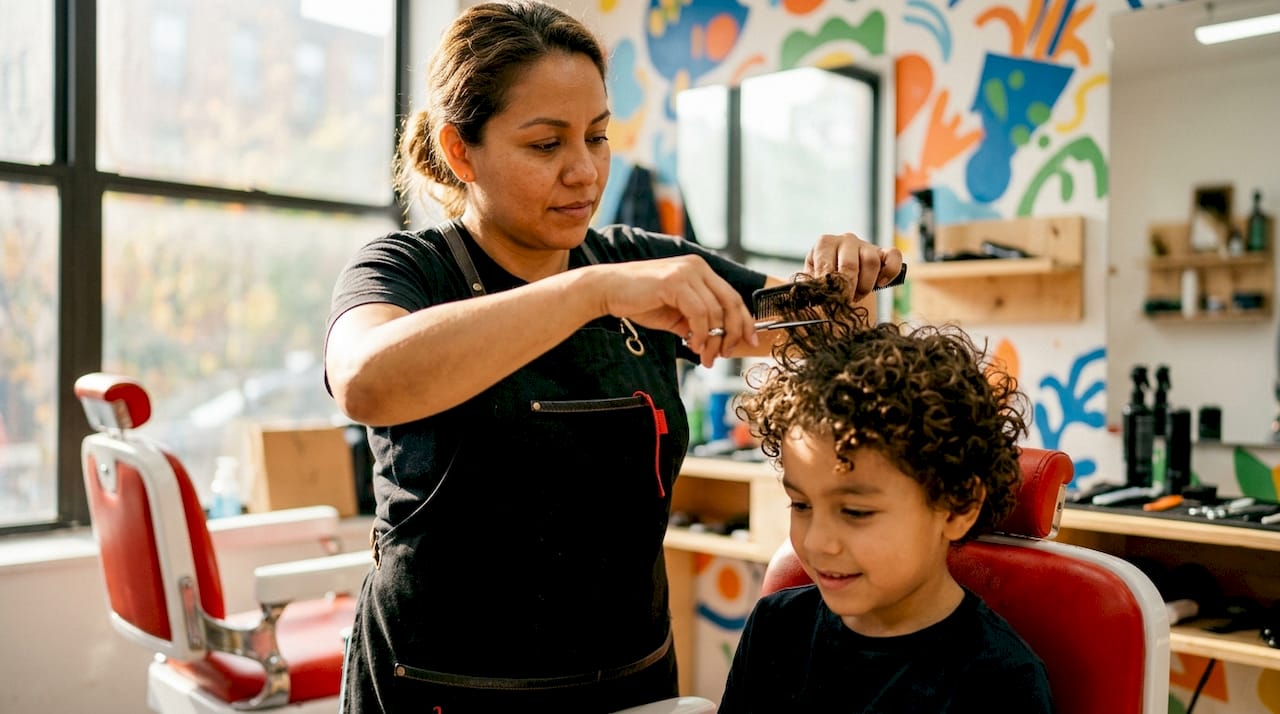
The tradeoff is time. Dry cuts typically run 75–120 minutes compared to 45–60 minutes for wet cuts. That extra time is not padding. It is the barber working section by section to produce a shape that grows out cleanly and looks intentional from every angle.
Here is what makes dry cutting work for kids specifically:
Visible curl pattern. The barber sees the natural coil before cutting, so the final shape matches the child’s actual hair behavior.
Accurate length control. No guessing about shrinkage means no surprise short cuts after the hair dries.
Better symmetry. Curl-by-curl work catches uneven density that wet cutting hides.
Cleaner growth. A well-shaped dry cut grows out evenly rather than puffing out at the bottom.
Pro Tip: Arrive at the appointment with your child’s hair completely dry and gently detangled. Avoid tight braids or ponytails before the visit, and skip heavy oils or gels. A clean, natural curl pattern gives the barber the clearest picture to work from.
What techniques do barbers use to shape curly kids hair?
Shaping curly kids’ hair without damaging it requires a specific toolkit of methods. The wrong technique does not just produce a bad haircut. It can cause frizz, structural imbalance, and a shape that gets worse as the hair grows. Barbers trained in textured hair follow a deliberate sequence.
Identify the curl type first. Curl types range from 2C (loose waves) to 4C (tight coils). Each type has different shrinkage, density, and fragility. A barber who treats all curls the same will consistently produce poor results. Understanding the specific curl type determines every decision that follows, from tool selection to layering depth.
Use freehand blending, not thinning shears. Thinning shears and razors damage curls by cutting through the curl mid-strand, creating frizz and uneven texture. Freehand blending uses scissors or clippers to shape around the curl rather than through it. The result is a clean silhouette that the curl itself fills in naturally.
Apply strategic layering for volume control. Curly hair stacks. Without layering, it builds into a triangle shape: flat on top and wide at the base. Debulking is a precise layering method that redistributes volume so the hair sits balanced from root to tip. This is not a generic thinning cut. It is a calculated removal of bulk at specific points to preserve the curl’s silhouette.
Avoid high-tension cutting. Pulling a curl taut before cutting changes where it lands when released. Barbers who cut under tension produce shapes that look right on the chair and wrong in the mirror at home. Low-tension or no-tension cutting respects the curl’s natural spring.
Plan the trim around the style and maintenance schedule. A tight fade on a curly kid needs reshaping every 4–5 weeks. A longer layered cut can go 8–12 weeks between trims. The barber should tell you the expected maintenance window before you leave the chair.
Pro Tip: Ask your barber to show you the curl type guide before the cut starts. Knowing whether your child has 3A or 4B curls helps you have a more specific conversation about shape, length, and upkeep.
How do barbers create a calm experience for kids during haircuts?
A child’s comfort during a haircut directly affects the quality of the cut. A moving, crying, or anxious child makes precise curl-by-curl work nearly impossible. Skilled barbers treat the emotional environment as part of the technical process, not a separate concern.
The most common trigger for meltdowns is noise. Standard clippers use high-torque motors that produce loud buzzing and strong vibration against the scalp. Low-noise, low-vibration trimmers like the T-Shaper are the preferred tool for children with sensory sensitivities. The difference in sound level alone can determine whether a child sits still or shuts down.
Beyond tools, the environment matters. A sensory-friendly barbershop atmosphere keeps lighting moderate, minimizes sudden sounds, and gives children a moment to adjust before the cut begins. Specialty barbers understand that a child’s first few visits set the tone for every future appointment.
Key strategies barbers use to keep young clients calm:
Parent partnership. The barber works with you, not around you. Positioning a parent in the child’s line of sight reduces anxiety significantly.
Verbal previewing. Telling a child what is about to happen before it happens (“I’m going to use the quiet trimmer near your ear now”) reduces startle responses.
Longer appointment blocks. Rushing a curly kids’ cut increases mistakes and child stress simultaneously. Scheduling extra time is not optional for this type of work.
Distraction tools. Tablets, favorite toys, or a parent’s phone playing a familiar show give a child a focus point that keeps their head still.
Specialty barbers who partner with parents build loyalty quickly. When a child leaves the chair happy and looking great, that family comes back. That outcome requires both technical skill and genuine patience.
What maintenance do barbers recommend for curly kids hair at home?
The cut is only half the work. How you care for curly kids’ hair between appointments determines how long the style holds and how healthy the hair stays. Barbers who specialize in children’s curls give parents a clear maintenance plan before the appointment ends.
Style Type | Trim Frequency | Key Home Care |
Fade or crop | Every 4–5 weeks | Daily moisturizing, edge care |
Layered curly cut | Every 8–12 weeks | Weekly deep conditioning, curl refresh |
Natural length | Every 10–12 weeks |
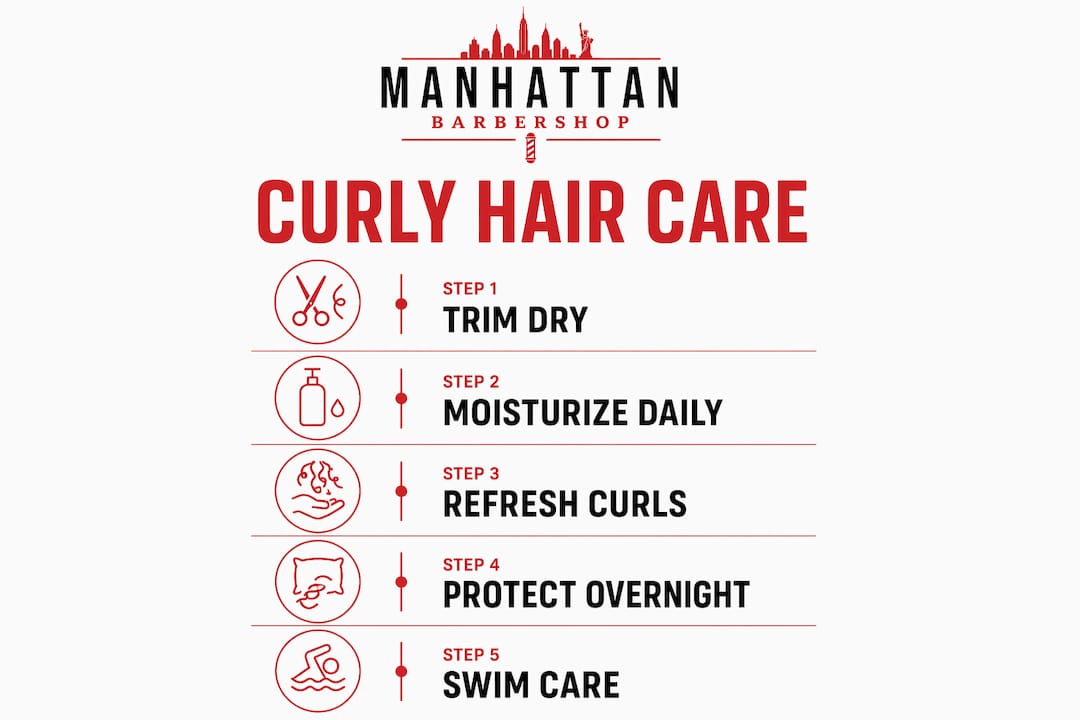
Hydration is the foundation of curly hair care for kids. Curly strands are structurally drier than straight hair because the natural oils from the scalp travel down a coiled shaft more slowly. Leave-in conditioners and curl creams applied after washing keep the curl defined and reduce breakage. Products designed for kids’ curly hair types account for the finer, more fragile nature of children’s strands.
Daily curl refreshing extends the life of any cut. Lightly misting with water and a leave-in conditioner, then finger-coiling any flattened sections, restores definition without heat. This takes about three minutes and makes a visible difference by mid-week.
Protective habits matter overnight. Satin pillowcases or durags prevent the friction that causes frizz and breakage while a child sleeps. Cotton pillowcases absorb moisture and rough up the cuticle. Switching the pillowcase is the single easiest upgrade most parents overlook.
Swimming care is often ignored until damage appears. Chlorine and salt water strip moisture from curly hair fast. Pre-wetting the hair with clean water before swimming limits how much pool water the strands absorb. A leave-in conditioner applied before the swim adds a protective layer. Rinse and condition immediately after getting out of the water. For detailed curly hair care tips between cuts, a consistent routine makes the biggest difference.
Key Takeaways
Barbers manage curly kids hair effectively by combining dry cutting, freehand blending, and sensory-friendly tools with a clear home maintenance plan tailored to the child’s specific curl type.
Point | Details |
Dry cutting is the standard | Cut hair dry to see true curl shape and shrinkage before trimming. |
Freehand blending protects curls | Avoid thinning shears and razors; use freehand techniques to prevent frizz. |
Curl type determines the approach | Identify curl type (2C–4C) before cutting to customize shape and layering. |
Sensory tools reduce child anxiety | Low-noise trimmers and a calm environment keep kids still and comfortable. |
Trim frequency varies by style | Fades need reshaping every 4–5 weeks; layered cuts last 8–12 weeks. |
What I’ve learned from watching barbers get curly kids’ cuts right and wrong
Most parents walk into a barbershop assuming any barber can handle their child’s curls. That assumption causes more bad haircuts than any other single factor. Not every barber has experience with the specific curl type your child has, and the gap between a barber who does and one who does not shows up immediately in the finished cut.
The dry cutting commitment is where I see the clearest divide. Barbers who default to wetting curly hair first are usually working from habit, not from training in textured hair. The extra time a dry cut requires is an investment that pays off in a shape that lasts and grows out cleanly. Parents who understand this stop being surprised by the longer appointment and start seeing it as a quality signal.
Sensory-friendly equipment has genuinely changed what is possible with young clients. I have watched a child who refused to sit through a haircut for two years stay completely calm with a low-vibration trimmer and a barber who narrated every step. The technical skill and the emotional skill are inseparable in this work.
The best advice I can give any parent is to ask two questions before booking: “Do you cut curly hair dry?” and “What curl types do you work with regularly?” The answers tell you everything about whether that barber is the right fit for your child.
— Evgenii
Curly kids’ haircuts done right at Manhattanbarbershopny
Manhattanbarbershopny specializes in kids’ curly haircuts built around dry cutting, freehand blending, and curl-type-specific shaping. Every appointment is scheduled with enough time to work curl by curl, so your child leaves with a shape that actually matches their natural hair.

The shop uses low-noise trimmers designed for children’s sensitive scalps, and the barbers work directly with parents throughout the process. Eugene Solod and the team at Manhattanbarbershopny understand that a great curly kids’ cut requires both technical precision and a calm environment. Book your child’s appointment online and bring them in with dry, detangled hair ready for a cut that holds its shape for weeks.
FAQ
What is dry cutting and why does it matter for curly kids?
Dry cutting means trimming hair in its natural, unwet state so the barber can see the true curl shape and shrinkage. It produces more accurate results than wet cutting because curls behave differently once dry.
How often should a curly kid get a haircut?
Trim frequency depends on the style: fades and crops need reshaping every 4–5 weeks, while longer layered cuts can go 8–12 weeks between visits.
Why should I avoid barbers who use thinning shears on curly hair?
Thinning shears cut through curls mid-strand, creating frizz and uneven texture. Freehand blending is the correct technique for maintaining curl integrity.
How do I prepare my child’s hair before a barber appointment?
Arrive with hair that is completely dry, gently detangled with a wide-tooth comb, and free of heavy products. Avoid tight braids or ponytails that distort the natural curl pattern before the cut.
What should I look for in a barber for my curly-haired child?
Seek a barber experienced with your child’s specific curl type (2C through 4C) who uses dry cutting, freehand blending, and child-friendly tools like low-noise trimmers.
Recommended
Comments