What Does Blending Mean at a Barbershop?

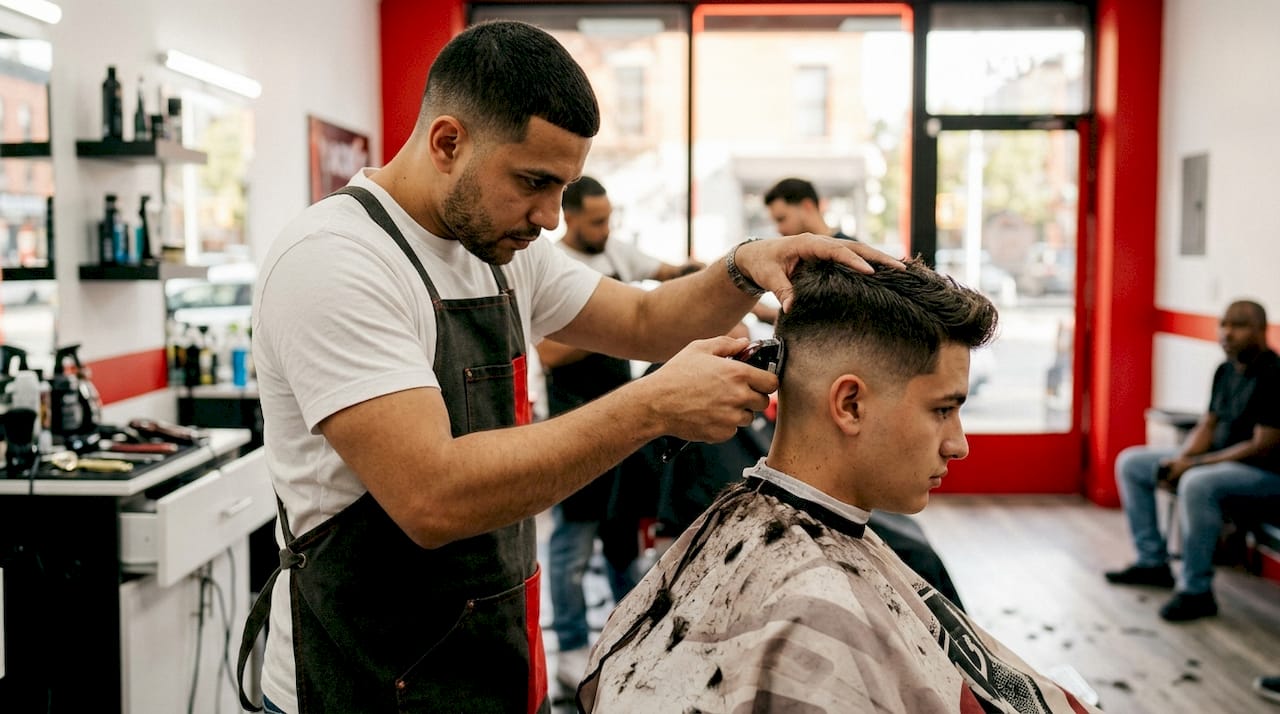
Blending in a barbershop is defined as the technique of merging two or more hair lengths together so no visible line exists between them. The result is a smooth, natural transition from shorter hair at the sides to longer hair on top. Professional barbers at shops like Manhattanbarbershopny achieve this using clippers with taper levers, thinning shears, and controlled hand movements. Understanding what blending means helps you ask for exactly what you want and recognize the skill behind a great haircut.
What does blending mean in barbershop haircuts?
Blending is the process of eliminating harsh boundaries between different hair lengths. Where one guard size ends and another begins, a visible “step” can appear. Blending erases that step so the hair flows from short to long without interruption. The industry term for this process is “graduated blending,” and it applies to everything from a simple taper to a full disconnected style.
The core goal is a natural look. A blended haircut does not show where the barber changed clipper guards. The transition feels gradual, almost like the hair grew that way. This is what separates a professional cut from a home trim.
Manhattanbarbershopny treats blending as a foundation skill, not an add-on. Every clean fade and classic cut the shop delivers depends on this technique being executed correctly from the first pass to the final detail.
What tools and techniques do barbers use for blending hair?
Professional blending relies on a specific set of tools, each with a distinct job. Using the wrong tool, or using the right tool incorrectly, produces choppy, uneven results.
Clippers and the taper lever
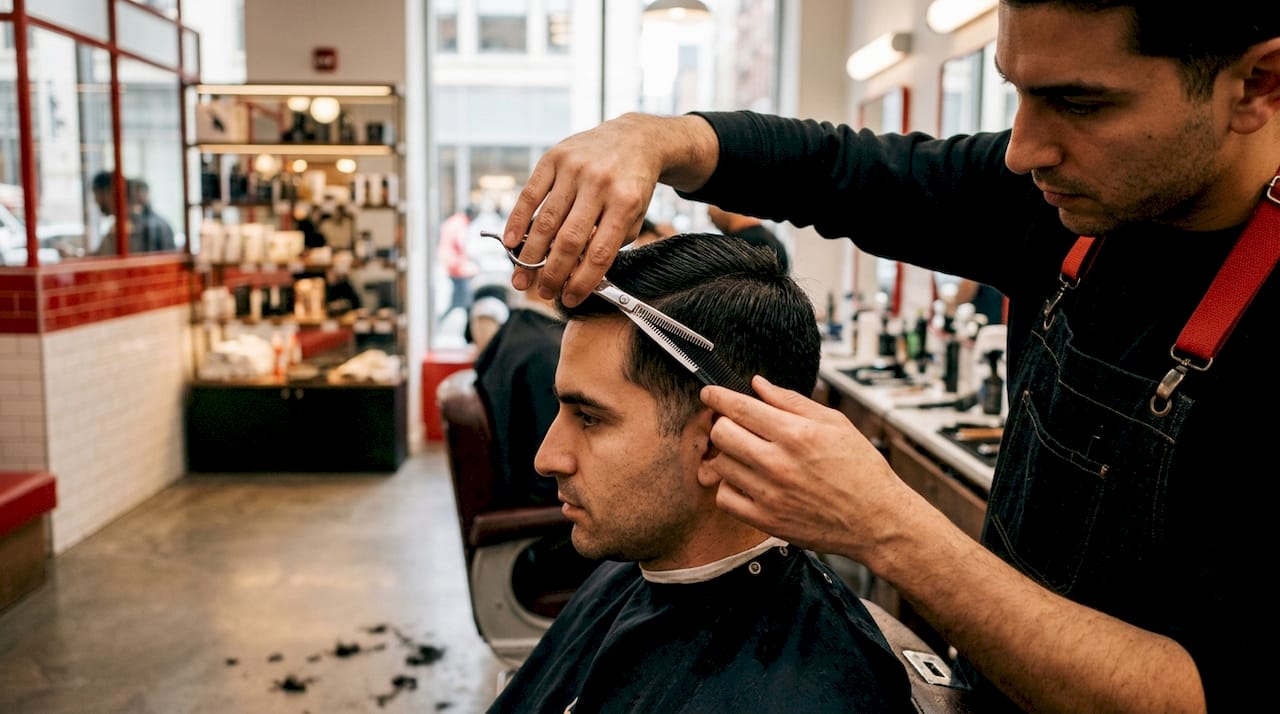
The taper lever on a clipper adjusts the blade position between guard sizes, creating micro-length transitions that fill the gap between guard changes. Without the lever, switching from a No. 2 to a No. 3 guard leaves a visible line. The lever closes that gap by splitting the difference. Skilled barbers move the lever continuously as they work, not just once between guards.
Thinning shears and texturizing shears
Thinning shears with 35–46 teeth remove 15–30% of hair per pass. That range makes them precise enough to soften a line without removing too much bulk at once. Texturizing shears work similarly but leave a slightly choppier texture, which suits thicker hair styles. Both tools are used after the clipper work to refine the blend and remove any remaining weight.
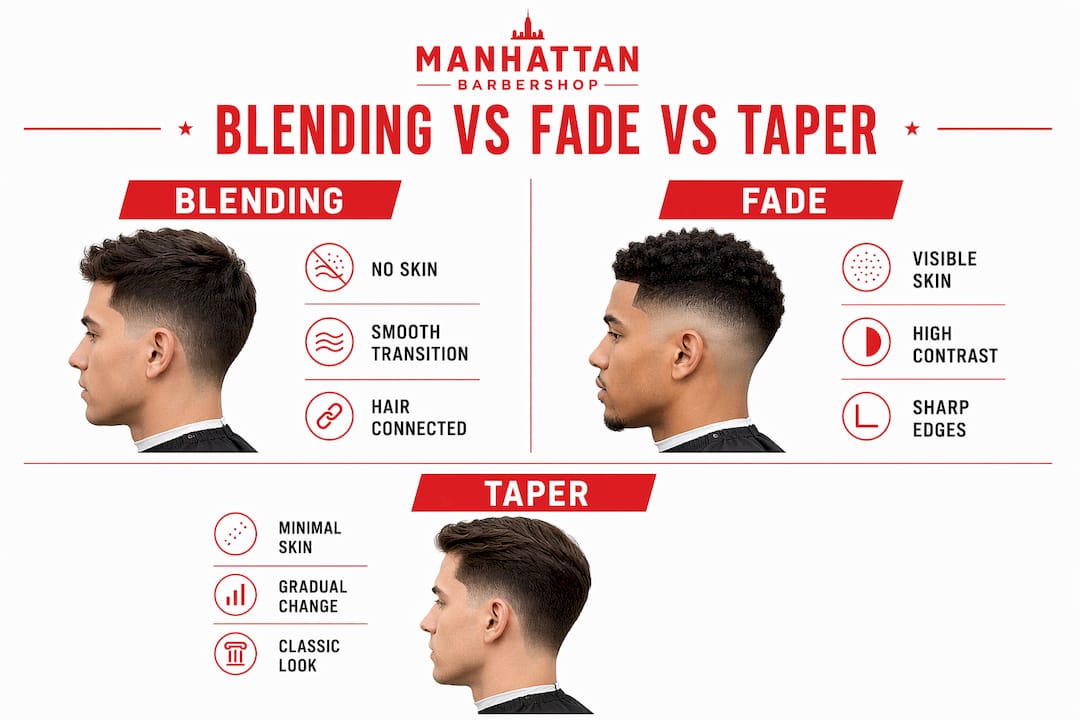
High-quality shears prevent visible chop marks and produce cleaner blends than budget alternatives. A barber using dull or low-grade thinning shears will leave uneven patches no matter how skilled they are.
Key blending movements
Flicking out: The barber rotates the wrist to pull the clipper away from the head at transition zones. This wrist flick technique prevents the clipper from digging into longer hair and causing choppy blends.
Shear-over-comb: A comb lifts the hair while scissors cut across it, creating a soft, graduated line at the top of the blend zone.
Guard progression: The barber works through guard sizes in order, using the taper lever between each to erase the step.
Cross-checking: After the main blend, the barber checks the work from multiple angles to catch any uneven spots.
Pro Tip: Always ask your barber to blend on dry hair when thinning shears are involved. Dry hair blending shows the true weight and fall of the hair, which prevents over-thinning or accidental holes in the cut.
How does blending differ from fades and tapers?
These three terms describe related but distinct techniques. Knowing the difference helps you communicate clearly with your barber and get the result you actually want.
Blending focuses on connecting lengths without exposing skin. The hair stays present throughout the transition zone. A fade, by contrast, often includes a shaved or near-shaved zone at the skin line, creating a sharper, higher-contrast gradient. A taper is a controlled reduction in length that follows the natural hairline, usually stopping well above the skin.
The table below summarizes the key differences.
Feature | Blending | Fade | Taper |
Skin exposure | None | Often present | Rarely present |
Contrast level | Low, gradual | High, sharp | Moderate |
Transition style | Seamless length merge | Gradient to skin | Length reduction along hairline |
Best for | Natural, low-key looks | Bold, defined styles | Classic, conservative cuts |
Maintenance | Low | Moderate to high | Low to moderate |
Blending is often used inside a fade or taper. A barber might cut a low fade and then blend the transition zone to soften the contrast. The two techniques work together rather than against each other. Learning to describe fade styles clearly to your barber makes the conversation much easier.
How does hair type affect blending techniques?
Blending is more instinctive than mechanical. Barbers must adapt their technique dynamically based on each client’s hair texture and density. There is no single setting or motion that works for every head of hair.
Coarse and thick hair
Thick, coarse hair resists the clipper blade and holds its shape stubbornly. Barbers need more passes through the blend zone and more lever manipulation to achieve a smooth result. Thinning shears become especially useful here because they reduce bulk without shortening the hair. The goal is to remove weight so the blend zone lies flat and transitions naturally.
Fine and straight hair
Fine hair blends more easily but shows mistakes more clearly. A single choppy pass with the clipper is visible on fine hair in a way it would not be on thick hair. Barbers typically use lighter pressure and slower clipper speed on fine hair to keep the blend even.
Curly and textured hair
Curly hair shrinks when dry and expands when wet, which changes the apparent length of the blend zone. Barbers who understand hair texture types account for this shrinkage when setting blend lines. Cutting curly hair too short in the blend zone produces a gap that looks disconnected once the hair dries and contracts.
Key points for clients to share with their barber before a blend:
Whether your hair is thick, fine, or somewhere in between
How fast your hair grows and where it grows unevenly
Any areas where the hair naturally parts or cowlicks form
Whether you prefer a tighter or softer blend line
How much time you spend styling your hair each morning
Pro Tip: Tell your barber about any past cuts that felt too short or too bulky in the sides. That single piece of information helps them customize your cut from the first pass rather than correcting it at the end.
What can clients expect from a professionally blended haircut?
A well-executed blend produces a haircut that looks clean immediately after the cut and stays that way for weeks. The sides flow into the top without any visible line, and the overall shape looks natural rather than constructed.
Here is what the process looks like from the client’s chair:
Consultation: The barber assesses your hair type, density, and the style you want before picking up any tool.
Clipper work: Guard progression begins at the shortest length and works upward, with the taper lever moving continuously between sizes.
Thinning shear refinement: Any remaining bulk or visible steps are softened with thinning shears on dry hair.
Cross-checking: The barber reviews the blend from the front, sides, and back to confirm the transition is even.
Detailing: Neckline and sideburn edges are cleaned up to frame the blend and complete the look.
The benefits of a blended haircut include low maintenance, a natural appearance, and versatility across dress codes. You can wear a blended cut to a job interview or a weekend game without it looking out of place. Between appointments, the blend grows out gradually rather than looking overgrown after two weeks.
Maintenance is straightforward. A light pomade or matte clay keeps the top styled without weighing down the blend zone. Most men find they need a touch-up every three to four weeks to keep the sides tight. Choosing a barber who specializes in great blending skills means the cut holds its shape longer because the blend was set correctly from the start.
Key Takeaways
Blending is the single technique that separates a polished professional haircut from a basic trim, requiring the right tools, adapted technique, and a barber who reads each client’s hair accurately.
Point | Details |
Core definition | Blending merges hair lengths to remove visible lines between clipper guard sizes. |
Essential tools | Taper lever clippers and thinning shears with 35–46 teeth are the primary blending tools. |
Blending vs. fading | Blends keep hair present throughout; fades often include a shaved skin zone. |
Hair type matters | Coarse hair needs more passes and lever work; fine hair needs lighter pressure and slower speed. |
Client maintenance | Blended cuts grow out gradually and typically need a touch-up every three to four weeks. |
Why blending is the skill that actually matters
I have watched a lot of haircuts over the years, and the ones that fall apart fastest are always the ones where the barber rushed the blend. The clipper work looks fine in the chair. Then the client steps outside, the light hits differently, and there is a visible line sitting right above the ear. That line was always there. The chair lighting just hid it.
The uncomfortable truth about blending is that it cannot be faked. A fade can be cleaned up with a razor. A taper can be adjusted with scissors. But a bad blend requires starting over because the problem is in the transition zone itself, not at the edges. That is why personalized barbershop service matters so much. A barber who takes two minutes to assess your hair before picking up the clippers will produce a better blend than one who starts cutting immediately.
Tool quality is the other half of the equation. A barber with perfect technique using dull thinning shears will still leave chop marks. The shears are doing the softening work, and they cannot do it with damaged teeth. When you walk into a shop, look at the tools. Clean, well-maintained equipment is a reliable sign that the barber takes the craft seriously.
Blending also rewards communication. Tell your barber what you liked and disliked about your last cut. That information is more useful than any photo you can show them, because it describes how your specific hair behaved rather than how someone else’s hair looks in a picture.
— Evgenii
Get a professionally blended haircut at Manhattanbarbershopny
Manhattanbarbershopny on the Upper East Side specializes in clean fades, classic cuts, and the kind of blending that holds its shape for weeks. The barbers here assess each client’s hair type before the first pass, adjusting clipper angle, lever position, and shear technique to match your specific texture and density.
Walk-ins are welcome, and online booking is available for clients who prefer to schedule ahead. Whether you want a tight blend on a low fade or a softer transition on a classic taper, the team delivers results that look sharp in any light. Book your appointment at Manhattanbarbershopny and see the difference a properly executed blend makes.
FAQ
What does blending mean at a barbershop?
Blending is the technique of merging different hair lengths together so no visible line or step appears between them. Barbers use taper lever clippers and thinning shears to create a smooth, gradual transition from short to long.
How is blending different from a fade?
A blend connects hair lengths without exposing skin, while a fade typically includes a shaved or near-shaved zone at the skin line. Blends produce a softer, lower-contrast result compared to the sharp gradient of a fade.
What tools do barbers use for blending hair?
The primary tools are clippers with a taper lever and thinning shears with 35–46 teeth. The lever fills gaps between guard sizes, and the shears remove bulk to soften any remaining lines.
Does hair type affect how blending is done?
Coarse, thick hair requires more clipper passes and lever adjustments, while fine hair needs lighter pressure to avoid choppy results. Barbers who adapt to hair texture produce blends that look natural for each specific client.
How often should you get a blended haircut touched up?
Most men need a touch-up every three to four weeks to keep the blend zone tight and the sides clean. A well-executed blend grows out gradually, so the cut still looks intentional even as the hair grows.
Recommended
Comments