How Barbershops Differ from Hair Salons: Key Facts


Most people assume a barbershop and a hair salon are basically the same place with different signs out front. That misconception leads to real frustration: showing up expecting a beard trim and color consultation, only to find out one of those services isn’t on the menu. Understanding how barbershops differ from hair salons helps you walk in prepared, get exactly what you want, and stop wasting time on the wrong appointment. This guide breaks down the actual differences in services, atmosphere, booking, and cost so you can make a confident choice every time.
Table of Contents
Key takeaways
Point | Details |
Service scope varies widely | Barbershops focus on cuts, fades, and shaves; salons cover color, treatments, nails, and more. |
Atmosphere shapes the experience | Barbershops tend to be casual and fast; salons lean quieter and more pampering-oriented. |
Booking precision matters | At a barbershop, booking the wrong appointment length often means a rushed or incomplete service. |
Cost reflects overhead differences | Barbershops generally cost less due to simpler setups; salons carry higher overhead from staff and equipment. |
Know before you go | Matching your grooming goal to the right venue saves time, money, and disappointment. |
How barbershops differ from hair salons in services
The clearest place to see the differences between barbershops and salons is the service menu. Barbershops specialize in a focused set of men’s grooming services: short cuts, tapered fades, beard trims, line-ups, and straight-razor shaves. That focus is a feature, not a limitation. A skilled barber who has done thousands of fades will outperform a generalist stylist on that specific cut every single time.
Salons operate on a completely different model. Salon experts train across a much wider range of services, including coloring, keratin treatments, highlights, waxing, nail care, and skincare. That breadth is what makes salons the right choice when you want a color refresh alongside your cut. The tradeoff is that no single stylist masters every service equally well.
Licensing also separates the two. Barbers complete a barber program focused on cutting techniques, straight-razor work, and scalp treatments. Cosmetologists, who staff most salons, complete a broader cosmetology program covering hair, skin, and nails. Neither is objectively superior. They are trained for different outcomes.
Here is what each venue typically covers:
Barbershop: Fades, tapers, buzz cuts, crew cuts, beard shaping, hot towel shaves, line-ups, and classic cuts like the side part or slick back
Hair salon: Haircuts, blowouts, coloring, highlights, balayage, perms, keratin treatments, scalp treatments, waxing, and nail services
Overlap zone: Basic haircuts and some scalp treatments appear at both, though execution style often differs
Pro Tip: If you want a fade or a straight-razor shave, go to a barbershop. If you want color work or a keratin treatment, go to a salon. Trying to get the wrong service at the wrong place usually ends in disappointment.
Atmosphere and experience at each venue
The feel of a barbershop and the feel of a salon are genuinely different, and that difference matters more than most people realize. Barbershops tend toward casual, fast-paced environments where conversation flows freely, the TV might be on, and regulars know each other by name. There is a community hub quality to a good barbershop that you rarely find anywhere else in grooming.
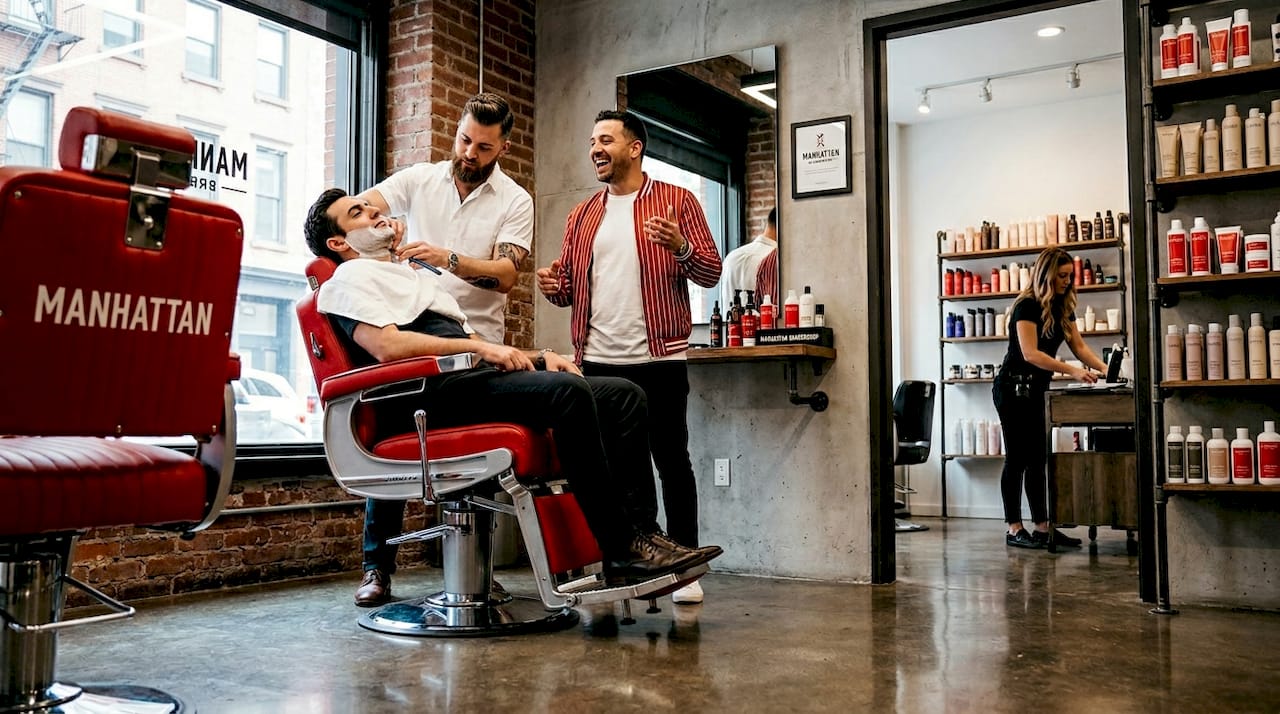
Salons typically aim for a quieter, more polished atmosphere. Soft music, product displays, and a focus on individual attention create a pampering environment designed to make clients feel taken care of. That is not better or worse. It is just a different kind of experience suited to a different kind of visit.
Pacing is another real difference. Barbershops are built for efficiency. A skilled barber can deliver a clean fade in 20 to 30 minutes. Salons, by contrast, often schedule longer appointments because services like coloring require processing time. If you are in a hurry, a barbershop usually gets you in and out faster.
“The barbershop isn’t just where you get your hair cut. It’s where you catch up, decompress, and leave feeling like yourself again. That kind of relationship with a barber is hard to replicate anywhere else.”
The client-barber relationship at a barbershop is also worth noting. Many clients see the same barber for years, building a shorthand that makes every visit faster and more personalized. Salon relationships can be just as strong, but the broader service menu and larger staff mean you might rotate between stylists more often.
Scheduling and booking: what to expect at a barbershop
Booking an appointment at a barbershop works differently than booking at a salon, and getting it wrong is one of the most common sources of frustration. Barber appointments operate in modules. A haircut is one booking. A beard trim is another. A straight-razor shave is a third. If you book only a haircut slot but show up expecting all three, you will either get a rushed experience or leave with an incomplete service.
GQ’s guide to getting a better haircut describes this mismatch perfectly: booking too short a slot for a full haircut plus beard shave is like booking a taxi but expecting a private jet. The barber cannot manufacture extra time out of thin air.
Salons handle scheduling differently. Multi-service appointments are standard, and the booking system is usually built to accommodate combinations like a cut plus color plus blowout in a single visit. The longer appointment windows are baked into the process.
Here is how to book correctly at either venue:
List every service you want before you call or book online. Do not assume the person booking will ask. Be specific about cut style, beard work, and any add-ons.
Ask how long each service takes. A haircut might be 30 minutes, but adding a beard trim and a shave could push the total to an hour.
Confirm the booking reflects the full time needed. Time budgeting is a major friction point at barbershops specifically, so clarity upfront protects both you and the barber.
Bring reference photos. A picture communicates faster and more accurately than a verbal description, especially for complex styles.
Arrive a few minutes early. Barbershops that run tight schedules feel the ripple effect of late arrivals across every client after you.
Pro Tip: When booking at a barbershop, always mention every service you want in the notes field of the online booking form. It takes 10 seconds and prevents the most common scheduling mismatch.
Business models and cost differences
The cost gap between barbershops and salons is real, and it comes down to overhead. Barbershops require less overhead than salons because the service menu is narrower, the equipment is simpler, and the staff size is smaller. A barber chair, clippers, razors, and a few products are the core setup. Salons need color stations, processing equipment, nail stations, skincare tools, and a larger team of specialists.
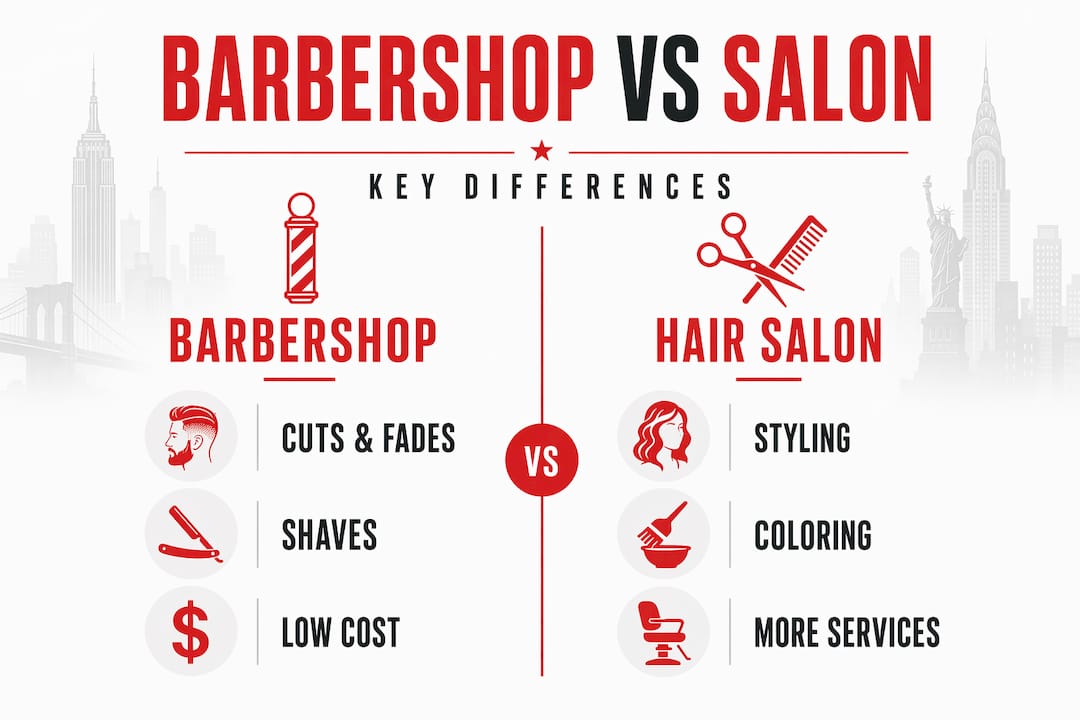
That difference in overhead translates directly to pricing. A barbershop haircut in most cities runs $25 to $50. A salon haircut for a man can run $60 to $100 or more, particularly if the stylist has specialized training or works in a premium location.
Emerging business models are worth knowing about too:
Mobile barbershops: A mobile barber truck can operate on as little as $7 per day using generator-powered tools, making it a genuinely low-cost alternative to a traditional shop. These are growing in urban areas and at events.
Salon suites: Individual stylists rent private suites within a larger building, giving clients a more personal experience at prices between a chain salon and a luxury spa.
Hybrid shops: Some barbershops now offer limited color services or scalp treatments, blurring the traditional line between the two models.
Factor | Barbershop | Hair salon |
Average haircut price | $25 to $50 | $60 to $100+ |
Service variety | Focused (cuts, shaves, fades) | Broad (color, treatments, nails) |
Appointment length | 20 to 45 minutes | 45 to 120 minutes |
Overhead costs | Lower | Higher |
Typical atmosphere | Casual, social | Quieter, upscale |
The value question ultimately depends on what you need. If you want a clean fade every three weeks, a barbershop gives you better results at a lower price. If you want color, texture work, or a full styling session, the salon’s higher price reflects genuinely specialized skill.
My take on choosing between the two
I have watched clients walk into the wrong type of shop dozens of times, and the pattern is always the same. They did not think about what they actually needed before they booked. They just picked the closest option or the one with the best reviews.
In my experience, the barbershop vs salon experience question is really a question about your grooming goals. If you want a sharp, low-maintenance cut that holds its shape for three to four weeks, a skilled barber who knows your hair type is the right call. The history of barbering runs deep for a reason. That craft has been refined over centuries to do one thing exceptionally well.
Where I see people go wrong is assuming that “more services” means “better for me.” A salon that offers 40 services is not automatically a better fit than a barbershop that offers 10. The fit depends entirely on what you are trying to accomplish.
The industry is also changing. More barbershops are adding scalp treatments and limited color services. More salons are hiring barbers to handle men’s cuts. The categories are blending at the edges, which means your best move is to ask specific questions before you book rather than assuming based on the sign outside.
If you care about a natural look that requires minimal product and holds its structure week after week, find a barber who specializes in that. If you want a style transformation involving color or texture, find a salon stylist with a portfolio that matches what you have in mind. The venue matters less than the specific skill set of the person holding the scissors.
— Evgenii
Experience the difference at Manhattanbarbershopny
Now that you understand the real differences between barbershops and salons, the next step is finding a barbershop that actually delivers on the craft. Manhattanbarbershopny on the Upper East Side specializes in clean fades, classic cuts, and personalized service that holds its shape for weeks. Owner Eugene Solod and his team take the time to understand your hair type and style goals before a single clipper touches your head.
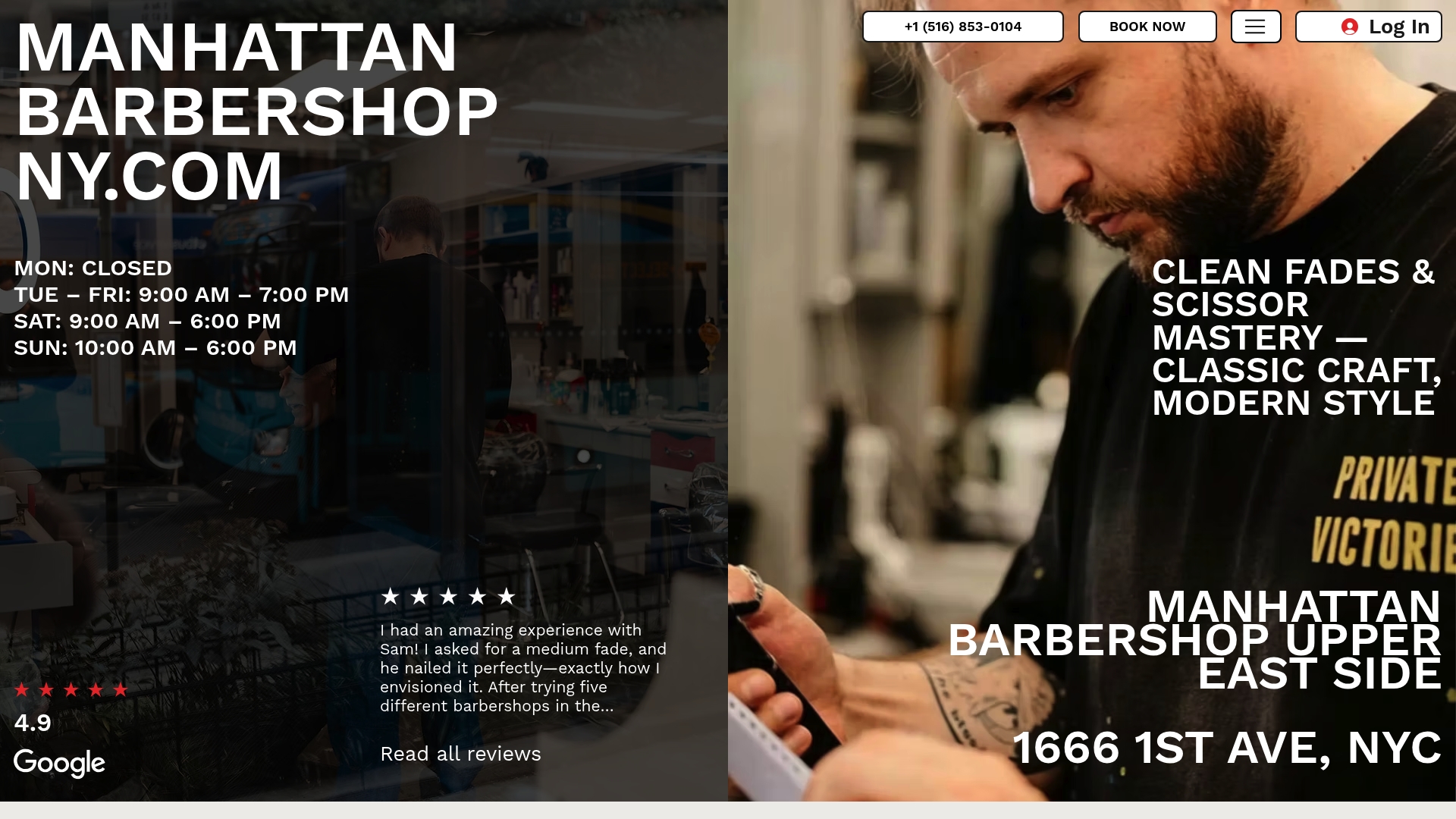
Whether you want a classic Iroquois cut, a sharp taper, or a beard design, every service is built around your specific look. Walk-ins are welcome, or you can book your appointment online in under two minutes. No guesswork, no rushed slots, just a barber who knows what they are doing and takes the time to prove it.
FAQ
What services do barbershops offer that salons don’t?
Barbershops specialize in straight-razor shaves, hot towel treatments, and precision fades that most salons do not offer. These services require specific barber training and tools that fall outside the standard cosmetology curriculum.
Why choose a barbershop over a salon for a men’s haircut?
Barbershops are built around men’s grooming, which means barbers have deeper experience with tapers, fades, and beard work than most salon stylists. The focused service menu also means faster appointments and often lower prices.
How do I know how long to book at a barbershop?
List every service you want before booking and ask the shop how long each one takes. Modular barbershop booking means a haircut and a beard trim are usually separate time slots, so combining them requires booking the full combined time.
Are barbershops cheaper than hair salons?
Generally, yes. Barbershops carry lower overhead and a simpler service menu, which keeps prices lower. A typical barbershop haircut runs $25 to $50, while a salon cut for men often starts at $60 and goes higher depending on location and stylist experience.
Can I get color services at a barbershop?
Most traditional barbershops do not offer color services, though some hybrid shops are starting to add limited options. For highlights, balayage, or full color treatments, a salon’s broader training and equipment make it the right choice.
Recommended
Comments