What Does a Refined Beard Trim Mean for Men?

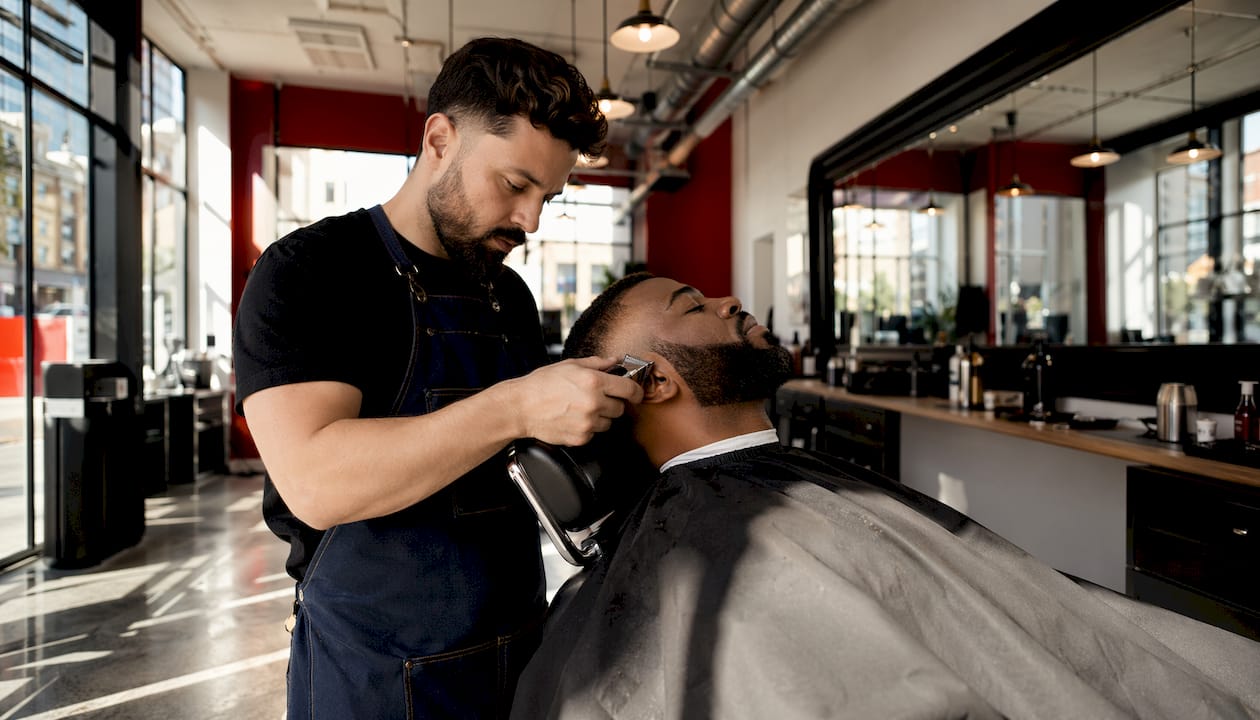
A refined beard trim is defined as a professional grooming service that shapes and sculpts your beard to enhance your face’s natural structure, not simply cut hair to a uniform length. Where a standard trim controls growth, a refined trim builds intentional facial architecture by setting cheek lines, necklines, and symmetry to complement your specific bone structure. A professional session lasts 20 to 35 minutes and costs between $20 and $45 in 2026. That price reflects not just time in the chair, but the skill, tools, and design judgment a trained barber brings to every appointment.
What does a refined beard trim mean compared to a standard trim?
A standard beard trim focuses on length control. The barber runs clippers or scissors across the beard to reduce bulk and keep growth in check, but the underlying shape stays the same. A refined trim is a different service entirely.
Refined trimming includes shaping or “architecture” to enhance facial structure, while standard trimming mainly maintains length. That distinction matters because the same beard length can look polished or unkempt depending entirely on where the edges sit and how the lines connect.
The table below shows the core differences between the two services.
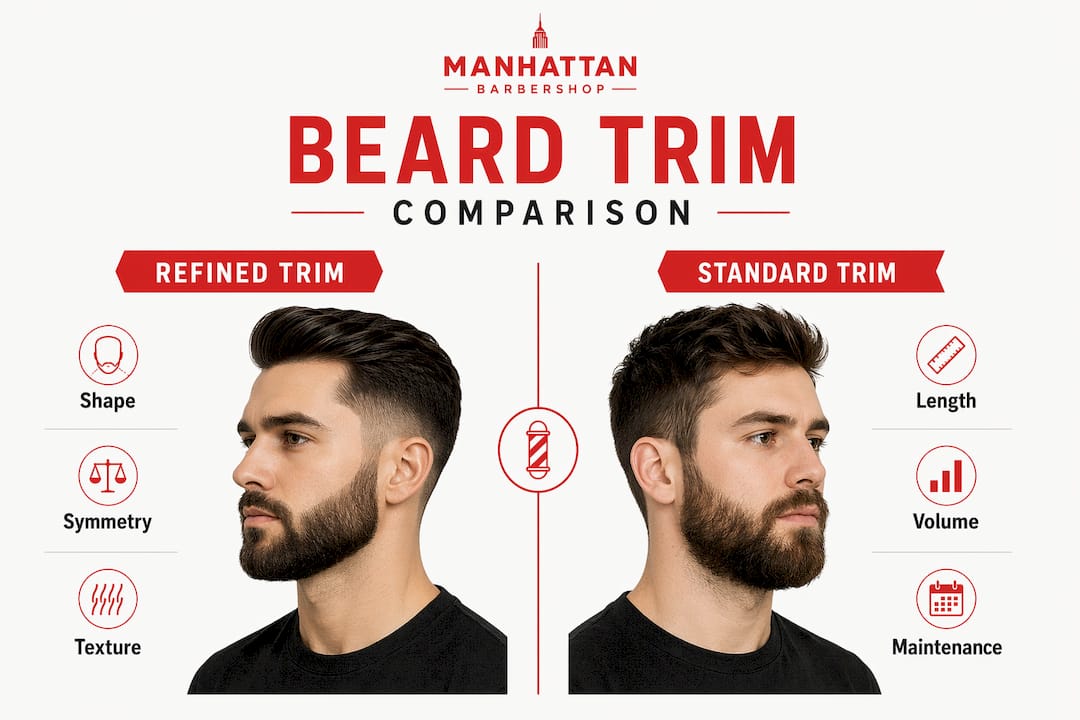
Feature | Standard trim | Refined trim |
Primary goal | Length reduction | Shape and structure |
Edge work | Minimal | Cheek lines, neckline, symmetry |
Tools used | Clippers, scissors | Clippers, scissors, straight razor |
Texture management | None | Thinning shears, point-cutting |
Result | Shorter beard | Sculpted, face-flattering beard |
The key elements that separate a refined trim from a basic one include:
Cheek line definition: A barber draws a clean, intentional arc from the sideburn to the mustache.
Neckline placement: Set using anatomical landmarks rather than guesswork.
Symmetry correction: Both sides of the beard are balanced against each other and against your face.
Texture work: Internal bulk is reduced to create a tapered silhouette.
Mustache shaping: Trimmed slightly off the lip line for comfort and neatness.
Symmetry and line placement distinguish professional refined trims from typical home trims. Small deviations in edge placement are what make a beard look unkempt even when it is clean and freshly washed.
How do barbers execute a refined beard trim?
A skilled barber follows a clear sequence when delivering a refined trim. The process is methodical, not improvised.
Comb-out and assessment. The barber combs the beard in its natural direction to reveal true length, density, and growth patterns. This step identifies problem areas before any cutting begins.
Length reduction. Clippers or scissors reduce overall length to the target guard setting. The barber works with the grain first, then against it to catch stray hairs.
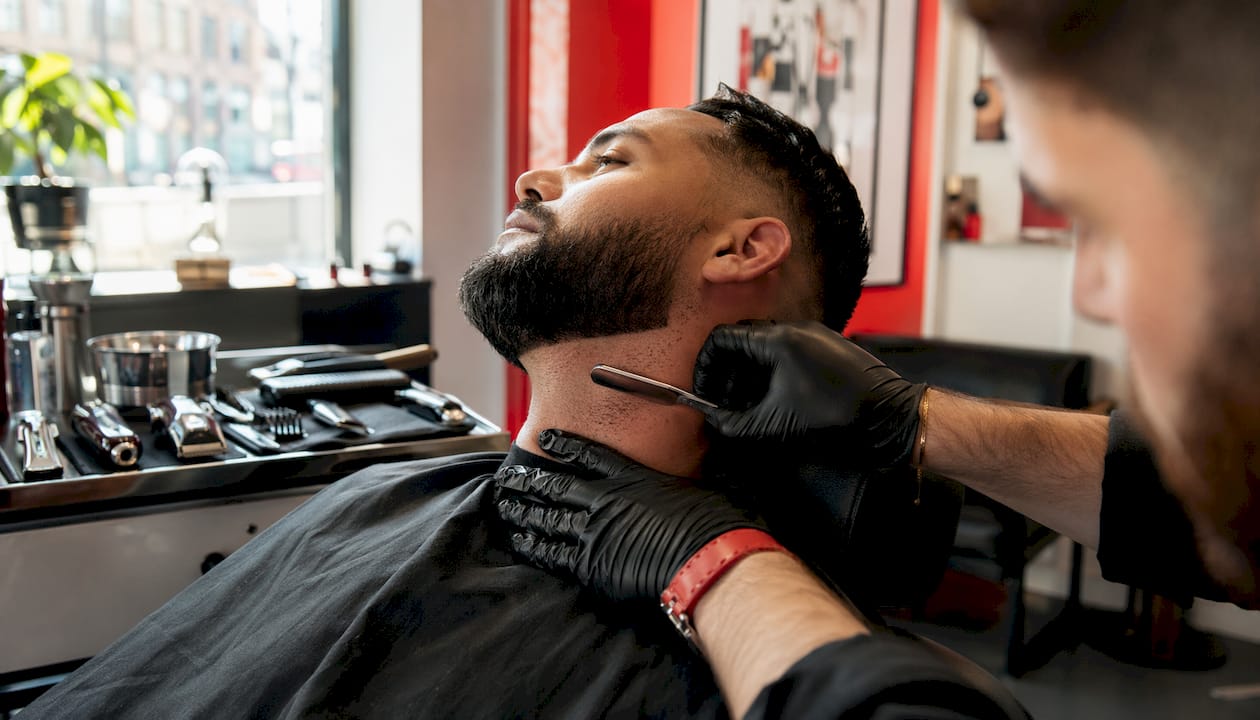
Edge definition. A straight razor or detail trimmer creates the cheek line and neckline. These lines are the signature of a refined trim.
Neckline placement. The two-finger rule places the neckline two fingers above the Adam’s apple for a natural, connected look. Setting it too high creates a floating beard; too low creates a neck beard.
Texture and bulk management. Thinning shears or point-cutting techniques reduce internal bulk and create a tapered masculine silhouette. This step is rarely performed in a basic trim.
Mustache detail. The mustache is trimmed slightly off the lip line to avoid obstructing eating or speaking. This small detail is often missed at home.
Final symmetry check. The barber steps back and compares both sides in the mirror, making micro-adjustments before finishing.
Pro Tip: Ask your barber to show you where they plan to set your neckline before they cut. Seeing the placement first lets you give feedback before it is permanent.
Understanding razor work in barbering is worth your time if you want to know why a straight razor produces cleaner edges than a trimmer. The blade removes hair at skin level, creating a sharper contrast between beard and bare skin.
Why is regular maintenance important for a refined beard trim?
A refined beard trim is not a one-time event. The shape degrades as hair grows, and the rate of degradation is faster than most men expect.
Professional visits every 3 to 5 weeks keep the beard’s refined shape intact. Waiting beyond 6 weeks often means the barber must perform corrective work rather than simple maintenance, which takes more time and costs more. That is a meaningful difference in both your schedule and your budget.
Consistent upkeep delivers benefits that go beyond appearance:
Comfort: Overgrown necklines cause irritation against shirt collars.
Professional readiness: A well-maintained beard reads as intentional and put-together in formal settings.
Easier sessions: Regular visits mean shorter appointments because less corrective work is needed.
Longer style life: Frequent light trims preserve the original design longer than infrequent heavy cuts.
Refined beard styles convey quiet confidence valued in corporate and formal environments. That perception only holds when the beard is actively maintained. A sharp beard that has grown out two weeks past its prime sends the opposite signal.
Manhattanbarbershopny clients who book on a consistent schedule report that their barber can complete a maintenance session faster and with better results because the baseline shape is preserved. The barber spends time refining, not rebuilding.
What are popular refined beard styles and how do they complement facial features?
Refined beard styles are defined by clean lines and deliberate shaping. The style you choose should work with your face shape, not against it.
Short boxed, corporate, and tapered beards are the most recognized refined styles for formal occasions. Each one relies on clean cheek lines and sharp necklines to project neatness and confidence.
Short boxed beard: Uniform length with squared-off edges. Works well on oval and square faces. The flat bottom line adds structure without adding visual weight.
Corporate beard: Kept very short, typically at a 1 or 2 guard setting, with crisp edges. Suits round faces because the tight shape avoids adding width.
Tapered beard: Gradually shorter from the cheeks down to the chin. Adds length to round or wide faces and softens angular jawlines.
Stubble with defined edges: The shortest refined option. Cheek and neckline definition do all the work. Suits almost every face shape.
Shaping techniques adjust for face proportions in specific ways. A barber reading hair growth patterns can identify where the beard grows unevenly and compensate during the trim to create visual balance.
Beyond the cut itself, texture and product use extend the life of a refined style. A light beard balm applied after washing keeps hairs lying flat and edges looking defined between appointments. Color services, available at full-service shops, can reduce the appearance of patchiness and add visual density to thinner beards.
Key Takeaways
A refined beard trim is a professional shaping service that builds facial structure through precise edge work, symmetry, and texture management, not just length reduction.
Point | Details |
Refined vs. standard trim | A refined trim shapes cheek lines, necklines, and symmetry; a standard trim only reduces length. |
Neckline placement | The two-finger rule above the Adam’s apple sets a natural, connected neckline. |
Maintenance schedule | Visit a barber every 3 to 5 weeks to preserve shape and avoid costly corrective work. |
Texture management | Thinning shears and point-cutting create a tapered silhouette not possible with clippers alone. |
Style selection | Match the beard style to your face shape for the most flattering result. |
Why I think most men underestimate what a refined trim actually does
Most men walk into a barbershop asking for a “cleanup.” That word is doing a lot of heavy lifting, and it usually means different things to the client and the barber. After years of watching this play out, I am convinced that the gap between a good beard and a great beard is almost never about length. It is about line placement.
The single most common mistake I see is men setting their own neckline too high. They see a little hair on the neck, they grab a trimmer, and they shave it off. The result is a beard that looks like it is floating above the throat. A barber who customizes each cut individually will always anchor the neckline to your anatomy, not to what looks clean in the bathroom mirror at arm’s length.
The second mistake is skipping texture work. A beard can be perfectly edged and still look bulky and shapeless if the internal density is not managed. Thinning shears take about two minutes in skilled hands and change the entire silhouette. Most men have never had this done because most basic trims do not include it.
The honest truth is that a refined trim is an act of intentional self-presentation. It signals that you pay attention to details. In a job interview, a first date, or a client meeting, that signal lands before you say a word. Trusting a skilled barber to build and maintain that structure is one of the highest-return grooming decisions you can make.
— Evgenii
Refined beard trims at Manhattanbarbershopny on the Upper East Side
Manhattanbarbershopny specializes in tailored beard trims that go well beyond a basic cleanup. The barbers on the Upper East Side use straight razors, thinning shears, and a detailed assessment of your face shape to build a beard style that holds its form for weeks.

Walk-ins are welcome, and online booking is available for men who want to lock in a specific time. Whether you are starting a new beard style or maintaining one you already love, the team at Manhattanbarbershopny delivers the kind of expert grooming service that makes the difference between a beard that looks grown-out and one that looks intentional. Book your appointment and see what a properly refined trim actually feels like.
FAQ
What does a refined beard trim include?
A refined beard trim includes length reduction, cheek line and neckline definition, symmetry correction, and texture management using thinning shears or point-cutting. It goes beyond a standard trim by shaping the beard to complement your facial structure.
How often should you get a refined beard trim?
Barbers recommend a visit every 3 to 5 weeks to keep the shape intact. Waiting longer than 6 weeks typically requires corrective work rather than simple maintenance.
What is the two-finger rule for neckline placement?
The two-finger rule places the neckline two fingers above the Adam’s apple. This landmark creates a natural, connected beard appearance and avoids the floating or neck-beard look that comes from incorrect placement.
Can you do a refined beard trim at home?
Home trimming can maintain length, but achieving clean cheek lines, a correctly placed neckline, and balanced symmetry requires professional tools and trained judgment. Most at-home attempts fall short on edge definition and texture management.
What beard styles count as refined?
Short boxed beards, corporate beards, tapered beards, and defined stubble all qualify as refined beard styles. Each relies on clean edges and deliberate shaping rather than natural growth to create a polished, put-together look.
Recommended
Comments