How Haircut Longevity Saves Time for Busy People


Haircut longevity is defined as how long a cut maintains its shape, structure, and freshness before it needs professional attention again. Understanding how haircut longevity saves time is the first step toward spending fewer hours in the salon chair and less time wrestling with your hair every morning. The right cut, maintained with the right habits, can hold its form for weeks longer than a poorly planned one. Manhattanbarbershopny builds every cut around this principle: styles that look sharp on day one and still look intentional on day 30.
How do professional haircut techniques extend longevity and reduce maintenance time?
The foundation of a long-lasting hairstyle is set during the cut itself, not during your morning routine. Stylists who use precision cutting methods remove bulk and weight exactly where the hair tends to expand or collapse. That targeted shaping means the style grows out predictably rather than falling apart at the edges.
Dry-cutting techniques allow stylists to see exactly how your hair falls and grows before making a single pass with the scissors. Wet hair stretches and shifts, which can hide problem areas. Cutting dry reveals the true growth pattern and lets the barber build a shape that holds as the hair grows.
Layer removal and perimeter shaping also play a major role. When a barber removes excess bulk from the sides and back while preserving weight on top, the style resists puffing out as it grows. That means you spend less time pressing it down or reaching for product every morning.
Heat-setting a hairstyle into your natural growth pattern extends style duration more effectively than heavy product use. Blow drying in the direction of your growth pattern locks the hair into position and reduces collapse throughout the day. The result is a style that holds without needing constant product reapplication.
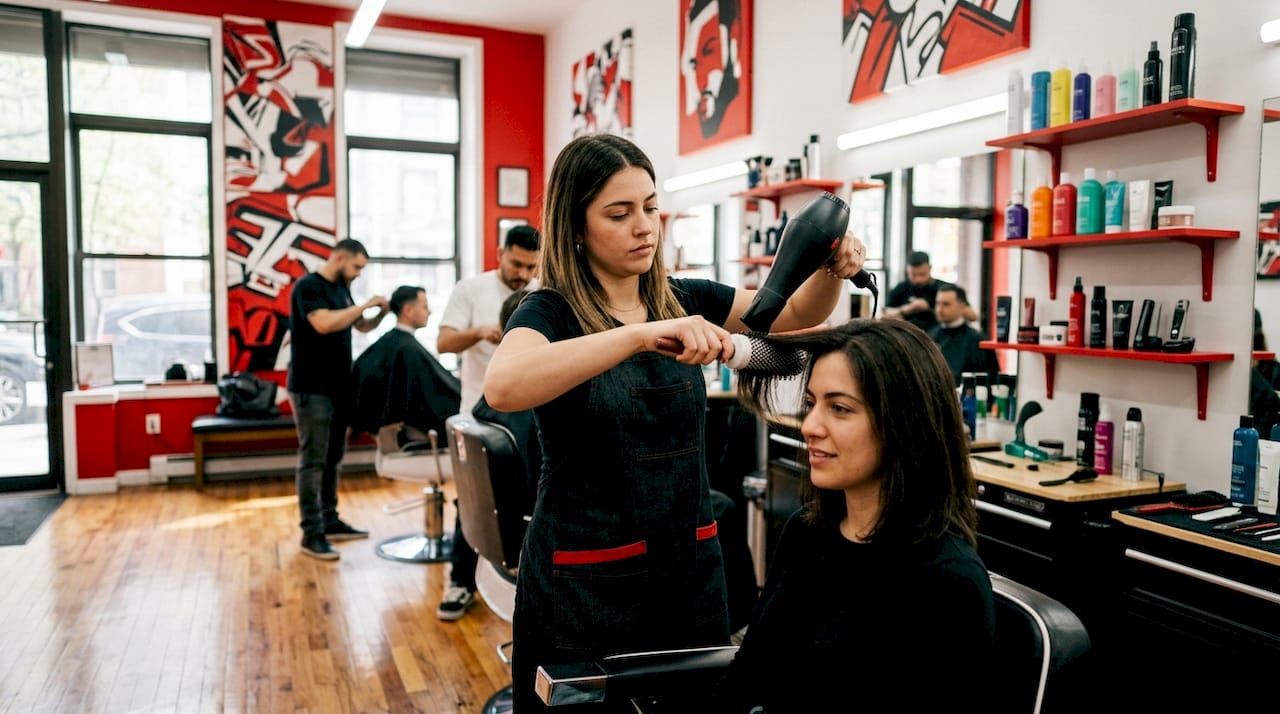
Pro Tip: Ask your barber to finish your cut with a blow dry that follows your natural part and growth direction. That single step can add several days of clean, low-effort styling to your week.
What trim schedule maximizes style duration and saves the most time?
Strategic trim scheduling is one of the most underused time-saving haircut techniques available. Most people either go too long between visits and end up with a style that has lost all definition, or they go too often and spend money on cuts that were not yet necessary.
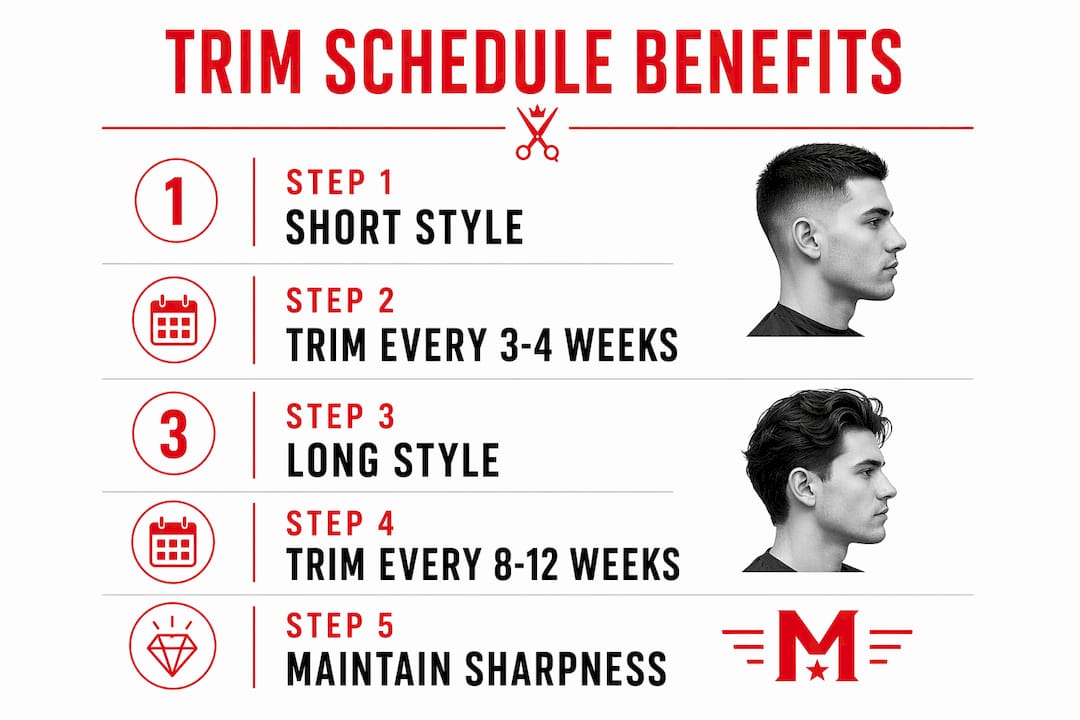
Master stylists recommend trims every 3–4 weeks for short styles that need to stay sharp, or every 8–12 weeks for longer styles where conservative cleanups are enough. Short styles need touch-ups every 4–6 weeks to maintain shape. Knowing which category your cut falls into removes the guesswork from scheduling.
The difference between a full trim and a maintenance cleanup matters here. A full trim reshapes the entire cut. A maintenance cleanup targets only the neckline, sideburns, and perimeter. Cleanups take less time and cost less, but they extend the life of the full cut by weeks.
Skipping trims entirely is the most common mistake people make when trying to save time. Neglecting trims beyond 12 weeks causes split ends to travel up the hair shaft, which means the next cut has to remove significantly more length. You end up spending more time in the chair, not less.
Here is a practical trim schedule based on hair length and style type:
Short fades and tapers: Full cut every 4–6 weeks, neckline cleanup every 1–2 weeks
Medium-length styles: Full trim every 6–8 weeks, perimeter cleanup every 2–3 weeks
Longer styles: Full trim every 10–12 weeks, split end check every 6–8 weeks
Textured or curly styles: Shape refresh every 6–8 weeks to prevent shrinkage-related distortion
Sticking to this kind of schedule means your style always looks intentional. You never reach the point where you need an emergency fix that takes twice as long as a routine visit.
What daily and weekly habits keep a haircut looking fresh longer?
At-home care is where most of the real time savings happen. A well-cut style supported by smart daily habits can look sharp for weeks with almost no effort.
Washing frequency is the first variable to control. Overwashing strips natural oils, making hair harder to style and more prone to frizz and breakage. Washing 2–3 times a week balances cleanliness and oil retention for style longevity. On non-wash days, a quick rinse or dry shampoo refreshes the scalp without disrupting the style’s structure.
Wash 2–3 times per week. Use a sulfate-free shampoo to protect natural oils and preserve color if applicable.
Rinse with cool water after conditioning. Cool water seals the hair cuticle, which reduces frizz and adds shine without any product.
Trim your neckline every 5–7 days. Light trimmer cleanups on the neckline extend the appearance of a taper or fade by days without touching the length.
Apply product to damp, not soaking wet, hair. Damp hair distributes product evenly and holds shape better than hair that is fully saturated.
Choose lightweight texture products. Sea salt spray and light pomades enhance volume and hold without the buildup that heavy gels and waxes create.
Product buildup is a silent style killer. Heavy products weigh hair down and accelerate style collapse, which means you end up restyling more often. Switching to lighter formulas, paired with barber-recommended men’s hair products, reduces buildup and keeps the cut looking fresh between washes.
Pro Tip: Keep a small trimmer at home and clean up your neckline every five to seven days. That one habit alone can make a fresh cut look sharp for an extra week without any salon time.
Does investing in a quality haircut actually save time long-term?
The answer is yes, and the math is straightforward. A quality cut that holds its shape for 10–12 weeks costs more per visit but far less per day than a budget cut that needs reshaping every three weeks.
High-end precision cuts are 40% more cost-effective annually than frequent low-cost trims when you factor in reduced product use and salon time. Premium cuts hold shape longer, which means fewer visits, less product, and less time spent correcting a style that has grown out unevenly. Viewing a haircut through a cost-per-day lens, rather than a cost-per-visit lens, changes how you evaluate what you are paying for.
Personalized cuts matched to your growth pattern and lifestyle deliver the biggest time savings. A barber who understands how hair growth patterns affect style shape can build a cut that grows out gracefully rather than awkwardly. That means fewer correction visits and less daily effort to make the style look intentional.
Manhattanbarbershopny specializes in exactly this kind of structural, architectural cutting. Eugene Solod and his team take the time to understand each client’s hair type, growth direction, and daily routine before making a single cut. The result is a style that requires minimal product and holds its form for weeks.
Investment type | Time cost | Style duration | Product dependency |
Budget cut, frequent visits | High salon time, 3–4 weeks between cuts | Short | High |
Mid-range cut, moderate schedule | Moderate salon time, 6–8 weeks between cuts | Medium | Moderate |
Precision cut, strategic schedule | Low salon time, 10–12 weeks between cuts | Long | Low |
Precision cut plus at-home maintenance | Minimal salon time, 12+ weeks between cuts | Longest | Very low |
The table above shows a clear pattern. As cut quality rises and at-home habits improve, both salon time and product dependency drop. The personalized barbershop experience at Manhattanbarbershopny is built around moving clients toward that bottom row.
Key Takeaways
The single most effective way to save time on hair care is to invest in a precision cut, follow a strategic trim schedule, and build simple at-home habits that preserve the style between visits.
Point | Details |
Precision cutting saves daily time | Dry-cutting and growth-pattern shaping create styles that hold longer with less morning effort. |
Strategic trim scheduling prevents damage | Short styles need touch-ups every 4–6 weeks; skipping trims leads to heavier corrective cuts. |
At-home neckline upkeep extends freshness | Trimming the neckline every 5–7 days adds days of sharp appearance without a salon visit. |
Lightweight products preserve style longer | Heavy gels and waxes accelerate style collapse; sea salt spray and light pomades maintain shape. |
Quality cuts reduce total time and cost | Precision cuts hold 10–12 weeks and are 40% more cost-effective annually than frequent budget trims. |
What I have learned about haircut longevity after years behind the chair
The biggest mistake I see is people treating haircut longevity as a passive outcome. They get a cut, go home, and hope it lasts. It does not work that way. Longevity is something you build through a combination of the right cut, the right schedule, and a few consistent habits at home.
The second mistake is skipping trims to save time. Skipping trims does not speed hair growth and usually results in more damage and styling effort later. I have seen clients come in after three months away and spend twice as long in the chair getting a corrective cut. That is the opposite of saving time.
What actually works is collaborating with your barber to build a schedule that fits your lifestyle. If you travel frequently or have an unpredictable schedule, a lifestyle-adapted haircut with a longer maintenance window is the right call. If you want to look sharp every day, a tighter schedule with at-home neckline cleanups is the better path.
The clients who save the most time are the ones who treat their haircut like a system, not a one-time event. A good cut, a trimmer at home, and a wash schedule that respects your hair type will do more for your daily routine than any product on the market.
— Evgenii
Manhattanbarbershopny: precision cuts that hold their shape
Manhattanbarbershopny delivers the kind of structural, personalized cuts that make the time-saving strategies in this article actually work. Eugene Solod and his team study your hair type, growth pattern, and daily routine before picking up the scissors. Every cut is built to hold its form for weeks, not days.

Walk-ins are welcome, and online booking takes less than two minutes. Whether you want a clean fade, a classic taper, or a low-maintenance style that fits your schedule, the team at Manhattanbarbershopny will build it to last. Book your expert precision haircut and start spending less time on your hair without sacrificing how it looks.
FAQ
How long should a good haircut last?
A precision cut from a skilled barber holds its shape for 8–12 weeks for medium to longer styles, and 4–6 weeks for short fades and tapers. At-home neckline maintenance can extend that window by one to two weeks.
How often should I trim my hair to save time?
Short styles need professional touch-ups every 4–6 weeks. Longer styles can go 10–12 weeks between full trims. Scheduling maintenance cleanups between full cuts reduces total salon time without letting the style fall apart.
Does skipping trims actually save time?
No. Skipping trims causes split ends to travel up the hair shaft, which forces heavier corrective cuts later. The result is more time in the chair, not less.
What products help a haircut last longer?
Lightweight texture products like sea salt spray and light pomades extend style hold without the buildup that heavy gels create. Washing 2–3 times per week preserves natural oils and keeps the style from collapsing between washes.
Is a more expensive haircut worth it for saving time?
Yes. Precision cuts hold shape 10–12 weeks and are 40% more cost-effective annually than frequent budget trims when you factor in reduced product use and fewer salon visits.
Recommended
Comments