How to Find a Barber Who Understands Hair Texture

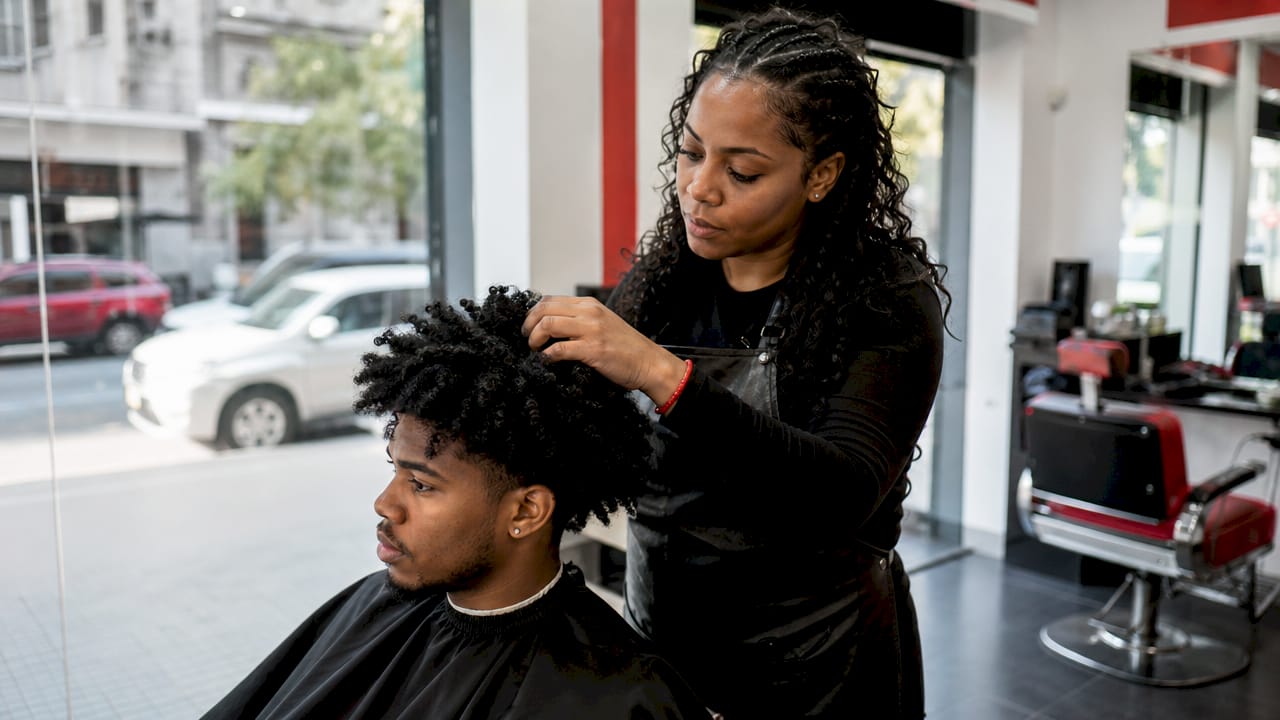
Finding a barber who understands hair texture is the single most important factor in getting a haircut that actually works for your hair. The industry term for this specialty is “texture-aware barbering,” and it covers everything from coily 4C hair to loose waves and thick, dense curls. A barber without this expertise will cut your hair the same way they cut everyone else’s. The result is a style that looks wrong within days and requires constant product to hold together. This guide gives you the exact criteria, questions, and techniques to identify a specialist who will get it right.
What qualities should you look for in a barber for textured hair?
The most reliable indicator of a skilled textured hair barber is a portfolio that shows work on hair like yours. 68% of barbershop clients prioritize skill and consistency over price, and they specifically look for portfolios featuring their own hair type. That number tells you something important: clients with textured hair have already learned this lesson the hard way.
Training hours matter more than most clients realize. In California, barbers complete at least 1,500 hours of training before licensing. The question is how many of those hours were spent on textured hair specifically. Ask directly. A barber who has worked primarily on straight hair for a decade is not automatically qualified to handle 4C coils or tightly curled Type 3 hair.
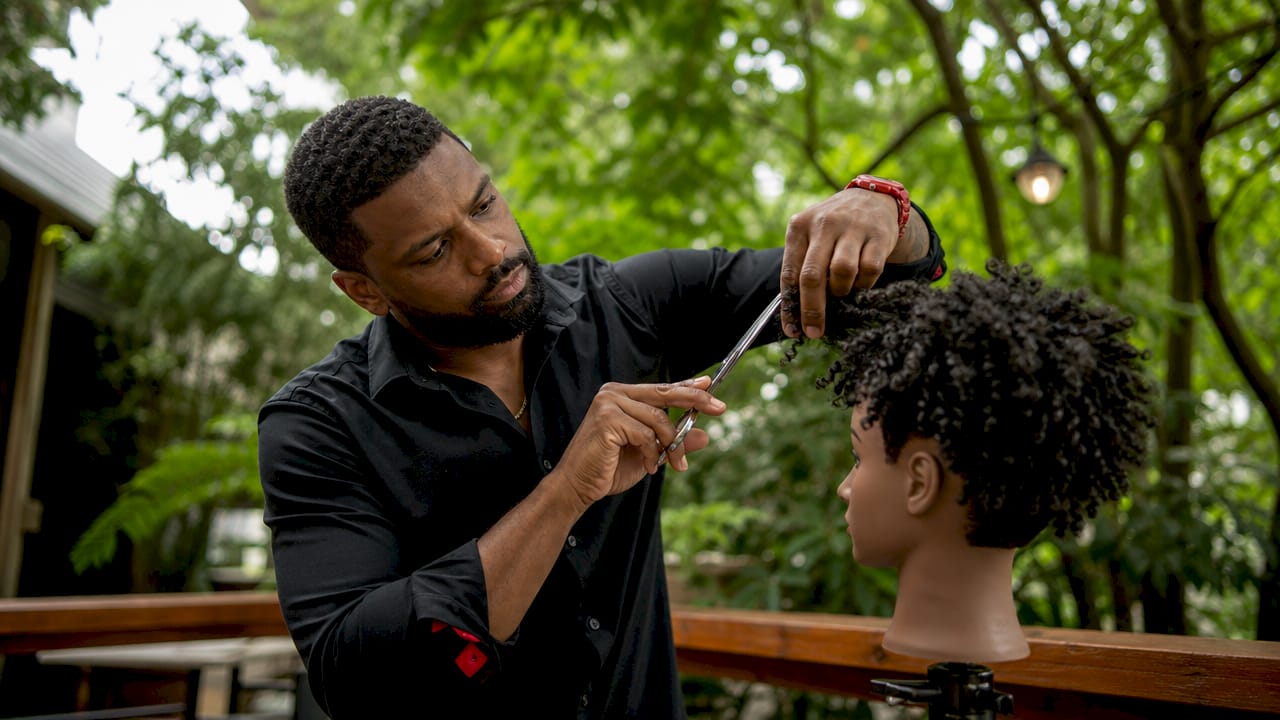
Experience with complex textures is a separate skill set. Barbers with 10–20+ years of experience are significantly more skilled at reading natural hair behavior before they make a single cut. They understand how density, growth direction, and shrinkage interact. A newer barber may have the technical training but lack the pattern recognition that only comes from years of hands-on work.
Look for these specific qualities when evaluating a barber:
Portfolio depth: Photos showing fades, tapers, and shape-ups on curly, coily, or wavy hair, not just straight hair
Communication style: They ask about your routine, not just your desired style
Dry hair assessment: They examine your hair before wetting it
Honest feedback: They tell you when a style won’t work for your texture or face shape
Maintenance guidance: They explain how the cut will grow out, not just how it looks today
Pro Tip: Ask to see before-and-after photos specifically for your hair type, not just their best work overall. A barber who specializes in textured hair will have plenty of examples ready.
Understanding why hair type matters at the barbershop is the foundation for every decision you make when choosing a specialist.
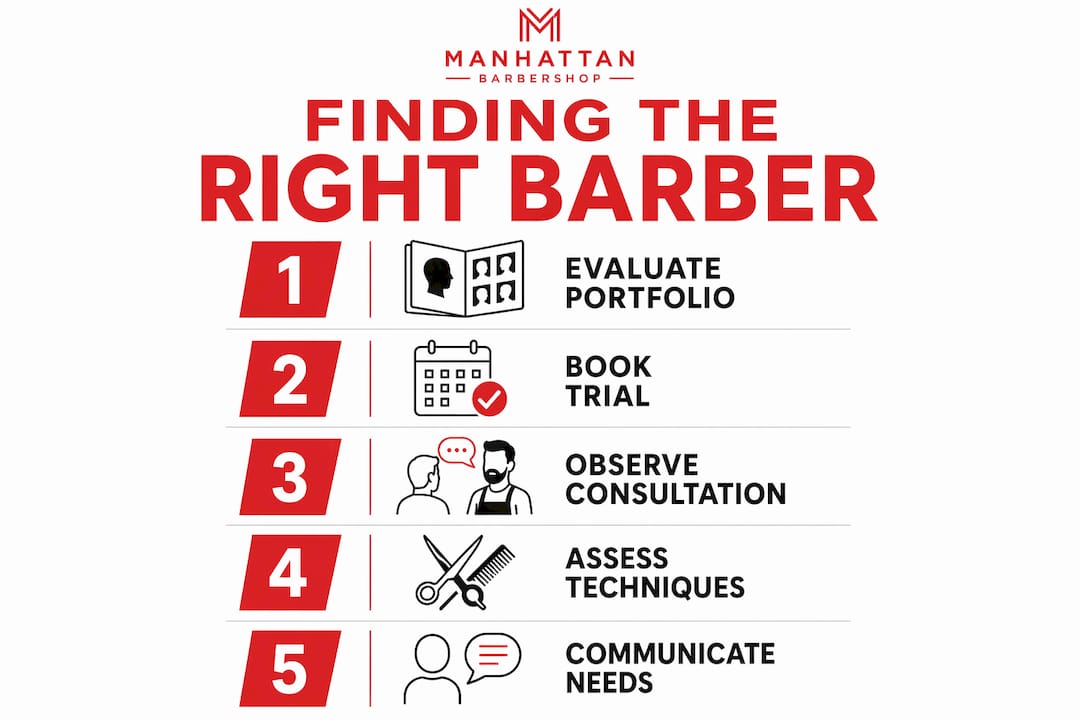
How do you evaluate a barber through a trial service?
The most effective way to test a barber’s skill with your texture is to book a low-risk trial service first. Experts recommend starting with a trim or beard shape-up rather than a full cut. This gives you 30–60 minutes to assess their communication, attentiveness, and technical understanding without committing to a major style change.
Use the trial to ask specific questions. The answers will tell you everything you need to know.
“Have you worked with [your specific texture] before?” A confident, specific answer with examples is a green flag. Vague reassurance is not.
“Do you cut textured hair wet or dry?” The correct answer for most textured hair is dry. If they say wet only, ask why.
“How does this cut grow out over the next four to six weeks?” A quality barber explains the growth phases, not just the day-one result.
“What products do you recommend for my texture after the cut?” This reveals whether they understand your hair’s daily behavior, not just its appearance in the chair.
“Can I see examples of similar work you’ve done?” If they cannot pull up photos quickly, that is a signal.
Watch how they handle the consultation itself. A skilled barber listens more than they talk in the first few minutes. They look at your hair dry, check your growth patterns, and ask about your daily styling routine before picking up any tool. A mediocre consultation skips all of that and goes straight to the cape.
Knowing what to expect on your first visit helps you walk in prepared and confident, so you can focus on evaluating the barber rather than figuring out the process.
Pro Tip: Book your trial on a day when you are not in a rush. You want time to observe, ask questions, and leave if the consultation feels off. A rushed first visit gives you incomplete information.
What cutting techniques do skilled barbers use for textured hair?
The single most important technical distinction in textured hair cutting is dry versus wet cutting. Cutting textured hair dry allows the barber to see the hair’s true behavior, including shrinkage, curl pattern, and natural fall direction. Wet cutting masks all of that. A barber who only cuts wet is essentially guessing at the final result.
Technique | Best for | Why it matters |
Dry cutting | Coily, curly, wavy hair | Reveals true shrinkage and curl pattern |
Wet cutting | Straight or very loose wave | Easier to achieve clean lines on low-texture hair |
Dry shaping with wet finish | Mixed textures | Shapes based on natural behavior, refines with moisture |
Beyond the wet versus dry question, skilled barbers shape hair based on growth patterns and density. Textured hair does not grow uniformly. It has whorls, cowlicks, and directional shifts that affect how a fade or taper sits on the head. A barber who ignores these patterns produces a cut that looks uneven within two weeks.
Common textured haircut styles and what they require:
Fades and tapers: Require precise blending that accounts for curl tightness at different lengths
Afro shaping: Demands understanding of density variation across the head
Twist-out or loc-friendly cuts: Need a barber who understands how the style will be worn daily
Waves: Require knowledge of brushing direction and how the cut supports wave formation
Barbers who specialize in textured hair also factor in how a client maintains their hair at home. A cut that requires 45 minutes of daily styling is not a good cut for someone with a 10-minute morning routine. The best barbers design cuts that work with your lifestyle, not against it.
How do you communicate your needs to get the best textured haircut?
Clear communication is the other half of a great textured haircut. The best results come from collaborative consultations where the client brings specific information and the barber brings honest expertise. Neither side can carry the conversation alone.
Bring multiple reference photos showing different angles of the style you want. Clients who bring several reference images receive more accurate cuts because the barber can see the style from the front, side, and back. One photo from the front leaves too much to interpretation.
Be specific about your daily routine. Tell the barber how much time you spend on your hair each morning, what products you use, and how often you plan to return for maintenance. This information changes the cut. A barber designing for a client who comes in every three weeks will cut differently than one designing for a client who comes in every eight weeks.
Avoid common communication mistakes that lead to disappointing results:
Describing only the style, not the maintenance: “I want a tight fade” tells the barber what you want. “I want a tight fade that I can maintain with a wave brush and minimal product” tells them how to build it.
Skipping the growth pattern conversation: Ask the barber to point out any growth patterns that affect the style before they start cutting.
Mismatching the appointment type: Detailed textured cuts require more time than a standard trim. Book the right service tier or the barber will be rushed.
Not asking for honest feedback: Expert barbers advise on what suits your head shape and growth patterns, not just what you asked for. Let them.
Tips on how to communicate your haircut style to your barber can save you from the frustration of walking out with something that looked right in a photo but wrong on your head.
Key Takeaways
Finding a barber who specializes in textured hair requires evaluating their portfolio, testing their consultation skills, and communicating your texture-specific needs clearly before committing to a full cut.
Point | Details |
Portfolio is the first filter | Look for before-and-after photos showing your specific hair texture, not just general work. |
Dry cutting signals expertise | Barbers who assess and cut textured hair dry produce more accurate results than those who only cut wet. |
Trial services reduce risk | Book a trim or beard shape-up first to evaluate communication and skill before a full cut. |
Reference photos improve accuracy | Bringing multiple angles of your desired style gives the barber the information they need to deliver it. |
Maintenance advice is part of the cut | A skilled barber explains how the cut grows out and what upkeep it requires over the following weeks. |
What I have learned from years of watching clients get textured hair right and wrong
The clients who consistently get great haircuts share one habit: they treat the first visit as a job interview, not a service transaction. They come in with photos, they ask direct questions, and they pay attention to how the barber responds before a single clipper touches their head. The clients who leave disappointed almost always skipped that step.
The relationship with a skilled barber compounds over time. A consistent barber builds better style because they learn your hair’s quirks across multiple visits. They remember that your left side grows faster, that your crown has a tight whorl, and that you hate product buildup. That knowledge cannot be transferred to a new barber on visit one.
The uncomfortable truth about textured hair barbering is that not every barber who claims to handle all textures actually can. The claim is easy to make. The portfolio is where the truth lives. If a barber’s Instagram or shop photos show mostly straight hair with the occasional curly client, that tells you their primary experience. You are not a test case for someone building their textured hair skills.
Self-advocacy matters more than most clients expect. Ask the barber to walk you through their plan before they start. If they cannot explain why they are making specific choices for your texture, that is information. The best barbers welcome the question. They want you to understand the process because it makes the collaboration better.
— Evgenii
Manhattanbarbershopny: textured hair expertise on the Upper East Side
Manhattanbarbershopny was built around the principle that every client’s hair type deserves a tailored approach. Owner Eugene Solod and his team take time during each visit to assess your texture, growth patterns, and lifestyle before picking up a clipper.
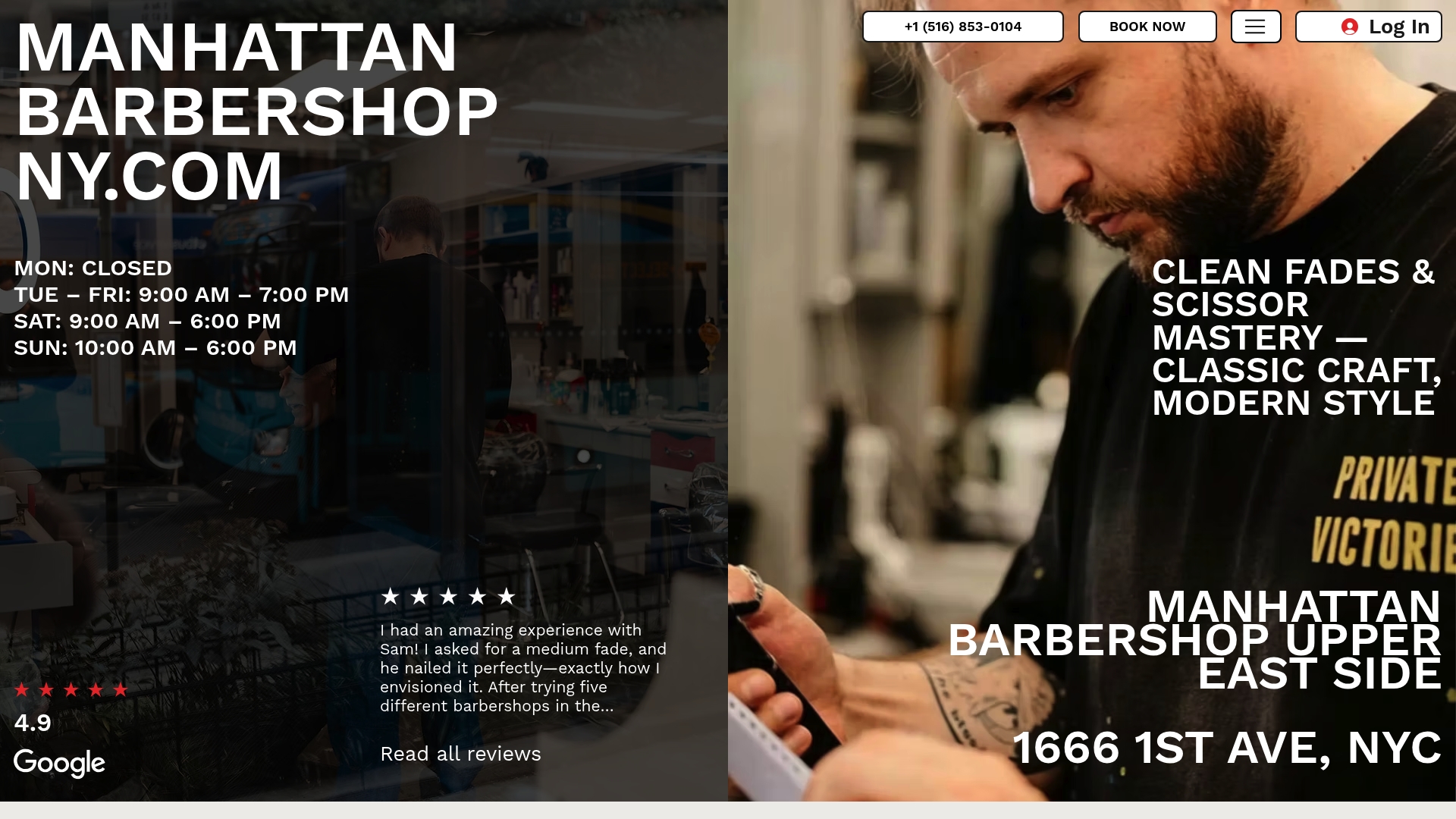
Walk-ins are welcome, and online booking is available for clients who want to schedule a consultation in advance. Every appointment includes a personalized consultation at no extra charge. If you want to test the fit before committing to a full service, book a regular haircut as your trial visit. The team at Manhattanbarbershopny specializes in clean fades, tapers, and texture-specific cuts that hold their shape for weeks without requiring heavy product.
FAQ
What makes a barber a specialist in textured hair?
A textured hair specialist assesses hair dry before cutting, understands shrinkage and growth patterns, and has a portfolio showing consistent work on curly, coily, or wavy hair types.
How do I find hair texture specialists near me?
Search for barbers who post before-and-after photos of textured haircuts on social media, then book a trial trim to evaluate their consultation skills and technical approach in person.
Should a barber cut curly or coily hair wet or dry?
Dry cutting is the standard for curly and coily hair because it reveals the true curl pattern and shrinkage, giving the barber accurate control over the final shape.
What questions should I ask a barber before my first textured haircut?
Ask about their experience with your specific texture, whether they cut dry or wet, and how the cut will grow out over four to six weeks. A confident, detailed answer signals real expertise.
How often should I visit a barber for textured hair maintenance?
A quality cut grows out well over weeks, but most textured hair clients return every three to six weeks depending on the style and how quickly their hair grows.
Recommended
Comments