How Your Haircut Affects First Impressions


Your haircut is a nonverbal signal that communicates personality, professionalism, and self-respect before you speak a single word. Research in social perception confirms that first impressions form within seconds, and grooming is one of the fastest cues the brain processes. Yale research shows hairstyle dramatically affects perceived intelligence, attractiveness, and social status. Understanding how haircut affects first impressions gives you a real advantage in job interviews, networking events, and everyday social interactions. Manhattanbarbershopny clients consistently report that a well-executed cut changes not just how others see them, but how they carry themselves.
How does a haircut affect first impressions?
A haircut signals attention to detail, discipline, and self-respect within the first seven seconds of meeting someone. Professional barbers describe this as the “first 7 seconds rule”: a sharp, clean cut communicates preparation, while an overgrown or uneven style suggests neglect. The brain reads grooming cues automatically, before conscious thought kicks in.
Social psychology research adds precision to this idea. A Springer study with 195 participants found that hair and face contribute roughly equally to judgments of power, while warmth judgments rely primarily on facial features. That finding matters because it means your haircut independently shapes how powerful or authoritative you appear, regardless of your facial expression or body language.
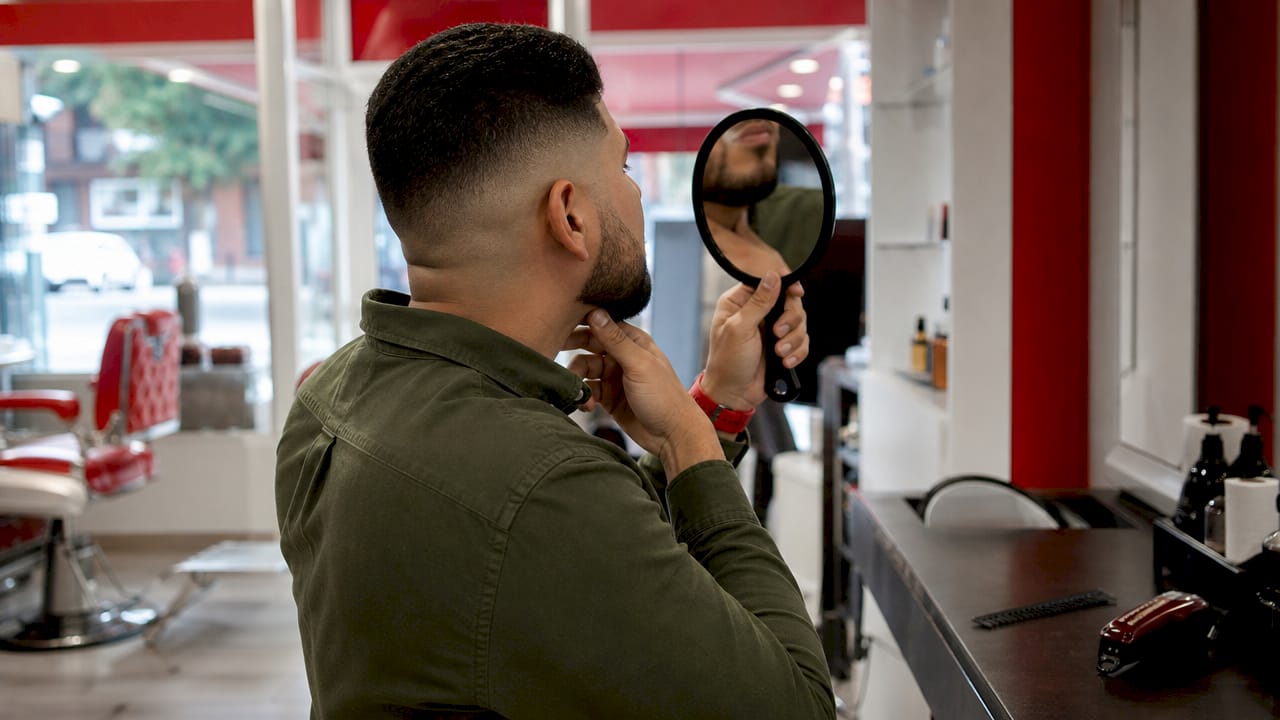
The specific grooming details carry weight too. A clean fade, a sharp neckline, and a shaped beard each add layers of intentionality to your appearance. People read these details as evidence that you pay attention to the small things. That inference transfers directly to how they expect you to perform at work, in relationships, and in social settings.
Pro Tip: Before any high-stakes meeting, check your neckline and sideburns. These two details are the first things people notice when you turn your head, and they signal whether your cut is fresh or fading.
What traits does a haircut communicate?
A structured, maintained haircut communicates four core traits: discipline, reliability, professionalism, and self-respect. Discipline shows up when someone maintains a consistent style over time. Reliability appears when the cut looks the same week after week. Professionalism registers through clean lines and intentional styling. Self-respect comes through in the overall care taken.
Discipline: Regular trims signal that you manage your time and appearance consistently.
Reliability: A consistent style tells others you follow through on commitments, even small ones.
Professionalism: Clean fades and defined lines communicate that you take your presentation seriously.
Approachability: Softer, natural styles with good shape read as open and friendly rather than rigid.
Confidence: A cut that fits your face and lifestyle lets you move through the world without self-consciousness.
How do different hairstyles shape professional and personal opinions?
Hairstyle choices carry different weight depending on the context. A classic taper or structured fade reads as polished and authoritative in a corporate setting. The same person wearing a longer, textured style at a creative agency signals individuality and confidence. Neither is wrong. The key is matching the style to the message you want to send.
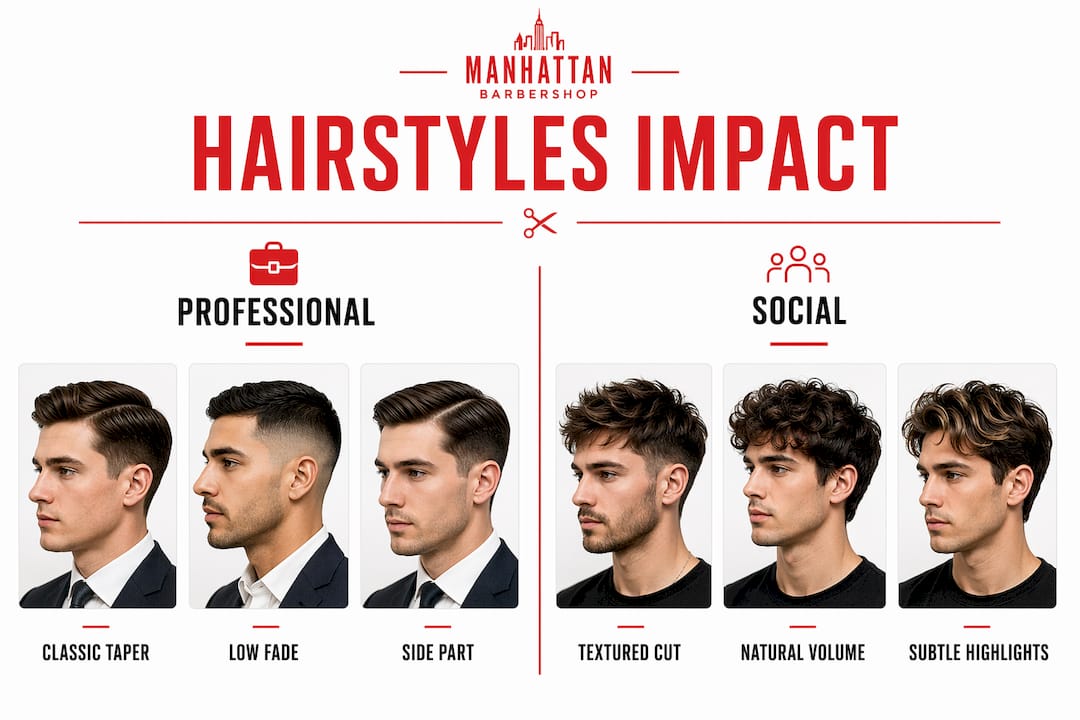
Business and professional settings
Clean tapers, low fades, and side parts remain the strongest signals of professionalism in traditional work environments. These styles communicate that you respect the norms of the space and take your role seriously. A fresh haircut boosts confidence and creates a polished image that others read as competence. That perception matters most in job interviews, client meetings, and performance reviews.
Social and creative environments
Shorter styles with texture, natural volume, or subtle highlights signal approachability and confidence in social settings. Creative environments reward individuality, so a well-maintained style with personality reads as an asset rather than a risk. The critical factor in both cases is maintenance. A bold style that is overgrown looks careless. The same style kept sharp looks intentional.
The sociocultural layer
Hairstyle perception is not culturally neutral. A study with over 1,000 participants found that Afrocentric hairstyles faced higher agency penalties in professional evaluations, with Black candidates rated as more dominant but less professional compared to those wearing Eurocentric styles. That bias is real and documented. Being aware of it helps you make informed choices about when to conform to expectations and when to push back on them.
Style type | Setting | Primary signal |
Classic taper or low fade | Corporate, interviews | Professionalism, discipline |
Textured crop or soft fade | Creative, social | Confidence, approachability |
Natural or Afrocentric styles | Any | Identity, authenticity |
Longer structured styles | Creative, casual | Individuality, ease |
What role does haircut maintenance play in shaping impressions?
Consistency in maintenance signals reliability more strongly than any single fresh cut. Routine visits and consistent styles communicate self-respect and organizational discipline in ways that a one-off sharp cut cannot replicate. A person who gets a great haircut once every three months looks polished for a week and neglected for the rest. A person who maintains a consistent style every three to four weeks looks reliable all the time.
Grooming behaviors reinforce or undermine the impression your haircut creates. Over 75% of people fidget with their hair when entering new social spaces. That nervous touching signals anxiety and undercuts the confidence your cut is supposed to project. Awareness of this habit is the first step toward correcting it.
Here is a practical maintenance routine that keeps your impression strong:
Schedule regular trims every 3–4 weeks. This keeps your style defined and your neckline clean without waiting until the cut looks obviously overgrown.
Return to the same barber. A consistent barber builds better style because they understand your hair type, growth patterns, and lifestyle. Inconsistency between barbers leads to subtle variations that erode the look over time.
Maintain your neckline between visits. A clean neckline extends the life of any cut by two to three weeks and keeps the professional signal intact.
Minimize hair touching in professional settings. Keep your hands away from your hair during meetings, interviews, and networking events to project calm and confidence.
Pro Tip: Tell your barber exactly how long you need the cut to last. A skilled barber adjusts the length and shape based on your schedule, not just your preference in the chair.
How can you choose the right haircut for your goals?
Choosing a haircut that aligns with your personal brand starts with identifying the primary impression you want to create. Authority, approachability, creativity, and professionalism each call for different style choices. Knowing your goal before you sit in the chair produces a better result than describing a style from a photo alone.
Knowing how to communicate your style to your barber is a skill that pays off every visit. Use specific language: describe the texture you want, the length on top, and how much skin you want showing on the sides. Vague requests produce inconsistent results.
Define your impression goal first. Decide whether you want to project authority, warmth, creativity, or reliability before choosing a style.
Match the cut to your face shape. A barber who understands face shapes will recommend styles that balance your features rather than fight them.
Factor in your lifestyle. A high-maintenance style that requires daily product and 20 minutes of styling will look great once and neglected the rest of the time. Choose a cut you can actually maintain.
Consider your industry and environment. A finance professional and a graphic designer can wear the same quality cut with different shapes and still both project competence in their respective fields.
Ask your barber for a personalized barbershop experience. A barber who asks about your work, your schedule, and your hair type will deliver a cut that holds its shape and serves your goals longer.
Pro Tip: Bring two or three reference photos that show different angles of the style you want. One photo rarely captures the full picture, and multiple angles help your barber understand the shape, not just the surface.
Consistency in headshots and professional photos follows the same logic. Consistent personal appearance in professional contexts builds trust over time because it signals that you are the same person in every room.
Key Takeaways
A haircut shapes first impressions by signaling discipline, reliability, and professionalism through grooming cues that people process within seconds of meeting you.
Point | Details |
First impressions form fast | Clean, structured haircuts signal preparedness within the first 7 seconds of any interaction. |
Hair independently signals power | Research shows hair contributes equally to power judgments, making your cut a direct authority signal. |
Consistency beats freshness | Routine maintenance every 3–4 weeks signals reliability more strongly than occasional sharp cuts. |
Style must match context | Classic tapers work in corporate settings; textured styles suit creative and social environments. |
Grooming habits matter | Minimizing nervous hair touching preserves the confidence signal your haircut creates. |
What I have learned after years behind the chair
The clients who get the most out of their haircuts are not the ones chasing the latest style. They are the ones who show up on a schedule, communicate clearly, and treat the cut as part of a larger habit of self-presentation.
I have seen men walk into a job interview with a great suit and a three-week-old haircut that has lost its shape. The suit says “I prepared.” The haircut says “I forgot.” That contradiction registers with interviewers even when they cannot articulate why. The impression suffers.
The most common mistake I see is treating a haircut as a one-time fix rather than a recurring investment. One sharp cut before a big event is better than nothing. But the person who maintains their style consistently month after month builds a reputation for reliability that goes beyond appearance. People start to associate that consistency with how they work, how they communicate, and how they show up in general.
The other thing most people miss is the conversation with their barber. A good barber is not just executing a cut. They are reading your face shape, your hair texture, your lifestyle, and your goals. The more you tell them, the better the result. Clients who say “same as last time” and clients who say “I have three big meetings this month and I need this to last four weeks” leave with very different outcomes.
A haircut is not vanity. It is communication. The question is whether you are sending the message you intend.
— Evgenii
Get a cut that works as hard as you do
A great haircut does not happen by accident. At Manhattanbarbershopny on the Upper East Side, every cut starts with a real conversation about your goals, your hair type, and how long you need the style to hold.
Eugene Solod and the team specialize in clean fades and classic cuts that stay sharp for weeks, not days. Whether you walk in or book your appointment online, you leave with a cut that fits your face, your schedule, and the impression you want to make. Walk-ins are always welcome.
FAQ
How quickly do people judge you based on your haircut?
First impressions form within the first 7 seconds of meeting someone, and grooming cues like haircut shape and neckline are among the fastest signals the brain processes.
Does a haircut really affect how professional you appear?
Yes. Research confirms that clean, structured haircuts signal preparedness and attention to detail, and men with neat grooming are consistently perceived as more competent by others.
What is the best haircut for a job interview?
A classic taper, low fade, or structured side part communicates professionalism and discipline in most corporate and business settings. The cut should be fresh, with a clean neckline and defined shape.
How often should you get a haircut to maintain a strong impression?
Every 3–4 weeks is the standard for maintaining a defined style. Routine maintenance signals reliability and self-respect more effectively than infrequent sharp cuts.
Can nervous hair touching undermine a good haircut?
Yes. Experts note that fidgeting with your hair in professional or social settings signals anxiety and weakens the confidence your haircut is meant to project. Keeping your hands away from your hair reinforces a calm, composed impression.
Recommended
Comments