Men's Hair Type Cut Compatibility: Your 2026 Guide

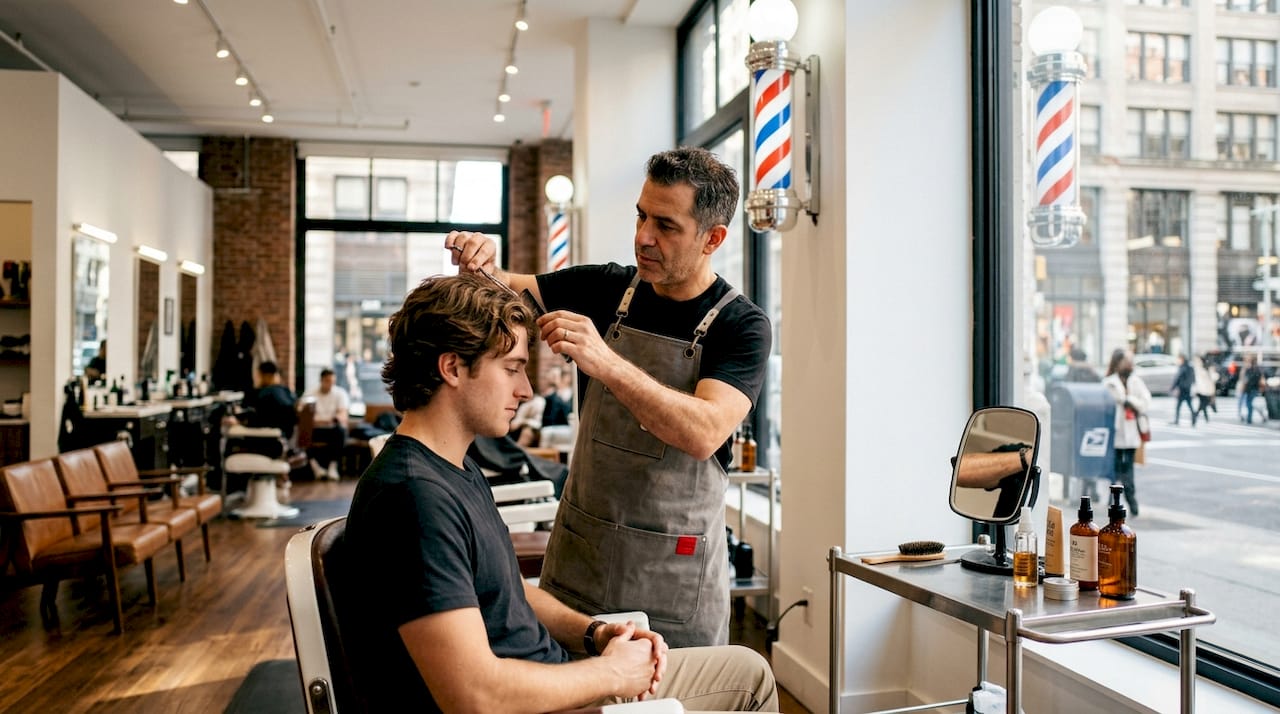
Men’s hair type cut compatibility is defined as the practice of matching a haircut style to your specific hair texture, density, and face shape to get the best look with the least effort. Most men pick a style they like the look of, then wonder why it never looks right on them. The real issue is almost always a mismatch between the cut and the hair’s natural behavior. At Manhattanbarbershopny, barbers assess hair texture and density before recommending any style, because those two factors determine what a cut can actually do on your head.
1. What is men’s hair type cut compatibility?
Men’s hair is categorized into four primary types: straight, wavy, curly, and coily. Each type behaves differently when cut, dried, and styled. Straight hair lies flat and shows every line cleanly. Wavy hair moves and can look full or frizzy depending on the cut. Curly and coily hair shrinks significantly when dry, which means a cut that looks short wet will look much shorter once it dries.
Hair density adds another layer. High density is classified as more than 150 hairs per square centimeter, medium falls between 100 and 150, and low sits below 100. A man with fine, low-density straight hair needs a completely different cut than a man with coarse, high-density straight hair, even though both have “straight hair.” Density determines weight, movement, and how a style holds its shape through the day.
2. How hair texture subtypes affect your cut options
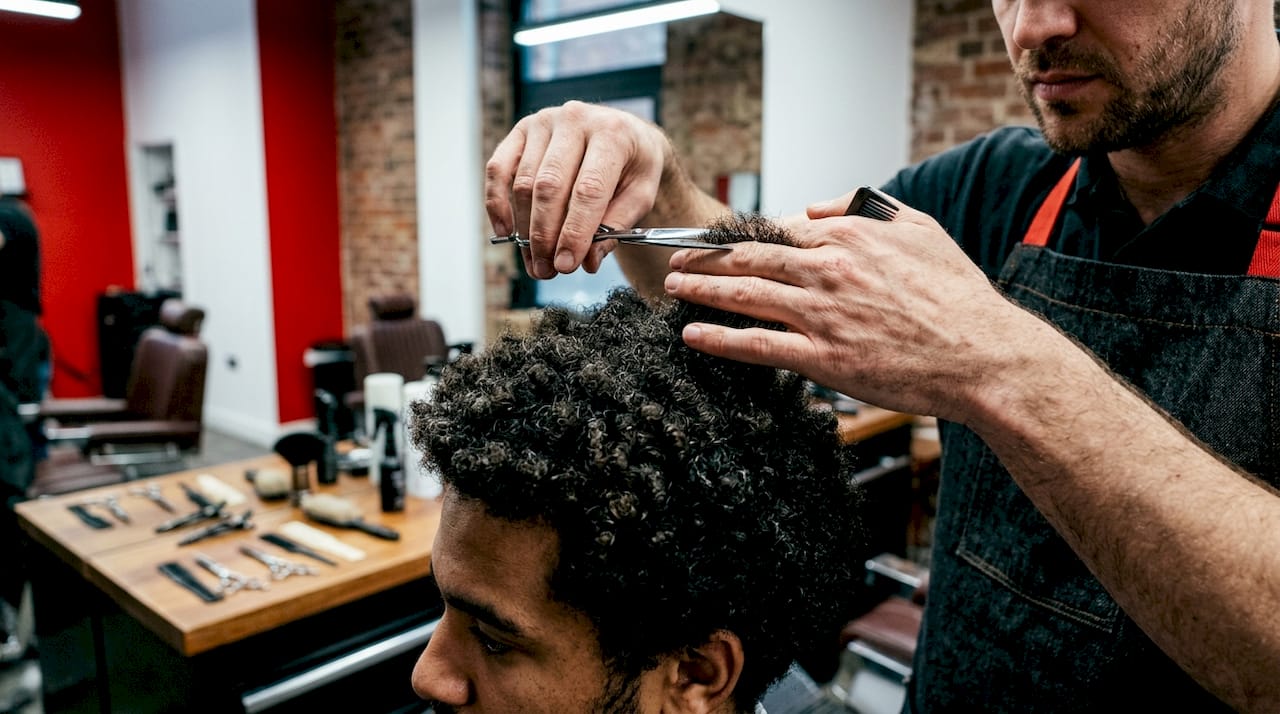
Within each of the four hair types, texture runs from fine to coarse. Fine hair has a smaller shaft diameter and less structural strength. It lies flat easily and can look limp if a cut adds too much length without removing weight. Coarse hair has a wider shaft, holds shape well, but can look bulky if a barber does not remove volume strategically.
Fine hair with low density looks stringy if left too long. The fix is a cut that adds the illusion of volume, such as a textured crop or a short side-part with some lift on top. Thick, coarse hair needs thinning shears or point cutting to create movement and prevent an unnatural, helmet-like shape. Thinning shears and point cutting are used specifically to add natural movement, not just reduce bulk.
Pro Tip: Ask your barber whether your hair is fine, medium, or coarse before discussing any style. That single answer narrows your compatible haircut options by half.
3. Best haircuts for each hair type
The table below maps the four primary hair types to their most compatible haircut styles.
Hair type | Best compatible cuts | Cuts to avoid |
Straight | High-contrast fade, side part, slick back | Very long unshaped styles |
Wavy | Textured crop, flow fade, medium taper | Blunt one-length cuts |
Curly | Curly fade, frohawk, defined layers | Tight high fades without volume |
Coily | Afro taper, shape-up, twist-out styles | Overly short cuts that lose shape fast |
Buzz cuts are the one universal option. A buzz cut suits all four hair types because it removes the variable of length and texture management entirely. For men who want more style, the textured crop and flow fade are the two most versatile cuts in 2026. The textured crop suits almost every hair type, and the flow fade adds texture with lower maintenance across most face shapes.
4. How face shape changes your haircut compatibility
Face shape is the second major filter in choosing a compatible haircut. Six face shapes are recognized for men: oval, round, square, oblong, diamond, and triangle. Each shape benefits from cuts that either add or reduce visual width and height.
Face shape | Best cuts | Avoid |
Oval | Almost all styles | None |
Round | High top, faux hawk, tapered sides | Full, wide styles |
Square | Textured top, soft taper | Flat tops that widen the jaw |
Oblong | Side parts, medium length | Very high tops |
Diamond | Textured fringe, side sweep | Very short sides |
Triangle | Volume on top, tight sides | Wide, full styles at the jaw |
Oval faces are the most flexible. Every other shape requires some thought. A round face benefits from height on top and tighter sides to create the illusion of length. A square face looks best with soft texture on top rather than hard lines that emphasize the jaw. The key mistake most men make is choosing a cut based on the style alone, without accounting for how their face shape interacts with it.
The real skill is combining face shape with hair type. A man with a round face and coily hair needs a cut that adds height without going so short on the sides that the top looks disconnected. A curly fade with defined volume on top solves both problems at once.
5. How hair density shapes the final result
Hair density more strongly influences haircut success than hair type alone. Two men can both have wavy hair, but if one has high density and the other has low density, the same cut will look completely different on each of them. High-density hair holds shape and volume naturally. Low-density hair needs a cut that creates the illusion of fullness.
For men with thinning hair, the cut choice becomes even more critical. Shorter cuts with a slight texture on top tend to work better than longer styles that expose thinning areas. Early attention to thinning hair combined with the right cut can maintain a full appearance for much longer. Clients consistently overestimate their own hair density, which is why a barber’s honest assessment during the consultation matters more than self-diagnosis.
6. What role maintenance plays in haircut compatibility
A compatible haircut is one you can actually maintain. Straight hair requires a trim every 2–3 weeks to keep a clean fade looking sharp. Curly and coily hair can go 4 weeks or more between cuts, especially in longer natural styles. High-contrast fades need a trim every 2 weeks to hold their definition. Longer natural styles can stretch to 4–6 weeks between visits.
Daily styling time matters just as much as trim frequency. Some styles require 10 or more minutes of daily styling. If you spend five minutes maximum on your hair each morning, a style that demands product application, blow-drying, and shaping will look bad within a week. The right cut for your lifestyle is one that looks good with the amount of effort you are actually willing to give it.
Pro Tip: Tell your barber exactly how many minutes you spend on your hair each morning. That number alone will help them eliminate half the styles that would not work for you.
For men who want low-effort results, low-maintenance haircut styles built around natural texture are the most reliable choice. These cuts work with your hair’s natural behavior rather than against it.
7. How to prepare for your barber consultation
The most productive barber consultations start before you sit in the chair. Let your hair air-dry without any product before your appointment. This reveals your natural growth patterns, curl formation, and true texture. What you see when your hair dries naturally is what your barber is actually working with.
Bring reference photos, but choose them carefully. Barbers recommend reference photos that match your hair texture, not just the silhouette you want. A photo of a man with thick, straight hair will not translate to a man with fine, wavy hair, even if the general shape looks similar. Match the texture in the photo to your own texture first, then look at the style.
Key things to tell your barber before they start:
Your hair type and whether it is fine, medium, or coarse
How long you spend styling each morning
How often you plan to come back for a trim
Any areas where your hair grows in a difficult direction
Whether you want a natural look or a styled look
Knowing the right questions to ask before you sit down separates a great haircut from a frustrating one. A barber who understands hair texture and personalized cuts will use this information to recommend a cut that fits your hair, your face, and your routine.
Pro Tip: If a barber never asks about your lifestyle or maintenance habits before cutting, that is a sign they are not tailoring the cut to you.
Key takeaways
The best haircut for any man is the one that aligns with his hair texture, density, face shape, and realistic maintenance habits.
Point | Details |
Hair type is the starting point | Straight, wavy, curly, and coily hair each require different cut approaches. |
Density matters more than type | Low or high density changes how any cut looks, regardless of hair type. |
Face shape refines the choice | Oval faces suit most styles; round, square, and oblong faces need targeted cuts. |
Maintenance must be realistic | High-contrast fades need trims every 2 weeks; natural styles can stretch to 4–6 weeks. |
Barber communication is critical | Share your texture, styling time, and trim frequency before the cut begins. |
What I’ve learned from watching men get the wrong cut
Most men walk in with a photo of a style they love and walk out disappointed. The photo usually shows a man with different hair. I’ve watched this happen more times than I can count, and the pattern is always the same: the client focused on the silhouette and ignored the texture.
The second most common mistake is overestimating maintenance tolerance. Men say they want a high-contrast fade, then show up six weeks later with a grown-out mess because life got busy. The cut was not wrong. The expectation was. A good barber asks hard questions about your routine before picking up the clippers, because a cut that does not fit your life will never look right.
What I respect most about the approach at Manhattanbarbershopny is the emphasis on honest consultation. Eugene Solod built the shop around the idea that a great haircut should be easy to maintain and natural-looking, not a daily project. That philosophy produces clients who come back consistently because the cut actually works for them.
The men who get the best results are the ones who embrace what their hair actually does. Curly hair that fights a straight style every morning is not a problem to solve. It is a texture to work with. The right cut makes that texture an asset, not an obstacle.
— Evgenii
Haircuts tailored to your hair type at Manhattanbarbershopny
Manhattanbarbershopny specializes in personalized haircuts for all hair types and face shapes on the Upper East Side of New York City. Every cut starts with a consultation where your barber assesses your texture, density, and lifestyle before recommending a style.
Walk-ins are welcome, and online booking is available for those who prefer to plan ahead. Whether you have fine straight hair, thick coily hair, or anything in between, the barbers at Manhattanbarbershopny build cuts that hold their shape for weeks without demanding heavy product use. Book your appointment online, or claim a free model haircut to experience a personalized consultation firsthand.
FAQ
What are the four main men’s hair types?
The four primary hair types for men are straight, wavy, curly, and coily. Each type has texture subtypes ranging from fine to coarse that further affect compatible haircut choices.
Which haircut works for all hair types?
The buzz cut is compatible with all four hair types because it removes length and texture management as variables. The textured crop is the most versatile styled option across hair types in 2026.
How often should men get a haircut based on hair type?
Straight hair with a high-contrast fade needs a trim every 2–3 weeks. Curly and coily hair in longer natural styles can go 4–6 weeks between cuts without losing shape.
Does face shape really change which haircut you should get?
Face shape directly affects which cuts add or reduce visual width and height. Oval faces suit nearly all styles, while round, square, oblong, diamond, and triangle faces each benefit from specific cuts that balance their proportions.
How do I communicate my hair type to my barber?
Let your hair air-dry without product before your appointment to reveal its natural texture and growth patterns. Bring reference photos of men with similar hair texture, and tell your barber your daily styling time and trim frequency upfront.
Recommended
Comments