The History of the Pompadour

Updated: Nov 3, 2025
Origins & Name
The hairstyle is named after Madame de Pompadour (Jeanne-Antoinette Poisson, 1721–1764), the official chief mistress of King Louis XV.
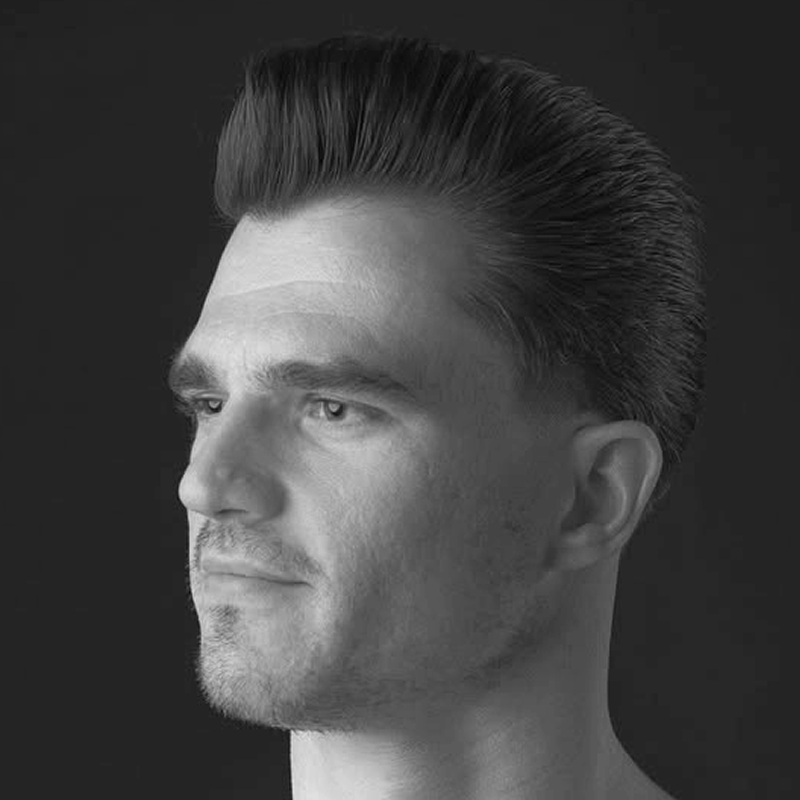
Interestingly, Madame de Pompadour herself did not actually wear the high-volume style we call a “pompadour” today — her hair was styled low and swept back. Still, her name became attached to the volumized look that emerged in the 18th century French court.
Early versions of raised, backward-swept hair were already part of aristocratic fashion in the late 17th and early 18th centuries.
Evolution Through Time

18th Century — Women’s high coiffures at the French court: powdered wigs, elevated shapes, complex constructions.

Late 19th – Early 20th Century — Revival in women’s fashion (the “Gibson Girl”style) with soft pompadour volume as a mark of elegance.


1950s–1960s — The male pompadour explodes in popularity with rock ’n’ roll and greaser culture. Icons: Elvis Presley, James Dean, Chuck Berry.


Modern Era — Adapted into undercuts, fades, and textured versions. In Japan, the pompadour (“Regent style”) became tied to yakuza and biker subcultures.
What Makes It Special
The defining feature is height and volume at the front, combed back or upward with smooth sides and a tapered shape toward the crown.
Symbol of luxury and status in the 18th century, later of rebellion and rock ’n’ roll freedom in the 1950s.
Universally adaptable: sleek, classic, textured, combined with modern fades — always recognizable.
From the Barber’s Chair
The pompadour is the cut that won me the title of Best Old-School Barber at Moscow Barber King 2018. Its power lies in timelessness — this style is never “out of fashion.” If you want to make an impression, wear a pompadour. It can be worn long on the sides and slicked back, or combined with a skin fade or taper fade for a modern edge.
Styling Variations:
Side Pompadour — volume swept to the side for a softer, more elegant look.
Jelly Roll Pompadour — the ultimate rockabilly statement: front hair rolled inward into a thick crest, often with a loose curl dropping forward. Bold, dramatic, and pure 1950s rebel energy.


Comments