What Does Client Retention Mean for Your Barbershop?

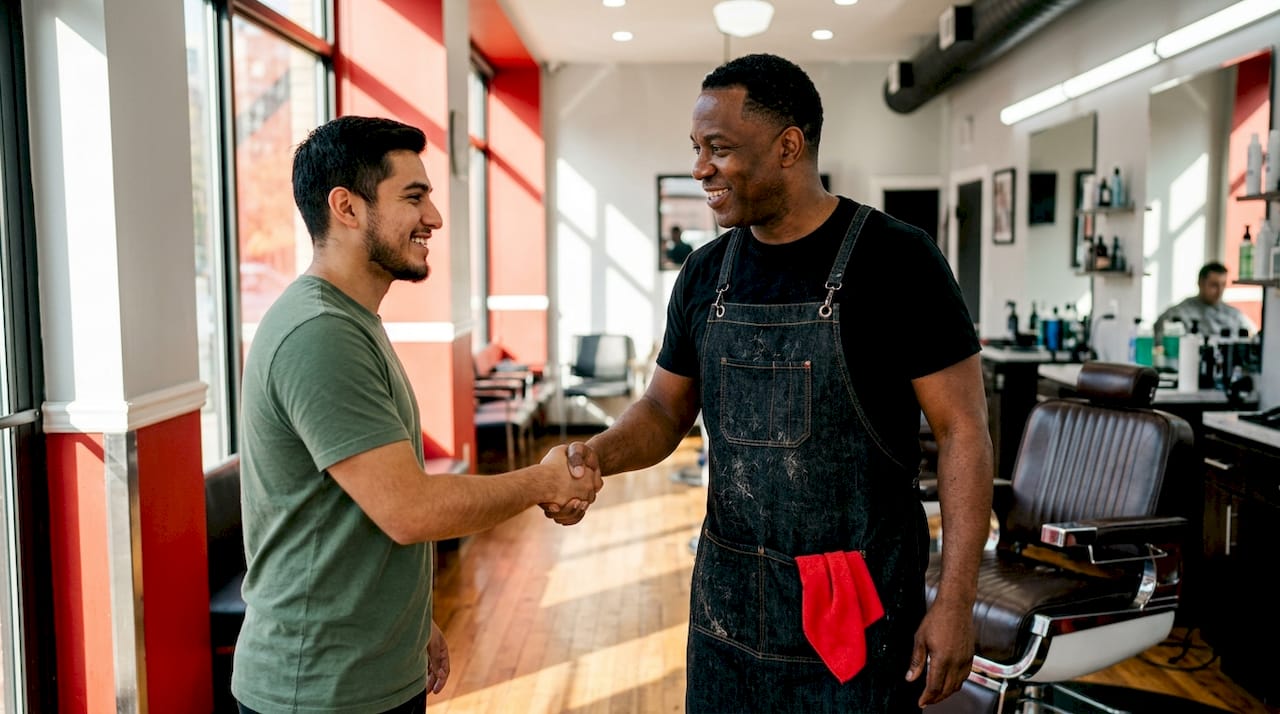
Client retention in a barbershop is defined as the percentage of clients who return after their first visit, and it is the single most reliable indicator of long-term business health. Retaining an existing client costs five times less than acquiring a new one, and a 5% increase in retention can boost profits by over 25%. That math alone makes client retention the most important number on your dashboard. Manhattanbarbershopny has built its entire model around this principle, prioritizing personalized service and consistent experiences that bring clients back week after week.
What does client retention mean in a barbershop, and why does it matter?
Client retention, also called customer retention, measures how many of your clients choose to return rather than walk out the door for good. The industry standard definition is straightforward: divide returning clients by total clients seen, then multiply by 100. Average barbershop retention rates sit at 60–70% industry-wide, with independent shops running roughly 12% higher than chains. That gap tells you something important. Clients at independent shops feel a stronger connection to the barber and the space, which is exactly the kind of loyalty you want to build.

The importance of client retention goes beyond a feel-good metric. A shop with 200 monthly clients and a 65% retention rate generates a predictable revenue base. Raise that rate to 75%, and you add 20 returning clients per month without spending a dollar on advertising. That compounding effect is why high-performing barbershop owners track retention before they track anything else.
How do you measure client retention accurately?
Accurate measurement starts with tracking unique customers, not total visits. Many owners count appointments and mistake volume for loyalty. The correct formula for rebooking rate is: (Customers who booked again ÷ Customers seen) × 100. A 56-day return window works well as the standard measurement period for most barbershops, since the average client gets a cut every four to eight weeks.
Key metrics to track
Rebooking rate: The percentage of clients who schedule their next appointment before or shortly after leaving.
Return window: The number of days between a client’s first and second visit. Common benchmarks are 28, 56, and 84 days.
Average visit frequency: Most barbershop clients visit 6.1 times per year. Use this to set realistic return-window expectations.
Average ticket value: Tracks revenue per visit and helps you spot whether loyal clients spend more over time.
Metric | What it measures | Why it matters |
Rebooking rate | % of clients who rebook | Predicts future revenue reliability |
56-day return window | Clients returning within 8 weeks | Standard retention benchmark |
Visit frequency | Average annual visits per client | Sets realistic rebooking targets |
Average ticket value | Revenue per appointment | Shows loyalty’s financial impact |
CRM tools focused on retention rates and average ticket value give managers a cleaner picture than daily cash reports. Switching your reporting focus from daily revenue to these KPIs is one of the fastest ways to spot problems before they cost you clients.
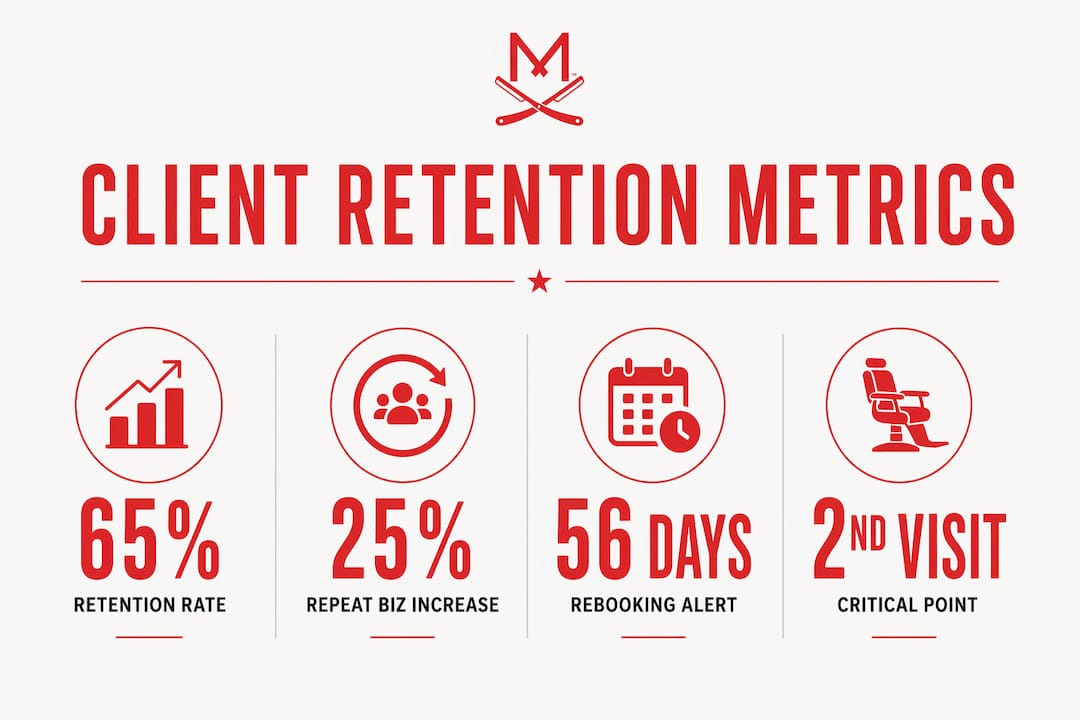
Pro Tip: Set a 56-day alert in your booking system for every new client. If they have not rebooked by day 45, trigger an automated reminder. That 11-day buffer is your best window to recover a client before they drift away.
Why is the second visit the most important appointment?
The second visit is the critical tipping point in any client’s relationship with your shop. Clients who return for a second cut are significantly more likely to become long-term regulars. The first visit is an audition. The second visit is a commitment. Most barbershop owners spend their energy attracting new clients while ignoring the gap between visit one and visit two.
Closing that gap requires a deliberate system, not charm or luck. Automated rebooking reminders timed to each client’s haircut frequency outperform in-chair asks because they reach clients at the right moment, not just when the barber remembers to mention it. A personalized digital nudge sent 10 days before a client’s expected return window is far more effective than a generic “come back soon.”
What to do and what to avoid
Do ask clients directly at the end of the appointment if they want to book their next visit.
Do set up automated text or app reminders tied to each client’s average return window.
Do record client preferences so the next visit feels like a continuation, not a restart. Manhattanbarbershopny barbers remember client preferences from visit to visit, which makes the second appointment feel effortless for the client.
Avoid making the rebooking ask feel like a sales pitch. Keep it casual and conversational.
Avoid relying on clients to remember on their own. Most will not.
Client retention is a system of repeatable habits, not a natural talent. Prioritizing the second visit is the single highest-leverage move in your retention playbook.
How do barbershop loyalty programs boost client retention?
A loyalty program is not a discount strategy. It is a structured system that rewards clients for consistent behavior and gives them a reason to choose your shop over every other option. Barbershops with structured digital loyalty programs see a 25% increase in repeat business. The design of the program matters as much as the existence of one.
How to build a loyalty program that works
Set the right reward threshold. A 6–9 visit threshold maintains client momentum best. Thresholds above 10 visits see clients drop out before they ever redeem a reward.
Choose meaningful rewards. Free haircuts, discounted add-ons, and referral bonuses all work. Referral incentives are especially powerful because they turn loyal clients into recruiters.
Go digital. Digital loyalty passes deliver push notifications with a 90% open rate. Paper cards suffer from 30–40% loss rates and generate zero data about client behavior.
Automate enrollment. Loyalty enrollment should happen in-chair, with a target of 40–50% of new clients signing up during their first visit.
Use real-time data. Digital systems show you which clients are close to a reward, letting staff give a timely nudge that feels personal rather than automated.
The difference between a discount and a loyalty program is data. Discounts reduce your margin. A well-designed loyalty program builds a database of client behavior that you can use to improve every part of your operation. Manhattanbarbershopny’s approach to personalized barbershop experiences pairs naturally with a digital loyalty system because the data from one feeds directly into the other.
What are the biggest misconceptions about why clients leave?
Most barbershop owners assume price is the main reason clients stop coming back. Surveys consistently show that scheduling friction and inconsistent rebooking habits drive more client loss than pricing ever does. A client who loves their cut but struggles to book an appointment will eventually find a shop that makes it easier.
The biggest retention mistake is fixing your prices when you should be fixing your booking process. Clients forgive a $5 price increase far more easily than they forgive a missed callback or a clunky scheduling experience.
Structured customer feedback with regression analysis helps identify which service variables actually predict repeat visits. That kind of evidence replaces guesswork with a clear picture of what is driving clients away. Pairing feedback collection with a brand-focused feedback process gives you both the data and the framework to act on it.
Other overlooked retention factors include:
Inconsistent barber assignments: Clients bond with a specific barber. Frequent reassignments break that bond.
No follow-up after a bad experience: One poor visit does not have to mean a lost client if you reach out and make it right.
Ignoring KPIs beyond revenue: High-performance barbershops measure retention rates and ticket values, not just daily cash. Shops that only watch the register miss the early warning signs of client drift.
How do you build a retention system that fills chairs consistently?
A retention system combines scheduling automation, personalized service, and digital tools into a repeatable process. No single tactic works alone. The system is what makes retention consistent regardless of which barber is on the floor.
Automate booking reminders. Set reminders to trigger at 10, 7, and 3 days before each client’s expected return date. Personalize the message with the client’s name and their usual service.
Use a CRM to store client preferences. Record hair type, preferred style, product sensitivities, and conversation topics. A CRM built for client tracking turns one-time visitors into clients who feel known.
Deploy a digital loyalty program. Connect it to your booking system so points update automatically after each visit. Clients should never have to ask how many points they have.
Train staff to invite rebooking. Every barber should end every service with a direct, low-pressure invitation to book the next appointment. Make it part of the checkout routine, not an afterthought.
Review retention data monthly. Pull your rebooking rate, return window averages, and loyalty enrollment numbers every month. Identify which barbers have the highest retention and share what they do differently.
Pro Tip: Run a monthly report on clients who visited once and never returned. Reach out to anyone who lapsed in the past 60 days with a personalized message and a small incentive. Win-back campaigns on lapsed clients cost far less than acquiring brand-new ones.
Key Takeaways
Client retention in a barbershop is a measurable, manageable system that directly determines profitability, and the second visit is its most critical moment.
Point | Details |
Define retention correctly | Retention is the percentage of clients who return after their first visit, not total appointment volume. |
Measure with the right tools | Track rebooking rate using a 56-day return window and monitor average ticket value alongside retention rate. |
Prioritize the second visit | Clients who return for a second cut are far more likely to become long-term regulars. Target this gap first. |
Build a digital loyalty program | Set reward thresholds at 6–9 visits and use digital passes with push notifications to outperform paper cards. |
Fix scheduling before pricing | Scheduling friction drives more client loss than price. Automate reminders and simplify booking to reduce churn. |
Why I think most barbershops are solving the wrong retention problem
After watching barbershop owners wrestle with retention for years, the pattern is always the same. They cut prices, run promotions, and post more on social media. None of it moves the needle because none of it addresses the actual problem: there is no system.
The second visit is where I would put every dollar and every minute of attention. If a client does not come back for that second cut, nothing else matters. No loyalty program, no referral bonus, no Instagram reel will compensate for losing clients at that first critical gap. Automation is not a shortcut here. It is the only reliable way to reach every client at exactly the right moment without depending on a barber to remember.
The human touch still matters enormously. Clients return to barbers who know their name, remember their fade length, and ask about their kid’s baseball game. But that warmth has to be backed by a system that tracks preferences, triggers reminders, and measures results. Feeling like a great barber is not enough. You need the data to prove it and the tools to repeat it.
Track your rebooking rate every month. If it is below 60%, your system needs work before anything else does. If it is above 70%, find out exactly what is working and make sure every barber on your team does the same thing.
— Evgenii
How Manhattanbarbershopny puts client retention into practice
Manhattanbarbershopny on the Upper East Side is built around the same principles this article covers: personalized service, consistent experiences, and a genuine investment in every client’s return.
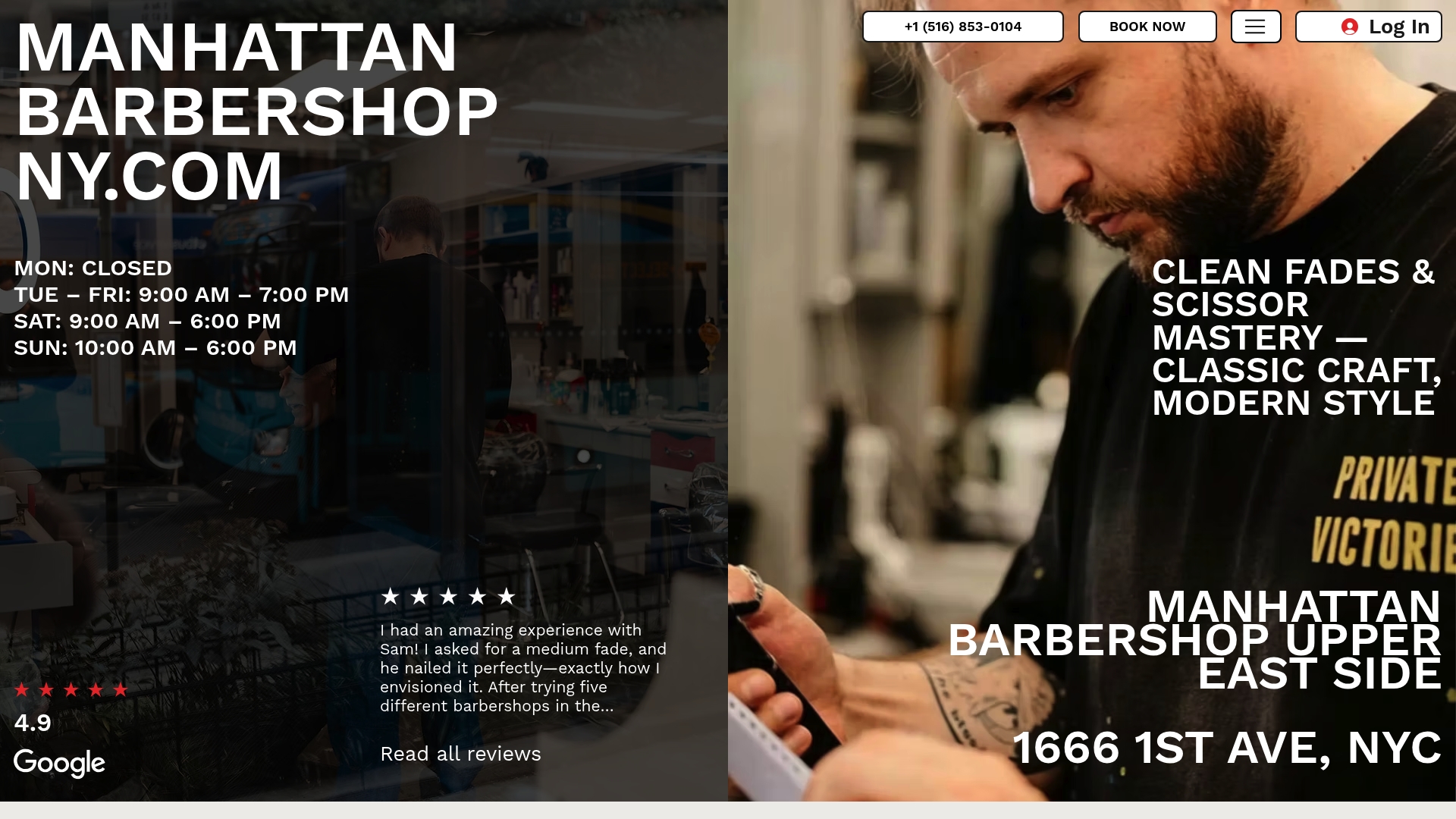
Eugene Solod and his team track client preferences from the first visit, so every appointment feels tailored rather than transactional. The shop’s approach to clean fades and natural-looking cuts means clients leave with a style that holds its shape long enough to make the next booking feel urgent, not optional. If you want to experience what a retention-focused barbershop actually feels like, book your appointment online and see the difference a system-driven shop makes. Walk-ins are also welcome if you want to try a model haircut and judge the experience firsthand.
FAQ
What does client retention mean in a barbershop?
Client retention is the percentage of clients who return to your shop after their first visit. It measures loyalty and predicts long-term revenue more accurately than new client volume.
What is a good client retention rate for a barbershop?
The industry average sits at 60–70%, with independent shops typically running about 12% higher than chain locations. Anything above 70% signals a strong retention system.
Why is the second visit so important for client retention?
Clients who return for a second haircut are significantly more likely to become long-term regulars. The first-to-second visit gap is the highest-leverage point in any barbershop retention strategy.
Do barbershop loyalty programs actually increase repeat business?
Yes. Barbershops with structured digital loyalty programs see a 25% increase in repeat business. Programs with 6–9 visit reward thresholds perform best because clients reach the reward before losing motivation.
What is the main reason clients stop returning to a barbershop?
Scheduling friction and inconsistent rebooking habits drive more client loss than pricing. Fixing the booking process delivers a better return than cutting prices.
Recommended
Comments