5 Barber Rules to Pick Oil, Balm, or Both by Beard Length in Manhattan

Updated: 5 days ago
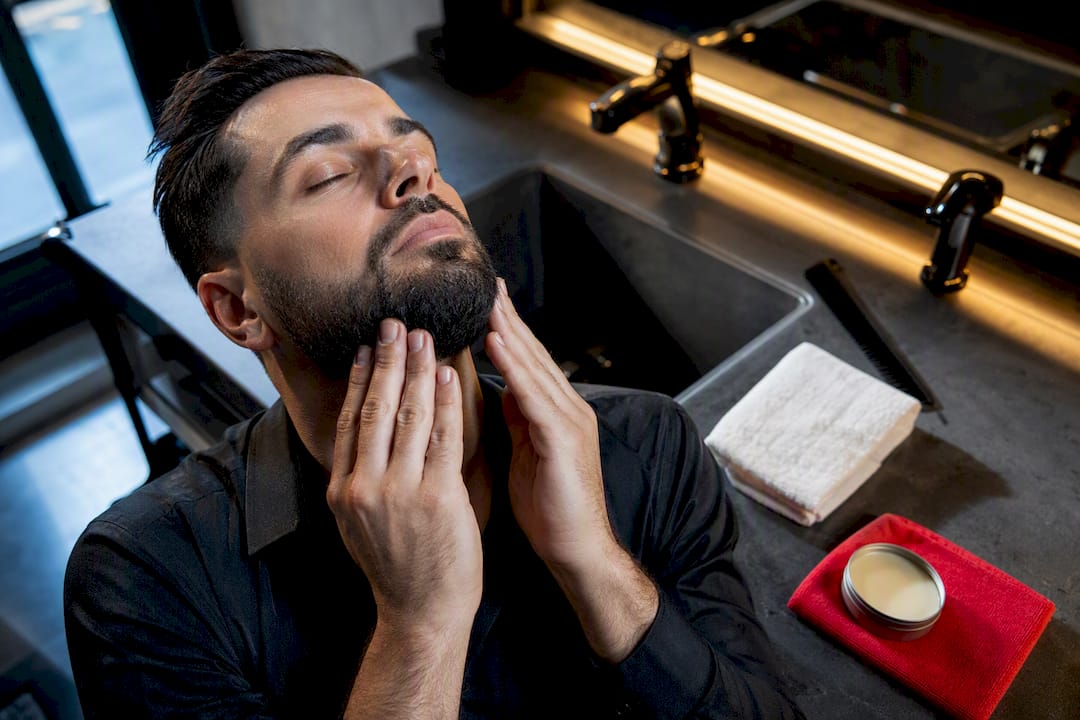
Beard oil hydrates the skin underneath your beard and softens the hair itself, which makes it the right call for short, itchy, or dry beards. Beard balm does that plus adds light hold and a protective coat, so it fits medium-to-long or unruly beards better. If you want both benefits, apply oil first to reach the skin, then balm to lock that moisture in and shape what’s left.
Oil is best for acne-prone or oily skin because it absorbs quickly and improves skin barrier function without leaving residue.
Balm provides longer-lasting conditioning and shape, making it suitable for medium to long, unruly, or coarse beards that need styling.
Short beards under an inch typically only need oil, while long, coarse, or curly beards benefit from both products layered, with oil first and balm for shaping.
Applying oil on damp, towel-dried hair after a shower and then using balm for styling creates an effective layering routine.
Patch-testing new products and limiting heavy balm use around sensitive skin areas can prevent irritation and breakouts.
Table of Contents
Beard Oil vs Balm: What’s Actually in Each One
The difference between beard oil and beard balm comes down to one word: viscosity. Oil is a thin liquid. Balm is a semi-solid. That single distinction explains almost everything else about how they perform on your face.
Beard oil is a blend of carrier oils, things like jojoba, argan, and sweet almond, sometimes cut with a few drops of essential oil for scent. Because it’s thin, it soaks into skin fast and travels down the hair shaft with minimal residue. That’s why oil is the product most barbers reach for when the actual problem is dry, flaky skin under the hair rather than the hair itself.
Beard balm starts with the same kind of carrier oils but adds butters (shea, mango, or cocoa) and beeswax. That combination turns liquid into something closer to a soft lip balm. Beeswax coats each hair strand rather than sinking into skin, which is exactly why balm gives you hold and oil doesn’t. The butters slow down absorption too, so balm releases conditioning over hours instead of minutes, according to Beardbrand’s breakdown of the two formulas.
A few practical takeaways from that difference in composition:
Oil absorbs in under a minute and leaves almost no visible residue.
Balm sits on the hair longer, which is what creates the light hold and shape.
Heavier ingredients like beeswax and cocoa butter don’t reach the skin the way oil does; they mostly work on the hair itself.
Some brands sell a related middle product, beard butter, which skips the wax for richer conditioning without much hold. Beard wax goes the other direction, built for serious styling like a handlebar mustache, according to 10Trim’s comparison of the category.
Neither formula is “better” in the abstract. They’re built to solve different problems, and that’s the whole reason this comparison keeps coming up.
Where Each Product Wins (and Where It Falls Short)
Oil’s biggest strength is what it does for skin care under a beard. Plant-based carrier oils genuinely improve skin barrier function and reduce dryness when used consistently, based on research on topical oil use published on NCBI. If your real complaint is itching or flaking rather than a wild beard, oil solves the actual problem instead of masking it.
The tradeoff: oil offers zero hold. It won’t tame a cowlick or keep flyaways in line, and if you apply too much, it can leave your beard looking slick rather than groomed.
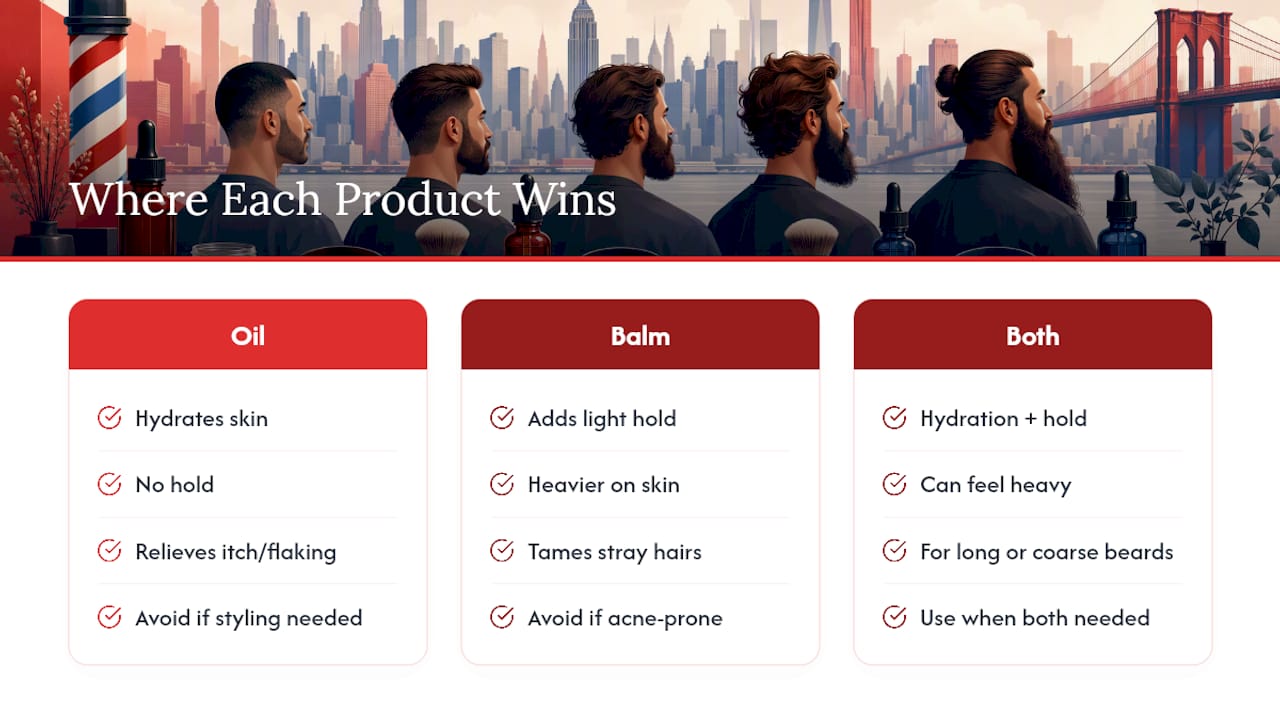
Balm flips that equation. Its beeswax and butter base tames unruly hairs, adds light shape, and keeps conditioning active longer because it releases slowly instead of absorbing all at once. That makes it the better pick for beards that need styling, not just softening.
The catch: balm sits heavier on the skin. If you already deal with oily skin or breakouts along the jawline, a thick daily balm can trap oil against the pores and make things worse, not better. That’s the one situation where reaching for “more product” actively backfires.
Quick gut check: if your main problem is itch and flaking, oil is doing the real work. If your problem is shape and stray hairs, balm is doing the real work. Using the wrong one for your actual complaint is the single most common mistake guys make with beard care.
Consumer comparison guides consistently land on the same split: oil for hydration, balm for taming and hold, and both together for beards that are long or coarse enough to need it, per 10Trim’s side-by-side review.
Which Product Fits Your Beard Length and Skin
Beard length changes the math more than almost anything else. A three-day stubble and a six-inch beard have completely different needs, and using the wrong product for your stage is why some guys feel like neither one “works.”
Stubble or short beard (under an inch): Oil alone is usually enough. There’s not enough hair length for balm to do anything useful, and a heavy product on short hair just looks greasy.
Medium beard: Use oil daily for conditioning, then add balm on days you actually want to shape it, before work, a date, an event.
Long, coarse, or curly beard: This is where the oil-then-balm combo earns its keep. Oil handles the skin and softens coarse strands; balm controls frizz and keeps the shape through the day.
Patchy or thin beard: Oil maximizes softness and shine, which makes thin patches look more intentional. A small amount of balm can add the illusion of thickness, but go light. Too much balm on thin hair clumps it visibly.
Oily or acne-prone skin: Lean on noncomedogenic oils like jojoba or grapeseed and limit balm use, since the heavier base is more likely to trap oil against skin. Patch-test anything new before working it in daily.
If you’re not sure which category you fall into, a look at how beard shaping works with different growth patterns can help you figure out whether your beard is even long enough for balm to matter yet.
How to Apply Beard Oil and Balm the Right Way
Most guys either use too much product or apply it in the wrong order. Here’s the sequence that actually works:
Apply oil to a towel-dried beard right after your shower, when pores are still slightly open and hair is damp enough to absorb the product instead of repelling it. Use a few drops for stubble, more for a medium beard, and enough to thoroughly coat longer beards.
Work the oil in with your fingers first, reaching down to the skin, not just coating the surface hair.
Scoop balm roughly dime-sized for a shorter beard, up to hazelnut-sized for longer growth, and rub it between your palms until it melts into a workable paste.
Apply balm from the skin outward, using it to shape and smooth rather than just piling it on top.
Comb through with a beard comb to distribute product evenly, then finish with a boar-bristle brush to smooth flyaways and add shine.
Layering oil before balm isn’t just a preference; it’s the order that lets moisture actually reach the skin before the wax and butter seal everything in, a sequence recommended across most practitioner and consumer guides, including Hims’s grooming breakdown.
Pro Tip: Clean your comb and brush weekly with a bit of dish soap. Leftover balm buildup on bristles transfers straight back into your beard every time you use them, which is how “clean” beards start looking dull by midweek.
Ingredients Worth Seeking Out (and the Ones to Watch)
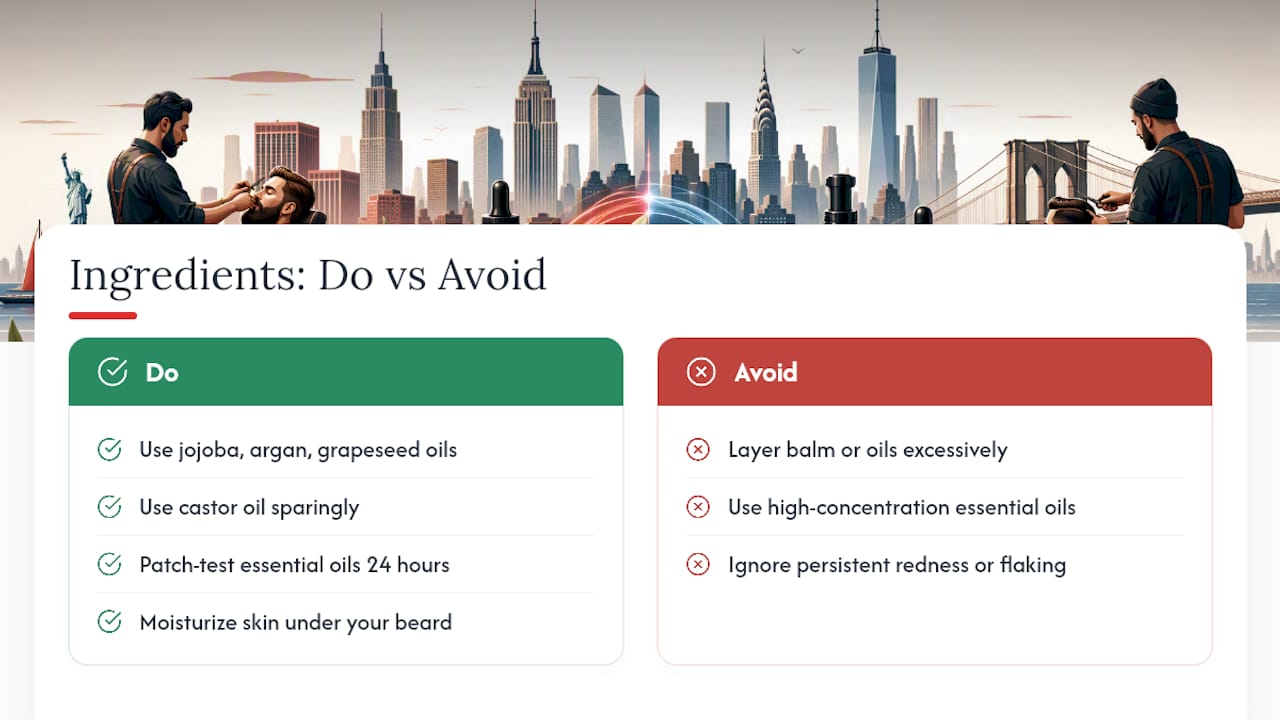
Jojoba, argan, and grapeseed oils are the safest bets for most skin types. They mimic natural skin oils closely enough to absorb without clogging pores, and dermatological research on plant oils backs their role in improving barrier function and cutting dryness. Castor oil shows up often too, mostly because it’s thick enough to add perceived fullness, though its viscosity means a little goes a long way.
Butters and beeswax build the hold and barrier function in balm, but they can trap excess oil against skin if you’re layering too much or too often. Essential oils, the scent-drivers in a lot of oils and balms, are the ingredient most likely to cause a reaction. Keep concentrations low and patch-test anything unfamiliar on your forearm for 24 hours before it touches your face.
The American Academy of Dermatology recommends moisturizing the skin under facial hair as a baseline habit, and flags that persistent redness, flaking, or dermatitis under a beard is a signal to see a dermatologist rather than push through it with more product.
What Barbers Actually Recommend Around a Trim
Manhattan Barbershop’s approach follows a simple pattern: oil daily, balm situationally. Oil goes on after every shower to keep skin and hair conditioned between visits. Balm comes out for styling days, before an interview, a date, or an event where shape matters more than usual.
The routine barbers use in the chair is straightforward: a small oil dose worked in first, combed through evenly, then a light touch of balm just to define the edges and shape. One detail most guys miss: keep balm light around the cheeks and neckline. A heavy hand there creates visible buildup that makes a beard look unkempt right before it’s due for a trim, not after.
Your Quick Beard Product Cheat Sheet
Short beard: oil only. Medium beard: oil daily, balm on styling days. Long or coarse beard: both, in that order, every time you condition.
Do | Don’t |
Patch-test new products for 24 hours | Layer multiple fragranced oils at once |
Apply oil to damp, towel-dried skin | Use heavy balm on beards under an inch long |
Start with small amounts and build up | Skip patch tests if you have sensitive skin |
Clean combs and brushes weekly | Ignore persistent redness or flaking |
When a Barber Visit Beats Another Trip to the Product Aisle
Products only fix so much. If your beard keeps growing in uneven, a fade line won’t hold shape, or you genuinely don’t know whether your hair type calls for oil, balm, or both, that’s a conversation for the chair, not another online order.
A trained barber reads your growth pattern and texture in person and matches product recommendations to what’s actually happening on your face, the same way a refined beard trim accounts for density and direction of growth. Think of professional shaping as the foundation your home routine builds on, not competition for it.
— Evgenii
Book a Beard Consultation With Manhattan Barbershop
Reading about oil versus balm gets you most of the way there, but a barber who can see your beard’s actual density, growth direction, and skin condition closes the gap that no article can. Our barbershop offers beard trims, shaping, and personalized product recommendations matched to your specific hair type, not a generic routine pulled from a bottle label.

A single appointment often clears up more confusion than weeks of trial and error with products bought off a shelf. Come in with whatever you’re currently using and describe the look you’re going for. Your barber will check the shape, the skin underneath, and tell you honestly whether you need more oil, a light balm, or a trim before either product will make a real difference. You can see current services on the beard trim page or book an appointment online directly.
Sources
Recommended
Comments