Curly Hair Fade: Men, Ask Your Barber for a Softer Mid Fade


Ask for a mid fade with a few inches left natural on top. It removes bulk at the sides while your curls keep their shape, and it grows out cleanly. Bring two or three photos that match your curl density, and use the scripts below in the chair.
TL;DR:
Ask the barber to cut curls dry or mostly air dry, avoid thinning shears, and account for shrinkage when setting the finished length.
Choose a low taper for looser waves and easier grow out; reserve high or skin fades for stronger contrast and more frequent touch ups.
Use conditioner and light curl cream on damp hair, then diffuse on low heat and wait until fully dry before fluffing.
Softer blends and lower fades grow out longer than sharp skin fades; preserve weight at the corners and add light layers to keep the shape balanced.
Table of Contents
1. Which fade styles work best with curls?
A fade strips width from the sides so the curls on top become the focus. The right height depends on your curl pattern, how often you want to visit, and how much contrast you like. A mid fade with 2–4 inches on top is the most reliable general choice, and it is our default recommendation too.
Mid fade with curly top: the reliable default. It sits halfway up the head, so it flatters most face shapes and leaves enough length above for curls to bounce.
Low taper or low fade: best for looser waves and longer grow-out. The cut stays close to the ear and neckline, so it reads as tidy rather than sharp.
High fade with curly top: high contrast and a bold silhouette. It needs more frequent touch-ups because the skin line shows growth fast.
Skin or short fades for tight coils: when you want very short sides and your coils are dense, going close makes the top look fuller by comparison.
Drop fade and tapered fringe: the fade curves down behind the ear, which suits a soft hairline and works well with a longer front.
Undercut vs fade: an undercut leaves a disconnected, abrupt line between sides and top. A fade blends the two, which is kinder to curls that spring outward as they grow.
Tighter coils can go shorter on top, while looser waves need extra length before the curl pattern shows. The current trend also favors softer blends and less contrast than the hard-line fades of the early 2020s, and that approach lengthens the time between cuts. If you want to see how fade types differ, our primer on what a fade haircut is covers the terminology.
2. How do you style a faded curly cut day to day?
Styling starts before you leave the chair. Masters in our field prefer cutting curls dry or when mostly air-dry, because a wet cut hides the curl’s real shape and springiness, which makes the fade less accurate. If you are curious about the dry technique, our guide to cutting curly hair with scissors explains it.
At home, moisture matters more than heavy product. A leave-in conditioner and a light curl cream control the swell from humidity better than thick pastes. Gentle drying helps too, and this guide on drying curls without frizz (in Danish) is a handy technique reference.
A quick routine:
Start with damp, not dripping, hair and work in a leave-in conditioner from root to tip.
Rake a small amount of curl cream through the top only, then scrunch upward.
Dry with a diffuser on low heat, since avoiding direct heat without a diffuser reduces frizz and preserves the pattern.
Finger-coil any loose sections, or use a curl sponge if your coils are very short.
Leave it alone until fully dry, then fluff gently with your fingers.
Pro Tip: Ask your barber to skip thinning shears on your curls, since they cut tiny pieces that stick out as frizz around the halo.
At night, pineappling (gathering the curls loosely on top of the head) is a standard barber recommendation for keeping definition between cuts.

3. What should you say to your barber for a curly fade?
Precision in the chair saves you from a cut that surprises you. Say the fade height, the guard number, how much to leave on top, and that you want it cut dry. For more phrasing ideas, see our short scripts on how to describe a fade to your barber, and for wording around tapers, this explainer on asking for a low taper.
Mid fade: “Mid fade, down to a short guard at the bottom, leave the top natural at a few inches. Please cut it dry.”
Low fade: “Low fade starting around the ear, number 2 guard, keep the top long and don’t thin it.”
High fade: “High fade with a short guard at the bottom, keep the top natural and blend it softly into the curls.”
Drop fade: “Drop fade curving behind the ear, number 2 at the bottom, leave the top natural.”
Skin fade: “Skin fade, soft blend, short top that shows my coil pattern.”
Softer blend: “Use scissor-over-comb for the transition so the line isn’t hard.”
Shrinkage: “Cut curl by curl, and remember my hair shrinks when it dries.”
Bring photos that match your curl density and shape, not just the length. A picture of looser waves will not help if you have tight coils.
4. How often do you need touch-ups, and how do you handle grow-out?
Fade height sets your upkeep schedule. The lower the fade, the longer it holds, and softer contrast stretches the cycle further. A soft blend lasts longer than a razor-sharp skin fade.
Skin or high fade: plan on a visit regularly to keep the line crisp.
Mid fade: regular visits are typical.
Low fade or taper: plan a visit when it starts to look grown out.
Shrinkage rule: curls look much shorter when dry, so tell your barber the length you want at its natural dry state, not stretched.
Grow-out fixes: leave weight at the corners and ask for a little layering so the shape stays balanced as it grows.
Between visits: keep curls moisturized, and sleep on a satin pillowcase or use a loose pineapple to cut down on frizz.
We have more on the longer cycle in our drop fade upkeep guide.
5. What does a barber actually think about fades for curly hair?
Men who walk in asking for a hard fade may prefer a softer one. Curls are unpredictable by nature, and a razor-sharp contrast shows every millimeter of growth. A gradual blend gives the hair room to breathe, so the cut still looks intentional later.

My preference is also to work dry. You cannot judge a curl’s real length when it is stretched by water, and a fade built on a stretched curl springs up unevenly. Before I start, I confirm three things with you: how long the top should sit once dry, how much shrinkage to plan for, and how much contrast you want between top and sides. If you bring a photo of someone with looser hair than yours, I will tell you plainly what to adjust. A fade that suits your actual curl is better than a perfect copy of someone else’s.
6. Where can you book a curly fade at Manhattan Barbershop?
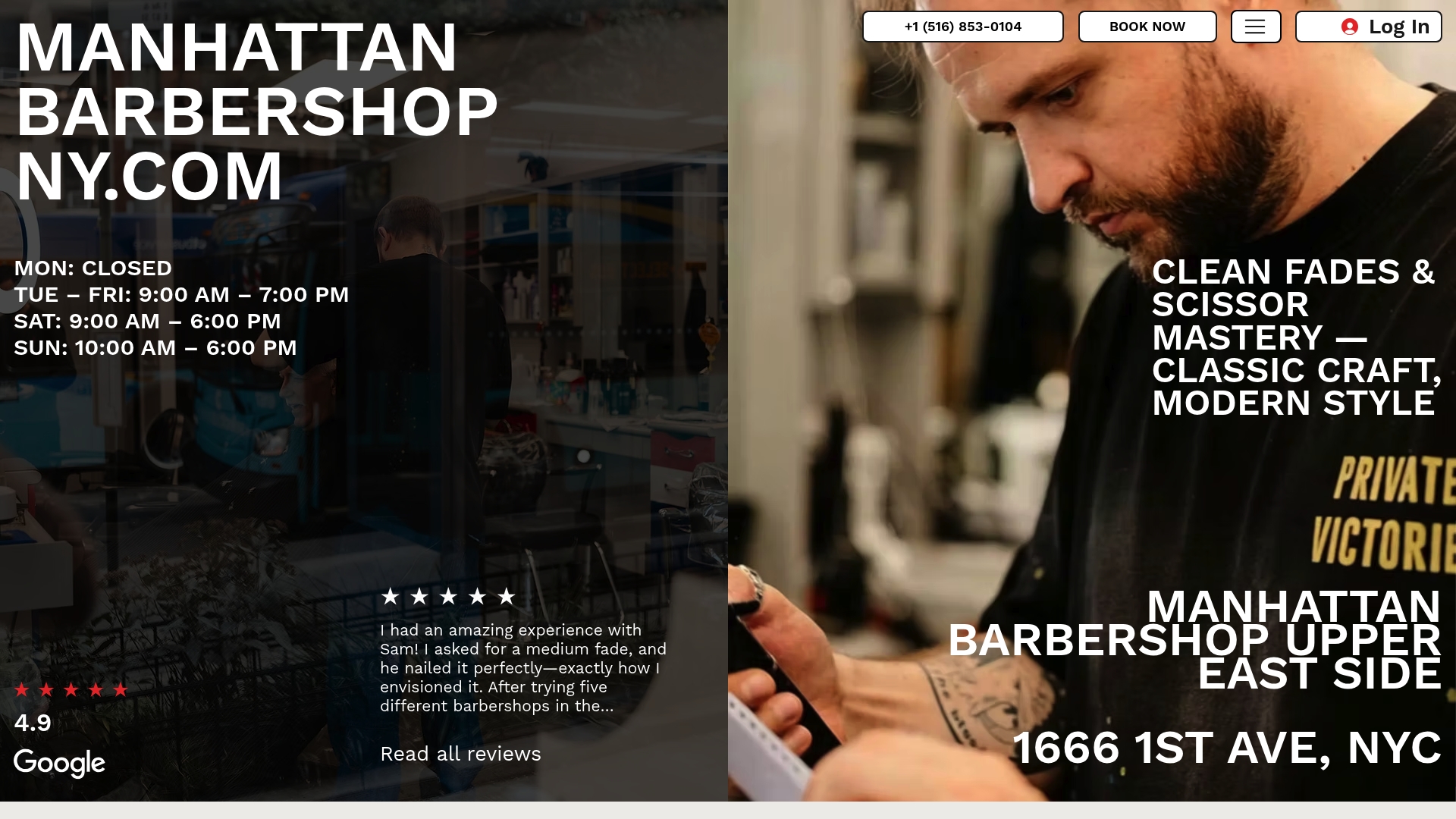
We cut curls dry and shape them to hold between visits. Pick the service that fits your cut and tell us your preferred fade height when you sit down.
Regular Haircut ($42): our standard fade with a curly top, built around dry shaping.
High-Top Fade ($42): for a high-contrast curly look.
Beard design ($25): short, medium or long, to match the fade.
Bring your photos, say “dry shaping,” and name the fade height you want. Book online, or stop by, since walk-ins are welcome.
FAQ
Which fade is best for curly hair?
A mid fade with a few inches left on top is the most reliable choice for most curl types. Tighter coils can go shorter, while looser waves need more length before the curl shows.
Are fades good for curly hair?
Yes. A fade removes width at the sides, and your curls add texture on top, so the two work together. Softer blends also keep the cut looking clean longer between visits.
What is a taper vs fade?
A taper gradually shortens the hair at the sides and neckline but usually leaves some length, while a fade goes shorter, often down to skin. Tapers look more subtle, and fades give a stronger contrast.
Are fades out of style in 2026?
No, but the look has shifted toward softer blends and less contrast than the hard-line fades of the early 2020s. That change also lengthens the maintenance cycle.
Sources
Recommended
Comments