What Is a Fade Haircut? Styles, Types, and Tips

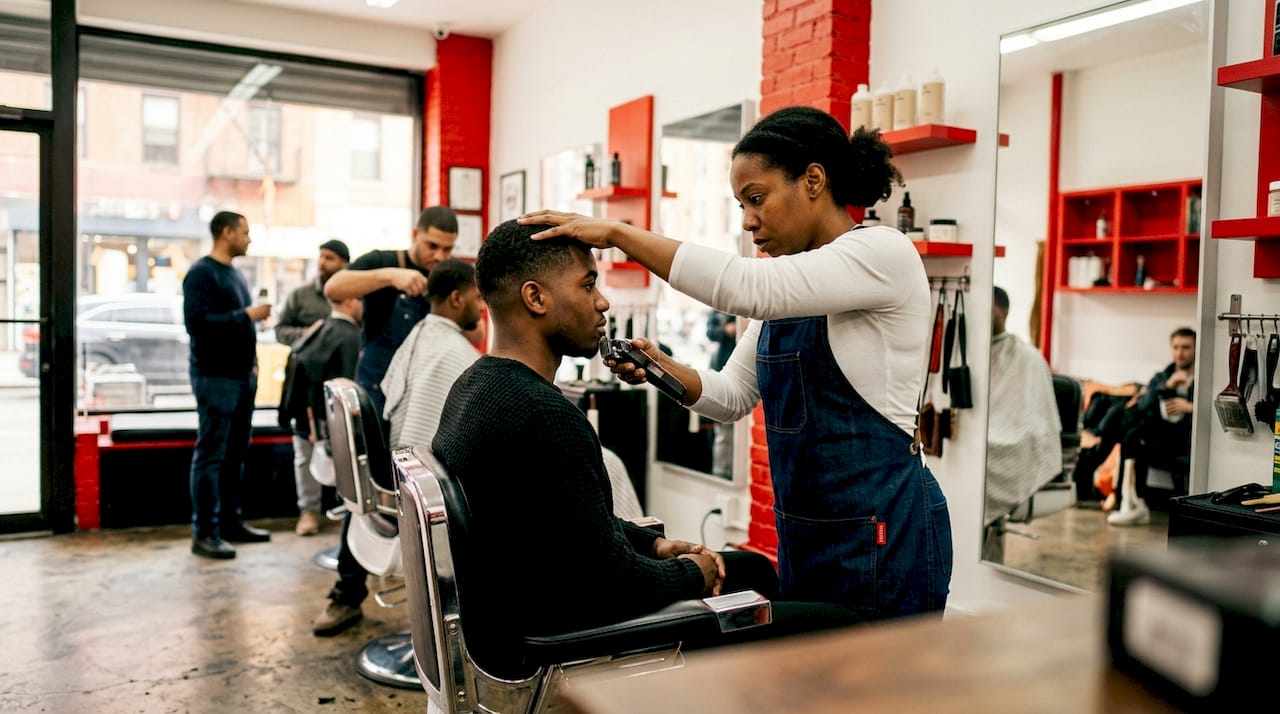
A fade haircut is defined by a gradual, seamless transition from very short or skin-level hair near the neckline up to longer lengths on top, creating a clean gradient effect that frames the face. This technique is the foundation of modern barbering, and understanding it helps you make smarter choices about your own style. Whether you’re considering your first fade or trying to figure out which variation suits your face shape, this guide covers the full picture: how fades are cut, the main types, how they compare to similar styles, and how to keep them looking sharp between appointments.
What is a fade haircut, and how does it work?
A fade haircut is a barbering technique where hair length decreases progressively from the top of the head down to the neckline, typically ending at or near the skin. The word “fade” refers to the way the hair appears to dissolve into the scalp rather than stopping abruptly. This is what separates a fade from a basic clipper cut, where the length simply changes in visible, blocky steps.
The result is a polished, structured look that works across hair textures, face shapes, and personal styles. Fade haircuts have become one of the most requested cuts in barbershops across the country because they add definition to any hairstyle on top, whether that’s a crop, a quiff, natural curls, or a high-top. They also have a practical benefit: fades visually thicken hair on top by removing the dark bulk from the sides, making them a smart choice for men experiencing early-stage thinning.
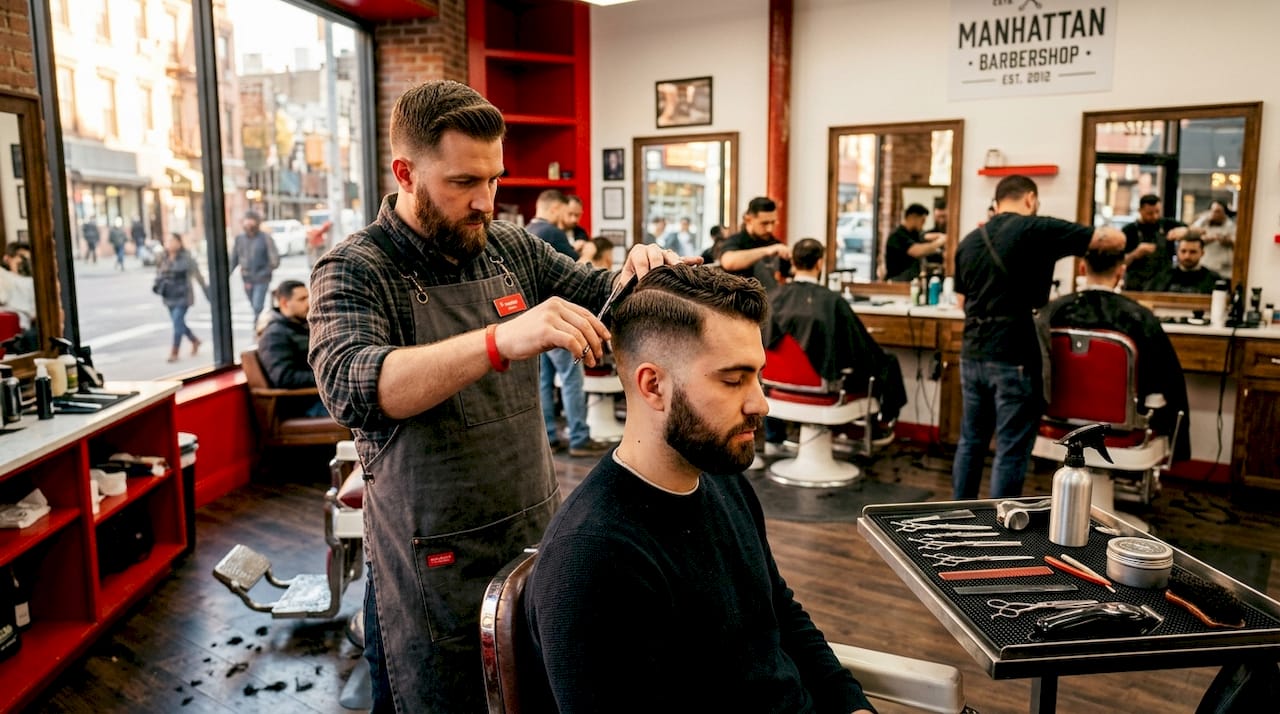
How barbers actually create a fade
The technical process behind a fade is more precise than most people realize. A barber starts with clipper guards, which are numbered attachments that control how much hair the blade removes. Guard sizes typically range from #0 (nearly skin level) to #8 (about one inch of length). The barber works upward from the neckline, switching between guard sizes to create a gradual increase in length.
What separates a skilled fade from a mediocre one is a technique called lever play. The clipper has a small lever on the side that adjusts the blade’s cutting position between guard sizes. By opening and closing this lever mid-stroke, a barber creates intermediate lengths that don’t correspond to any single guard number. This is how invisible transitions between lengths are achieved. Without lever play, the fade shows visible “steps” where one guard length ends and another begins.
The barber also uses a comb and scissors to blend the top section into the faded sides, making sure the overall shape flows naturally. This blending stage is where the cut either comes together or falls apart. A well-executed fade has no detectable line where one length stops and another begins.
Pro Tip: When booking a fade appointment, bring a photo of the exact style you want. Describing a “low fade” verbally can mean different things to different barbers. A photo removes all ambiguity and helps your barber deliver exactly what you have in mind.
What are the main types of fade haircuts?
The height of the fade is one of the most powerful tools for altering how your face looks. Placing the fade higher makes the face appear longer and sharper. Placing it lower creates a softer, more natural frame. Here are the main fade types you’ll encounter:
Low fade: Starts just above the sideburns and ear line. It creates a subtle transition that keeps most of the hair on the sides intact. Low fades suit almost every face shape and are the easiest to maintain because the contrast between the faded area and the longer hair above it is minimal.
Mid fade: Starts around the temple area, roughly halfway up the sides of the head. It balances sharpness with versatility and works well with most hairstyles on top.
High fade: Starts near the upper sides of the head, close to the crown. It creates a bold, high-contrast look that draws attention to the hair on top. High fades work especially well with styles like pompadours, high-tops, and textured crops.
Skin fade (also called a bald fade): The hair at the base is shaved completely to the scalp, with zero length at the bottom. Skin fades leave no hair at the base, creating the sharpest possible contrast. They require the most frequent maintenance.
Shadow fade: A softer alternative to the skin fade. The hair at the base is left at a very short length (around a #0.5 or #1 guard) rather than shaved to the skin. The result is a subtle shadow effect that looks clean without the starkness of a full skin fade.
Fade type | Starting point | Contrast level | Best suited for |
Low fade | Just above the ear | Subtle | Most face shapes, low-maintenance lifestyles |
Mid fade | Temple area | Moderate | Versatile, works with most top styles |
High fade | Upper sides near crown | Bold | Oval and square faces, statement styles |
Skin fade | Anywhere, down to scalp | Maximum | Sharp, defined looks, frequent touch-ups |
Shadow fade | Anywhere, short base | Soft | Those wanting a clean look without full skin exposure |
Different fade heights create distinct visual impacts and carry different maintenance demands, so your lifestyle should factor into which type you choose.

Fade vs. taper vs. undercut: what’s the difference?
These three cuts are often confused, and the confusion is understandable because they all involve shorter sides and longer hair on top. The differences come down to how the transition is made and how far it goes.
A taper blends hair to a shorter length as it moves down toward the neckline, but it does not typically reach the skin. The transition is gradual but stops short of the scalp. A fade, by contrast, blends to skin or near-skin smoothly, with a more dramatic reduction in length. The taper is the more conservative option. It suits formal environments and requires less frequent touch-ups because the contrast between lengths is lower.
An undercut is a different concept entirely. It keeps a sharp, visible separation between the longer hair on top and the very short or shaved sides. There is no blending. The contrast is intentional and abrupt. Undercuts make a strong visual statement but can look unpolished if the top hair isn’t styled deliberately.
Style | Transition type | Ends at skin? | Maintenance frequency |
Fade | Gradual, blended | Yes (skin or near-skin) | Every 1 to 3 weeks |
Taper | Gradual, blended | No | Every 3 to 4 weeks |
Undercut | Sharp, no blending | Often yes | Every 3 to 4 weeks |
The practical takeaway: if you want a clean, modern look that works in both casual and professional settings, a fade is the most flexible choice. If you want lower maintenance and a subtler look, go with a taper. If you want a bold, fashion-forward style and you’re willing to style the top every day, an undercut delivers.
How to maintain a fade between appointments
Fades are high-reward but also high-commitment. Most people schedule fade appointments every 2 to 3 weeks to keep the blend looking sharp. Skin fades and high-contrast styles may need a touch-up every 1 to 2 weeks because hair regrowth becomes visible faster at the base.
Here’s a practical maintenance routine to extend the life of your fade:
Keep the edges sharp. Use a small trimmer to clean up the hairline around the ears and neck between appointments. Do not attempt to cut into the faded area itself. Cutting into the blend disrupts the gradient and creates the visible steps that a good fade works to eliminate.
Wash and condition regularly. Healthy hair holds its shape better and looks cleaner. Dry, brittle hair makes even a fresh cut look dull within days.
Use the right product for your hair type. For textured or curly hair, a light cream or curl-defining product keeps the top section defined without weighing it down. For straight hair, a matte clay or pomade adds structure without a greasy finish. Avoid heavy waxes on fine hair because they flatten the volume that a fade is designed to create.
Schedule your next appointment before you leave the barbershop. Higher fades lose their sharp contrast quickly as new growth emerges, and waiting until the fade looks grown out means you’re already behind. Booking ahead keeps you on a consistent schedule.
Protect your hairline at night. If you have a skin fade or sharp line-up, sleeping on a satin pillowcase reduces friction and keeps the edges from looking rough in the morning.
Pro Tip: Maintaining edges with a trimmer is helpful between visits, but cutting into the fade itself risks ruining the blend. Leave the blending work to your barber and focus home grooming on the hairline only.
Maintenance frequency is part of the style choice, not an afterthought. A skin fade that you can only refresh every four weeks will look sharp for one week and grown out for three. Matching the fade type to your actual schedule is how you stay looking intentional rather than neglected.
Key takeaways
A fade haircut is the most versatile men’s cut available because the height, contrast level, and blending technique can be adjusted to suit any face shape, hair type, or lifestyle.
Point | Details |
Core definition | A fade blends hair from skin or near-skin at the base to longer lengths on top with no visible steps. |
Fade height matters | Low fades are subtle and low-maintenance; high fades are bold and require more frequent touch-ups. |
Fade vs. taper vs. undercut | Fades blend to skin; tapers stop short of skin; undercuts use sharp, unblended separation. |
Maintenance is non-negotiable | Most fades need a refresh every 2 to 3 weeks; skin fades may need every 1 to 2 weeks. |
Home care has limits | Trim edges at home but never cut into the blended area. Leave blending to a professional barber. |
Why I think most people choose the wrong fade for their lifestyle
I’ve seen it happen dozens of times. Someone comes in asking for a skin fade because they saw it on a celebrity or in a photo, and it looks incredible on day one. By week two, the regrowth has blurred the contrast, and the cut looks more like an unfinished project than a deliberate style. The problem isn’t the fade. The problem is the mismatch between the style and the person’s actual grooming schedule.
My honest recommendation: start with a mid fade or a low fade on your first visit. These give you the clean, structured look that makes fades worth getting, without the aggressive maintenance demands of a skin fade or a high-contrast high fade. Once you know how your hair grows and how often you’re realistically going to sit in the chair, you can push the contrast higher if you want to.
The other thing most articles won’t tell you is how much the conversation with your barber matters. Knowing how to describe your fade style before you sit down is the single biggest factor in getting a cut you’re happy with. A barber who understands your face shape, hair texture, and lifestyle will always deliver a better result than one who’s just executing a generic request. That relationship builds over time, which is why a consistent barber is worth more than the closest or cheapest option available.
— Evgenii
Get a precision fade at Manhattanbarbershopny

Manhattanbarbershopny specializes in clean, precise fades tailored to your hair type and face shape. Eugene Solod and the team take the time to understand what you’re looking for before a single clipper touches your head, whether that’s a subtle low fade, a sharp skin fade, or a bold high-top fade with maximum contrast. Every cut is designed to hold its shape for weeks, not days. If you’re ready to stop guessing and start wearing a fade that actually fits your style and schedule, book your appointment online and let the craft speak for itself.
FAQ
What is a fade haircut in simple terms?
A fade haircut is a style where hair gradually gets shorter from the top of the head down to the neckline, blending smoothly into the skin or near-skin with no visible lines or steps.
What is a low fade vs. a high fade?
A low fade starts just above the ear and creates a subtle transition, while a high fade starts near the upper sides of the head and produces a bold, high-contrast look that requires more frequent maintenance.
How often do you need to get a fade touched up?
Most fade haircuts need a refresh every 2 to 3 weeks. Skin fades and high-contrast styles may require a touch-up every 1 to 2 weeks because regrowth becomes visible faster.
What is the difference between a fade and a taper?
A fade blends hair all the way down to the skin or near-skin level. A taper blends to a shorter length but stops short of the scalp, making it a subtler, lower-maintenance option.
Can you maintain a fade at home?
You can trim the hairline and edges at home with a small trimmer, but you should never cut into the blended area of the fade itself. Cutting into the blend disrupts the gradient and requires a professional to fix.
Recommended
Comments