Save Five Barber Visits a Year: Low vs Mid Fade for Manhattan Men
- Evgenii Solod
- 2 days ago
- 11 min read

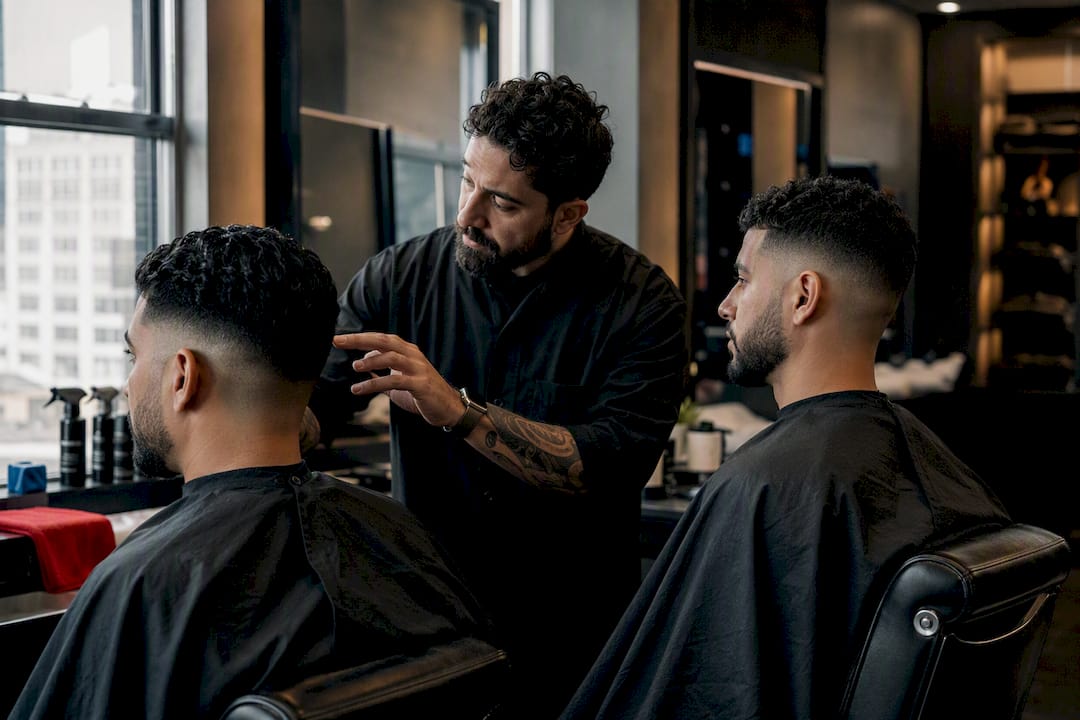
Most guys should ask their barber for a mid fade. It splits the difference between a bold, high-contrast finish and a haircut you don’t need to babysit every two weeks, which makes it the safest default when you’re not sure what you want. Choose low instead if you’ve got a long face, thinning temples, or you just don’t want to sit in a barber chair more than once a month. The real trade-off boils down to this: more contrast means more upkeep. Manhattan Barbershop’s barbers walk clients through this exact decision daily.
TL;DR:
A mid fade requires more frequent touch-ups every 2 to 3 weeks, while a low fade can last up to 4 weeks before noticeable growth.
A low fade is best suited for longer, textured hair and helps soften long or square faces by hiding sharp angles and thinning temples.
A mid fade benefits round, heart, or diamond-shaped faces by adding contrast, but is less suitable for thinning temples or if longer intervals between barber visits are needed.
Choosing between low or mid fade should prioritize your face shape, hairline, and ability to maintain regular visits, with thinning temples often dictating a lower fade.
Clear communication with your barber, including specific start points and reference photos, ensures a fade that maintains its shape between visits.
Table of Contents
Low Fade Vs Mid Fade: The Quick Visual Snapshot
The whole low vs mid fade debate comes down to one measurement: where the clippers start working. A low fade begins just above the ear and stays below the temple, so from the front it barely registers. A mid fade starts higher, around temple or eye level, which puts the fading line right where people actually look when they talk to you.
Low fade:
Subtle transition, reads as clean rather than “faded” from a few feet away
Grows out slowly, so you can stretch appointments longer
Mid fade:
Sharper contrast between short sides and longer top, more visible shape
Needs more frequent trims to keep the line crisp
If you’re torn, start lower. A barber can always raise the fade line on your next visit, but there’s no undoing a fade that got taken too high the first time.
What Makes a Low Fade Different?
A low fade starts just above the ear, tucked below the temple, with a transition zone that runs about 1 to 1.5 inches. That’s a narrow window of blending, which is exactly why it reads as understated instead of dramatic. From the front, you mostly see hair. From the side, there’s a quiet fade tucked below where most people’s eyes land.
That narrow, low placement does something useful visually: it doesn’t draw a hard line across your temple, so it doesn’t shorten your face the way a higher fade can. That’s why a low fade tends to flatter long, oblong, and square faces. It softens sharp jaw angles instead of emphasizing them, and it doesn’t add width where a long face doesn’t need it.
Guys with thinning temples benefit here too. A higher fade puts a spotlight exactly where hair is retreating. A low fade keeps that zone in shadow.
Grow-out window: roughly 3 to 4 weeks, sometimes longer
Hides drift because the transition sits below eye level, inside the natural shadow of the ear
Pairs well with beard blending, since the fade line can connect smoothly into a beard fade without competing for attention
The forgiving grow-out is the real selling point. Because the blend line sits low and in shadow, you don’t notice regrowth the way you would with a fade started higher up.
Top length matters here too. Low fades pair naturally with textured crops, medium-length quiffs, and slicked-back styles where the top does the visual work and the fade just cleans up the sides.
Pro Tip: Tell your barber “low fade, start it below the temple, keep it soft” instead of just “low fade.” Barbers hear that word applied loosely, and specifying the start point removes the guesswork.
If your hair is fine or thinning up top, a low fade with a slightly longer top length balances things out better than a shorter crop would.
What Makes a Mid Fade Different?
A mid fade starts at temple or eye level, with a transition zone of roughly 1 to 2 inches that’s genuinely visible from the front, not just the side. That’s the whole appeal. It gives your haircut a defined shape without going full high-and-tight.
Because the fade line sits at eye level, it redistributes visual weight upward and outward. Round faces benefit the most: a mid fade tightens the appearance of wide cheeks by adding visible structure at the sides, and heart-shaped and diamond faces get a similar benefit since the higher contrast balances a narrower jaw or chin. Oval faces, which look good in almost anything, wear mid fades just as easily.
The catch is upkeep. A mid fade needs touch-ups roughly every 2 to 3 weeks to stay sharp. Because the transition line sits higher, above the ear’s natural shadow, regrowth becomes visible faster. What barbers call “drift” (the fade line blurring as new growth fills in) shows up here in about half the time it takes on a low fade.
Grow-out window: 2 to 3 weeks before the line noticeably softens
Best paired with a defined top style: textured quiff, side part, or a short crop that contrasts against the fade
Not the best pick if your temples are already thinning, since the higher start point highlights that area rather than hiding it
Barbers commonly call the mid fade the “workhorse” fade because it works across nearly every hair type and face shape without extreme upkeep demands, which is part of why it’s the default recommendation for first-time fade clients.
Pro Tip: Ask for “mid fade, temple height, soft blend” rather than just “mid fade.” That single phrase tells your barber exactly where to start and how sharp to make the line.
Low or Mid Fade: How Do You Decide?
Face shape gets you most of the way there. Round faces do better with a mid fade because the added contrast counters the width. Long or oblong faces should stick with low, since a higher fade line adds visual height you don’t need. Square and oval faces can go either way, and the tiebreaker usually comes down to top length: shorter tops look sharper with mid, longer tops sit better with low.
Your hairline matters just as much as your face shape. If your temples are thinning or receding, skip the mid fade. It puts the fade line directly on top of the area you’re trying to downplay.
Then there’s the calendar question, which most guys underrate. Answer these three in order:
Can you realistically get to a barber every 2 to 3 weeks? If not, mid fade will look ragged before your next appointment.
Is your face shape round, heart, or diamond? If yes, mid fade flatters you more than low will.
Are your temples thinning? If yes, choose low regardless of what your face shape suggests, since hiding that area matters more than the contrast trade-off.
If your answers point in different directions, weight the hairline question the heaviest. A flattering fade that highlights a receding temple isn’t actually flattering.
How Do You Style and Maintain a Fade?
Daily styling depends on what’s on top, not what’s happening at the fade line. A textured crop needs a matte paste worked through damp hair for definition without shine. A quiff wants a stronger hold cream applied at the root for lift. A slicked-back style calls for a light pomade that keeps movement without looking wet all day.
Maintenance schedules split cleanly by fade type. Low fades hold up for 3 to 4 weeks; mid fades need attention every 2 to 3 weeks before the line starts to blur into regrowth.
Low fade: budget for roughly 12 to 13 cuts a year if you stretch to 4 weeks
Mid fade: budget closer to 17 to 18 cuts a year at a 3 week cadence
Small at-home touch-ups (trimming stray neck hair, cleaning up the hairline) can stretch either schedule by a few days, but full fade refreshes belong in the barber’s chair
That gap, roughly five extra visits a year for a mid fade over a low one, is worth factoring in before you commit, especially if your schedule or budget is tight.
What Do You Say to Your Barber to Get It Right?
Vague requests get vague results. Instead of “give me a fade,” name the start point, the contrast style, and the blend type. Say “low fade starting below the temple” or “mid fade at eye level,” then specify “skin fade” if you want it faded to bare scalp, or “shadow fade” if you want a hint of hair left at the bottom.
Guard sequences help your barber translate your words into clippers. A generic low fade might run 0 or skin at the bottom, stepping through guards 1, 2, and 3 before blending into scissor work on top. A mid fade often starts a guard higher and compresses that same progression into a shorter, higher zone.
Bring two photos, front and side, so your barber sees the fade height and how it should look when you turn your head.
Point in the mirror at the exact spot you want the fade to start, rather than describing it in words alone.
If it comes out wrong, say so before you leave the chair. “Can we bring this down half an inch” is a normal, easy request, and any barber worth returning to will make the adjustment.
If your beard connects to your haircut, mention that upfront too, since the beard fade needs to match the same start point and blend style as the hair fade.
What Makes Manhattan Barbershop’s Approach Different?
Getting a low vs mid fade decision right takes more than clipper skill. It takes a barber who actually looks at your hairline, face shape, and how often you can realistically come back before picking a start point.
That’s the approach behind clean fades as a specialty rather than an afterthought, and it’s why clients come back specifically for fade work instead of treating it as a generic haircut add-on. In consultation, our barbers ask about your schedule before they ask about style preference, because a fade that looks perfect on day one and ragged by week two isn’t actually the right fade for you.
If you’re still torn between low and mid, that’s exactly the kind of question worth bringing into a consultation rather than guessing at home.
Where Did Low and Mid Fades Come From?
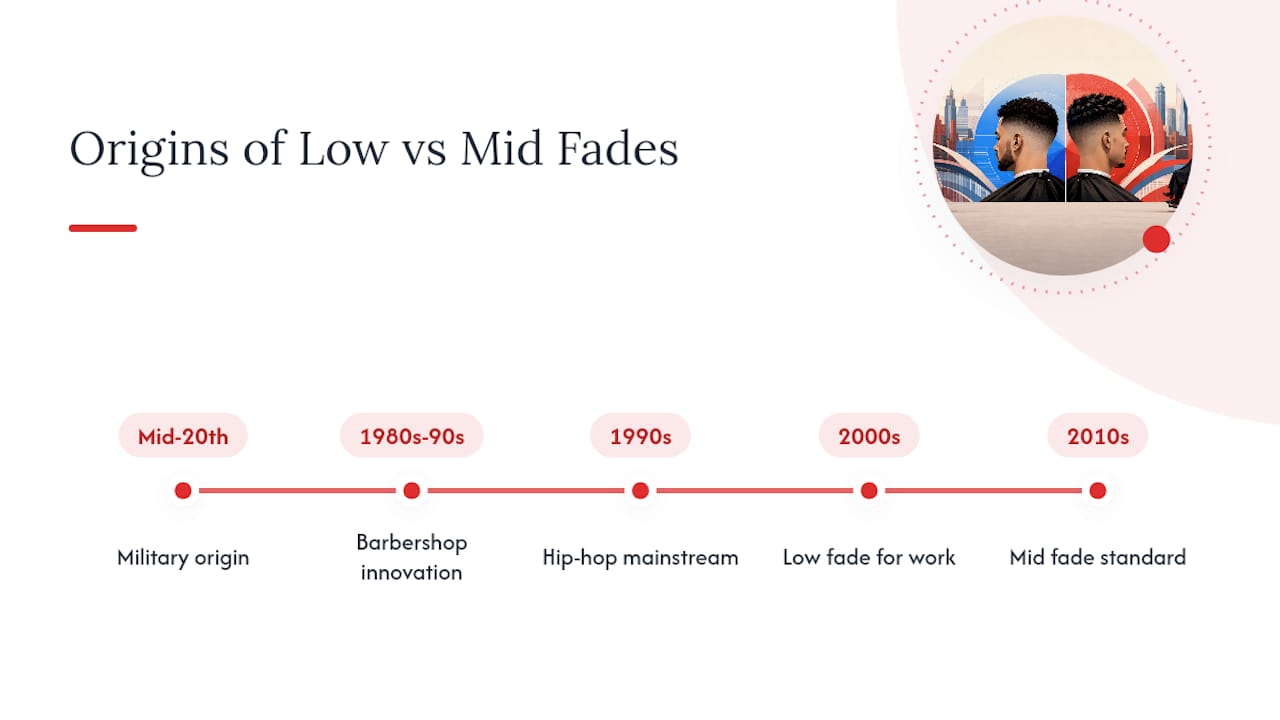
Fade haircuts trace back to military barbering in the mid-20th century, where short, high-contrast cuts were practical for uniformity and hygiene rather than style. The “high and tight” military fade was the ancestor of nearly every fade variation that followed.
The low and mid fade as separate categories emerged later, largely through Black barbershop culture in the 1980s and 1990s, where precision fading became an art form rather than a simple buzz cut. Barbers began distinguishing fade height as a deliberate style choice: a low fade for a subtler, more conservative look, a higher fade for sharper, more graphic contrast.
Hip hop culture through the 1990s and 2000s pushed higher, sharper fades into mainstream visibility, while the low fade stayed the go-to for workplaces and more traditional settings. That split, sharp and visible versus subtle and low-maintenance, is essentially the same choice men face today, just with better vocabulary to describe it.
The mid fade’s rise as the “default” recommendation is a more recent shift. As barbershops standardized fade terminology and men became more comfortable discussing haircut specifics with barbers instead of just pointing at guard numbers, the mid fade emerged as the compromise position: enough contrast to look intentional, not so much that it demands weekly upkeep. It’s less a trend and more a settling point after decades of experimentation with fade height.
What Are the Modern Variations on Low and Mid Fades?
Neither fade stays static. A drop fade curves the line downward behind the ear rather than staying straight, working well with both low and mid start points and adding a slightly more contemporary shape. A burst fade circles around the ear instead of running in a straight line across the head, which pairs especially well with a low start since it keeps the curve subtle.
Skin fades, taken down to bare scalp at the bottom, work as an intensifier on either style; a low skin fade still reads understated, while a mid skin fade pushes contrast higher. Shadow fades soften that same idea, leaving a light dusting of hair at the bottom instead of bare skin, which suits guys who want the shape without the stark line.
Textured tops have changed how both fades get worn day to day. A few years ago, fades typically paired with slicked, product-heavy tops. Now, textured crops and messy quiffs are just as common, letting the fade do quiet structural work while the top carries personality. Curly and coily hair types have also pushed barbers to adapt blend techniques, since tighter curl patterns fade differently than straight or wavy hair and need adjusted guard sequences to avoid a choppy transition.
What Are the Downsides of Low and Mid Fades?
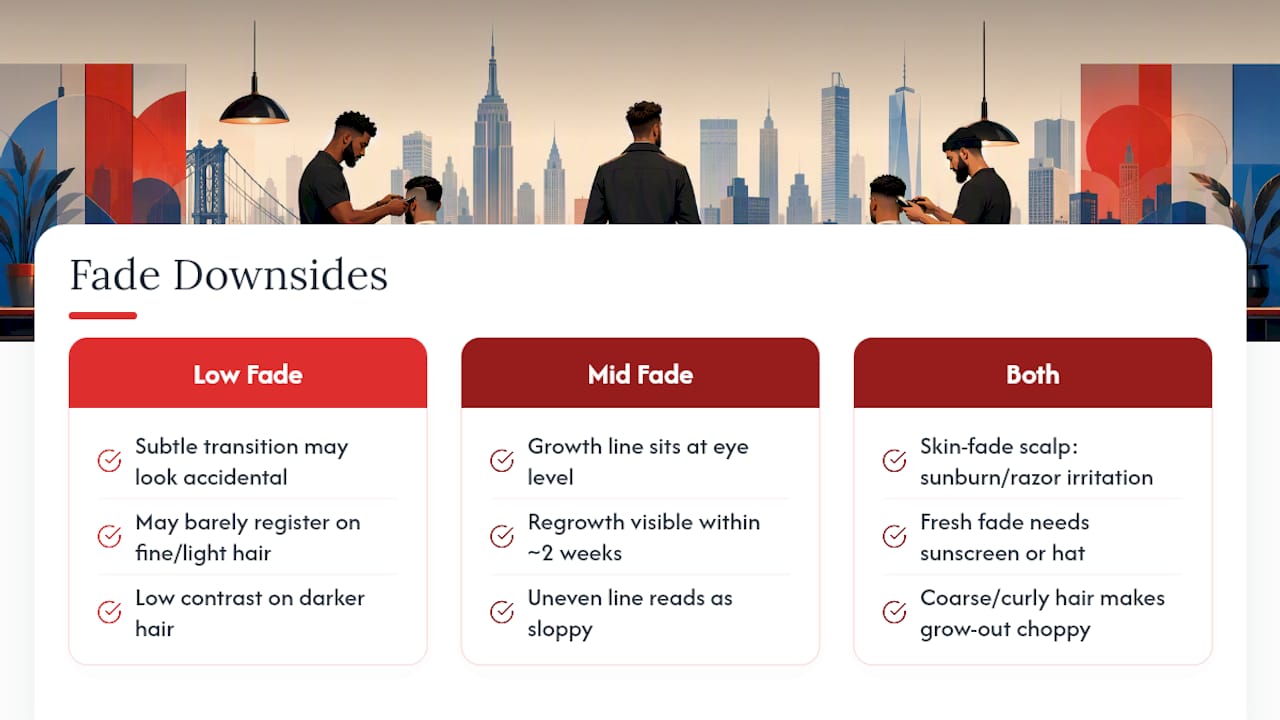
Both styles come with trade-offs beyond just maintenance frequency. Growth lines are the biggest complaint with mid fades specifically: because the transition sits at eye level, regrowth becomes visible fast, and an uneven line reads as sloppy rather than intentional after about two weeks.
Scalp exposure is a real consideration for skin fades on either style, particularly for guys with sensitive skin or a history of scalp irritation. A freshly shaved fade line can be more prone to sunburn or razor irritation in the days right after a cut, so sunscreen or a hat matters more than most guys expect in the first week.
Low fades have their own quieter downside: because the transition is subtle, a poorly executed one can look like an accident rather than a deliberate style, especially on darker hair where contrast is already low. Guys with very fine or light hair sometimes find low fades barely register at all, which defeats the purpose of getting one.
Curl pattern adds complexity to both. Coarser or curlier hair can make the fade line look choppier as it grows out, since curls don’t lie flat the way straight hair does, which shortens the effective grow-out window regardless of which fade you pick.
Is the Mid Fade Really the Safer Choice?
Most advice on this topic treats low and mid fades as a style preference, like choosing a shirt color. That undersells it. The real decision driver isn’t taste, it’s your calendar and your hairline, and most guides bury that fact under face-shape charts.
Here’s what the research actually supports: a mid fade is the better default only if you can commit to the 2 to 3 week maintenance rhythm it demands. If you can’t, a mid fade that’s grown out two weeks past its prime looks worse than a low fade that’s aged gracefully for a month. Conventional wisdom oversells contrast and undersells commitment.
Thinning temples should override face shape almost every time. A round face might technically flatter from a mid fade, but if the temples are receding, that recommendation backfires. Prioritize your hairline first, your face shape second, and your styling preferences last. That order gets ignored constantly, and it’s the single biggest source of buyer’s remorse in fade decisions.
If you walk away from this with one thing: ask yourself how often you’ll actually show up to a barber chair before you ask what looks best in a photo.
— Evgenii
Ready to Book Your Fade at Manhattan Barbershop?
Whichever way you lean on low vs mid fade, the execution matters more than the decision itself. A precise start point, a clean blend, and a barber who asks about your hairline before touching a clipper make the difference between a fade you love for a month and one you’re already annoyed by after two weeks.

Manhattan Barbershop’s barbers specialize in exactly this kind of consultation, walking through face shape, hairline, and your realistic schedule before picking a start point, so you leave with a fade built to hold its shape between visits rather than one that looks great for exactly one day. If you’re deciding between a standard regular haircut with a fade or want to test the shop out first, you can also check availability for a free model haircut. Walk-ins are welcome, but if you want a specific time slot with a barber who knows fade work, book online and skip the wait.
Sources
Recommended
Comments