20 Barber Ready Men's Medium Length Hairstyles for 2026

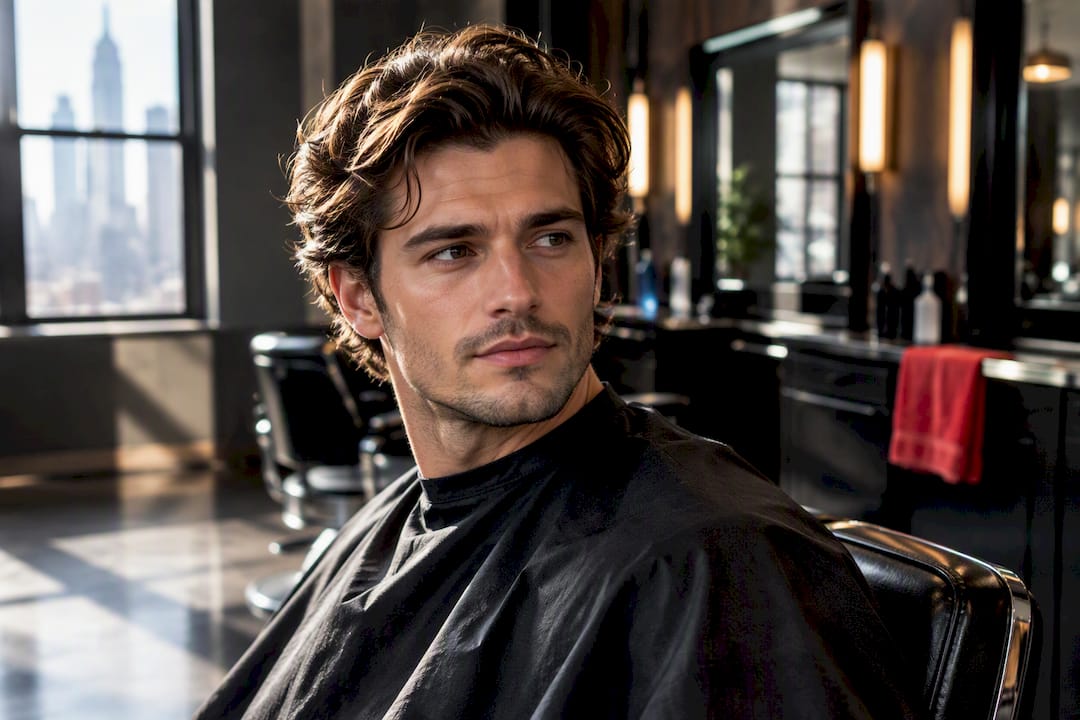
Medium length for men means roughly three to six inches of hair on top, long enough to push around with your fingers or a comb, short enough to grow out without an awkward-phase disaster. It’s the length most barbers recommend by default because it works on more face shapes and hair types than a buzz cut or a shoulder-grazing flow ever will. Below you’ll find 20+ specific styles with barber-ready phrasing, a framework for matching a cut to your face and hair texture, and the exact words to use in the chair.
TL;DR:
Medium length hair between three and six inches offers a versatile balance of texture, shape, and ease of styling for most face shapes.
Popular styles in 2026 emphasize softer textures, natural movement, and wearable volume, with textured quiffs and shag cuts leading trends.
Fades require more frequent touch-ups every three to four weeks, while scissor cuts and soft tapers can last up to six weeks without appearing messy.
Correct communication with precise measurements and reference photos improves haircut satisfaction, especially for textured or curly hair types.
Regular expert craftsmanship, including internal layering and accurate dry cuts, ensures styles stay natural and low-maintenance over time.
Table of Contents
What Counts as Men’s Medium Length Hairstyles
Anything under three inches on top reads as short. Anything over six inches typically starts crossing into flow or long-hair territory, where the styling rules change completely. The three-to-six-inch band is the sweet spot because it’s long enough to create texture, shape, and movement, but short enough that you’re never more than a few weeks from a clean reset if you hate how it’s growing in.
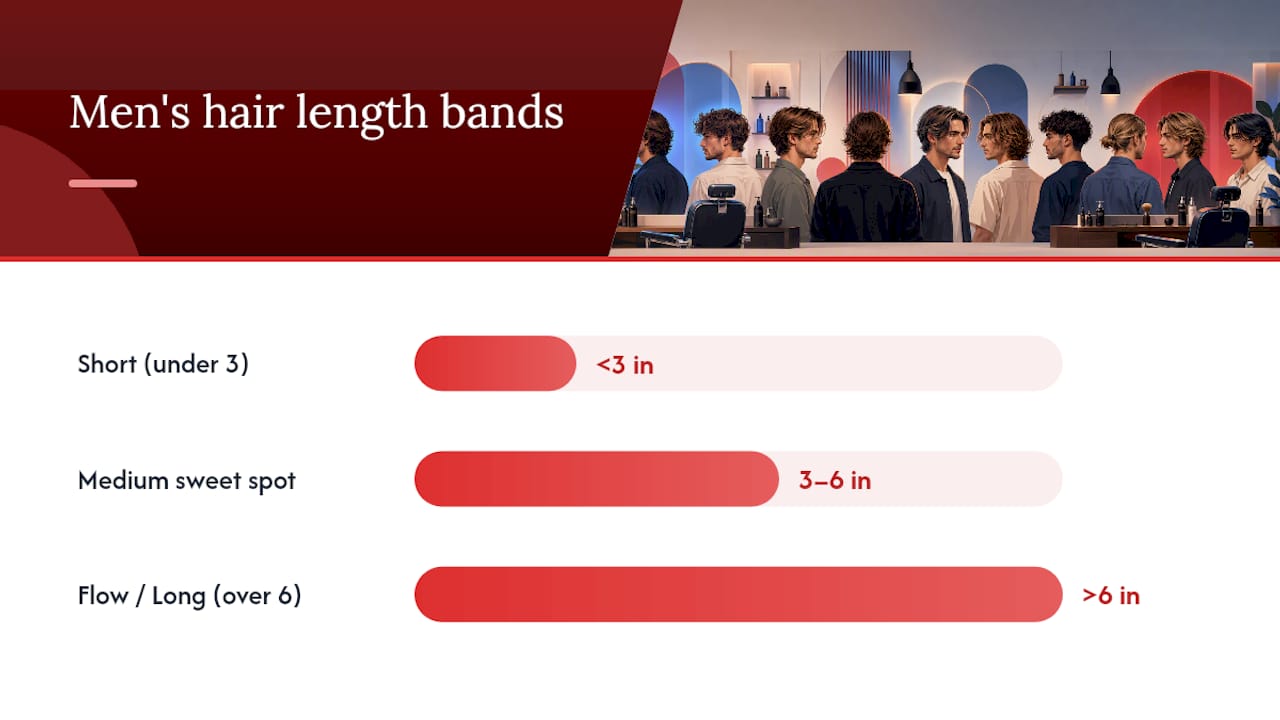
This length also happens to be the most forgiving zone in men’s haircuts. Medium length generally suits a wider range of face shapes compared to very short or very long hair, and it grows out in a way that still looks intentional instead of shaggy. That’s a big part of why it’s become the default request at barbershops. You get one haircut that can look sharp for a Monday client meeting and looser for a Saturday night, without a second trip to the chair.
There’s also a practical upside nobody talks about enough: medium length is more economical over time. A style with longer sides needs fewer touch ups than a hard fade, and the top length gives your barber room to correct minor mistakes without starting over.
20 Medium Length Hairstyles Men Are Actually Requesting in 2026
Every entry below includes a rough top length, the hair types it flatters most, a face-shape note, and the exact phrase to use with your barber. Trend coverage for 2026 keeps pointing the same direction: texture over sculpting, and softer, more wearable versions of styles that used to look severe.
Textured quiff. Around 4 to 5 inches on top, styled up and back with volume at the front. Works best on straight to wavy hair with some natural body. Flatters round and square faces by adding height. Ask for: “4.5 inches on top, taper the sides, point-cut the front for texture, no heavy layering underneath.”
Bro flow. About 5 to 6 inches, pushed straight back or center-parted with minimal product. Best on straight to wavy hair, tends to fight curls. Suits oval and long face shapes. Ask for: “Leave 5.5 inches on top, low taper on the sides, no layers, I want weight for a natural back-sweep.”
Curtains (middle part). Roughly 4 to 5 inches, parted center with the sides framing the forehead. Works on straight and wavy hair; curly hair needs internal thinning to part cleanly. Best for oval, heart, and diamond faces since it softens a wide forehead. Ask for: “4.5 inches on top, center part, blend the sides into a soft taper, keep some weight near the part.”
Wolf cut. Heavily layered, shaggy shape usually kept at 4 to 6 inches with choppy ends. On thick or textured hair, the layering amplifies volume and movement, which is why it’s best left to a stylist who layers carefully rather than a rushed clipper job. Flatters round and oval faces. Ask for: “Wolf cut, heavy layering through the crown, choppy ends, keep length around 5 inches, texturize with a razor or shears.”
Soft mullet. A relaxed, less dramatic take on the classic, blending shorter sides into a longer back without the harsh drop-off. Works on straight to curly hair. Best on oval and square faces. Ask for: “Soft mullet, 4 inches on top, sides tapered not shaved, gradual length increase toward the back, no hard line.”
Textured crop. Short-to-medium on top (around 3.5 to 4.5 inches) with heavy texture and a fringe that sits above the brow. Works on straight, wavy, and curly hair equally well. Flatters nearly every face shape, which is part of why it’s a go-to. Ask for: “Textured crop, 4 inches on top, point-cut fringe, tight taper on the sides, disconnect if possible.”
Shag. Layered throughout with a lived-in, undone finish, usually 4 to 6 inches. Best on wavy and curly hair since the layers rely on natural texture. Suits long and oval faces. Ask for: “Shag cut, layer through the whole top, keep the ends choppy, don’t over-blend the sides.”
Slick back. Around 4 to 5 inches, combed straight back with a shine or matte finish depending on product. Works best on straight and wavy hair; coily hair can do it with a strong hold cream. Flatters square and oval faces. Ask for: “4.5 inches on top, no fringe, enough length to slick straight back, medium taper on the sides.”
Side part. Classic 3.5 to 4.5 inch length with a defined part and combed structure. Works on straight and wavy hair; curly hair needs a harder product to hold the part. Suits round and square faces by adding asymmetry. Ask for: “Side part, 4 inches on top, hard part line, scissor-blend the sides, some length for a comb-over drape.”
Comb-over. Similar to a side part but with more length on top (up to 5 inches) swept diagonally. Works on straight to wavy hair. Best on oval and diamond faces. Ask for: “Comb-over, 5 inches on top, sweep to one side, taper fade on the sides for contrast.”
Ivy League. A shorter, tighter cousin of the classic crew cut, usually 2.5 to 3.5 inches on top with a slight side sweep. Works on any hair type. Flatters most face shapes, especially round and square. Ask for: “Ivy League, 3 inches on top, tapered sides, keep it neat and conservative.”
Two-block. Popular from Korean street style, this pairs longer top hair (4 to 5 inches) with an undercut or short-shaved sides for sharp contrast. Works on straight and wavy hair. Best on oval and heart faces. Ask for: “Two-block, undercut sides, 4.5 inches on top left loose or textured.”
Undercut with length on top. Sides go very short (a #1 or skin fade), top stays 4 to 6 inches for slicking, quiffing, or messy styling. Works on all hair types. Flatters square and round faces most. Ask for: “Disconnected undercut, skin on the sides, 5 inches on top.”
Messy waves. Natural wave texture left long enough to move (4 to 5 inches), styled with fingers rather than a comb. Best on wavy and curly hair. Suits oval and long faces. Ask for: “4.5 inches on top, leave natural wave, light layering, no hard part.”
Medium pompadour. A shorter, less dramatic pompadour than the classic version, around 4 to 5 inches with lift at the front. Works on straight and wavy hair with good body. Flatters round and square faces. Ask for: “Medium pompadour, 4.5 inches on top, volume at the front, fade or taper on the sides.”
French crop. A fringe-forward cut with texture on top (around 3.5 to 4 inches) and a tapered or faded side. Works on straight to curly hair. Best on oval and diamond faces. Ask for: “French crop, textured fringe, 4 inches on top, mid taper on the sides.”
Heartthrob fringe. A soft, face-framing fringe style trending for 2026, usually 4 to 5 inches with a slight curl or wave left in. Works best on wavy and curly hair. Flatters heart and oval faces. Ask for: “Heartthrob fringe, leave the front longer and wavy, 4.5 inches, light layering.”
Baby mullet. The toned-down mullet trend: subtle length at the back without the dramatic drop. GQ’s 2026 trend coverage calls this out specifically as a softer alternative to the classic mullet. Works on straight to wavy hair. Suits oval and square faces. Ask for: “Baby mullet, slight length increase at the back, no hard shelf, blend into the sides.”
Curly crop with fringe. Designed specifically for coily and curly hair, kept around 3.5 to 4.5 inches with the curls left intact on top. Works on curly and coily hair almost exclusively. Flatters round and square faces by adding height. Ask for: “Curly crop, cut dry to see the curl pattern, keep length for definition, taper the sides.”
Layered flow with fringe. A blend of the bro flow and a fringe, around 5 inches with face-framing pieces cut shorter. Works on straight and wavy hair. Best on long and oval faces. Ask for: “Layered flow, 5 inches on top, cut some face-framing pieces shorter, blend sides low.”
Pro Tip: Bring two or three reference photos instead of one, and pick images of guys with a similar hair texture to yours, not just a similar face. A curly-haired guy trying to replicate a straight-haired quiff photo is the single most common source of chair disappointment.
How to Pick Your Medium Length Haircut
Four things decide whether a medium-length cut works for you: face shape, hair texture, how much time you’ll spend styling it, and how the sides get treated. Get those four right and almost any style on the list above will look intentional instead of accidental.
Match the style to your face shape. Oval faces can wear almost anything, but curtains or a wolf cut show it off well. Square faces benefit from a textured quiff or side part that softens sharp angles. Round faces look sharper with a disconnected undercut or Ivy League that adds height. Long or oblong faces do well with a bro flow or shag that adds width at the sides. Heart-shaped faces suit a heartthrob fringe or two-block, since both draw attention away from a narrow chin. Diamond faces pair nicely with a comb-over or French crop that balances wide cheekbones.
Cut with your texture, not against it. Straight hair holds sharp lines well, so side parts and slick backs look crisp. Wavy hair is the most flexible and handles nearly every style on this list. Curly hair needs internal layering to avoid a triangle shape, and barbers generally cut curls dry or on damp hair rather than soaking wet, since wet curls stretch and spring back to a different length once dry. Coily hair does best with shape cut dry, curl by curl, rather than a uniform clipper pass.
Decide your side treatment based on your schedule. A scissor-blended side needs the least frequent trims but the most skill to execute well. A soft taper sits in the middle. A low fade looks the sharpest fastest but grows out visibly within two weeks.
Use the 3:2:1 rule to talk guards, not guesswork. The 3:2:1 rule refers to using a #3, #2, and #1 clipper guard in sequence down the sides for a clean, gradual taper, and it’s become shorthand between clients and barbers for “I want it blended, not choppy.” If you want a slightly longer, softer version, ask for a 4:3:2 instead. It keeps more length on the sides while still creating a visible taper toward the ear.
Styling Medium Length Hair: Routines and Products That Work
Three routines cover most guys. The low-effort routine is a small amount of matte paste rubbed between the palms, then scrunched through damp hair with fingers, no comb, no blow-dryer. The textured routine adds a sea-salt spray to damp hair before the paste, which is what gives quiffs and messy waves their separated, piece-y look. The polished blowout uses a round brush and blow-dryer on medium heat, pulling the top forward or back depending on the style, finished with a light-hold cream instead of paste so it doesn’t look stiff.
Product choice depends on texture and finish, not just personal taste:
Straight or fine hair does best with a light cream or a volumizing sea-salt spray. Heavy pastes weigh it down flat.
Wavy hair responds well to sea-salt spray for texture or a matte paste for definition without shine.
Curly hair needs a leave-in conditioner before any styling product, since curls dry out fast and frizz without moisture underneath.
Coily hair benefits from a curl cream or butter-based product applied to soaking wet hair, then air-dried or diffused on low heat.
A blow-dryer with a diffuser attachment is worth owning if you have curly or coily hair. It cuts drying time and defines curl clumps instead of blowing them apart the way a standard nozzle does.
Pro Tip: During grow-out, switch from paste to a lighter cream around week three. Longer hair needs less hold and more slip, and sticking with a heavy product past that point tends to make the style look greasy instead of intentional.
How Often to Get a Trim and What to Ask For
Trim frequency depends entirely on how your sides are cut. A fade needs a refresh every three to four weeks before the line grows out and blurs, while a soft taper stretches to four to six weeks, and a full scissor-blend can go five to six weeks without looking unkempt.
Weeks 1 to 2: The cut looks freshest; styling takes the least effort.
Weeks 3 to 4: Sides start growing out first, especially on fades. This is when a “shape trim” (sides only, top untouched) keeps things sharp without losing length.
Weeks 5 to 6: The top starts carrying real weight. Ask for “weight removal” if it’s starting to sit flat or look bulky, rather than a full cut that resets your progress.
Between visits: A weekly clarifying shampoo keeps product buildup from making fine hair look limp, and a wide-tooth comb on wet hair prevents breakage on curly or coily textures.
What to Tell Your Barber for a Medium Length Cut
Specific numbers beat vague descriptions every time. Instead of “not too short,” try one of these:
For a textured quiff: “4.5 inches on top, taper on the sides, point-cut for texture.”
For curtains: “4.5 inches, center part, soft taper, keep weight near the part.”
For a bro flow: “5.5 inches on top, low taper, no layers, I want natural weight for a back-sweep.”
For a soft mullet: “4 inches on top, tapered sides, gradual length increase toward the back, no hard line.”
Reference the 3:2:1 guard rule directly if you want a specific taper, or ask for a 4:3:2 if you’d rather keep more length on the sides. Bring photos from four angles (straight on, 45 degrees, profile, and back) and circle the specific detail you care about most, whether that’s the fringe length or how tight the taper runs. For a deeper walkthrough of this kind of communication, see this guide on how to talk to your barber about the cut you want.
Getting a Medium Length Cut Done Right
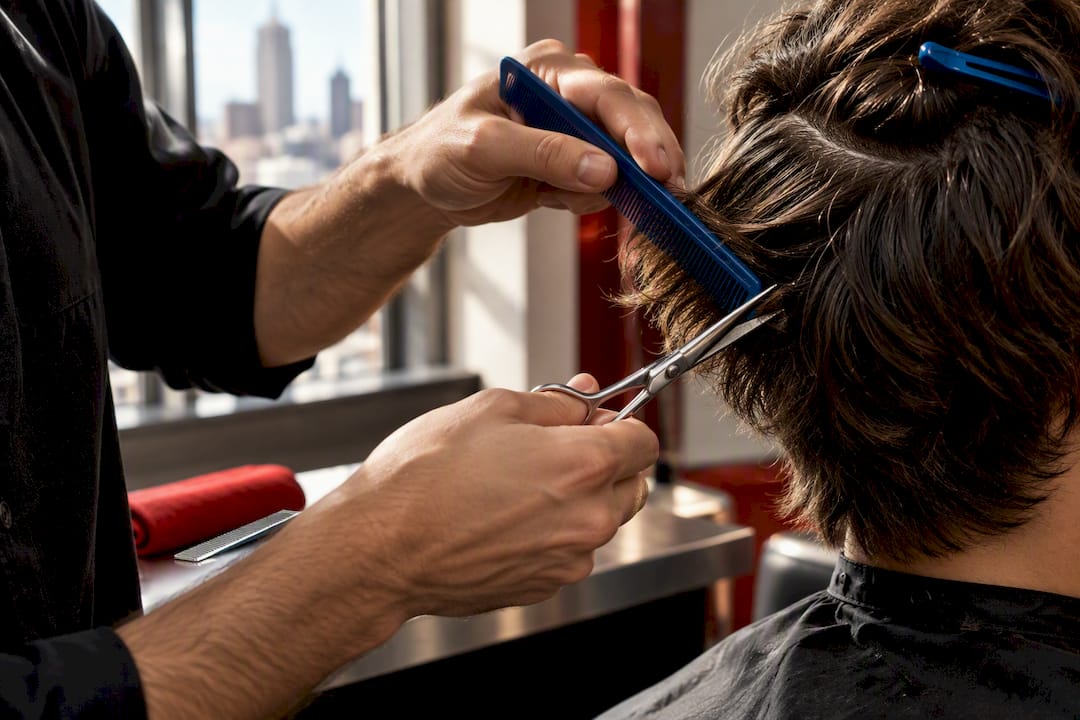
Craftsmanship matters more at medium length than at any other length, because there’s nowhere for a bad cut to hide. An expert barbershop’s approach centers on personalized consultation and scissor work that holds its shape without relying on heavy product, which is exactly the kind of finish medium-length styles need to look natural rather than sculpted. Barbers who work this length regularly lean on internal layering and point cutting to remove bulk while keeping usable length, a technique that’s core to why scissor-cut medium styles stay low-maintenance between visits. Curly and coily textures get cut dry or damp rather than soaking wet, since accuracy on textured hair depends on seeing the curl pattern as it actually falls.
Why Medium Length Is Having a Moment in 2026
Trend signals for 2026 point toward texture and away from severe sculpting: softer mullets, looser wolf cuts, and fringes that move instead of sitting frozen in place. That shift favors medium length specifically, since it’s the only range with enough hair to show texture while still being short enough to manage on a weekday morning. If you’ve been stuck between a buzz cut that feels boring and long hair that feels like a commitment, this is the moment to try the middle ground.
— Evgenii
Book a Medium Length Cut That Actually Holds Its Shape
Some barbershops take the guesswork out of medium-length cuts by starting with a conversation about your hair type, face shape, and styling preferences. Instead of a rushed clipper job, clients can get scissor and clipper work built around natural finishes that hold their shape for weeks, not days.
Bring the photos and barber-ready phrases from this guide straight to your appointment. Whether you’re after a textured quiff, a soft mullet, or a clean two-block, a Regular Haircut covers most medium-length scissor and clipper work, and the Crop (classic / massive crop) service is worth asking about specifically if you want a textured crop or fringe-forward style. Ready to see it in person? Book online and tell your barber which script from this guide you want to start with.
Sources
FAQ
What Does the 3:2:1 Haircut Rule Mean?
It refers to using #3, #2, and #1 clipper guards in sequence down the sides to create a smooth, gradual taper instead of one flat length. Ask for a 4:3:2 version if you want the same gradual blend but with slightly more length left on the sides.
What Hair Length Is Considered Medium for Men?
Medium length generally falls between three and six inches on top. Under three inches reads as short, while anything past six inches starts moving into long or flow territory.
What Are the Most Popular Men’s Haircuts Right Now?
Textured quiffs, curtains, soft mullets, and wolf cuts are dominating requests, with 2026 trend coverage pointing toward texture and softer, more wearable takes on styles that used to look severe. Classic options like the side part and Ivy League remain steady choices for workplace settings.
How Often Should I Get a Medium Length Haircut Trimmed?
It depends on your side treatment: fades need a refresh every three to four weeks, while scissor-blended sides can stretch to five or six weeks. A soft taper usually falls in the middle at four to six weeks.
What Is the Most Flattering Medium Length Style?
There’s no single answer since it depends on face shape and hair texture, but the textured crop and curtains fit the widest range of faces because both add balance without exaggerating any one feature. A quick consultation with your barber about your specific face shape gets you a more useful answer than any general list.
Recommended
Comments