What Distinguishes Great Barber Skills: 9 Key Signs

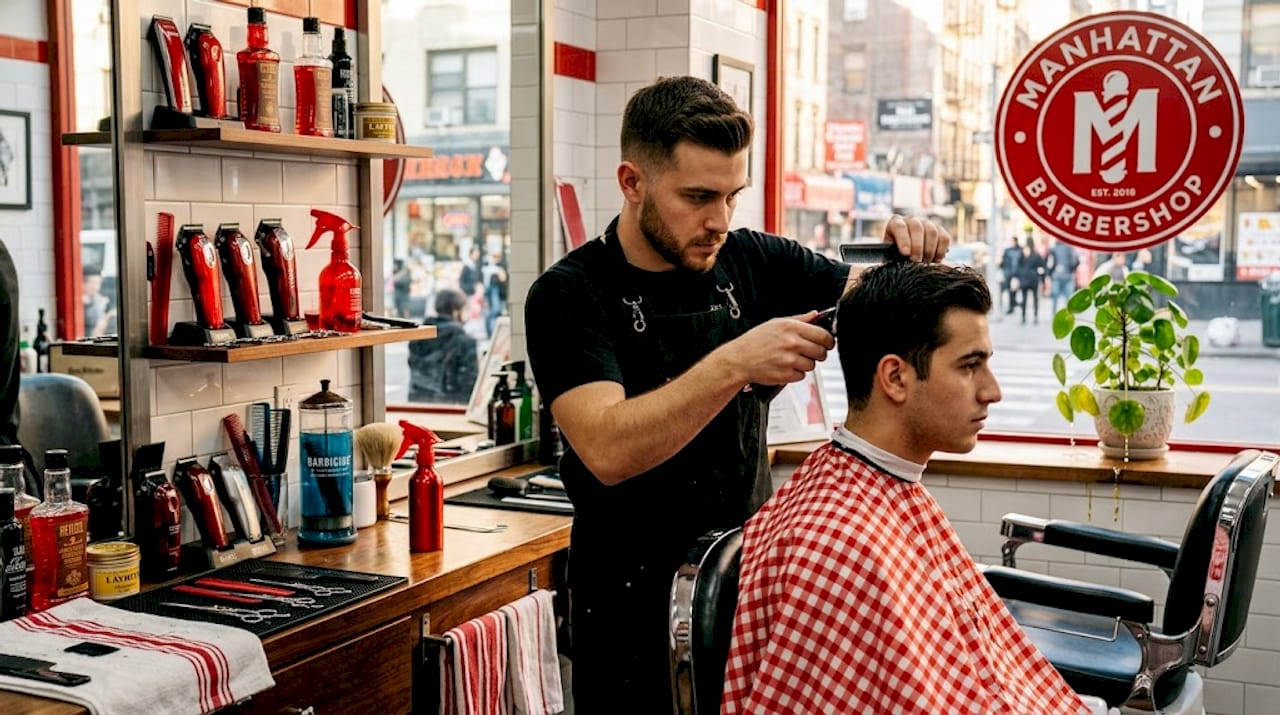
Most people can tell when a haircut looks good. Far fewer can explain why. What distinguishes great barber skills goes well beyond clean lines and a smooth fade. It’s a combination of technical mastery, sharp diagnostic instincts, and the kind of interpersonal intelligence that turns a 30-minute appointment into a result you’re still proud of three weeks later. Whether you’re trying to find a better barber or sharpen your own craft, knowing what separates good from genuinely great changes everything about how you evaluate the chair you sit in.
Table of Contents
Key takeaways
Point | Details |
Technical precision drives results | Clippers and scissors serve different roles; mastering both is what separates clean cuts from exceptional ones. |
Consultation is non-negotiable | A great barber assesses your hair’s unique characteristics before touching a single guard to your head. |
Signature style signals mastery | Top barbers develop recognizable techniques through fading, texturizing, and consistent execution across every client. |
Professionalism builds trust | Clean environments, calm communication, and consistent outcomes are what keep clients coming back for years. |
You can spot quality before the cut ends | Knowing the signs of skilled craftsmanship helps you choose better and get more from every visit. |
1. What distinguishes great barber skills starts with technical precision
There’s a reason the best barbers talk about their tools the way chefs talk about knives. Clippers handle 80% bulk removal, while scissors take care of the remaining 20% through techniques like scissor-over-comb and point-cutting. Both matter. A barber who leans exclusively on guards and clippers will always hit a ceiling in terms of refinement.
The clipper-over-comb technique is one of the clearest markers of skill. It requires the barber to control both the comb angle and the clipper speed simultaneously, creating seamless blends that no guard setting can replicate on its own. Point-cutting, where the scissors snip into the hair at an angle rather than straight across, adds texture and removes bulk without creating a blunt, heavy line.
Tools matter too. Longer barber scissors, typically 6.5 to 7 inches, allow fluid strokes that blend hair more efficiently than the shorter scissors common in salon settings. A barber investing in the right equipment signals they take the craft seriously.
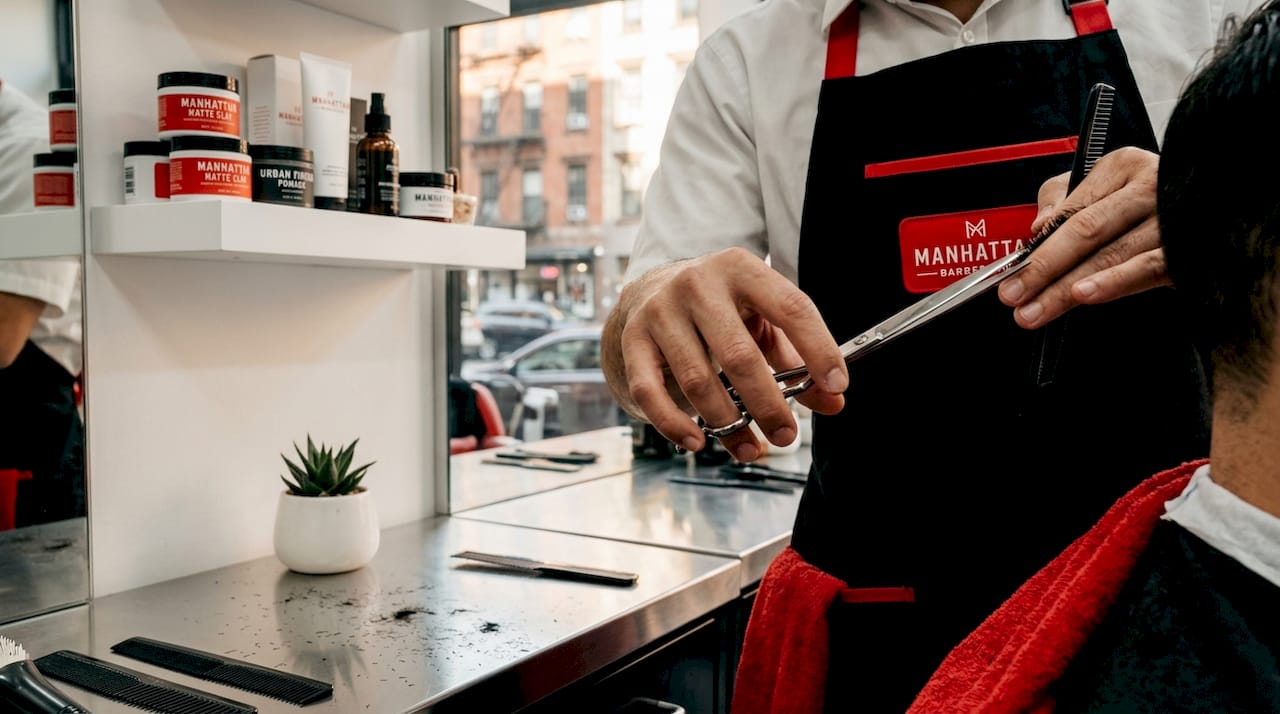
Pro Tip: Watch how a barber finishes the neckline and temples. Rushed, uneven detail work in those areas is a reliable sign that precision isn’t their priority.
2. Diagnostic consultation before the first cut
A great barber doesn’t pick up their clippers the moment you sit down. They ask questions. They look at your scalp. They run their fingers through your hair to assess density, growth direction, and texture before deciding on a single technique.
Collaborative consultation accounts for variables like cowlicks, hairline recession, and hair density. What sounds like a simple “short back and sides” request can mean something completely different depending on whether your hair grows forward, whether you have a double crown, or whether your hairline is naturally uneven. Skipping this step produces generic results.
Here’s what a quality consultation looks like in practice:
The barber asks about your lifestyle and how much time you spend styling
They assess your natural growth patterns, not just the style you describe
They explain what’s achievable given your hair type before starting
They offer an honest opinion on reference photos rather than just agreeing
Pro Tip: If a barber agrees to every reference photo you show without any comment or adjustment, that’s not attentiveness. That’s a setup for disappointment. Good barbers push back when a photo doesn’t match your hair type.
3. Advanced fading and blending techniques
Fading is where technical skill becomes visible art. Anyone can fade with guards. Truly skilled barbers use lever control for micro-adjustments between guard lengths, including half and quarter-lever positions, to create gradations so smooth they look airbrushed.
Cross-checking is another technique that separates serious barbers from average ones. After completing a fade, skilled barbers run cross-checking passes at perpendicular angles to catch uneven sections that are invisible from a single viewing angle. Most clients never know this is happening. That’s the point.
Here’s how classic and modern techniques compare in terms of skill demand:
Technique | Skill level required | What it achieves |
Guard-only fade | Beginner | Basic length reduction |
Clipper-over-comb | Intermediate | Seamless blending without guard lines |
Slide cutting | Advanced | Texture and weight removal |
Lever-controlled fade | Advanced | Micro-gradient transitions |
Scissor-over-comb | Expert | Precision blending on longer hair |
The barbers who win at professional barbering competitions are judged on precision fades, tapers, and creative freestyle cuts under time pressure. The standard they’re measured against isn’t trend-following. It’s technical accuracy.
4. Building a signature style
Generic barbers execute what you ask for. Great barbers bring something of their own to the process. A great barber develops a signature style by combining advanced cutting techniques, a consistent consultation strategy, and a curated set of tools they trust completely.
This signature shows up in the details. It might be the way they blend the temple fade into the sideburn, or how they approach beard shaping relative to the jaw structure. It’s recognizable across different clients and different styles. You can see it in the evolution of barbering techniques over decades: the barbers who left a mark were the ones with a distinct technical voice, not just technical competence.
Ongoing education reinforces this. Barbers complete 1,000 to 1,800 hours of mandated training, but the best ones don’t stop there. They attend competitions, study other barbers, and continuously refine their techniques long after licensing.
5. Consistency across every client and every visit
One great haircut proves a barber can cut hair. Consistent great haircuts prove they’ve mastered the craft. Identifying skilled barber craftsmanship often comes down to whether the quality holds up on your third visit the same way it did on your first.
Consistency requires more than muscle memory. It requires a repeatable process: the same consultation approach, the same sequence of techniques, the same attention to detail regardless of how busy the shop is. Traditional barbering emphasizes skill over speed, and that patience is what produces durable results that still look sharp two weeks after the cut.
A clean, organized workspace is part of this picture too. A barber who keeps their station tidy, their tools sanitized, and their workflow calm under pressure is signaling the same discipline that shows up in their cutting. Environment and execution are connected.
“Grooming based on knowledge of hair growth, scalp health, and measured rituals improves long-term appearance and confidence.” This is why skilled craftsmanship defined barbering long before it became a trend.
6. Interpersonal skills and expectation management
The technical side of barbering gets most of the attention. The interpersonal side is where clients are actually won or lost. Master barbers absorb blame and manage client expectations, guiding people from reference photos to cuts that actually suit their anatomy. That requires confidence, diplomacy, and real knowledge of what’s achievable.
A barber who says “that won’t work with your hair type, but here’s what will” is demonstrating expertise. A barber who silently attempts the impossible and delivers disappointment is not. The qualities of great barbers include knowing when to redirect a client and how to do it without making them feel bad about the request.
This also means reading the room. Some clients want to talk. Others want silence. The best barbers pick up on this quickly and adjust. That attentiveness to the person in the chair, not just the hair on their head, is what makes the experience feel personal rather than transactional.
7. Understanding how client behavior affects the cut
Here’s something most clients don’t realize: they play an active role in how good their haircut turns out. Client stillness and posture directly influence cut quality. Crossing your legs shifts your spine. Tilting your head to check your phone disrupts the barber’s line of sight. Small movements add up to asymmetry.
A skilled barber will gently correct your posture. They’ll ask you to look straight ahead, tilt your chin down, or relax your shoulders. If your barber never says anything about how you’re sitting, that’s either because you’re perfectly still or because they’re not paying close attention.
Clients should also trust the barber’s process mid-cut rather than panicking at the first pass of the clippers. What looks uneven halfway through a fade is often exactly where it needs to be before the blending pass. Interrupting that process creates more problems than it solves.
8. How to identify a skilled barber before you commit
You don’t have to wait until the haircut is done to evaluate quality. Signs of skilled barber craftsmanship are visible from the moment you walk in.
Check their portfolio. Consistent results across different hair types and skin tones indicate repeatable skill, not luck.
Watch how they handle the consultation. Do they assess your hair before reaching for tools?
Look at their station. Organized tools, clean capes, and sanitized equipment signal professional standards.
Notice their technique sequence. Skilled barbers work methodically, not reactively.
Ask one specific question about your hair type. A knowledgeable barber will give you a specific answer, not a vague one.
Observe how they finish. The neckline, sideburns, and temple taper are where detail work either holds up or falls apart.
Pro Tip: Ask the barber what technique they plan to use for your fade or blend. If they can explain it clearly, they know what they’re doing. If they can’t, that’s your answer.
9. The role of tools in extending barber knowledge
Tools extend the barber’s knowledge but don’t replace it. This is worth saying plainly because the market is full of premium clippers and high-end shears that promise results they can’t deliver without skilled hands behind them. The diagnostic judgment that tells a barber which tool to reach for, and when, comes from experience alone.
A barber who owns one set of reliable clippers and knows them intimately will consistently outperform someone with a full wall of tools they use interchangeably. The same logic applies to scissors. Knowing how blade tension, shear length, and cutting angle interact with a specific hair type is the kind of knowledge that accumulates over thousands of haircuts, not hours of product research.
My honest take on what actually separates great barbers
I’ve watched a lot of barbers work, and the thing that strikes me most isn’t the technical skill. It’s the rhythm. Great barbers move with a kind of quiet confidence that’s hard to fake. They’re not rushing. They’re not second-guessing. They’ve done this enough times that the decision-making happens below the surface.
What I’ve learned is that barbering remains one of the most human-centered professions because trust and embodied skill can’t be automated. A barber who knows your hair, your habits, and your face shape carries information no app can replicate.
The misconception I hear most often is that a great haircut is about the style. It isn’t. It’s about the execution. I’ve seen simple crops that were genuinely masterful and complex fades that fell apart on closer inspection. The style is just the brief. The skill is everything that happens after.
What I’d tell anyone looking to identify skilled barbers: stop looking at the finished photo and start watching the process. The care, the sequence, the adjustments mid-cut. That’s where the real skill lives.
— Evgenii
Experience the difference at Manhattanbarbershopny
If you’ve read this far, you already know what to look for. Now you deserve to experience it firsthand.
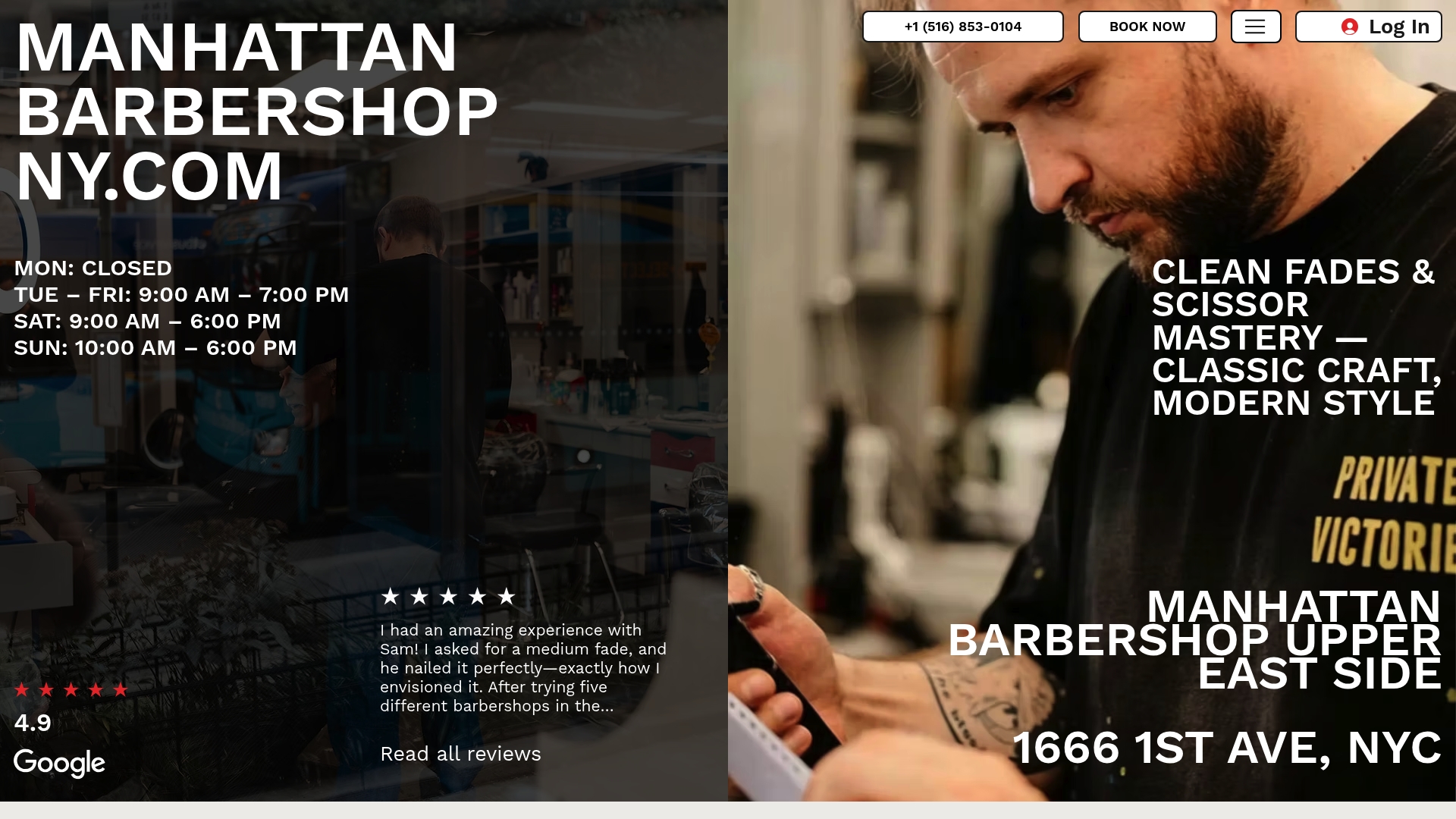
At Manhattanbarbershopny, every cut starts with a real consultation. The barbers here assess your hair type, growth patterns, and lifestyle before picking up a single tool. Whether you’re looking for a classic side part, a bold Iroquois cut, or a clean fade that holds its shape for weeks, the focus is always on precision and a natural result you can actually maintain. No excessive product. No generic approach. Just skilled craftsmanship tailored to you. Book your appointment and find out what a truly great haircut feels like.
FAQ
What distinguishes great barber skills from average ones?
Great barbers combine technical precision with diagnostic consultation and consistent execution. They assess individual hair characteristics before cutting and use advanced techniques like lever-controlled fading and cross-checking to deliver results that hold up over time.
How do I identify a skilled barber on my first visit?
Watch how they conduct the consultation, observe their technique sequence, and check whether they assess your hair type before reaching for tools. A skilled barber explains their approach and adjusts based on your specific hair characteristics.
Why does the consultation matter so much in barbering?
Consultation accounts for variables like cowlicks, hairline recession, and hair density that directly affect the final result. Skipping it turns a tailored service into a generic one, regardless of how technically capable the barber is.
What are the signs of skilled barber craftsmanship to look for?
Look for a clean, organized station, a methodical cutting sequence, confident posture correction, and detail work at the neckline and temples. A barber who finishes those areas with care is applying the same precision throughout the entire cut.
Can great tools make up for limited barber skill?
No. Tools extend what a skilled barber can do, but they don’t replace diagnostic judgment or technique. A barber who knows one set of clippers deeply will consistently outperform someone with premium tools they use without real understanding.
Recommended
Comments