Why a Consistent Barber Builds Better Style

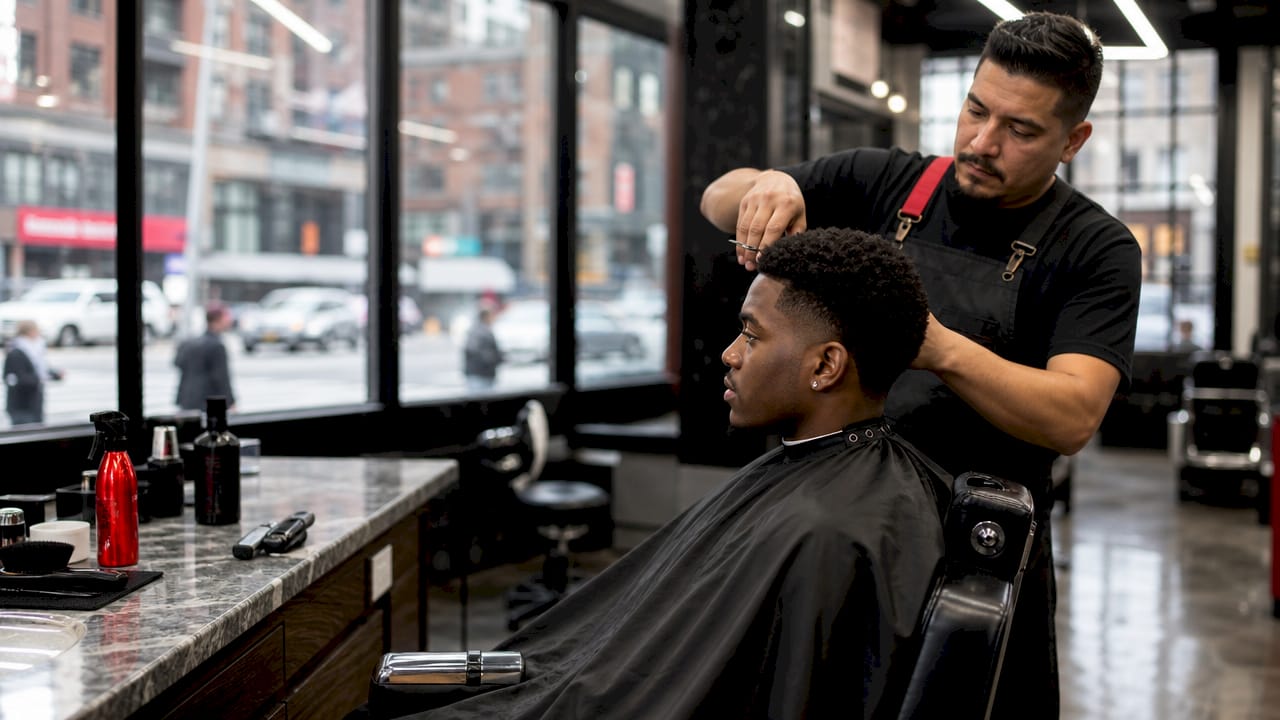
A consistent barber relationship is the single most effective tool for building a sharper, more intentional personal style. Most people treat haircuts as transactions. The clients who look consistently polished treat them as an ongoing collaboration. Your barber’s ability to read your hair’s growth patterns, texture, and behavior compounds over time, producing cuts that fit your face and lifestyle with precision that a first-time appointment simply cannot deliver. 70% of people report a significant confidence boost immediately after a professional barbershop service. That number climbs when the service is tailored to someone who already knows your hair.
Why a consistent barber builds better style over time
The technical term for what happens between a returning client and their barber is progressive personalization. Each visit adds data. Your barber observes how your hair grew since the last cut, where it pushed out of shape first, and which areas held the line. That information directly shapes the next cut. Without it, every appointment starts from zero.
A barber who sees you regularly learns several things that no intake form can capture:
Hair texture and density shifts that change with seasons, stress, or diet
Cowlick placement and growth direction that determine how a fade or taper will behave at home
Growth speed by zone, since the crown, sides, and neckline rarely grow at the same rate
Your lifestyle context, whether you style daily, work outdoors, or need a low-maintenance shape
Barber-client communication during check-ins about hair behavior is a critical feedback loop that enables truly personalized styles. Without regular feedback, cuts become guesswork rather than tailored grooming. Master barbers use your comments about how your hair behaved in the weeks after a cut to fine-tune their technique. That refinement is impossible without consistent visits.
The practical result is that you spend less time explaining yourself. You walk in, exchange a few words, and your barber already knows whether to go tighter on the sides or leave more length on top. That efficiency is not laziness. It reflects a working relationship built on real knowledge of your unique hair characteristics.
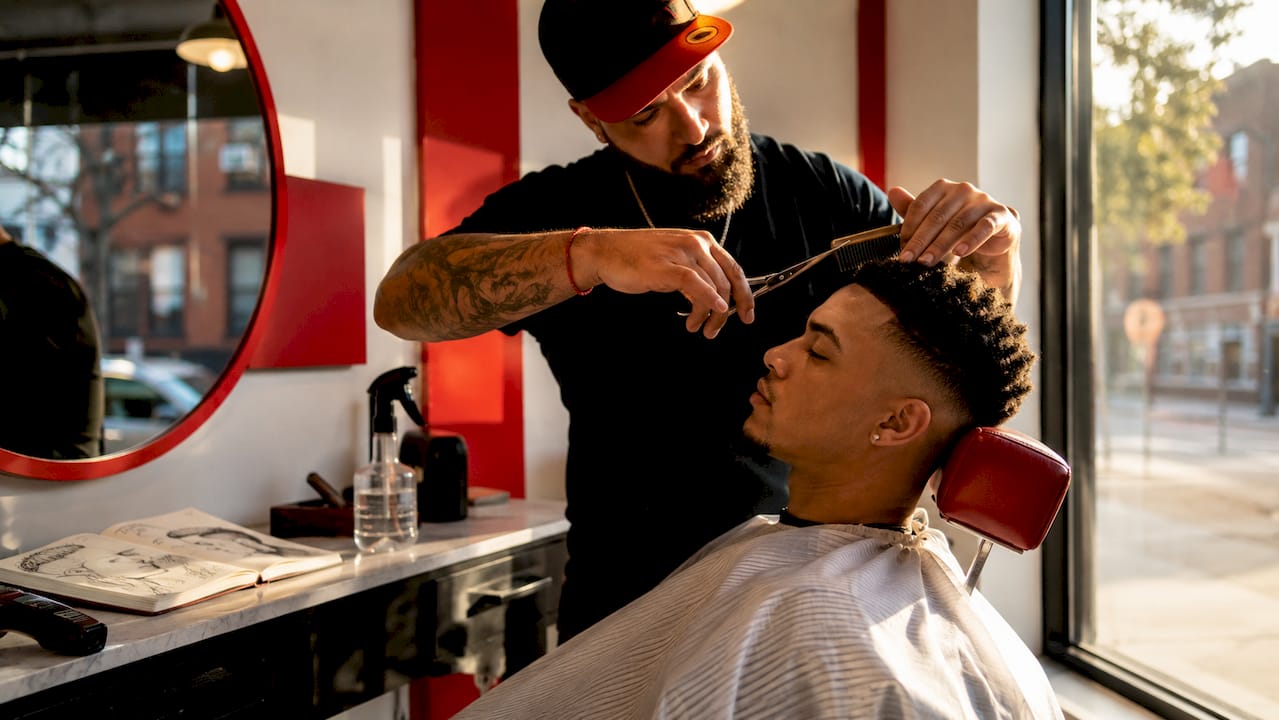
Pro Tip: After each appointment, tell your barber one specific thing you liked and one thing you want adjusted. That two-sentence debrief accelerates the personalization process faster than any reference photo.
What psychological benefits come from seeing the same barber regularly?
The benefits of regular barber visits extend well past the mirror. Consistent barber visits serve as a “third space” for mental health support, reducing anxiety after just 30 minutes in the chair. A third space is any environment outside home and work where you decompress and reconnect socially. The barbershop fills that role in a way few other grooming environments do.
“The barbershop is one of the last places where you sit down, put your phone away, and actually talk to someone. That’s not a small thing.” This observation from barbers working with young men on mental health reflects a broader truth: the ritual matters as much as the result.
The psychological case for a regular grooming schedule includes several measurable effects:
Reduced decision fatigue: Consistent grooming routines reduce the mental energy spent on grooming decisions, freeing you to focus on style outcomes rather than logistics.
Mood improvement: The sensory experience of a barbershop visit, including hot towels, scalp massages, and focused attention, acts as a grounding habit that helps busy people slow down.
Reinforced self-discipline: Keeping a regular appointment signals to yourself that your appearance and well-being are worth protecting. That signal compounds.
Social connection: Barbershops create a unique environment for social connection and mental reset that traditional salons often do not provide.
Regular grooming routines reinforce personal standards and professional presence, linking ongoing upkeep with improved performance socially and at work. A fresh look is the result of continuous maintenance, not a single transformation. The local barbershop atmosphere plays a direct role in making that maintenance feel like something you look forward to rather than a chore.
How does switching barbers frequently undermine your style?
Every time you sit in a new barber’s chair, that barber starts from scratch. They do not know your growth patterns, your cowlick behavior, or the fact that your left side grows faster than your right. You explain your preferences, they interpret them through their own lens, and the result is a cut that approximates what you want rather than one built on accumulated knowledge of your specific hair.
Each new barber resets the learning process about your hair’s unique characteristics. Consistent barbering is an investment in your visual identity. Switching undermines that investment every time.
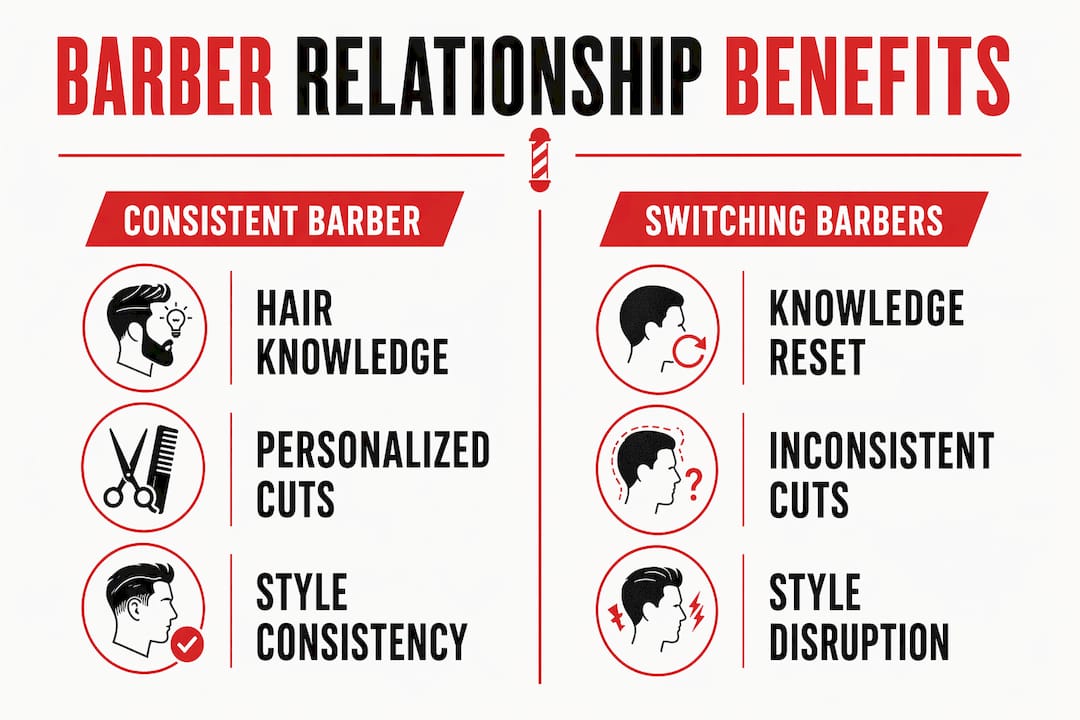
Factor | Consistent barber | Switching barbers frequently |
Knowledge of your hair | Builds over months and years | Resets with every new appointment |
Cut precision | Improves progressively | Stays at a baseline “first visit” level |
Time spent explaining | Decreases over time | Remains high at every visit |
Style consistency | Sharp and intentional at all times | Varies based on each barber’s interpretation |
Risk of unflattering cuts | Low, barber knows your face and hair | Higher, especially during adjustment phases |
Choosing a local barber who prioritizes relationships over volume produces higher quality, more personalized results compared to chain establishments that focus on speed. Chain barbershops are not designed for the kind of iterative refinement that builds a signature style. They are designed for throughput. The two goals are incompatible.
What practical steps build a lasting barber relationship?
Building a consistent barber relationship is not complicated, but it does require intention. Here is a straightforward process that works:
Find a barber who matches your style goals. Look at their portfolio, read reviews, and pay attention to whether they ask questions or just start cutting. A barber who asks about your lifestyle and maintenance habits before picking up the clippers is the right kind of professional. The guide on finding a barber who matches your personal style is a practical starting point.
Communicate specifically, not vaguely. “Shorter on the sides” means nothing. “A skin fade starting at the temple, blended to a two on top” means something. Bring reference photos for the first two or three visits until your barber has internalized your preferences.
Schedule at 2 to 3 week intervals. Regular visits at 2 to 3 week intervals prevent messy growing-out phases, eliminate the need for drastic corrections, and keep your style looking intentional at all times. This cadence is the standard for maintaining clean fades and sharp lines.
Give feedback after every cut. Tell your barber what worked and what did not. This is the input that drives the personalization process forward.
Stay consistent even when traveling. If you are away for an extended period, communicate that to your barber so they can plan the cut length accordingly. A slightly longer cut before a two-week trip is smarter than returning to a shape that has grown out unevenly.
Pro Tip: Book your next appointment before you leave the shop. Clients who pre-book maintain their schedule at a far higher rate than those who rely on memory or last-minute availability.
Understanding how barbers customize cuts individually gives you the vocabulary to communicate more precisely and accelerates the relationship-building process significantly.
Key takeaways
A consistent barber relationship builds better style because accumulated knowledge of your hair produces cuts that improve progressively, while switching barbers resets that process every time.
Point | Details |
Familiarity drives precision | A barber who knows your hair texture, growth speed, and cowlicks cuts with far greater accuracy than a first-time appointment allows. |
Visits compound over time | Style improvements build month over month, just as a steady grooming routine produces results that a single session cannot. |
Mental health benefits are real | Thirty minutes in a trusted barber’s chair reduces anxiety, reinforces self-discipline, and provides genuine social connection. |
Switching barbers costs you | Every new barber resets the learning curve, increasing the risk of inconsistent cuts and wasted time re-explaining preferences. |
Schedule at 2 to 3 week intervals | This cadence prevents growing-out phases and keeps your style looking intentional rather than accidental. |
What I’ve learned from watching clients transform over months
I have watched the same pattern repeat itself more times than I can count. A client comes in for the first time, sits down, and gives a vague description of what they want. The cut is good. Three months later, after consistent visits, that same client walks out looking like a different person. Not because the barber suddenly got better. Because the barber finally knows them.
The clients who see the most dramatic style improvements are not the ones with the best hair. They are the ones who show up on schedule, give honest feedback, and treat their barber as a collaborator rather than a service provider. That mindset shift changes everything.
What most people miss is that grooming confidence is cumulative. When you know your hair is going to look right because your barber has dialed in your cut over six months of visits, you carry yourself differently. You stop second-guessing your appearance in the mirror every morning. That mental clarity is worth more than any single great haircut.
My honest advice: stop treating your barber like a vending machine. Invest in the relationship the same way you would with a personal trainer or a doctor. The returns are real, they are visible, and they show up in every room you walk into.
— Evgenii
Experience the difference at Manhattanbarbershopny
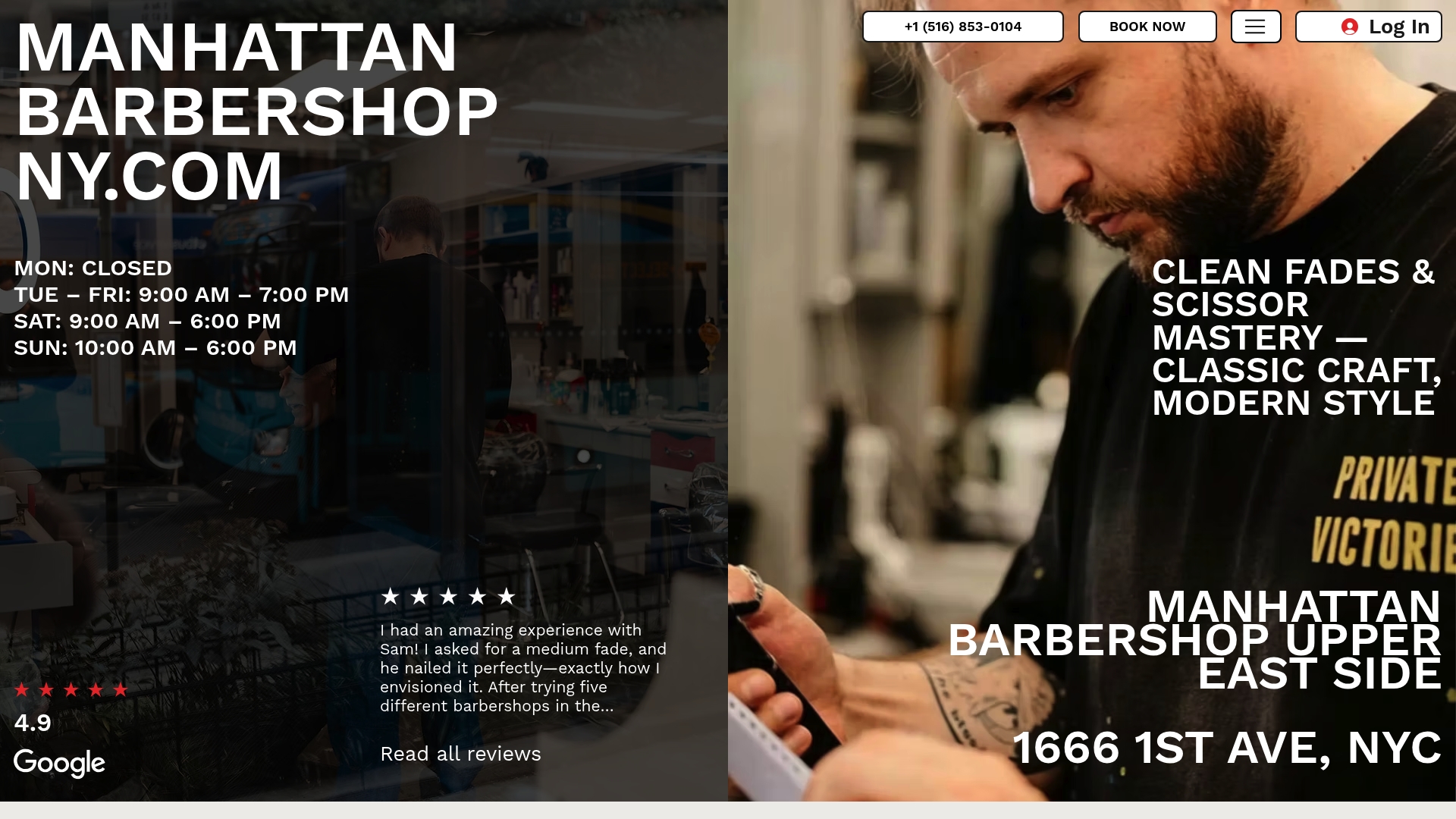
Manhattanbarbershopny, located on the Upper East Side of New York City, is built around exactly the kind of consistent, personalized service this article describes. Eugene Solod and his team take the time to understand each client’s hair type, lifestyle, and style goals before a single clipper touches your head. Whether you are looking for a clean Iroquois cut, a classic fade, or a regular maintenance cut that holds its shape for weeks, the focus is always on natural results with minimal product. Appointments are easy to schedule through online booking, so there is no excuse to let your style slide between visits.
FAQ
Why does a consistent barber relationship improve your haircut?
A barber who sees you regularly learns your hair’s growth patterns, texture, and behavior over time. That accumulated knowledge produces cuts that are progressively more precise and personalized than any first-time appointment can deliver.
How often should you visit your barber to maintain style?
Visiting every 2 to 3 weeks is the standard cadence for maintaining clean fades and sharp lines. This frequency prevents the growing-out phase that disrupts style consistency and eliminates the need for corrective cuts.
Does switching barbers frequently hurt your style?
Yes. Every new barber resets the learning process about your hair’s unique characteristics, increasing the risk of inconsistent cuts and requiring you to re-explain your preferences from scratch each time.
What are the mental health benefits of regular barber visits?
Consistent barber visits reduce anxiety, reinforce self-discipline, and provide social connection in a relaxed environment. The sensory experience of a barbershop visit, including hot towels and focused attention, functions as a grounding self-care habit.
How do you find a barber who matches your style goals?
Review their portfolio, observe whether they ask questions about your lifestyle before cutting, and communicate your preferences with specific language and reference photos during the first few visits. Consistency with the right barber compounds into measurably better style over time.
Recommended
Comments