Why Hair Type Matters at the Barbershop

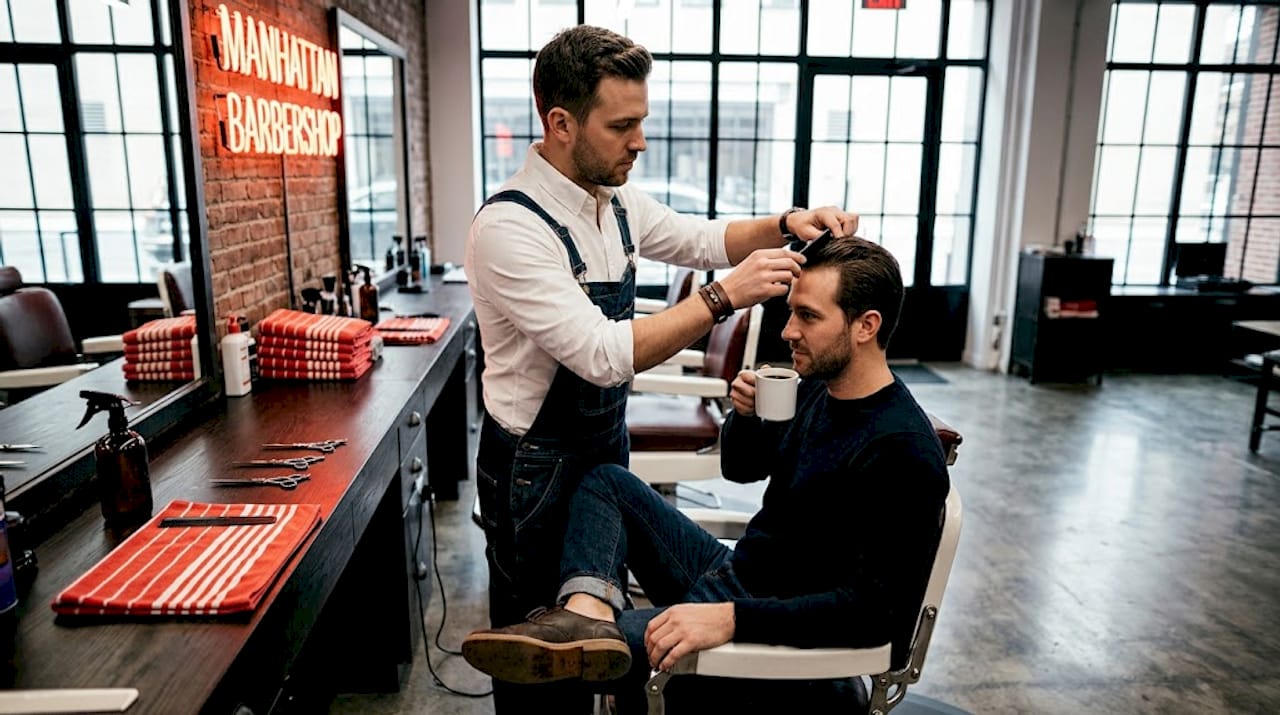
Most men have walked out of a barbershop feeling let down without knowing why. The cut looked great on someone else. The photo seemed clear enough. Yet something was off. Understanding why hair type matters at the barbershop is the missing piece for most guys. Your hair’s density, texture, porosity, and growth patterns determine what cuts work, how your hair behaves after you leave the chair, and what products will actually hold it in place. Get those factors right, and every haircut becomes a win.
Table of Contents
Key takeaways
Point | Details |
Hair density shapes your options | Low-density hair cannot support voluminous or heavily layered styles without looking sparse and flat. |
Texture dictates cutting technique | Straight, wavy, curly, and coily hair each require different tools and approaches from your barber. |
Porosity controls product choice | High-porosity hair needs rich creams; low-porosity hair performs better with lighter clays. |
Communication prevents dissatisfaction | Telling your barber about your hair type and lifestyle leads to cuts that actually hold their shape. |
Maintenance frequency matters | Most men should schedule a trim every 8 to 12 weeks based on their hair’s growth rate and texture. |
Why hair type matters: the barbershop basics
Walk into any barbershop and your barber sees more than just the length you want taken off. They are reading your hair’s physical properties in real time. Those properties tell them what the hair can and cannot do. Skipping this step is exactly what causes frustration between what you pictured and what you see in the mirror.
The four properties that determine everything
Hair density is the number of strands per square centimeter on your scalp. Hair density categories break down as high (over 150 hairs per cm²), medium (100 to 150 hairs per cm²), and low (under 100 hairs per cm²). High-density hair can carry bold, voluminous styles. Low-density hair works better with tighter, structured cuts that create the illusion of fullness.
Texture covers whether your hair is straight, wavy, curly, or coily. Each type responds differently to scissors, razors, and clipper guards. Straight hair lies flat and shows lines cleanly. Wavy hair has natural movement but can puff in humidity. Curly and coily hair shrinks significantly after cutting, which means your barber must account for how much the hair will spring up once it dries.
Porosity determines how fast your hair absorbs and releases moisture. High-porosity hair absorbs over 90% moisture quickly but loses it just as fast, making it prone to frizz and dryness. Low-porosity hair absorbs under 25% moisture in five minutes, meaning products tend to sit on top rather than penetrate.
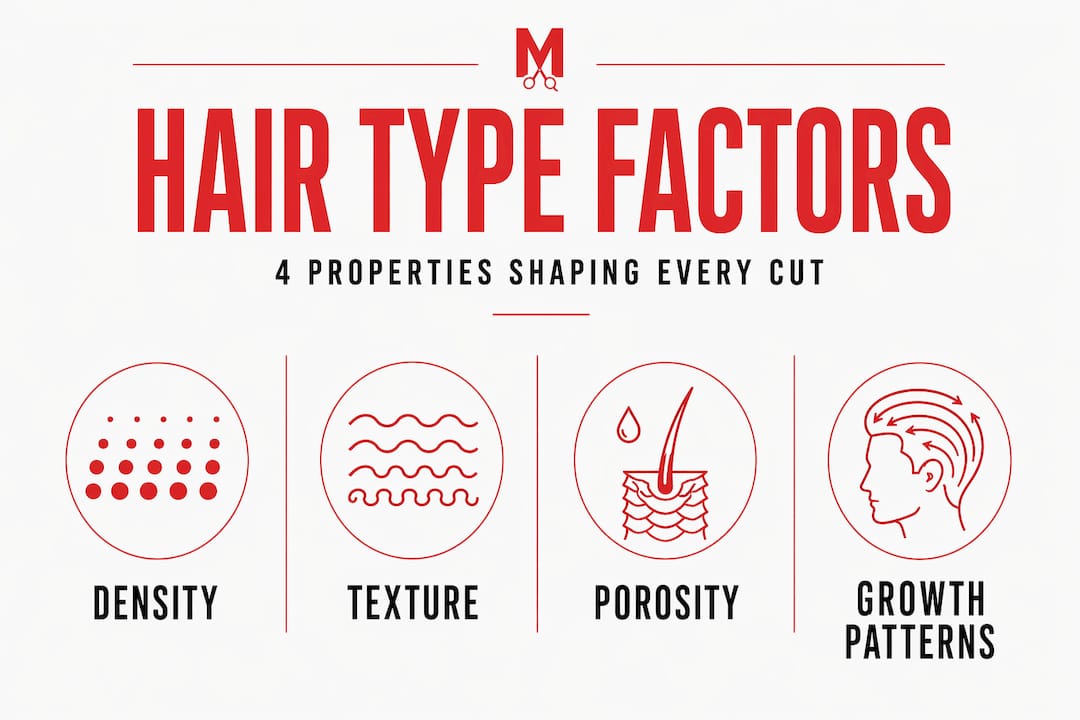
Growth patterns include cowlicks, crown swirls, and hairlines that grow at awkward angles. These patterns resist certain styles and must be factored into any cut that needs to lay flat or part cleanly. A barber who ignores your crown swirl will leave you fighting your hair every morning.
Here is a quick breakdown of how these properties interact:
Property | Low range | High range | Haircut impact |
Density | Thin, sparse | Thick, full | Determines volume and weight of style |
Texture | Straight | Coily | Affects shrinkage, cutting tools, and styling |
Porosity | Low (under 25%) | High (over 90%) | Drives product type and moisture routine |
Growth pattern | Uniform | Heavy cowlicks | Shapes parting, fades, and hairline work |
How barbers assess your hair before cutting
The best barbers treat the consultation like a technical exam, not a formality. Before a single clipper guard touches your head, a skilled barber is already analyzing skull shape and growth through cranial mapping. This goes far beyond matching a photo you pulled up on your phone. It means reading how your hair actually grows, where density changes across different zones of your scalp, and how your head shape interacts with different silhouettes.

Hair type varies across the scalp more than most men realize. The sides might be finer than the top. The crown might be coarser than the temples. A skilled barber reduces weight on coarser zones to balance the overall style rather than cutting everything uniformly and hoping it works out. That attention to detail is what separates a haircut that looks sharp on day one and on day twenty-one from one that collapses after a week.
Tool selection also shifts based on your hair type. Scissors over comb works well for fine, straight hair where precision matters. Clipper guards handle dense hair efficiently. Razors thin out bulk in heavy, coily hair but can cause frizz and split ends in already dry or high-porosity hair. Each choice is intentional when a barber truly understands the technical process of consultation.
Your lifestyle factors in too. If you work out daily and shower twice a day, your barber needs to know that. Frequent washing strips moisture from high-porosity hair, which changes which products will realistically hold your style. If you air dry instead of using a blow dryer, certain cuts won’t achieve their intended volume. These details belong in the consultation, not as an afterthought.
Pro Tip: Before your next appointment, spend two minutes looking at your hair when it’s completely dry and unstyled. Note where it parts naturally, where it grows in different directions, and whether it looks fuller or thinner in certain zones. Share those observations with your barber. That thirty seconds of conversation changes what you walk out with.
How hair type affects your style, products, and maintenance
This is where the importance of hair type becomes most concrete. Certain cuts simply do not work on certain hair. Long layered styles on low-density hair end up looking stringy and flat because there is not enough volume to support the shape. A textured crop works far better on fine hair because it creates dimension at the surface without demanding body the hair doesn’t have.
Styling challenges follow directly from hair type:
Straight, fine hair flattens by midday because it lacks natural grip. Products with too much hold make it look greasy rather than styled.
Wavy hair frizzes in humidity and can look inconsistent if the cut doesn’t account for where the wave pattern breaks.
Curly hair experiences significant shrinkage after washing. A curl that looks two inches long wet can spring up to under an inch dry. Your barber needs to cut with that in mind.
Coily hair requires moisture constantly. Without it, shrinkage is extreme and the hair becomes prone to breakage along the cut line.
Product matching is where most men go wrong without realizing it. Straight hair benefits from lightweight products that control oil rather than add moisture. Curly and coily hair needs moisturizing creams and richer oils. Porosity makes this more specific. High-porosity hair responds best to rich creams that slow moisture loss. Low-porosity hair does better with clays or lighter styling agents that don’t seal the cuticle further.
“Working with your hair’s natural type instead of against it is what separates styling success from daily frustration. Product mismatch is almost always the real culprit when a man blames his products for poor results.” — Manhattanbarbershopny
Maintenance scheduling also depends on your hair type and goals. Most men benefit from trims every 8 to 12 weeks to retain length while keeping the shape clean. Tight fades and precision cuts need refreshing closer to every 3 to 4 weeks. Coily hair that is growing out needs less frequent cutting but more attention to moisture and protective styling between visits.
Common mistakes men make about hair type
Even men who care about their appearance make predictable errors when it comes to hair type at the barbershop. Knowing these mistakes ahead of time keeps you from repeating them.
Assuming any barber can handle any hair type. Specialization is real. Barbers who primarily work with straight and wavy hair may not have deep experience with coily textures, and vice versa. When choosing a barber for your hair type, ask about their experience with your specific texture before sitting in the chair.
Bringing a celebrity photo and expecting an exact copy. The celebrity has a different density, growth pattern, and texture than you. The photo is a starting point for conversation, not a blueprint. A good barber will tell you which elements of that style translate to your hair and which ones need adapting.
Using the wrong products. True styling success comes from matching product weight and moisture content to your hair type. Men with fine hair who use heavy pomades end up with flat, greasy hair by 10 a.m. It’s not the product’s fault.
Skipping the conversation. Many men fail to specify exact length preferences and styling habits. Saying “just clean it up” gives your barber almost nothing to work with. Specify the length you want removed, how you style it daily, and how long you want the cut to last.
Cutting too often or not enough. Men with slow-growing, low-density hair sometimes over-trim and end up looking thin. Men with fast-growing, dense hair wait too long and lose the clean lines they paid for.
Pro Tip: Ask your barber to describe your hair type back to you after the consultation. If they cannot identify your density, texture, or any unusual growth patterns in two or three sentences, they haven’t assessed it properly.
How to prepare for your next barbershop visit
Knowing your hair type before you walk in transforms the quality of the service you receive. Here is a step-by-step approach that works.
Identify your density at home. Look at your scalp when your hair is wet. If you can see it easily, your density is low to medium. If you have to look hard to find it, you’re on the higher end.
Know your texture category. Let your hair air dry without touching it. The resulting shape tells you whether you’re straight, wavy, curly, or coily.
Do a porosity test. Drop a strand of clean hair into a glass of water. If it sinks quickly, your porosity is high. If it floats, it’s low. Share this with your barber.
Note your growth patterns. Check your hairline and crown for cowlicks or swirls. These details directly affect how your barber approaches parting and shaping.
Come with specifics about your styling routine. Tell your barber exactly how you dry your hair, what products you currently use, and how much time you realistically spend styling in the morning. Understanding how to describe your style gives your barber everything they need.
Schedule based on your hair’s actual growth rate. Ask your barber at the end of your visit when you should return. Take their answer seriously and book it before you leave.
My take on hair type and why it changes everything
I’ve spent years watching men come in frustrated and leave satisfied, and the turning point is almost always the same. It’s the moment they stop treating the consultation as a formality and start treating it as a collaboration.
What I’ve learned is that most haircut dissatisfaction isn’t about the barber’s skill level. It’s about a gap in information. The client doesn’t know how to describe their hair. The barber doesn’t push hard enough to find out. The result is a generic cut applied to a specific head. That never works as well as it should.
The men who get the best results are the ones who understand their own hair type well enough to have a real conversation. They come in knowing their texture, knowing their density, knowing that their crown does something weird. That knowledge gives their barber something to work with, and a skilled barber turns that information into a cut that holds its shape for weeks.
My practical advice is this: stop chasing cuts that look good on other people and start learning what works for your specific hair. The patience to experiment with products and scheduling pays off. Your hair is not a liability. It’s a starting point.
— Evgenii
Experience the difference at Manhattanbarbershopny
At Manhattanbarbershopny, every client visit starts with a genuine consultation. The barbers assess your texture, density, porosity, and growth patterns before recommending any style. That process isn’t extra. It’s the standard.

Owner Eugene Solod built the shop around the belief that a great haircut comes from understanding the person sitting in the chair, not just copying what’s trending. The barbers here adapt their tools and techniques to what your hair actually needs, whether that’s scissor work on fine hair or weight reduction on dense, coily texture. You’ll also get honest product advice matched to your porosity and daily routine. Walk-ins are welcome, and booking online takes less than a minute. If you’re ready to experience a cut tailored to your actual hair, come see the team on the Upper East Side.
FAQ
Why does hair type matter so much at the barbershop?
Hair type determines which cuts are physically possible, which tools your barber should use, and which products will hold your style. A cut applied without considering texture, density, and growth patterns rarely performs the way it should.
How do I know if my barber understands hair types?
A qualified barber will assess your hair before cutting and ask about your styling routine and maintenance habits. If they go straight to cutting without any observation or questions, they’re skipping a critical step.
What’s the best way to tell my barber about my hair type?
Come prepared with basic observations: whether your hair is fine or thick, how it behaves when it dries naturally, any cowlicks or growth patterns you’ve noticed, and how you style it every day. Specific details lead to better results than general requests.
How often should I get a haircut based on my hair type?
Most men should visit the barbershop every 8 to 12 weeks for maintenance trims, though tight fades and precision cuts may need refreshing every 3 to 4 weeks to stay sharp.
Can the wrong product damage my hair type?
Yes. Using heavy products on fine, low-density hair weighs it down and accelerates oil buildup. Using lightweight products on high-porosity, coily hair leaves it dry and prone to frizz and breakage. Matching product weight to your hair type is as important as the cut itself.
Recommended
Comments